Echo, Saturn (III) (2020)
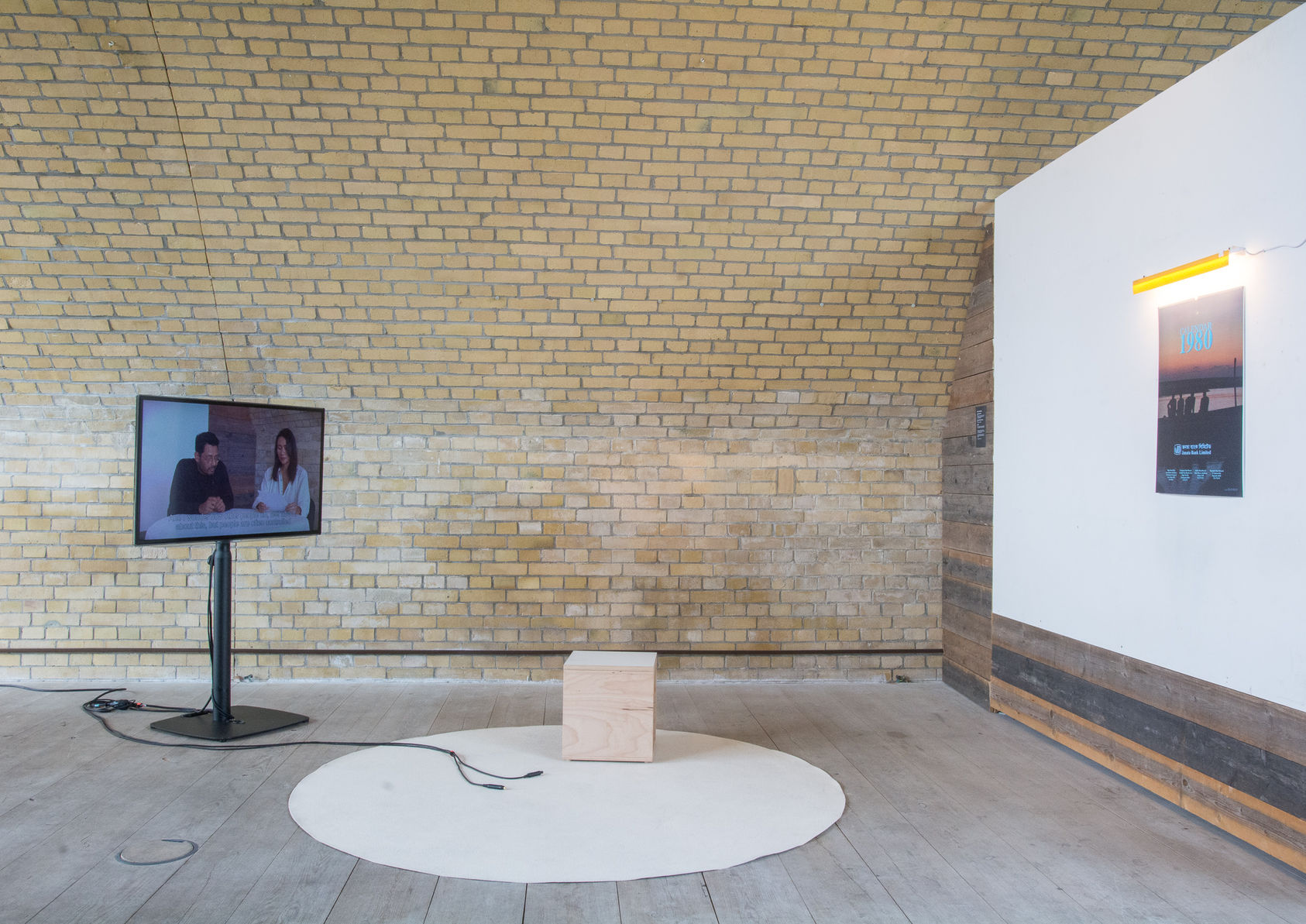
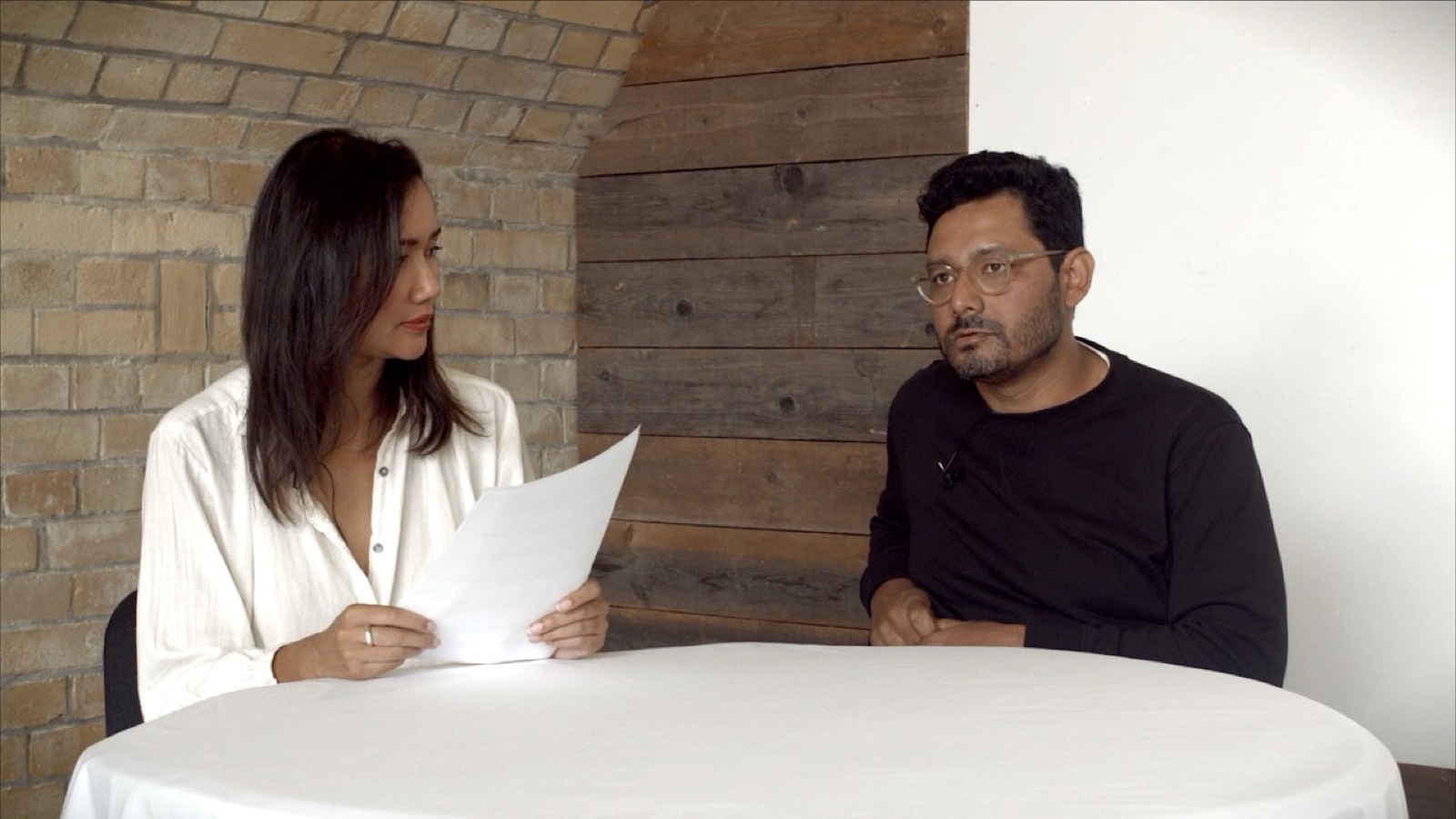
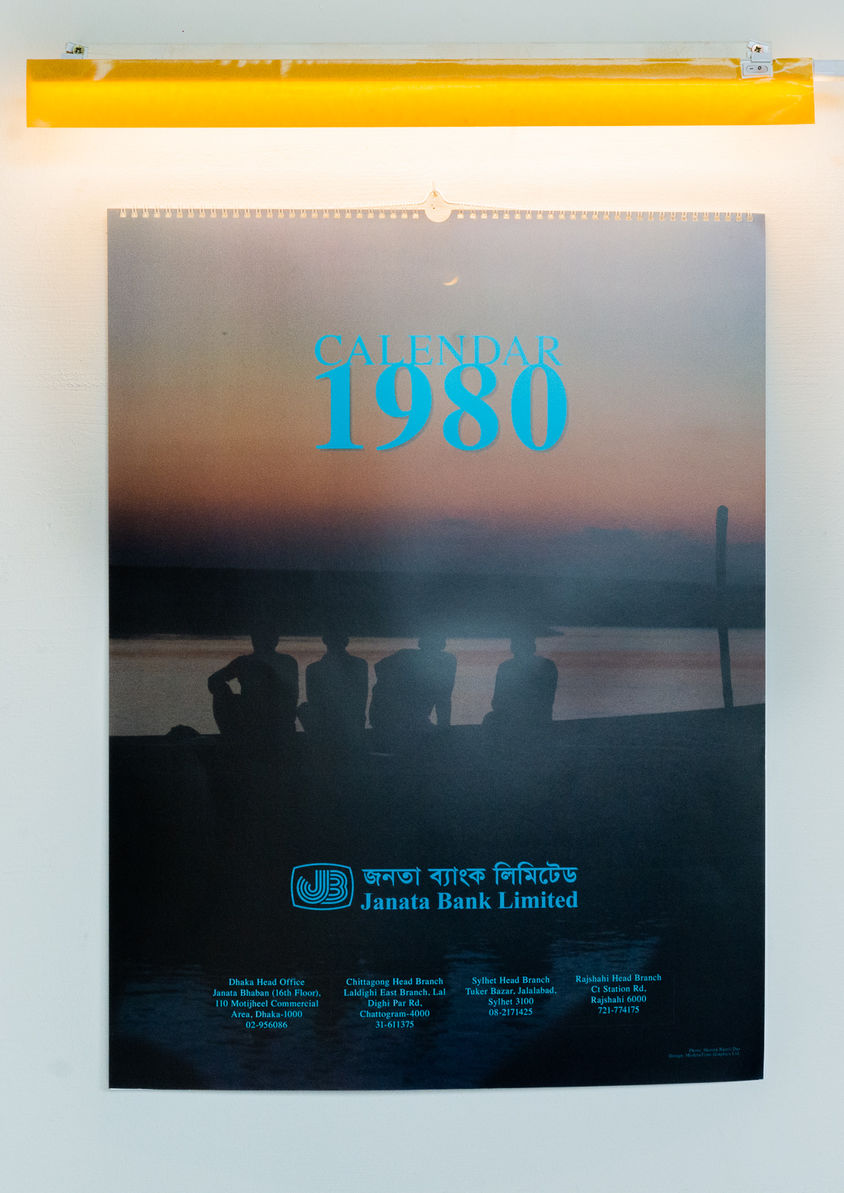
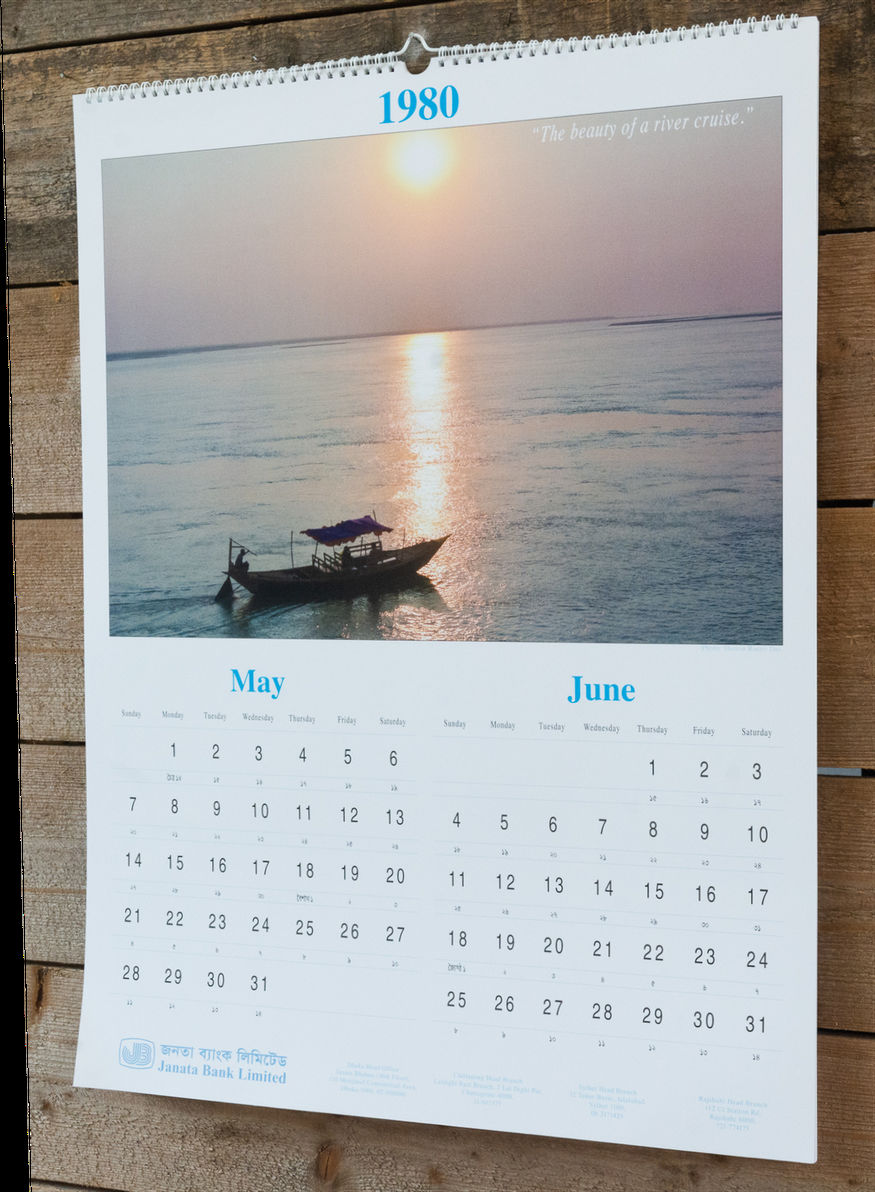
The Echo, Saturn (III) (2020) installation brings together Echo, Saturn (Artist Interview), a staged exchange performed with curator Z. Elders, with two copies of a reconstructed 1980 Janata Bank calendar ostensibly drawn from Dr Shahidul Zaman’s archive. A familiar promotional format turns against its subject: the interviewer presses the artist on the unequal economies of working in Bangladesh, his diasporic authority, cultural appropriation, his use of collaborators’ memories and the slippage between parafiction and deception. The questions are often rude, confronting and incriminating.
The calendars make this uncertainty physical. Across thirteen pages, the same May–June spread recurs almost unchanged; a river scene and the phrase “The beauty of a river cruise” appear, disappear and shift position, turning a mundane corporate object into a faulty instrument of recall. One copy is shown closed beneath yellow light and another opened elsewhere in the building, while the interview and its printed transcript separate speech from evidence. The curator Z. Elders put strict contractual limits on the work: permission must be asked for every two years, the work cannot be videotaped, and the captions must say “Performed by Omar Chowdhury and Z. Elders.”
Together, the works ask whether another person’s archive can ever be borrowed without being transformed—and whether acknowledging the violence of authorship undoes it, or simply absorbs criticism back into the work.