Omar Chowdhury — Works
BAN♡ITS (2024–25) Busan Biennale 2024; IFFR Tiger Short Competition 2025; Berwick New Cinema Award 2025
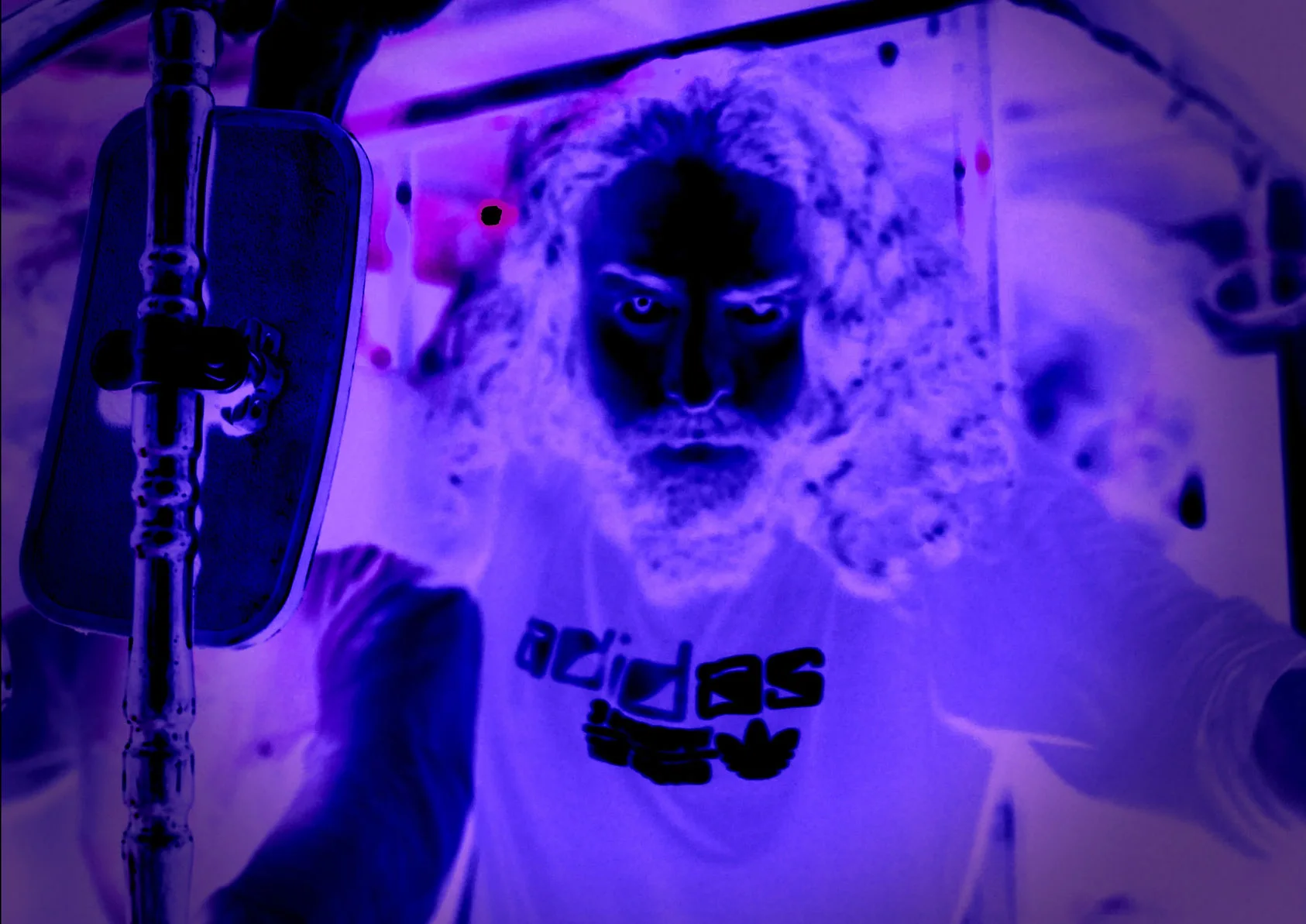
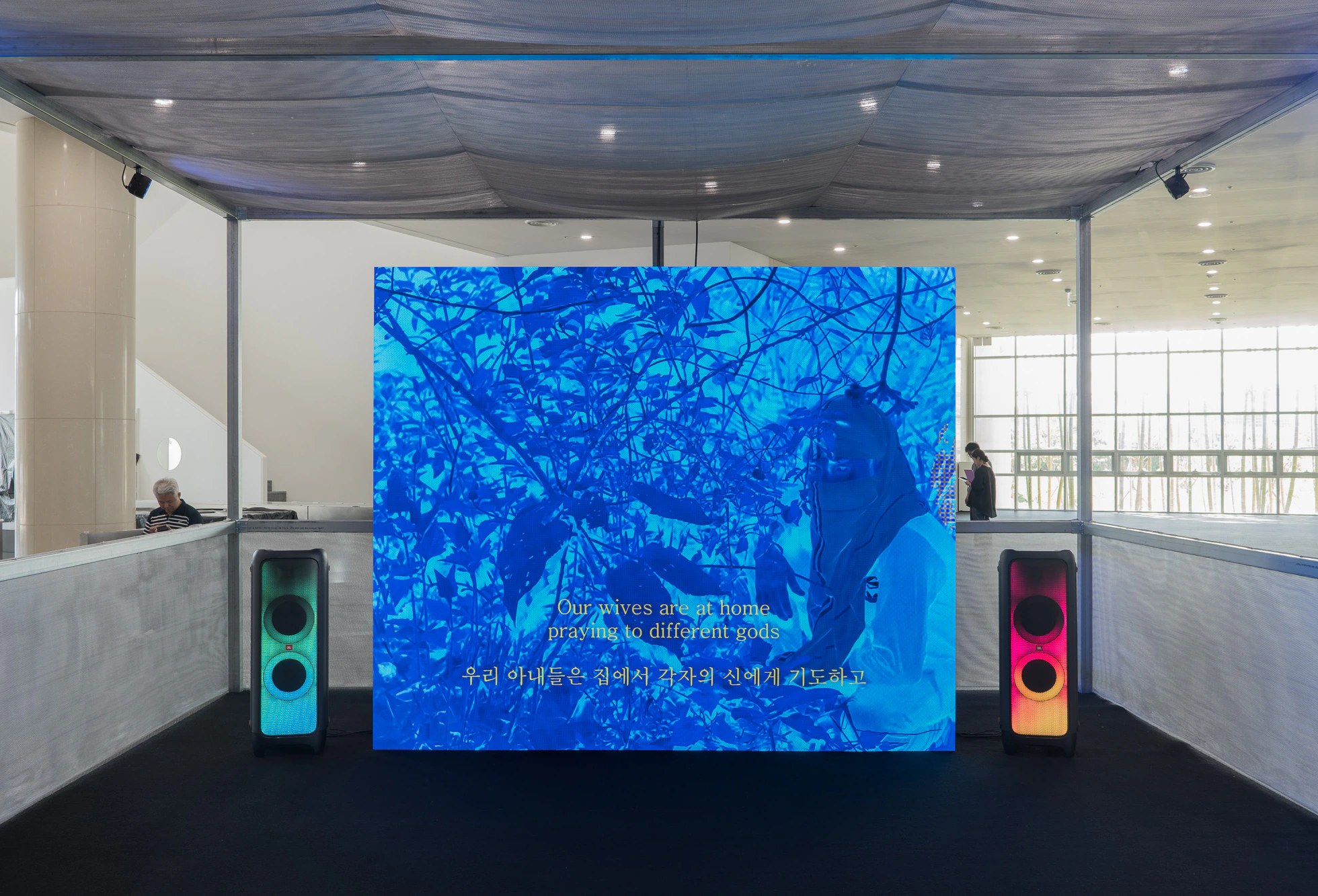
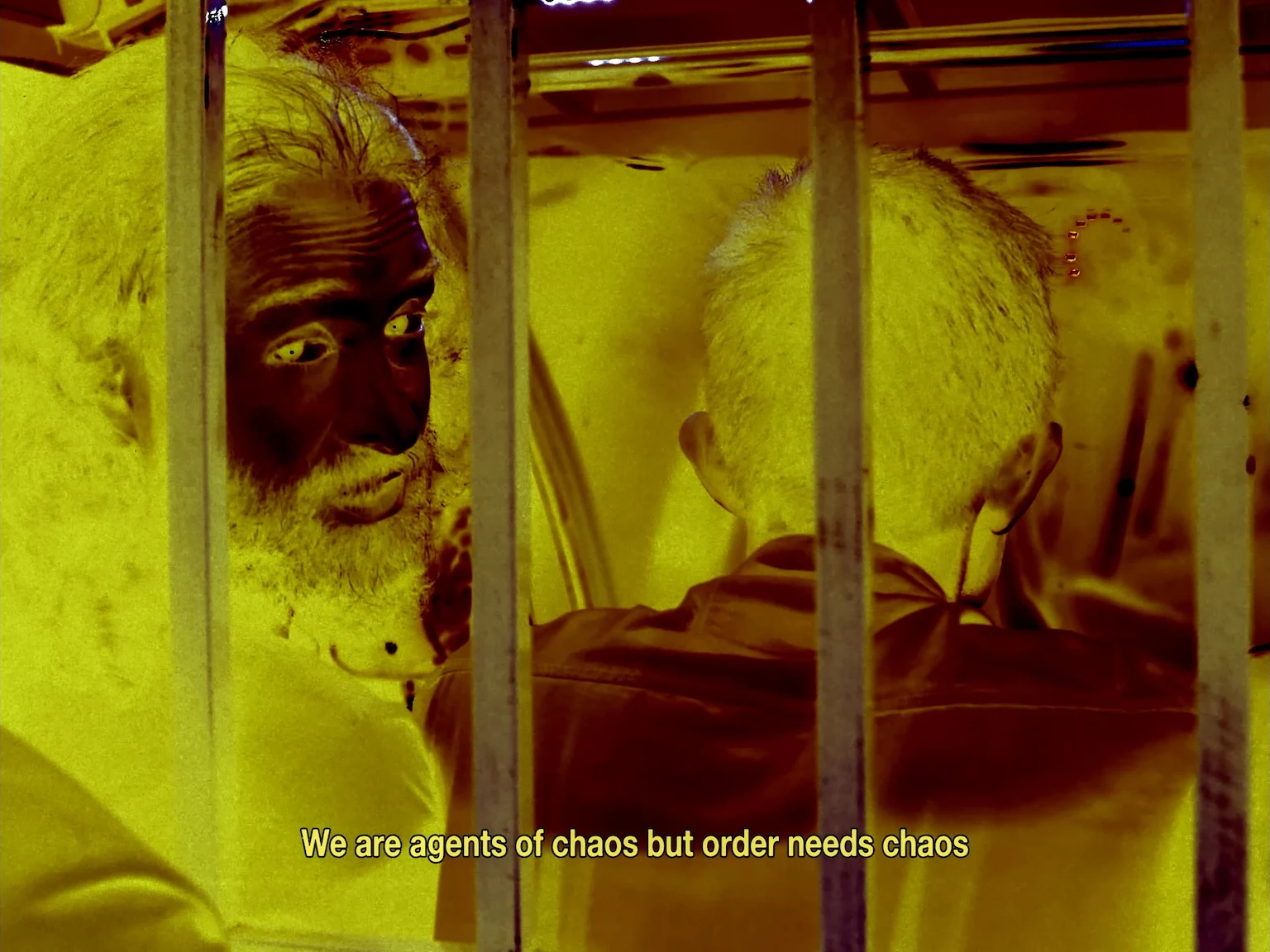
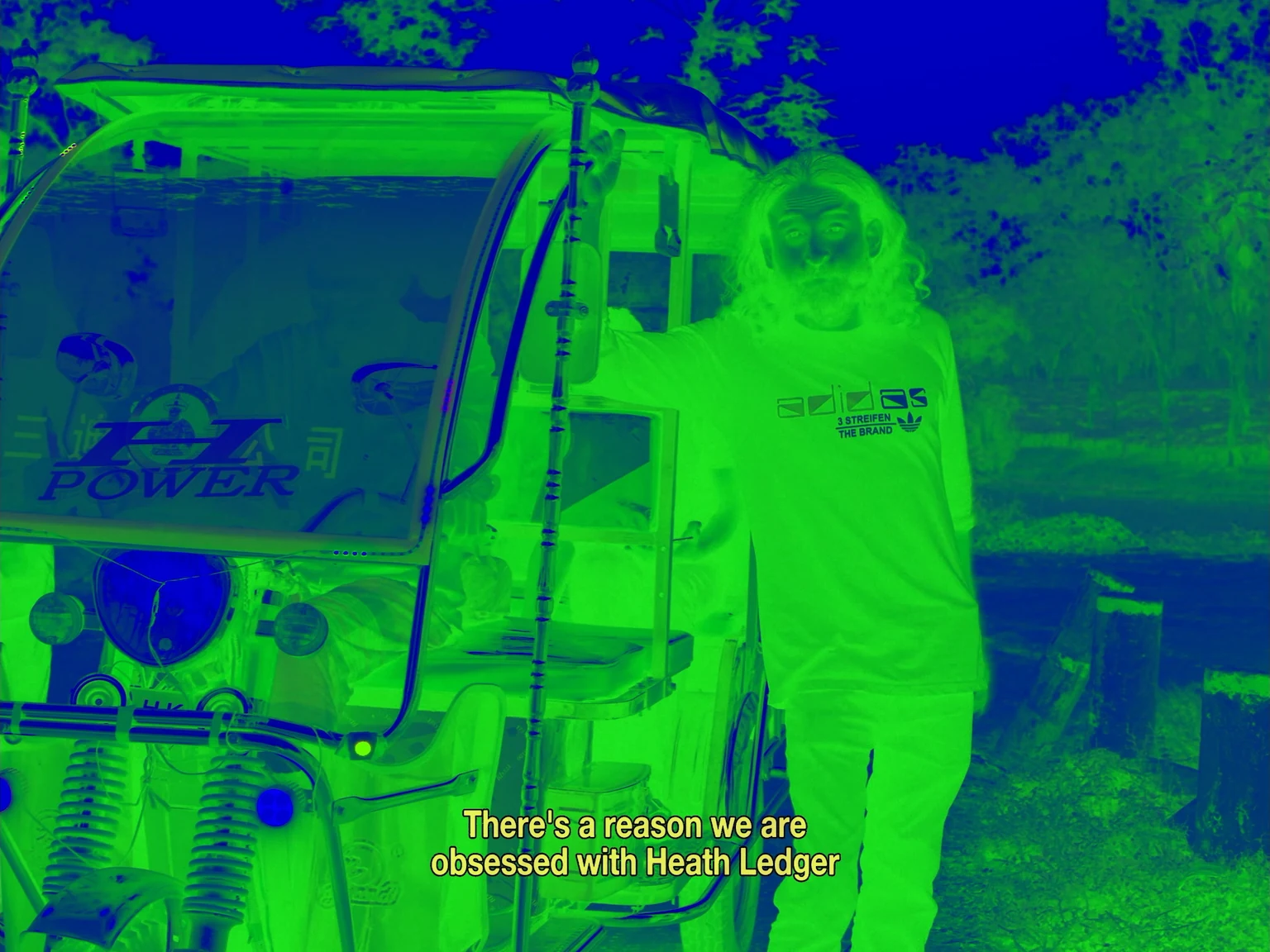
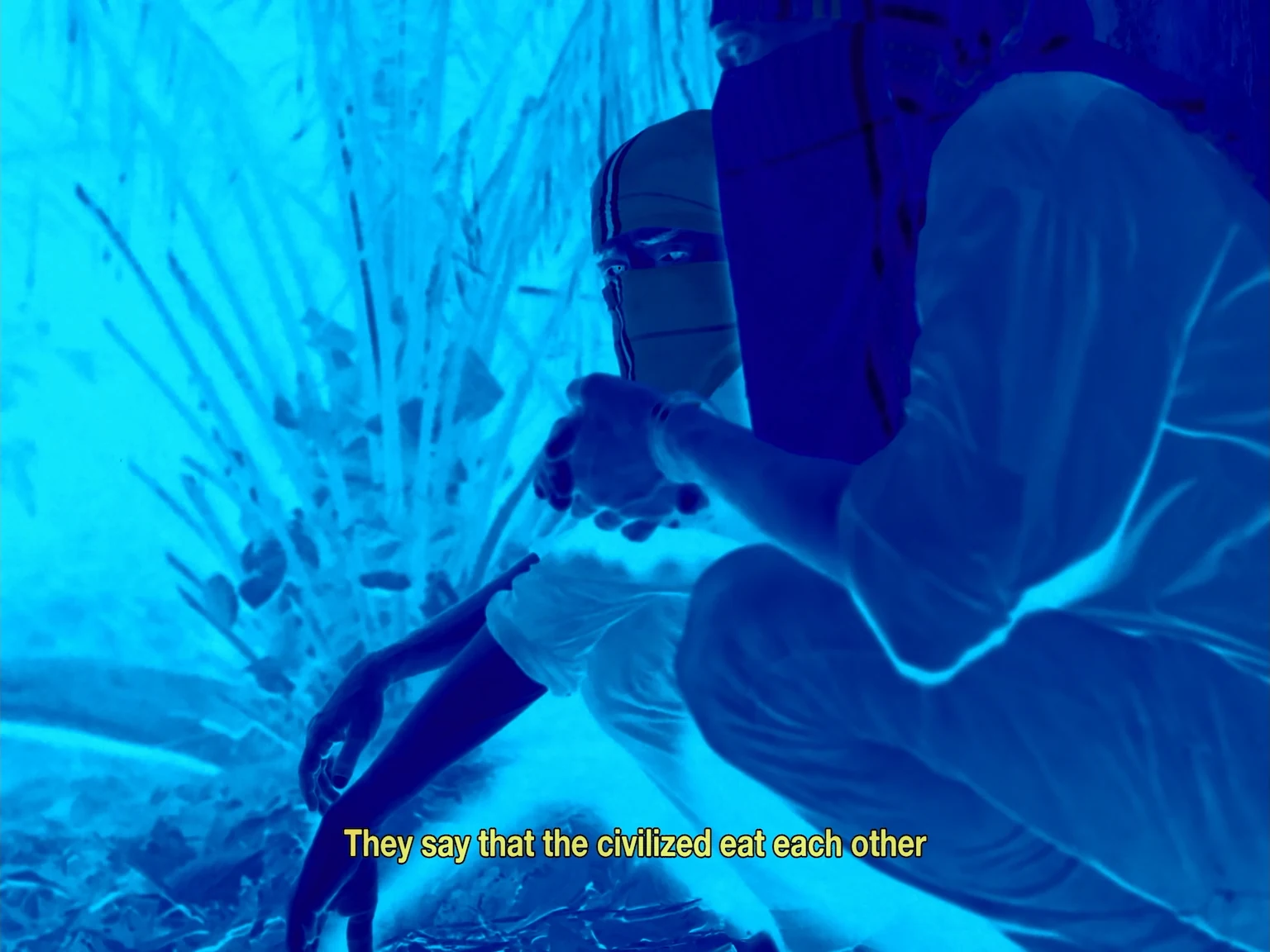
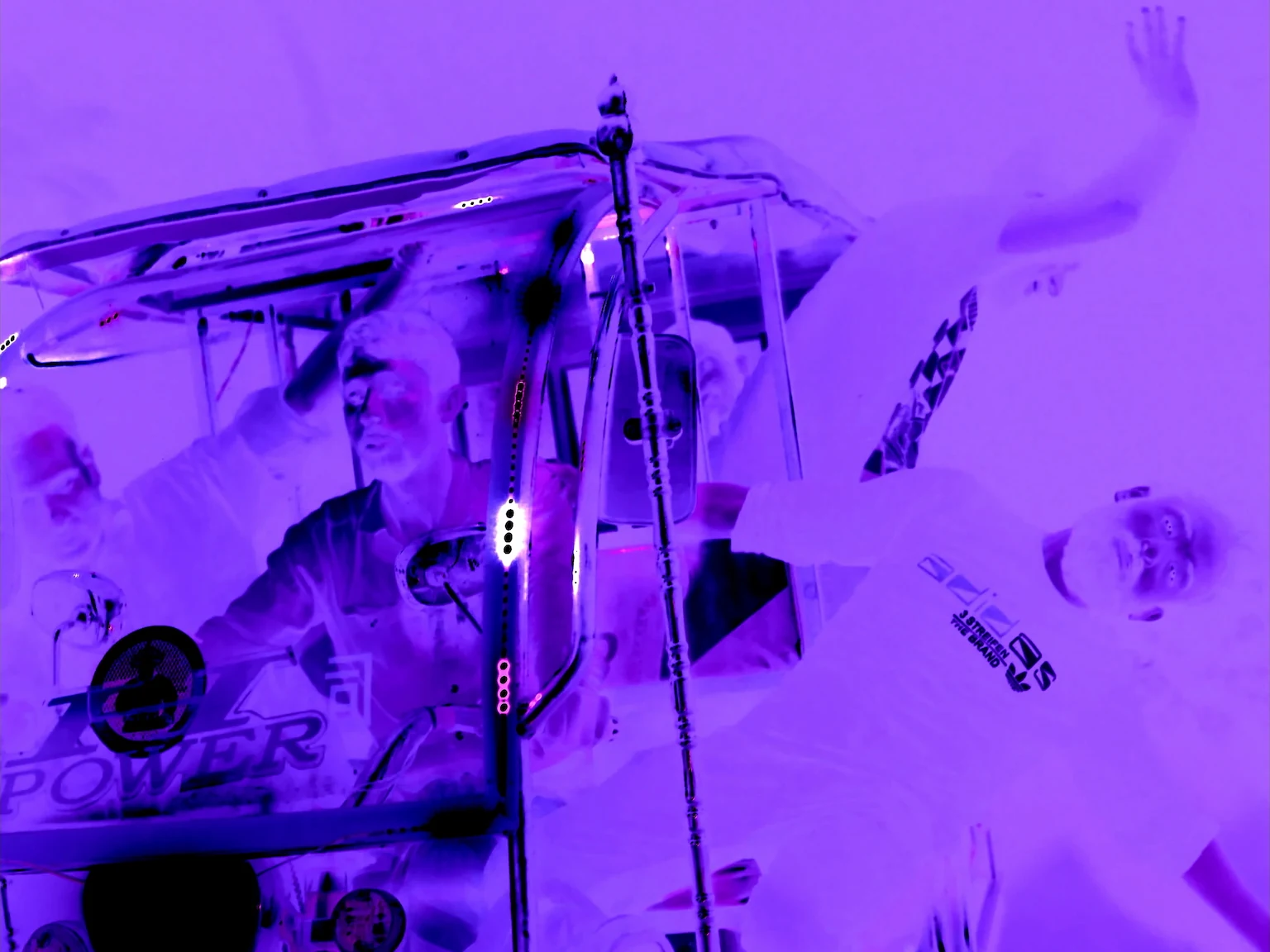
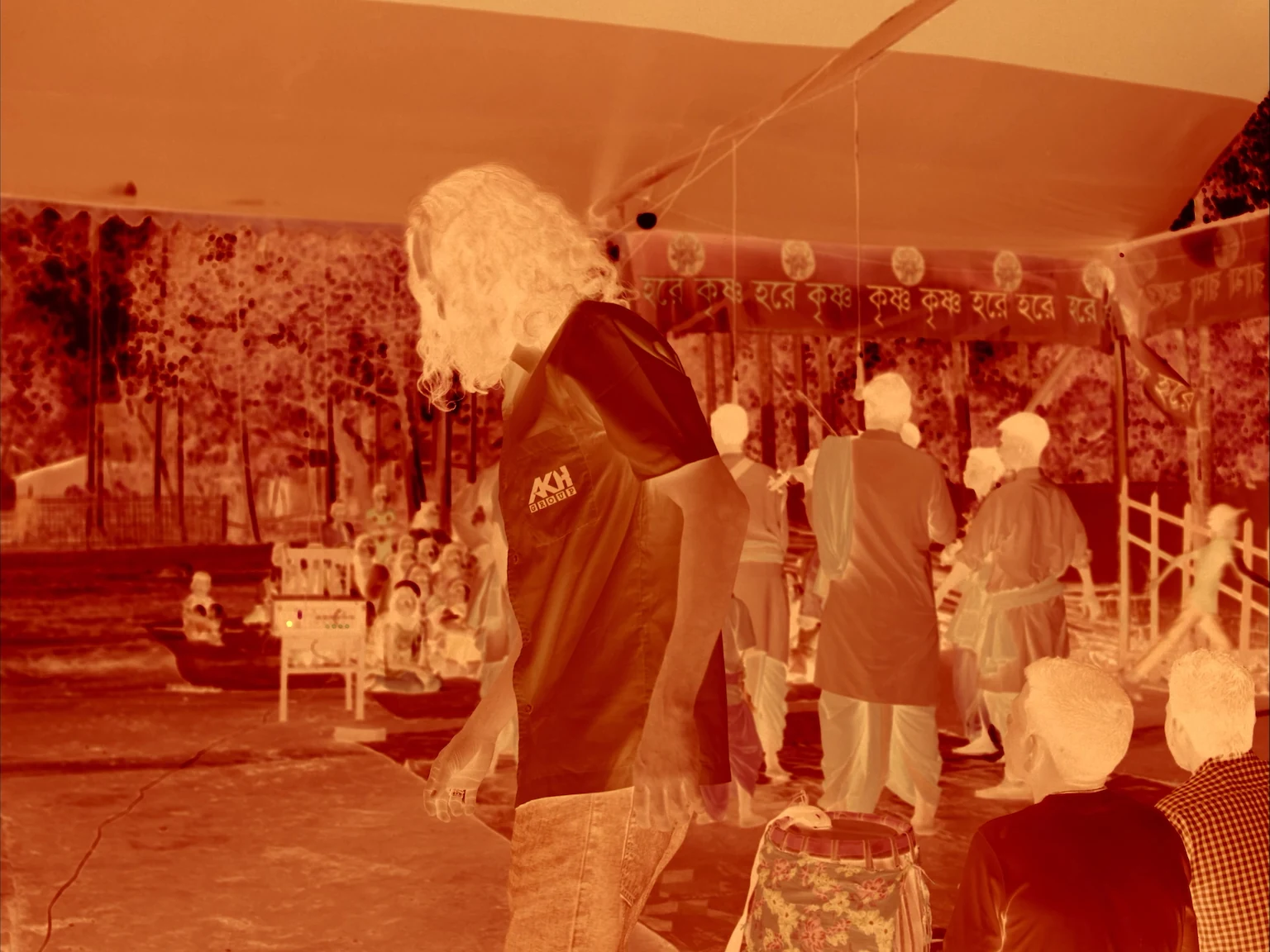
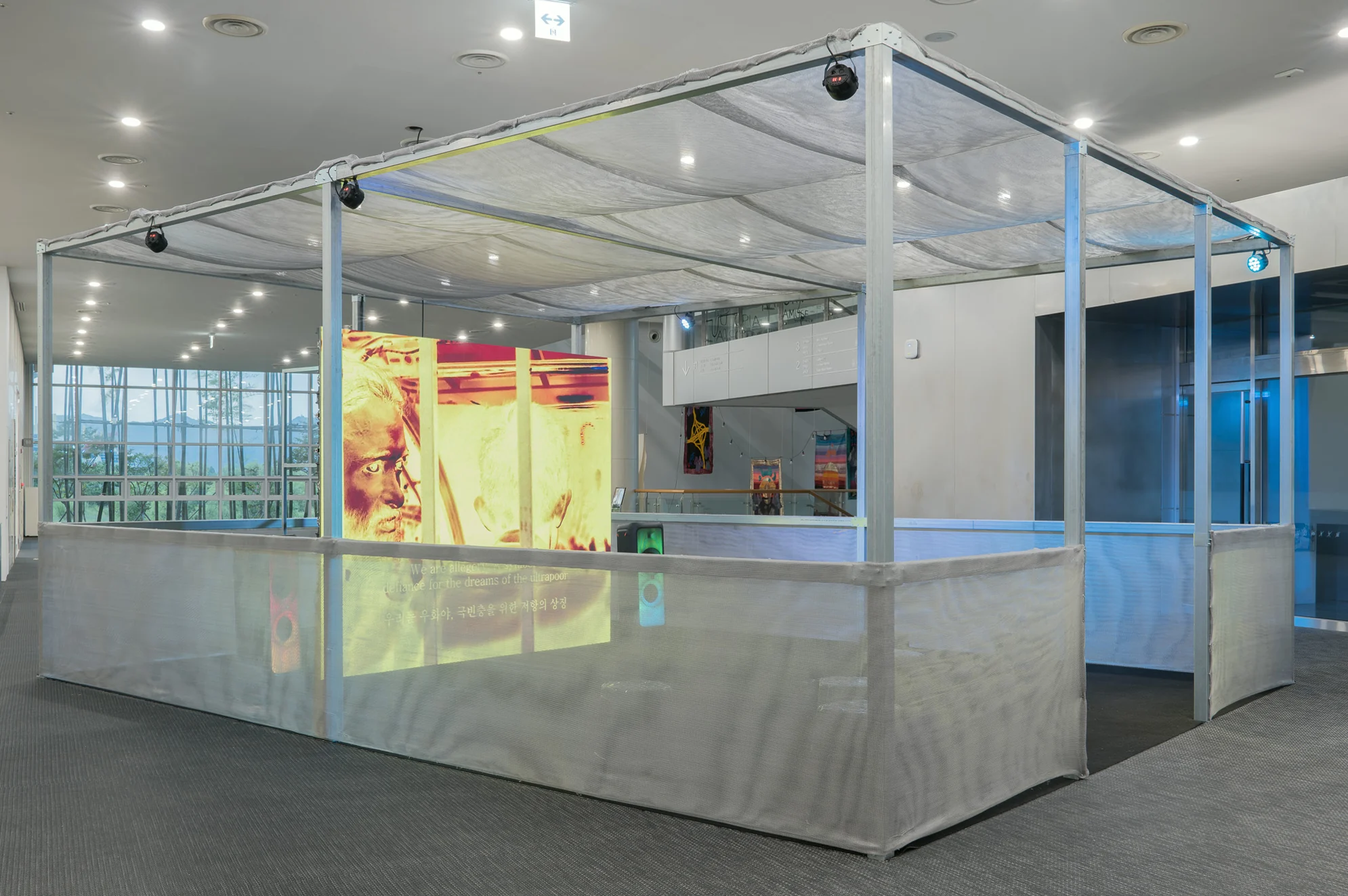
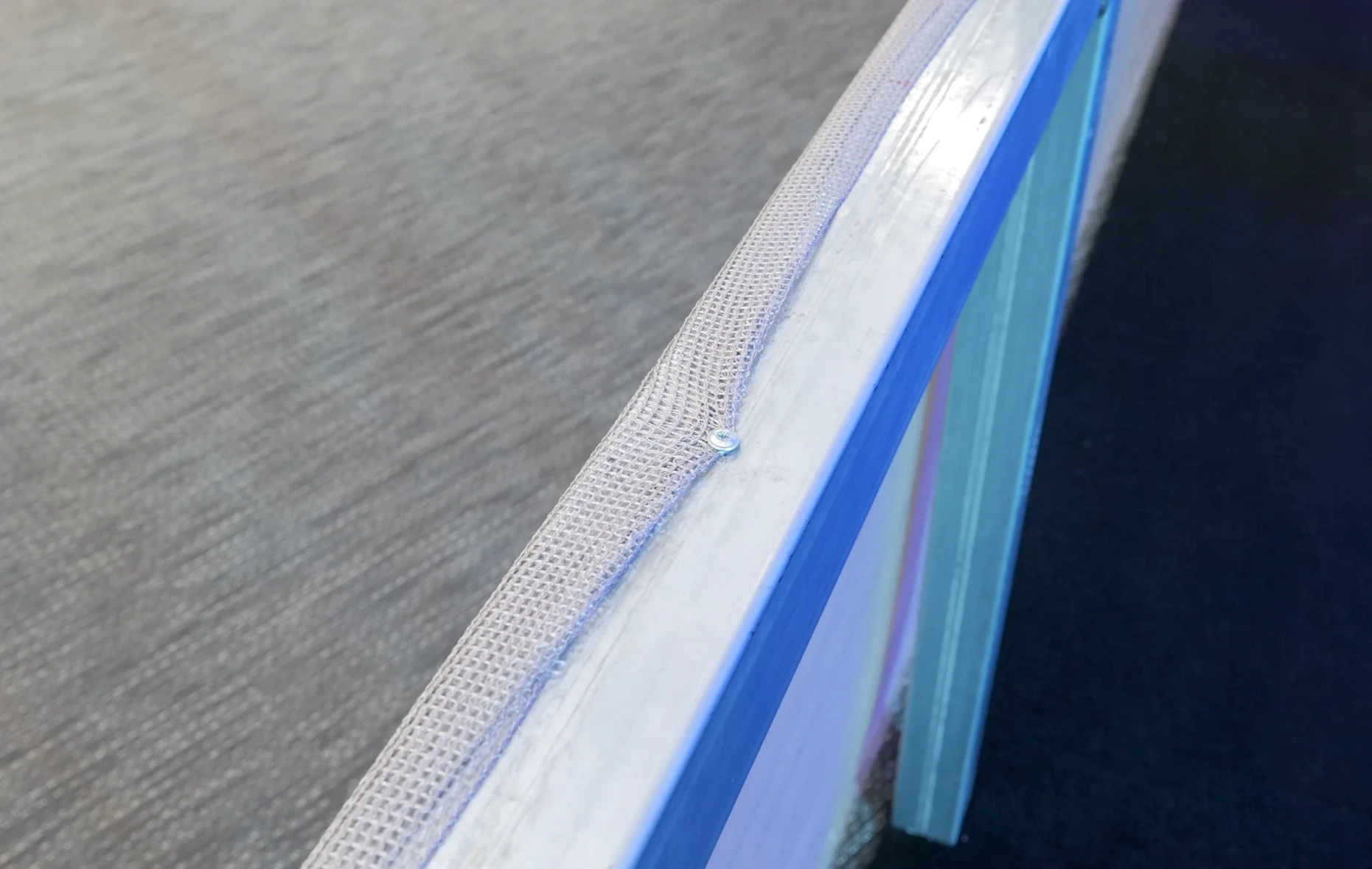
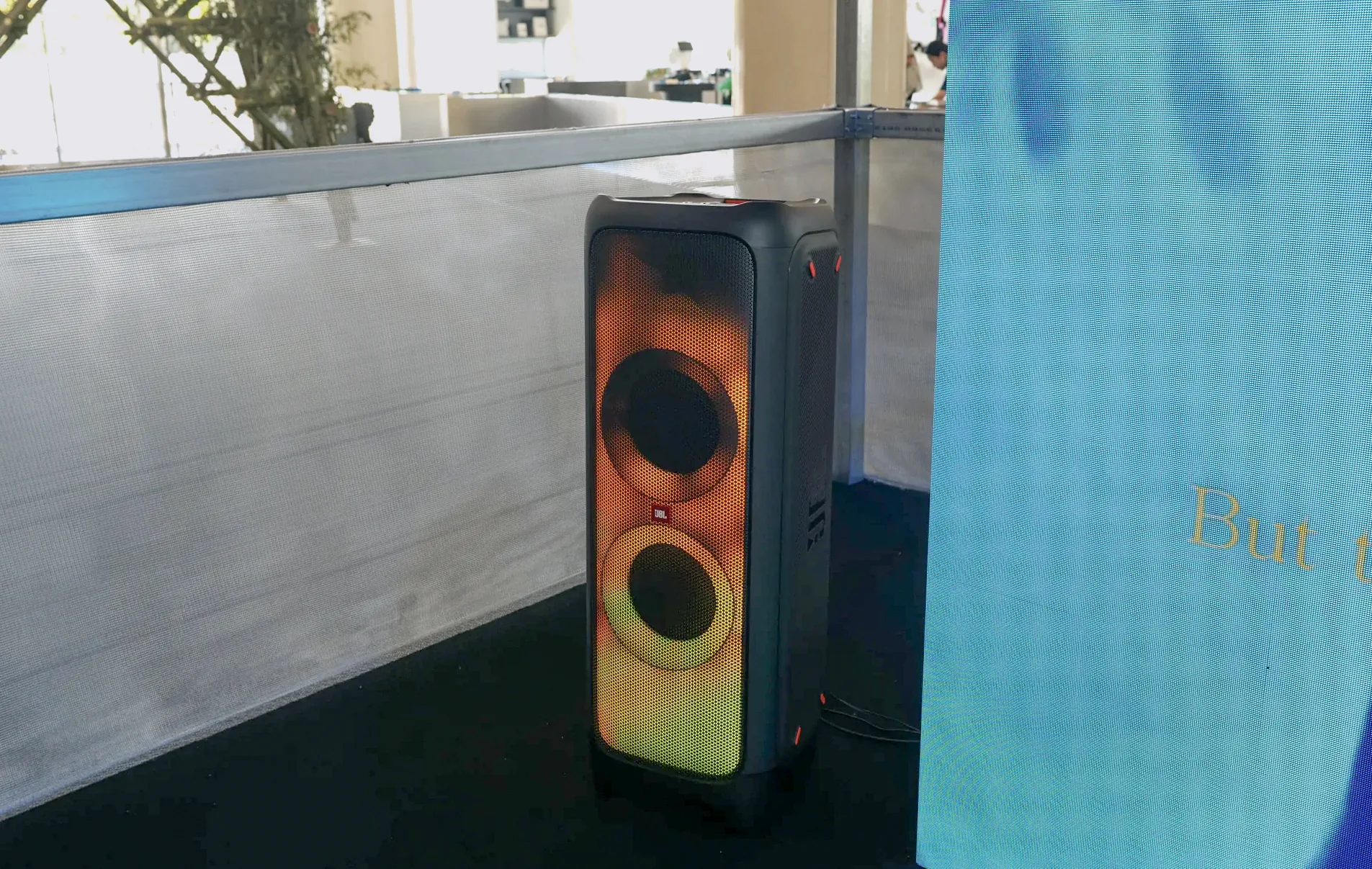
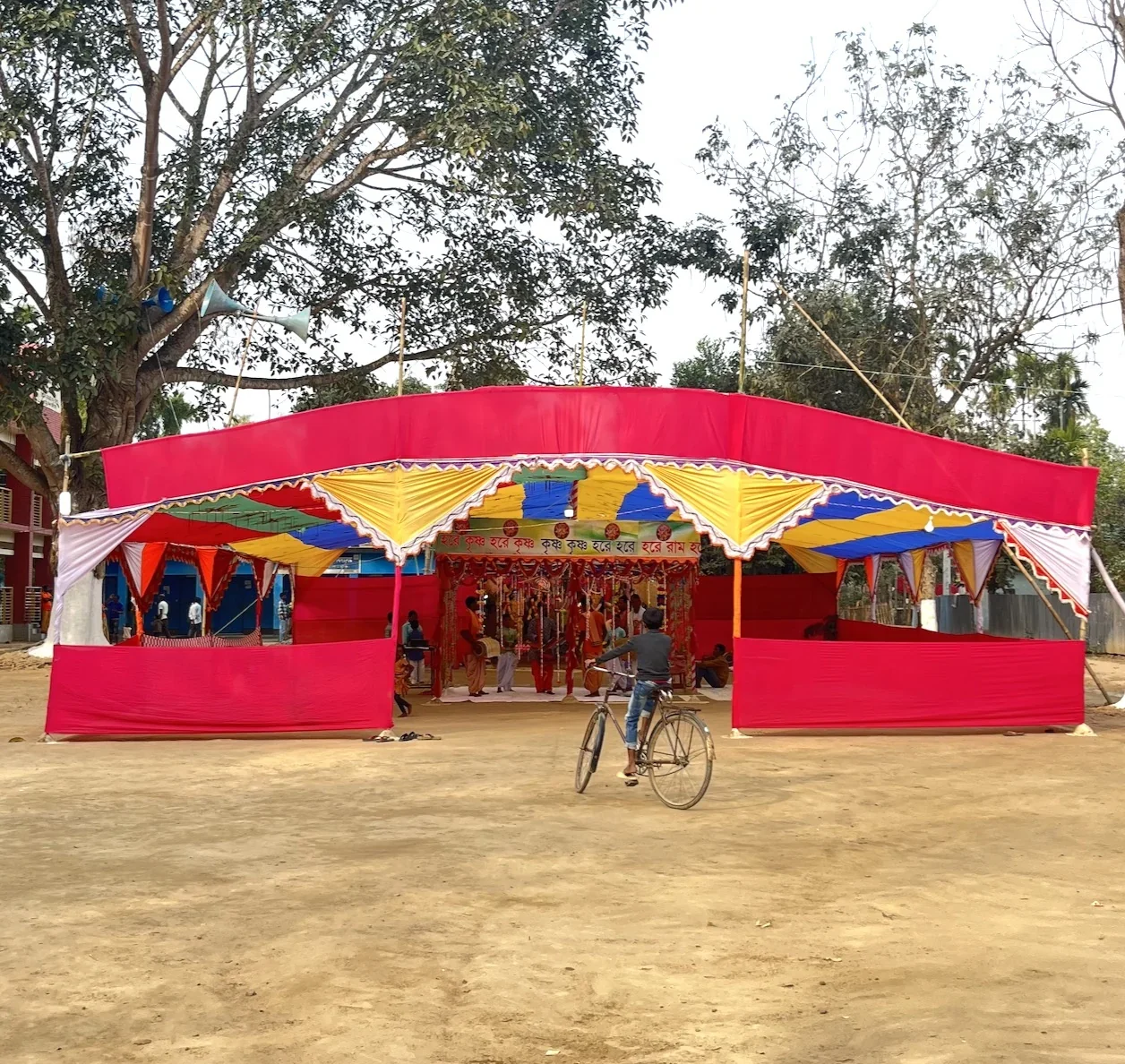
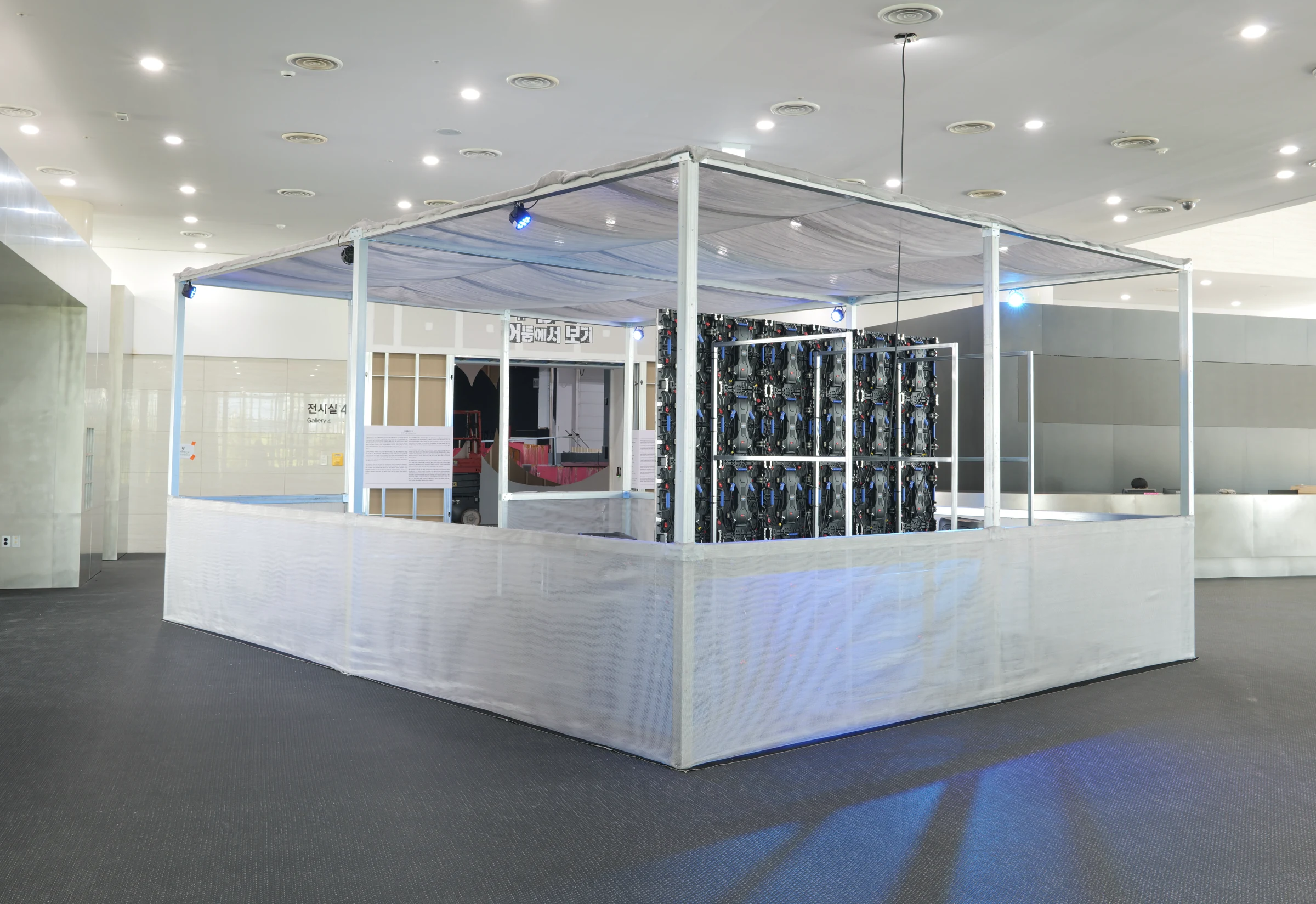
Out near the lawless eastern borderlands of the sub-continent, a No-Visa-Required artist returns to make a film installation with a crew of washed-up ban♡its obsessed with Heath Ledger’s Joker. As they comically reenact their romanticised past, we confront the divergent histories and philosophies of peasant banditry as political resistance. Presented on a festive LED wall inside a temporary village pavilion, BAN♡ITS (2024–25) asks: when the art world comes calling, who are the real ban♡its?
The work combines cinema, ceremony and party aesthetics. Flashing lights animate the roof; speakers burn beside the screen. The installation becomes both social space and stage set.
The bandits occupy every frame as “knowing” subjects, spraying slogans, philosophies and nihilistic declarations across the screen. Their wiry leader emerges as prophet, performer and political theorist, insisting that their failed and increasingly inert violence remains a form of revolution. Extremely unserious, serious people, in other words. But revolutionaries have always been a little theatrical. Revolutions still happen.
The artist remains physically absent but verbally present: an interloper, a pariah and a minor agent of exoticism. The bandits casually discuss murdering him for his possessions, yet he cannot quite transform their boasts into heroic cinema. Unable to verify their mythology, he turns to their soliloquies to fill the vacuum where his own art is supposed to be.
Iddddd (2023–25) Contour Biennale 10, Mechelen; Martins&Montero, Brussels
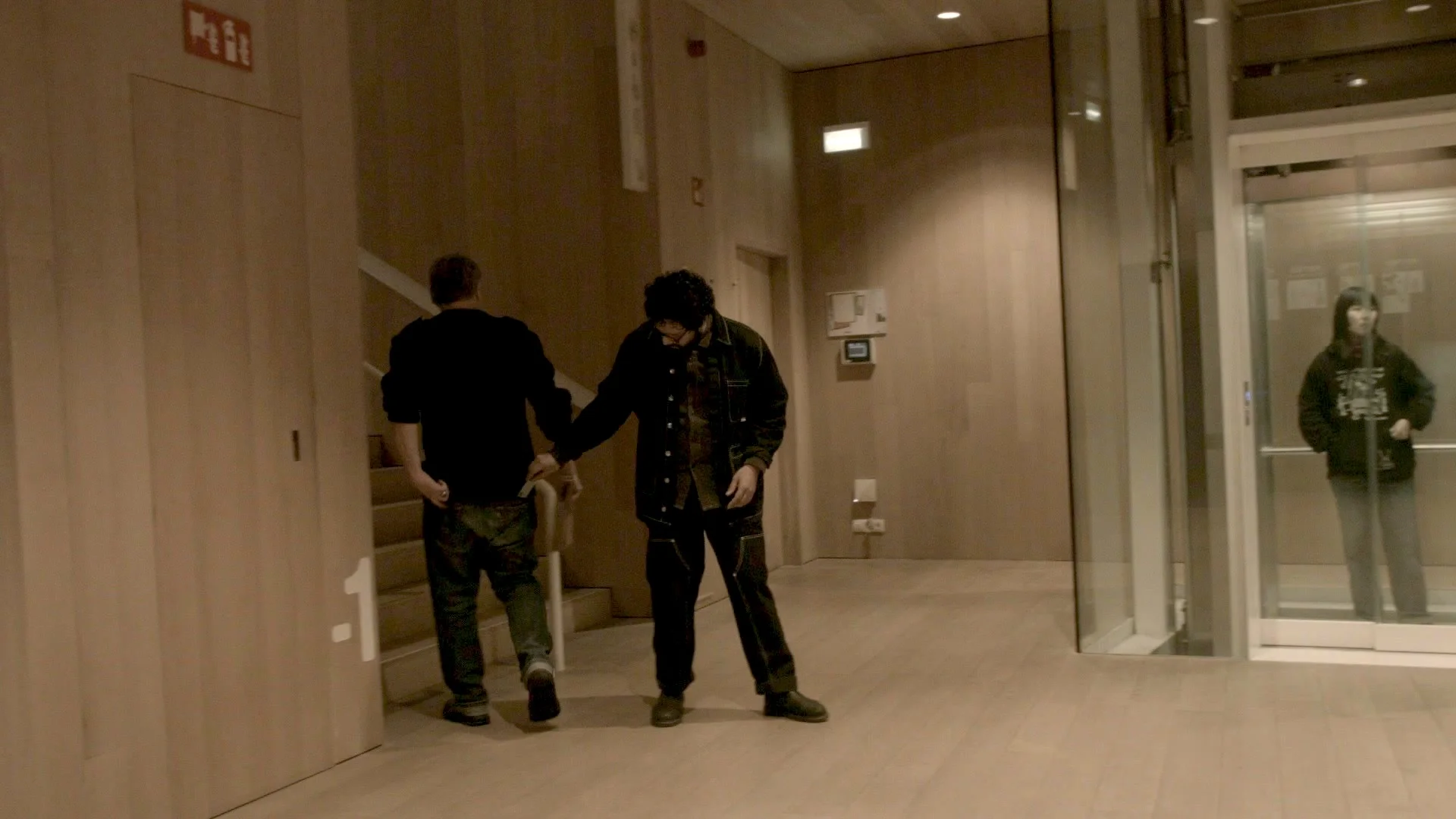
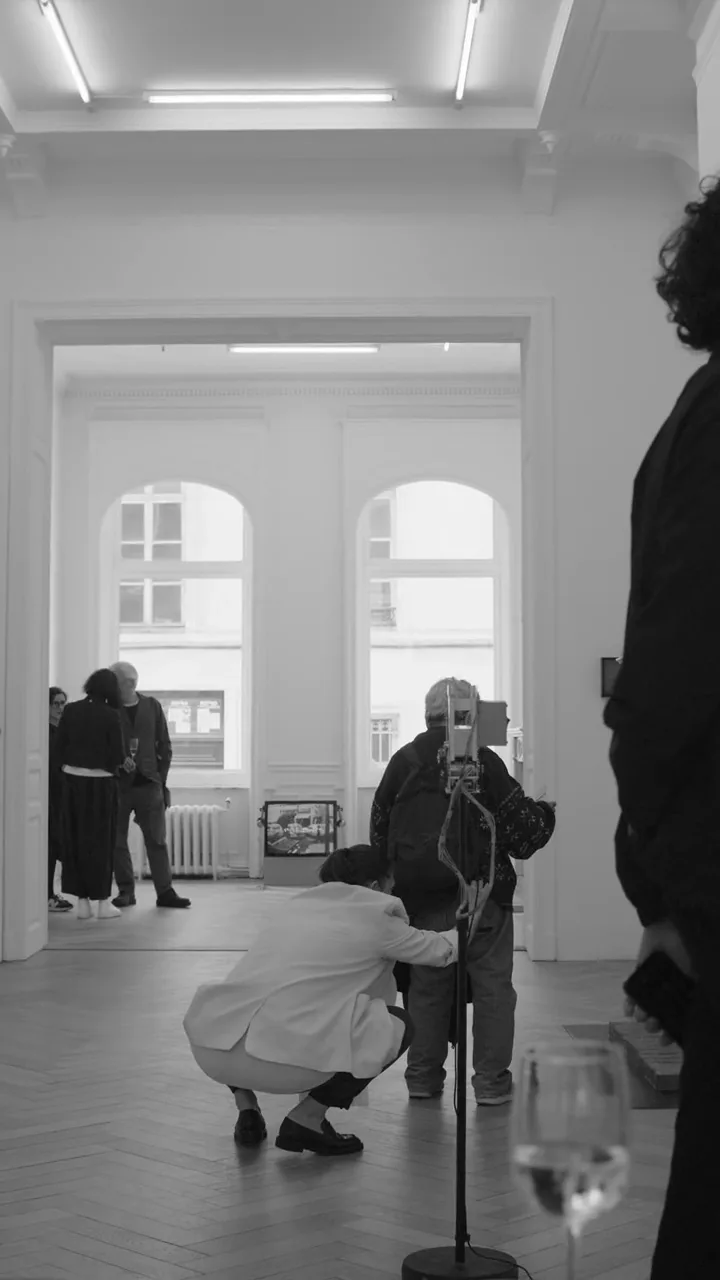
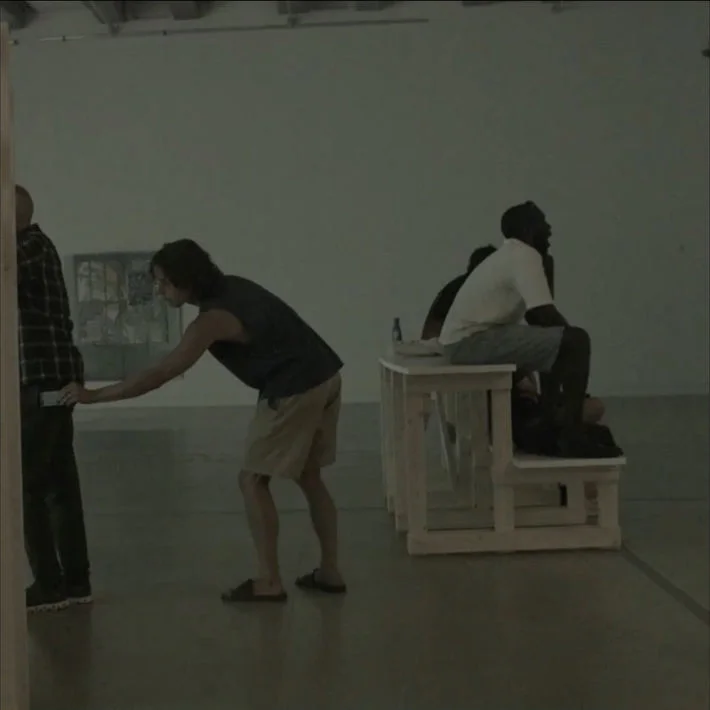
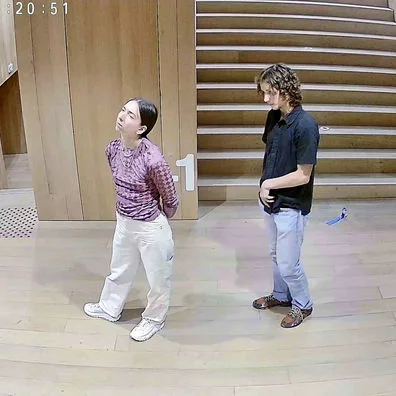
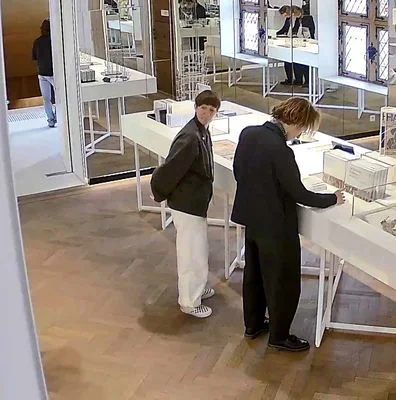
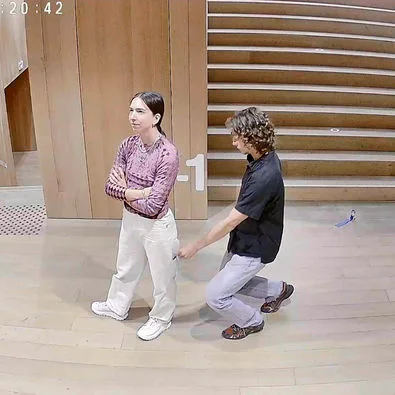
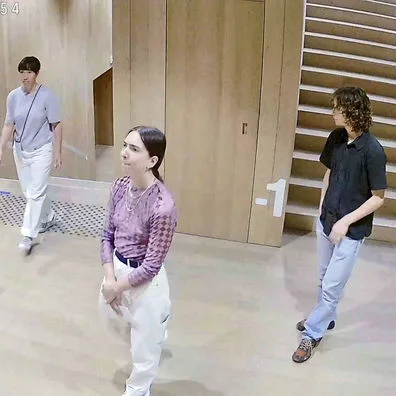
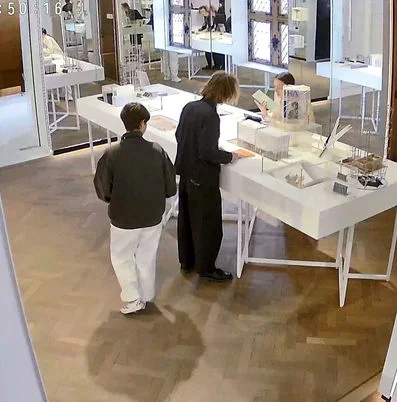
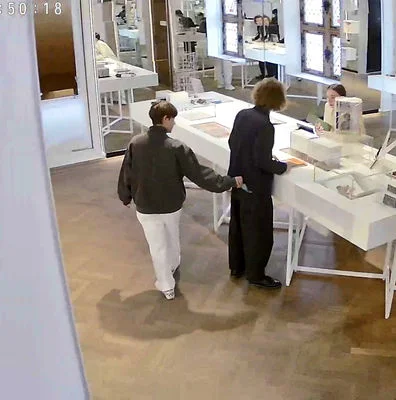
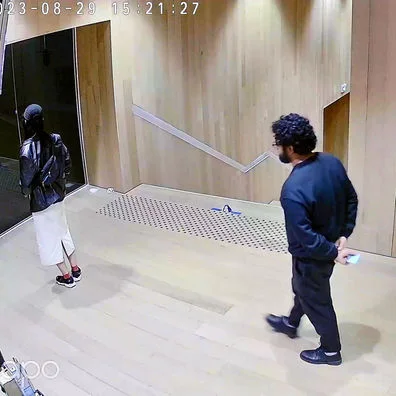
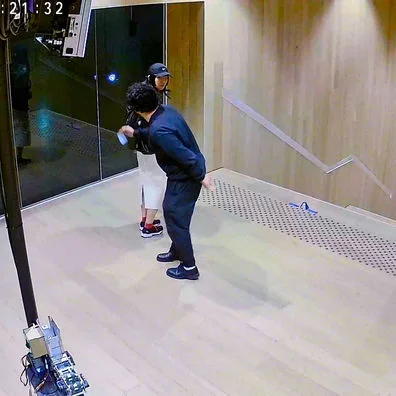
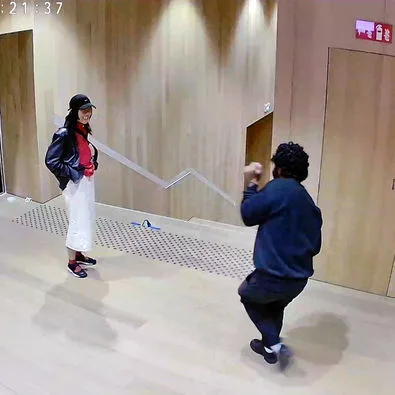
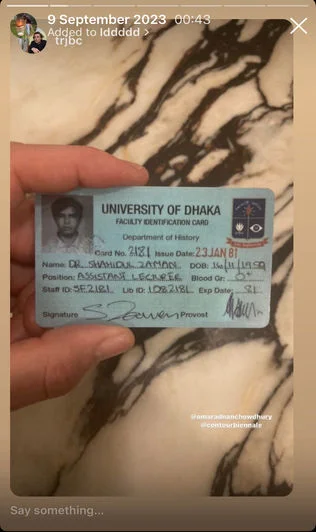
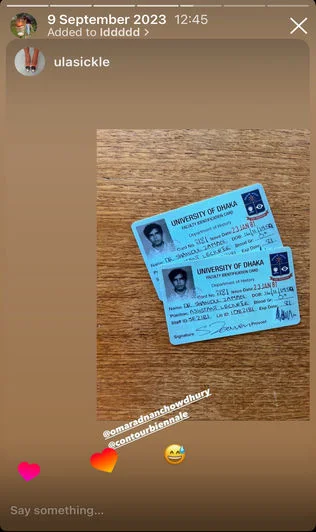
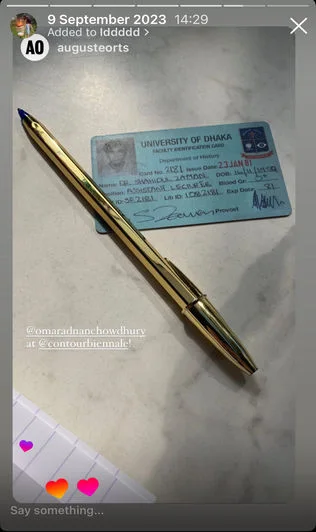
At Contour Biennale 10, the artist and four dancers attempted pickpocketing techniques on unsuspecting museum visitors. Instead of stealing, they discreetly placed an object in a pocket or bag, turning theft into a delayed encounter that might only be discovered elsewhere. If caught, the performers followed a viral TikTok logic of de-escalation: meeting the visitor’s eyes, dancing, or saying, “I’m just trying to make a living.”
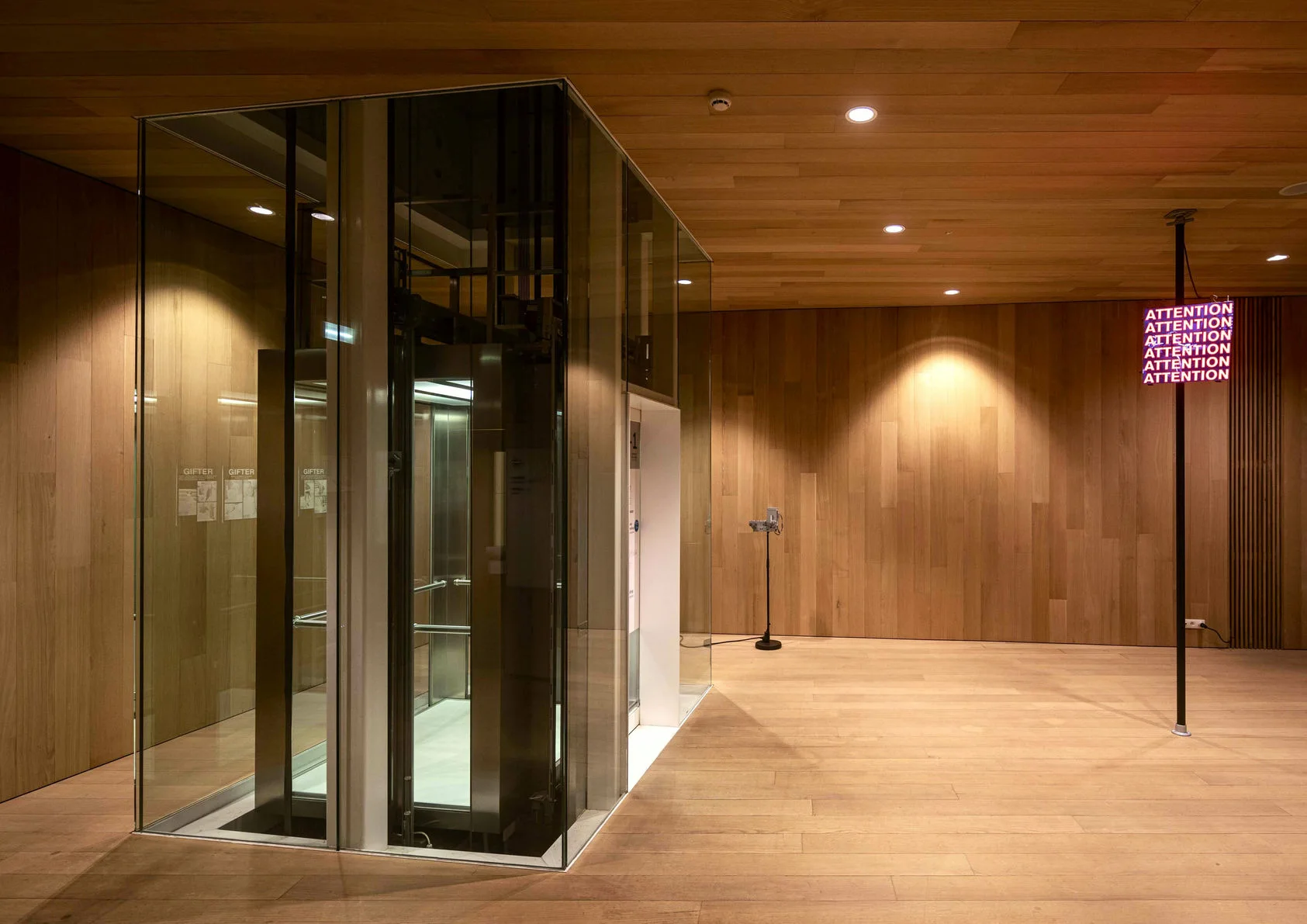
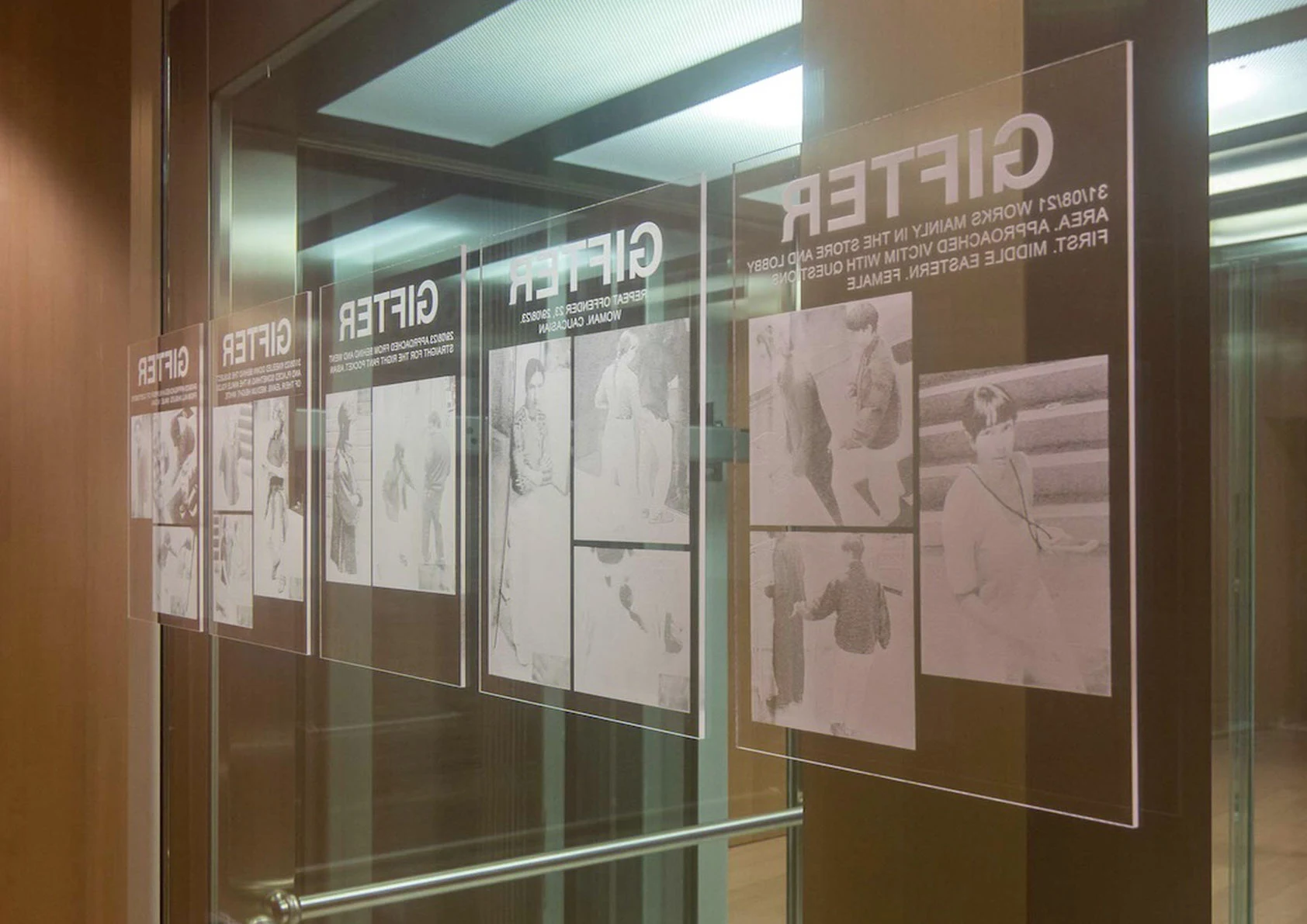
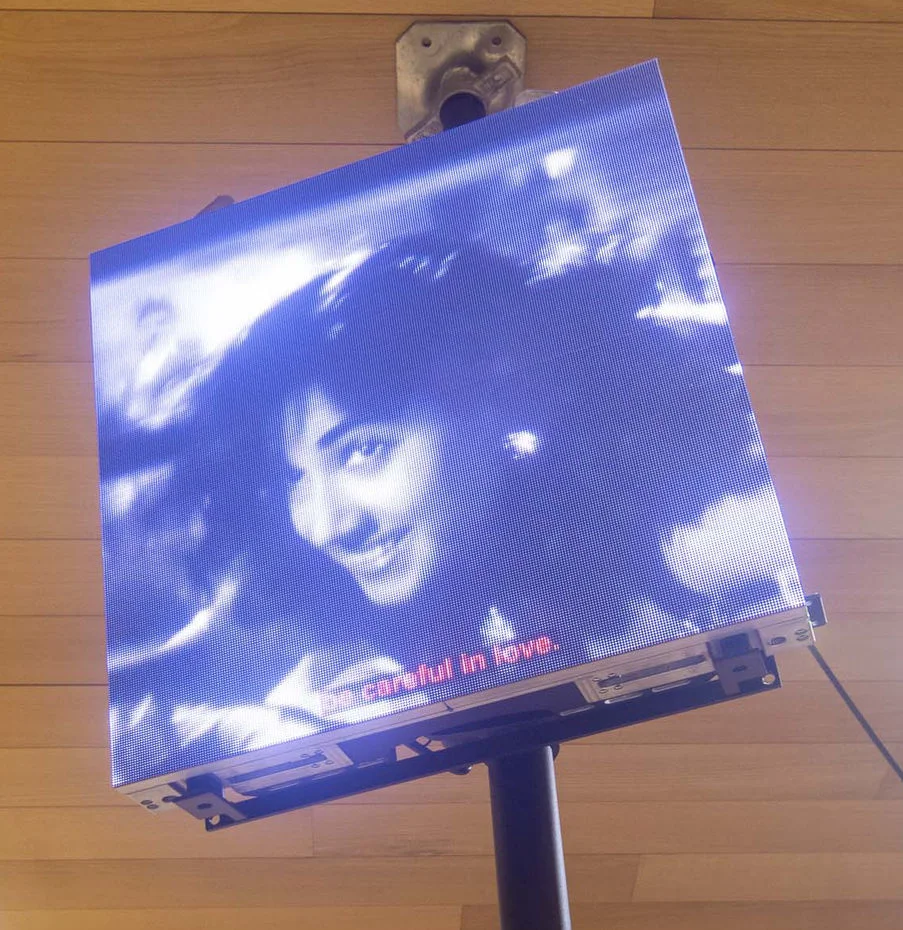
A scenography spreads the action through the museum’s busy transitional spaces, creating pockets in which attention is diverted by passers-by and a catchy Hindi music video. Five acetate etchings on the back wall of a glass elevator mimic wanted posters, showing security images of the performers alongside their sex and race. Above them, an LED screen resembling a train-station display loops a Hindi tune about love and trust. At unpredictable moments it freezes on “ATTENTION”, while a disembodied voice calls “attenzione” and “gifters”.
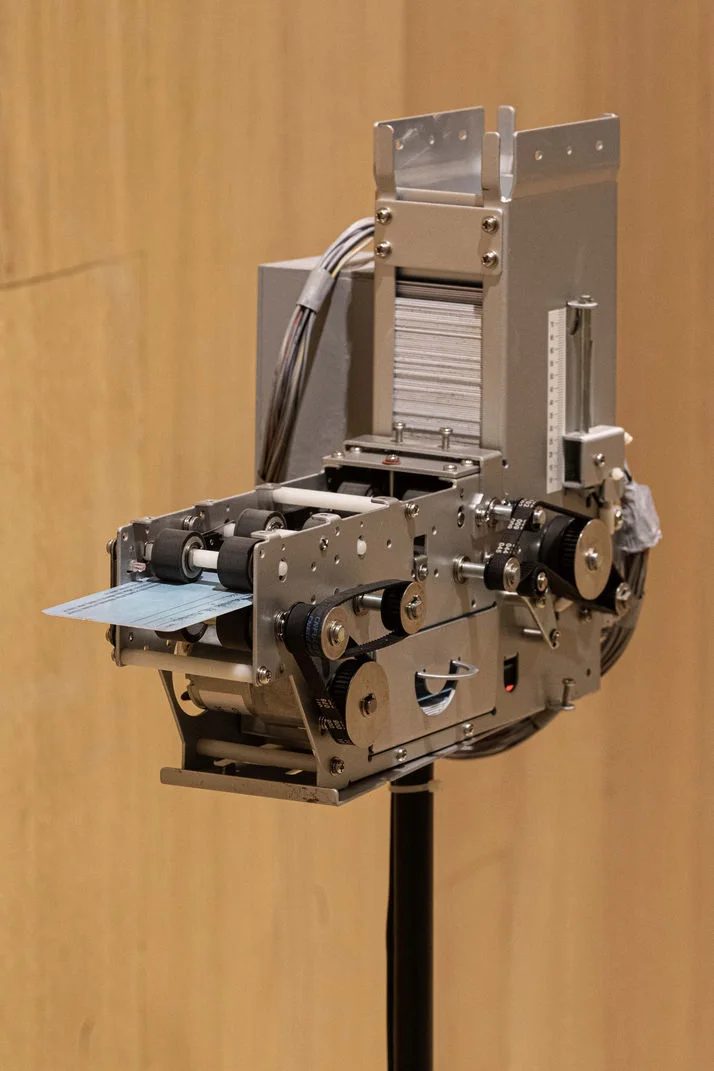
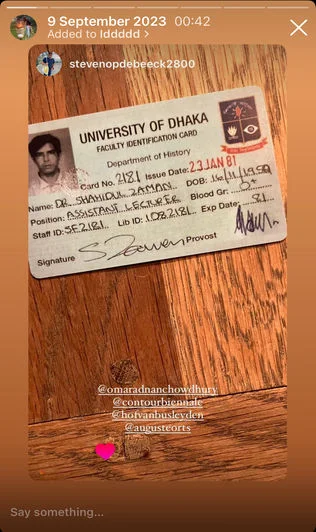
The warning borrows from a viral Italian meme in which a woman associated with the far right calls out alleged pickpockets in Venice. Disassembled machinery, acting as a “fence” for the gifters, dispenses a facsimile of a University of Dhaka identification card for Dr Shahidul Zaman. Cameras catch the performers only in fragments; the cards later resurface in visitors’ posts, turning each encounter into both evidence and misrecognition.
Faydabad For-Sale (2023) Ke Ba Kahara, Dhaka
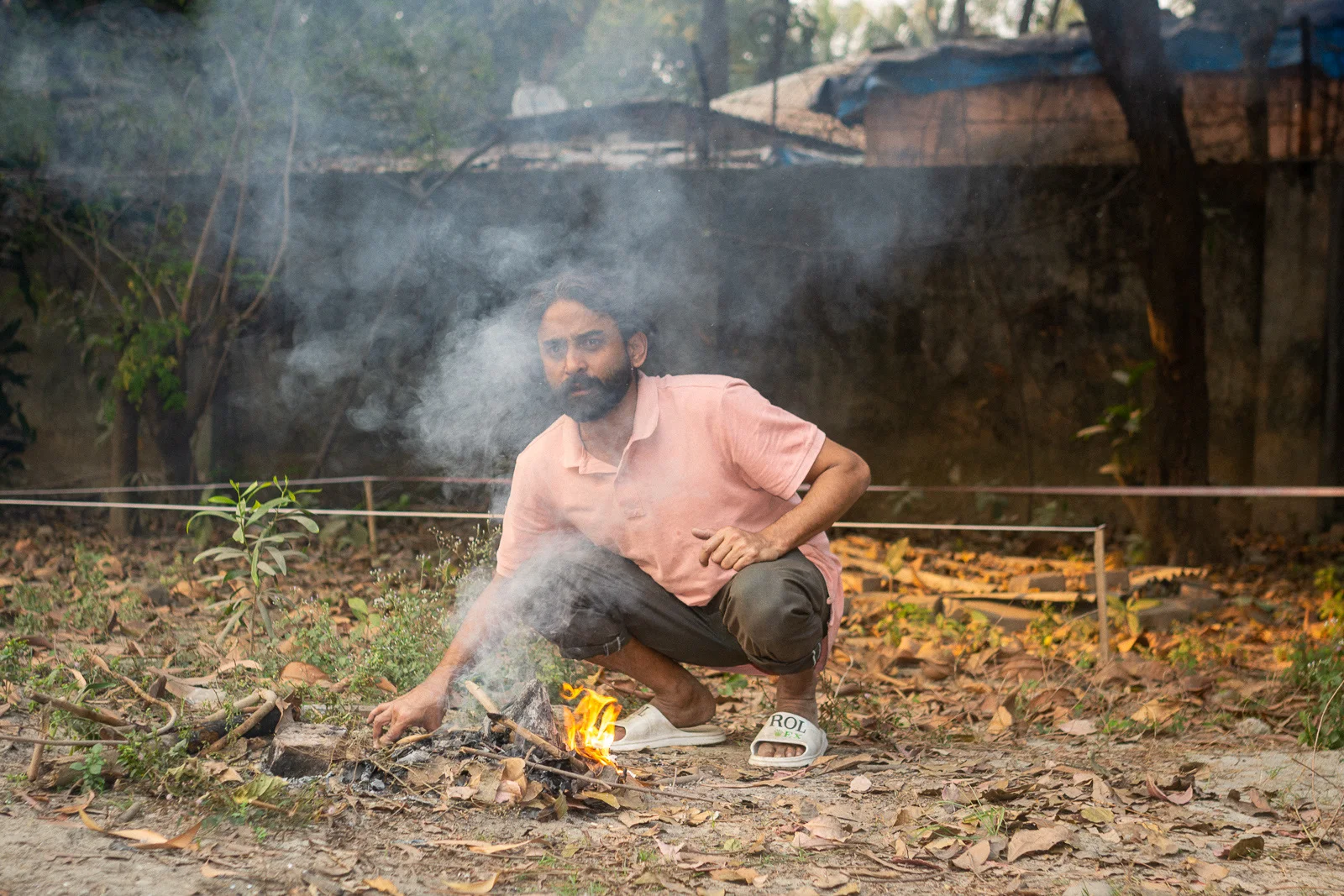
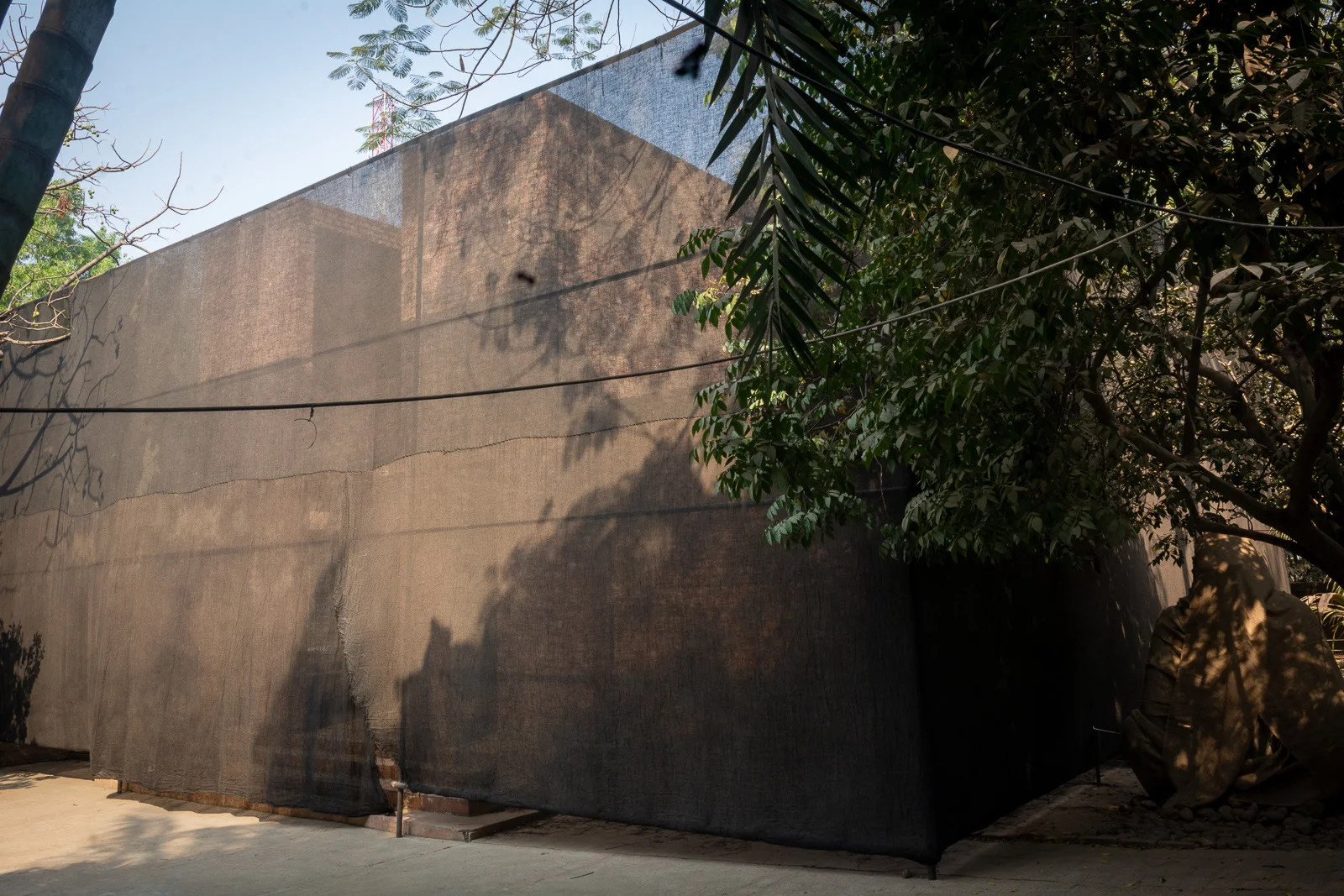
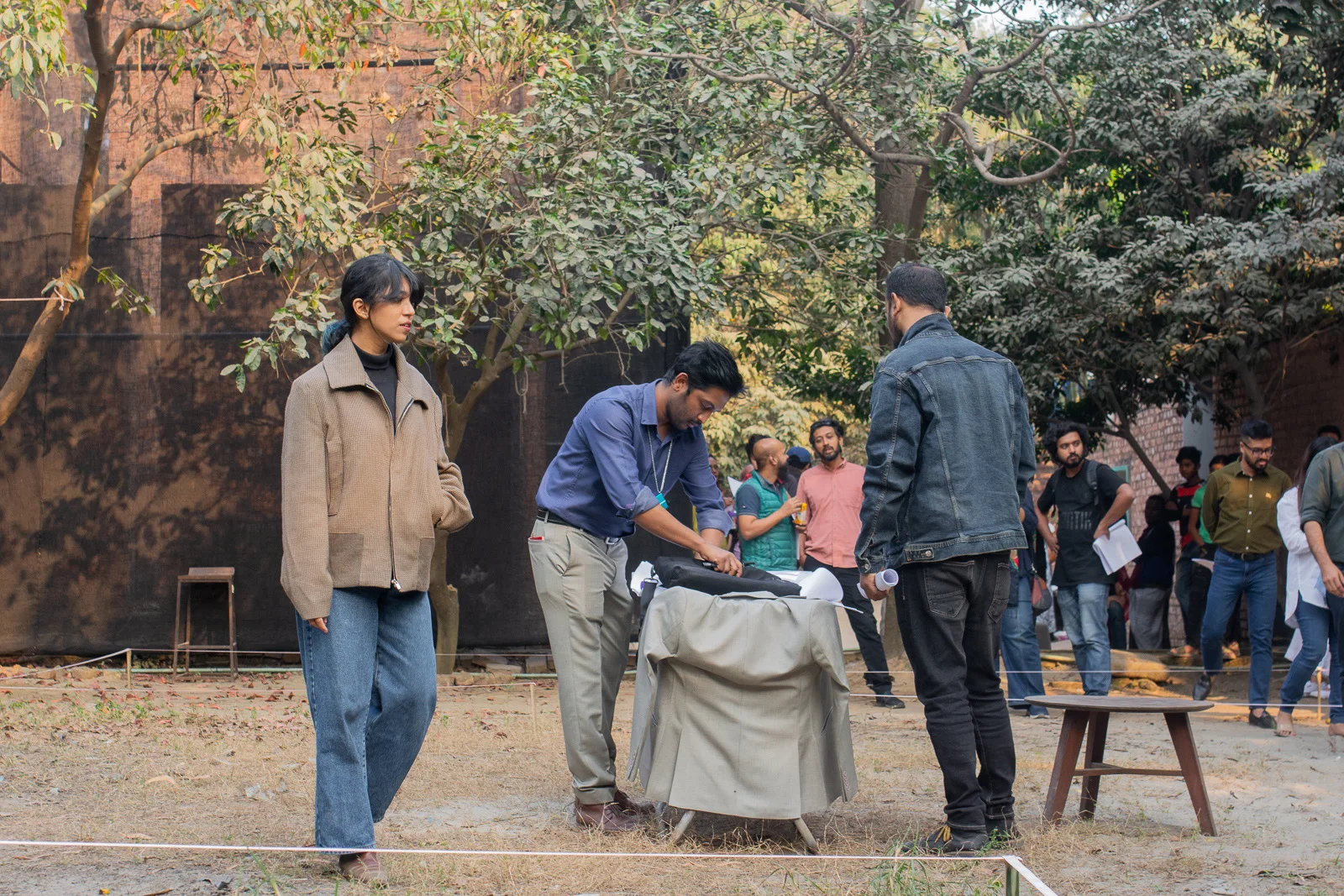
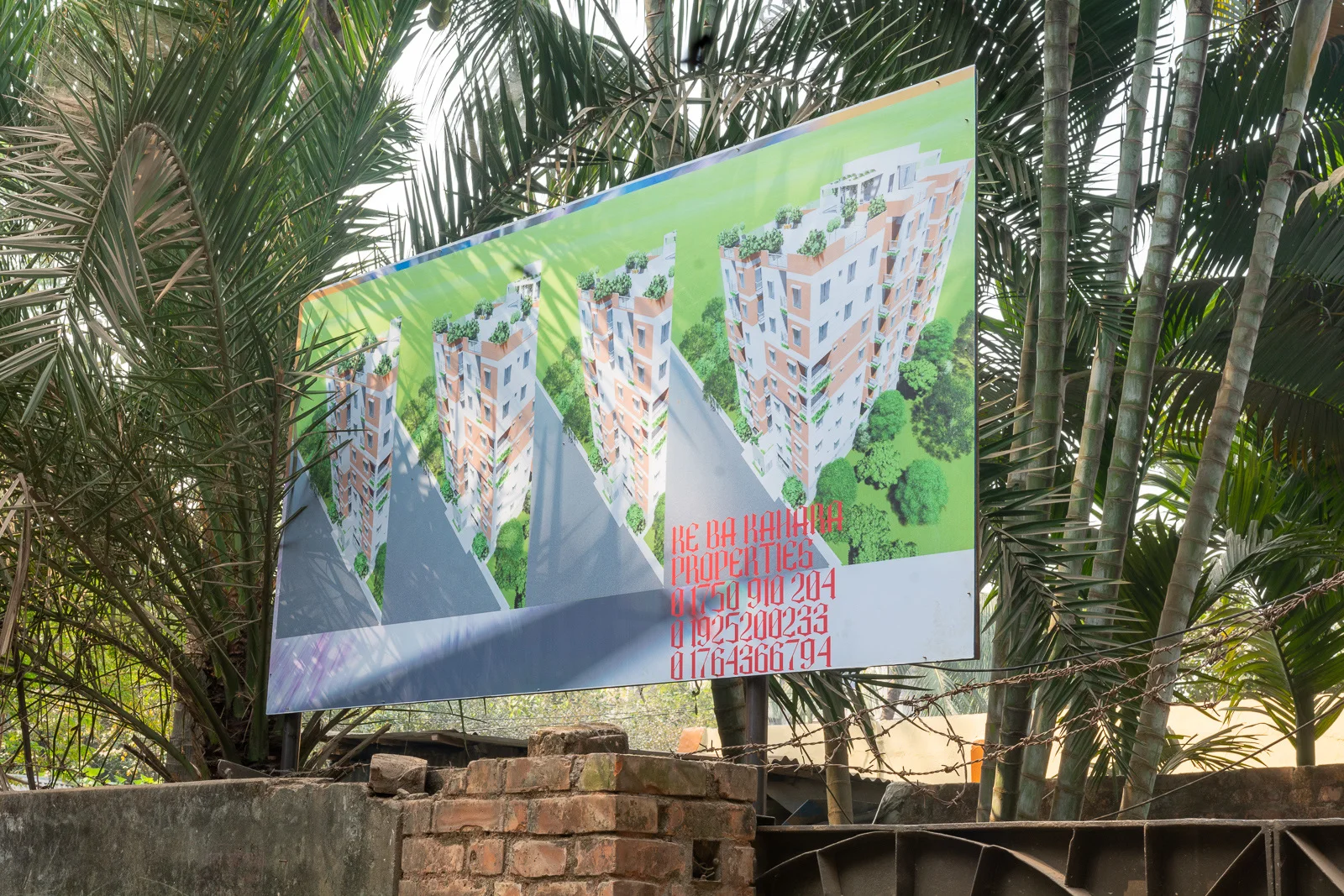
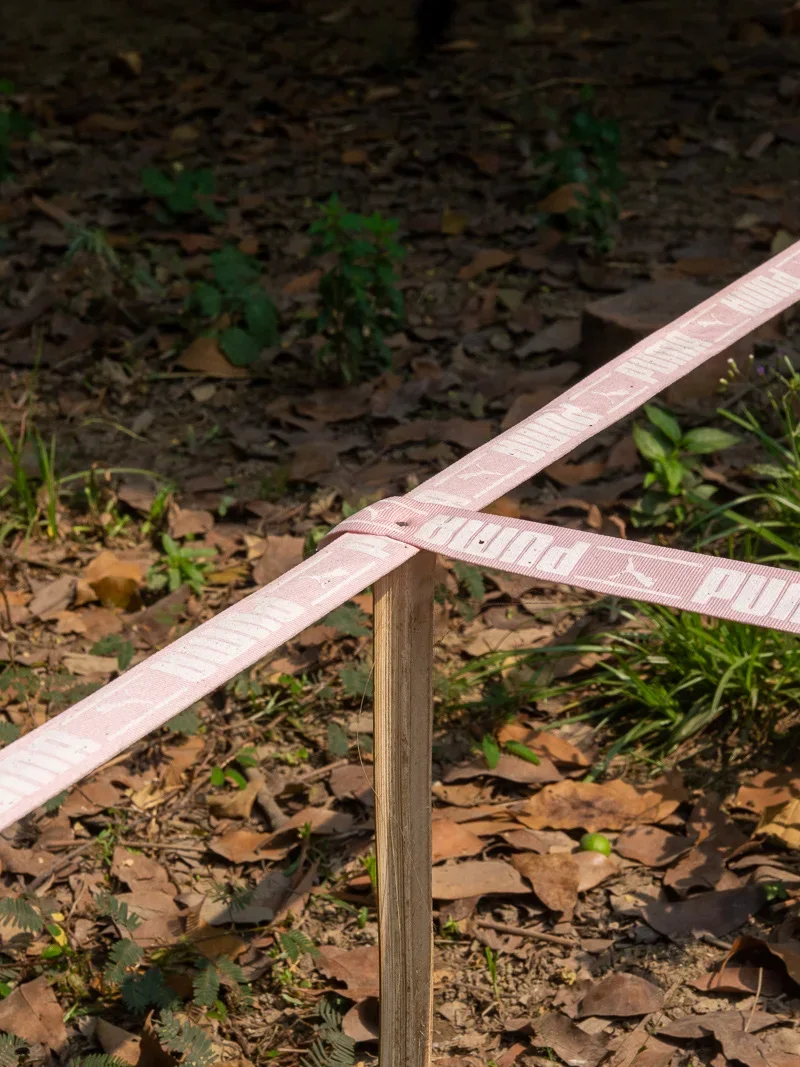
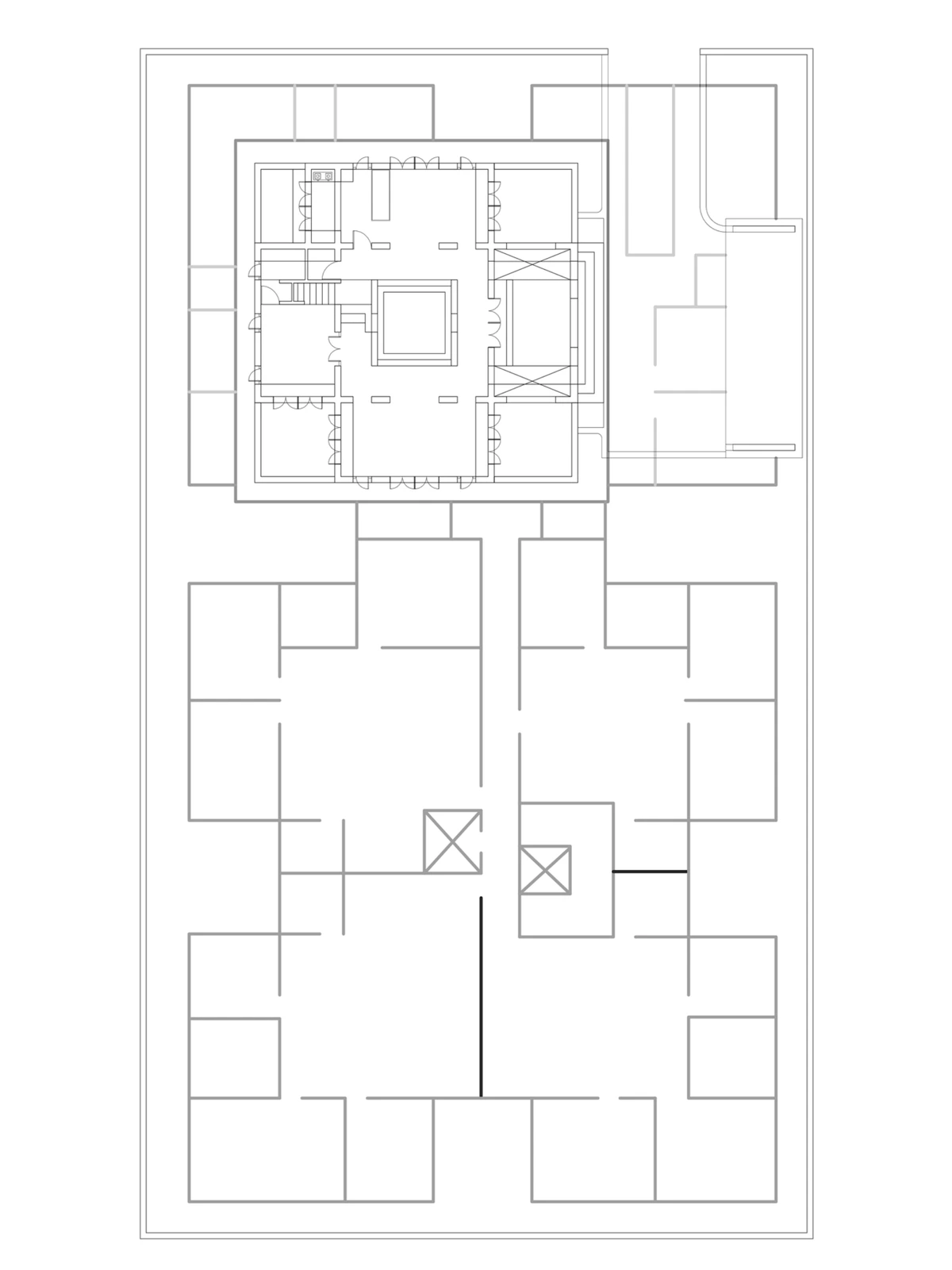
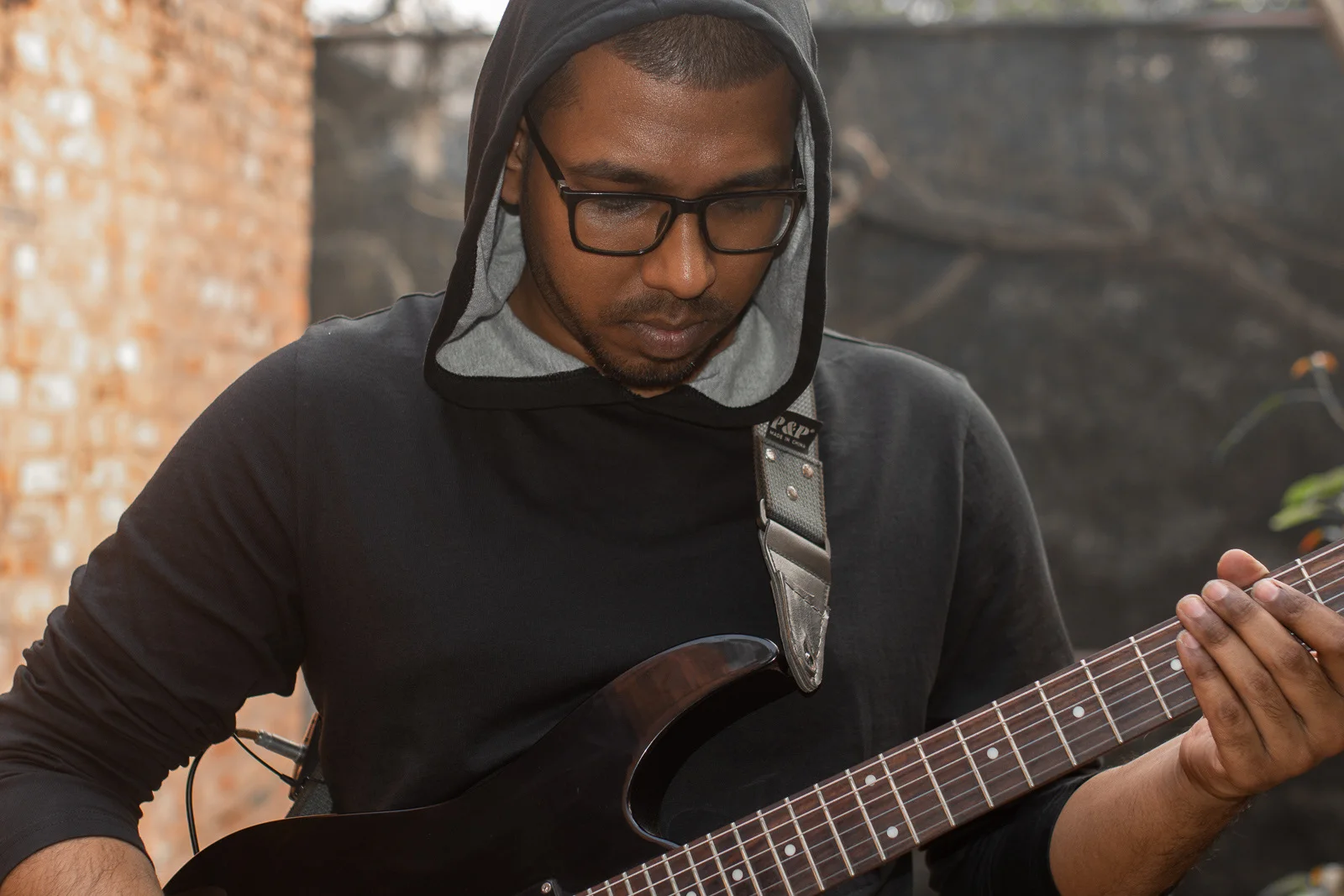
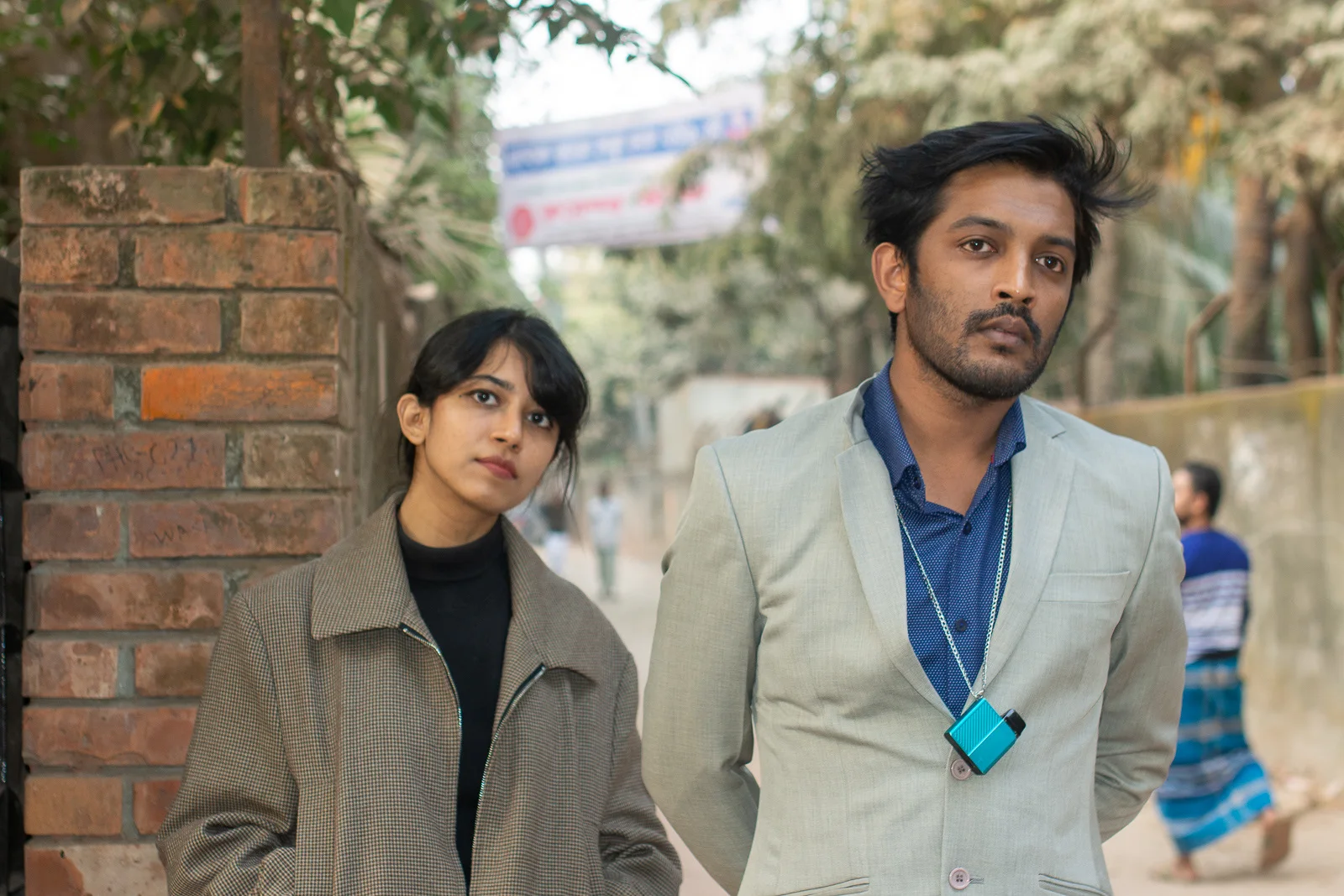
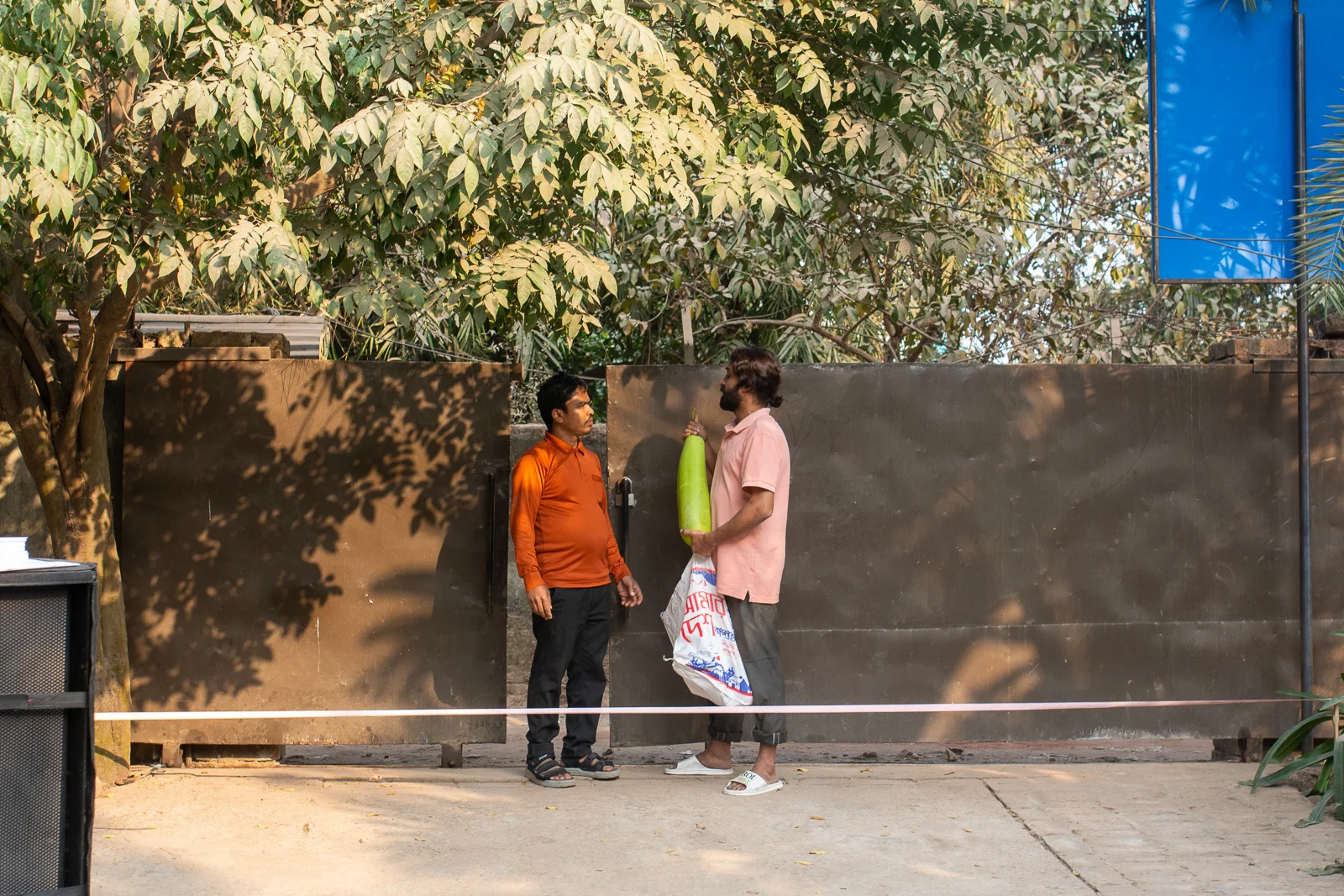
At one of architect Marina Tabassum’s earliest buildings, a looped performance unfolds through architectural interventions, video projections and death-metal music. Five performers move in synchrony with a guitarist’s death-metal score to explore the tangled history of an imported modernism and its obsolescence amid Bangladesh’s urban transformation.
Faydabad For-Sale (2023) is the second performance and installation staged at Tabassum’s abandoned early modernist property on the edge of Dhaka. Stripped of its fittings and enclosed in a metal frame and black hessian shroud, the building awaits demolition. In its place, a real-estate company proposes a contemporary block of forty flats. Pink Puma tape traces the complete replacement building at full scale across the house and grounds, intersecting the performers’ routes.
A salesman, an architect and a caretaker attempt to make a final sale. As the salesman inflates costs, the architect prepares to leave for Switzerland and the caretaker weighs his displacement against the promise of new homes and business. Their choreography is timed by a shadowy guitarist on the roof, whose death-metal compositions wash over the building through three enormous speakers. The performers follow separate paths, sometimes converging as scenes unfold simultaneously throughout the site. At the end, they return to their starting positions and begin again. Repeated four times, the work reveals different moments with each iteration while ensuring something else is always missed.
Performed in Bangla, the work is accompanied by a printed translation followed like a libretto. Upstairs, a video shows an early reading by the actors; downstairs, a large projection presents the first performance in the series, staged years earlier.
Echo, Saturn (II)—The Courts (2021) Annet Gelink Gallery, Amsterdam
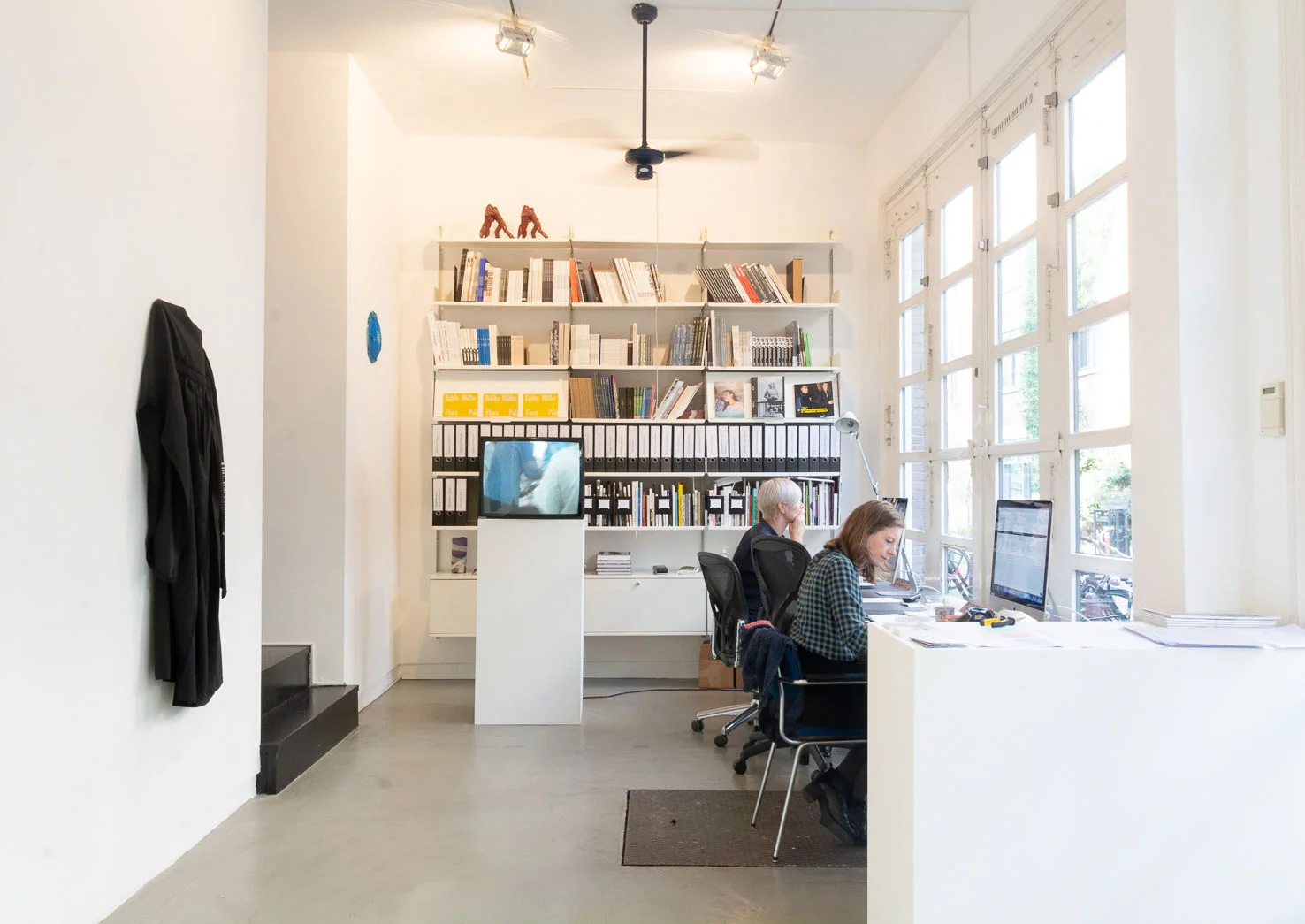
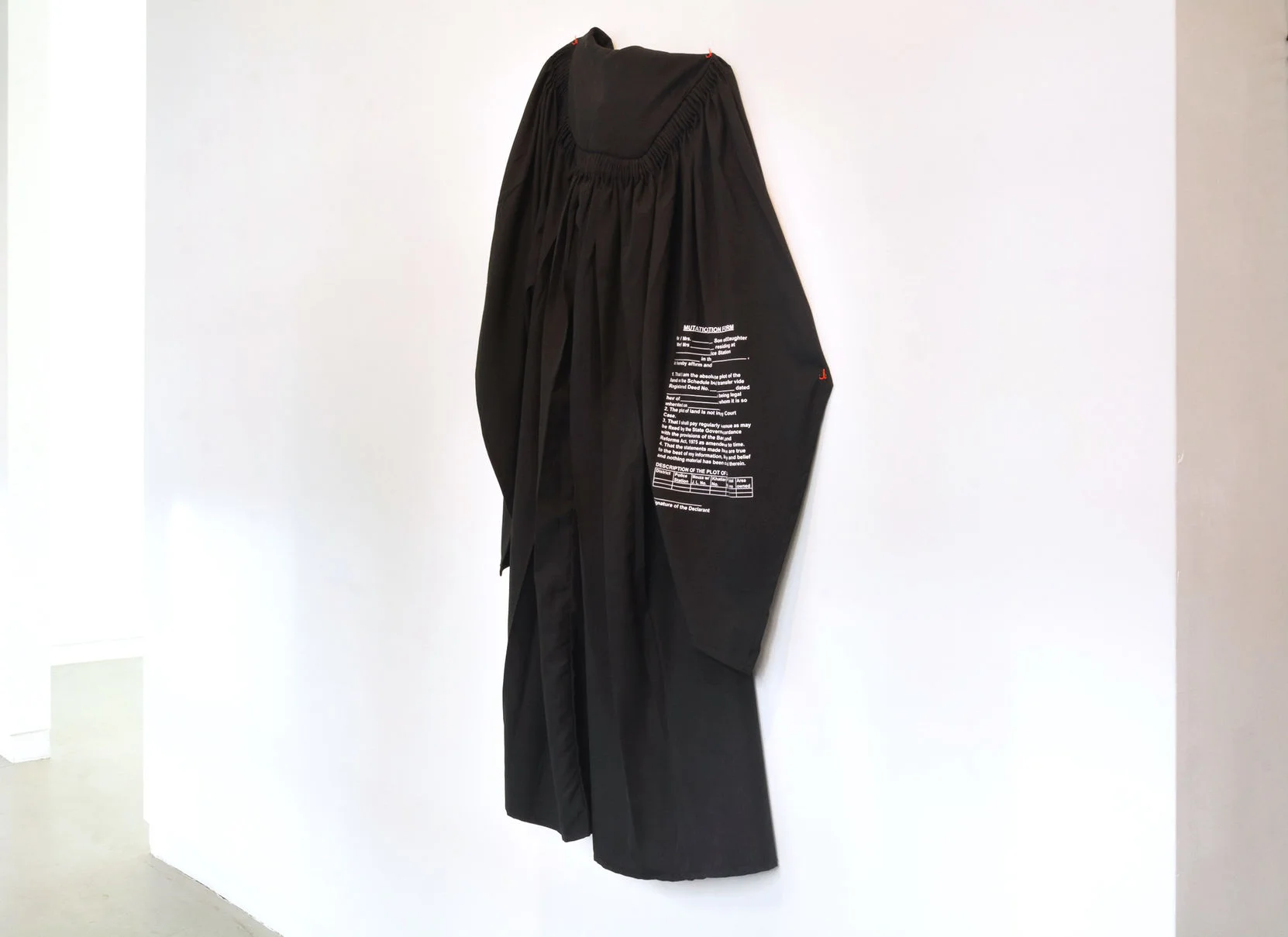
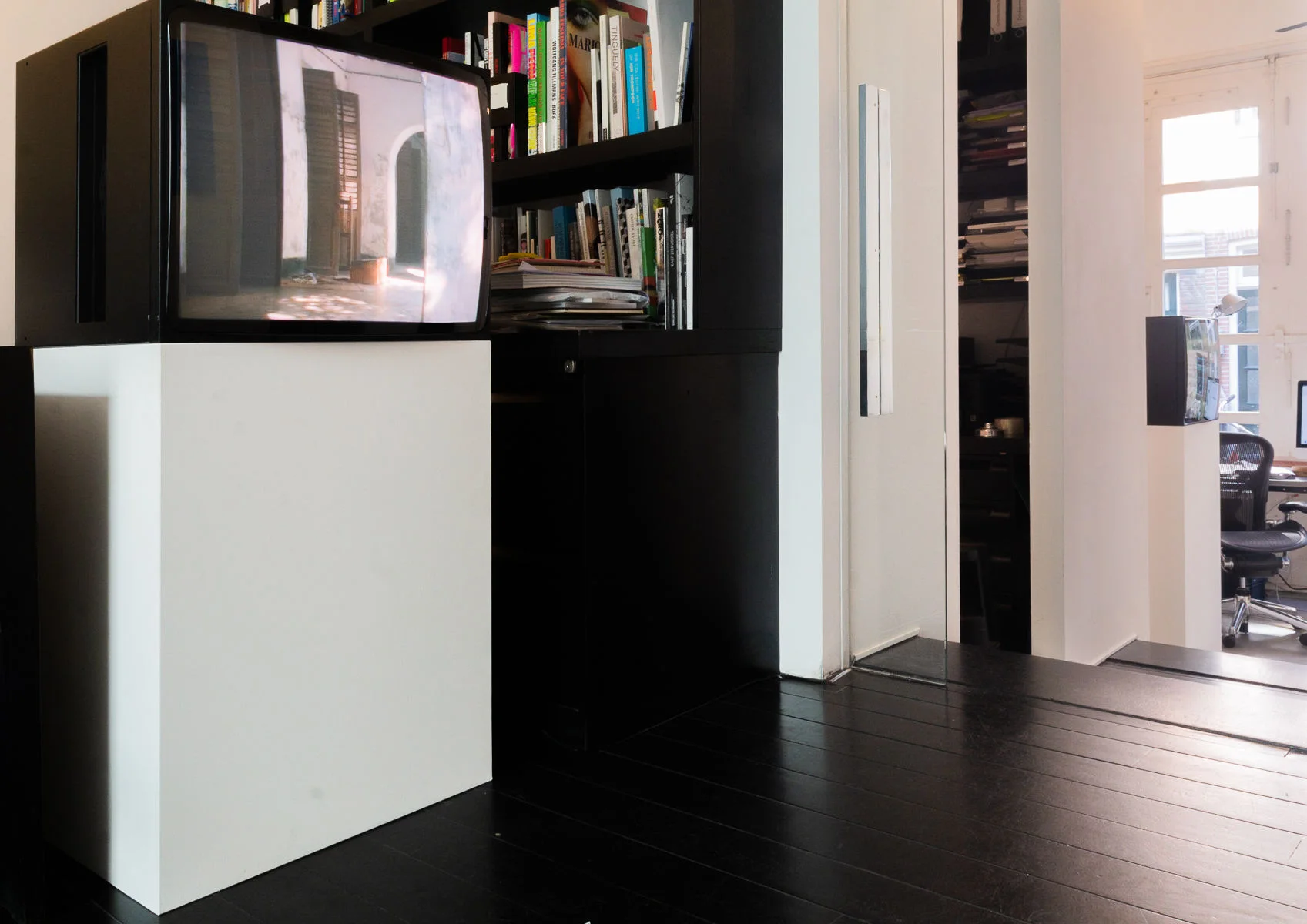
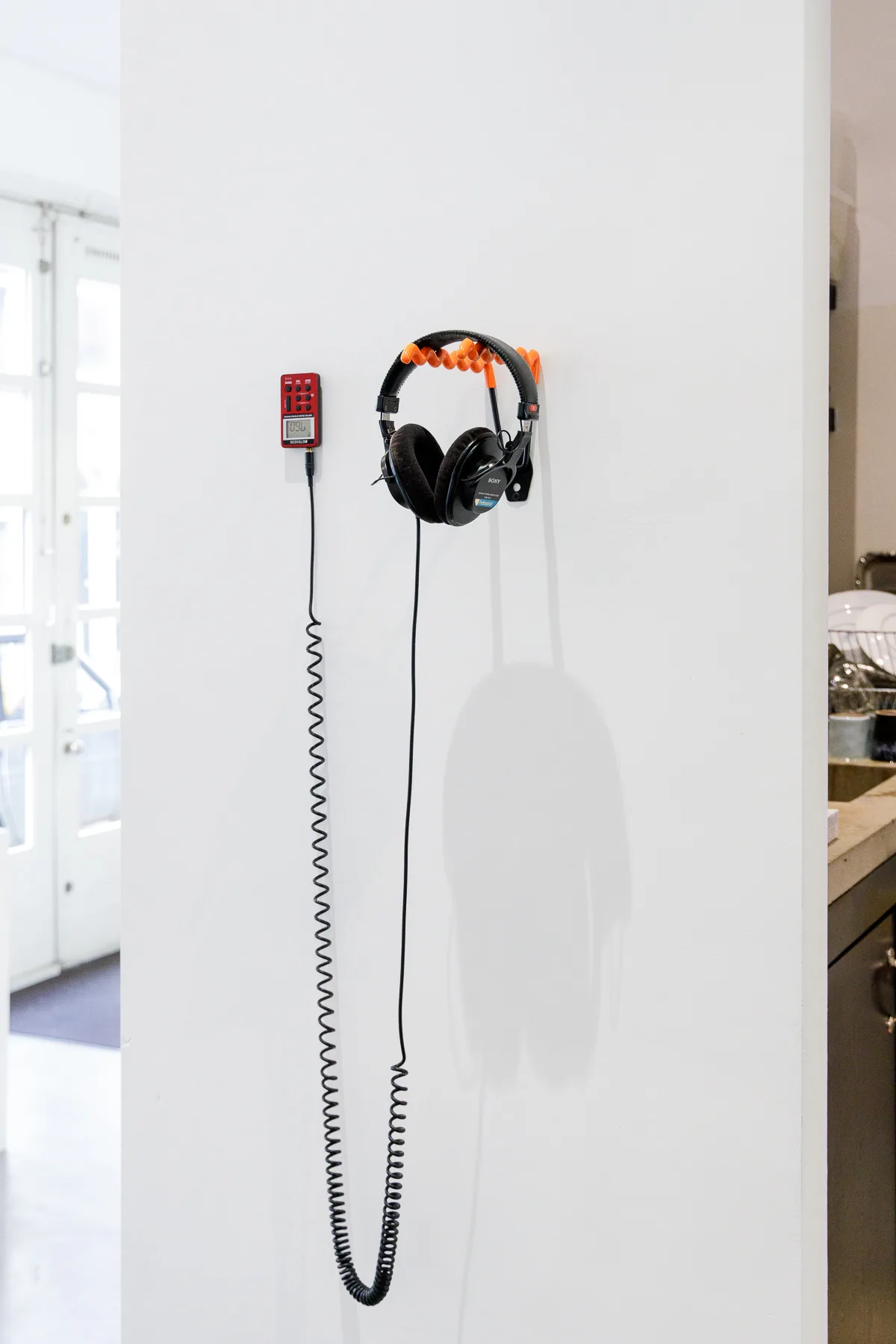
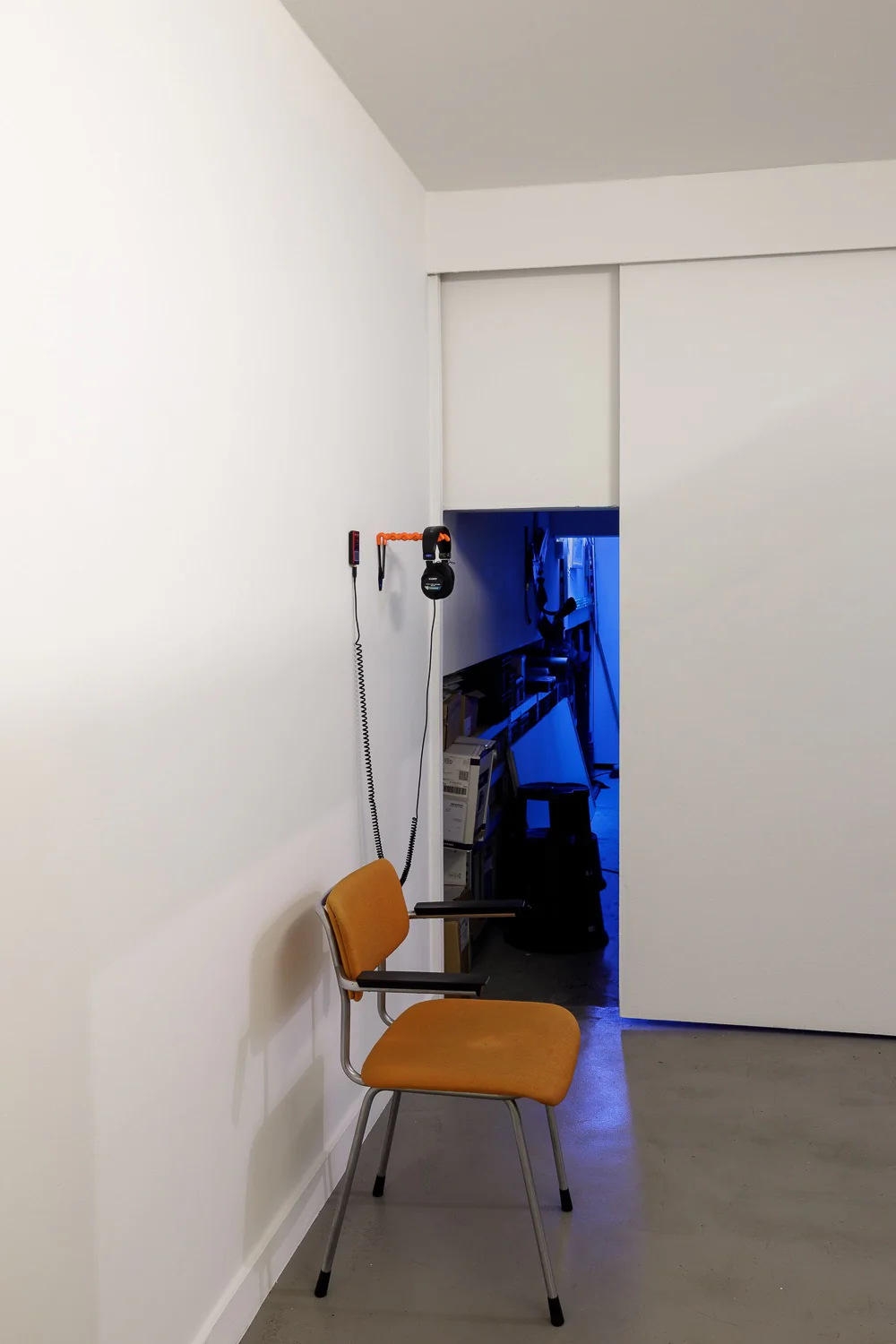
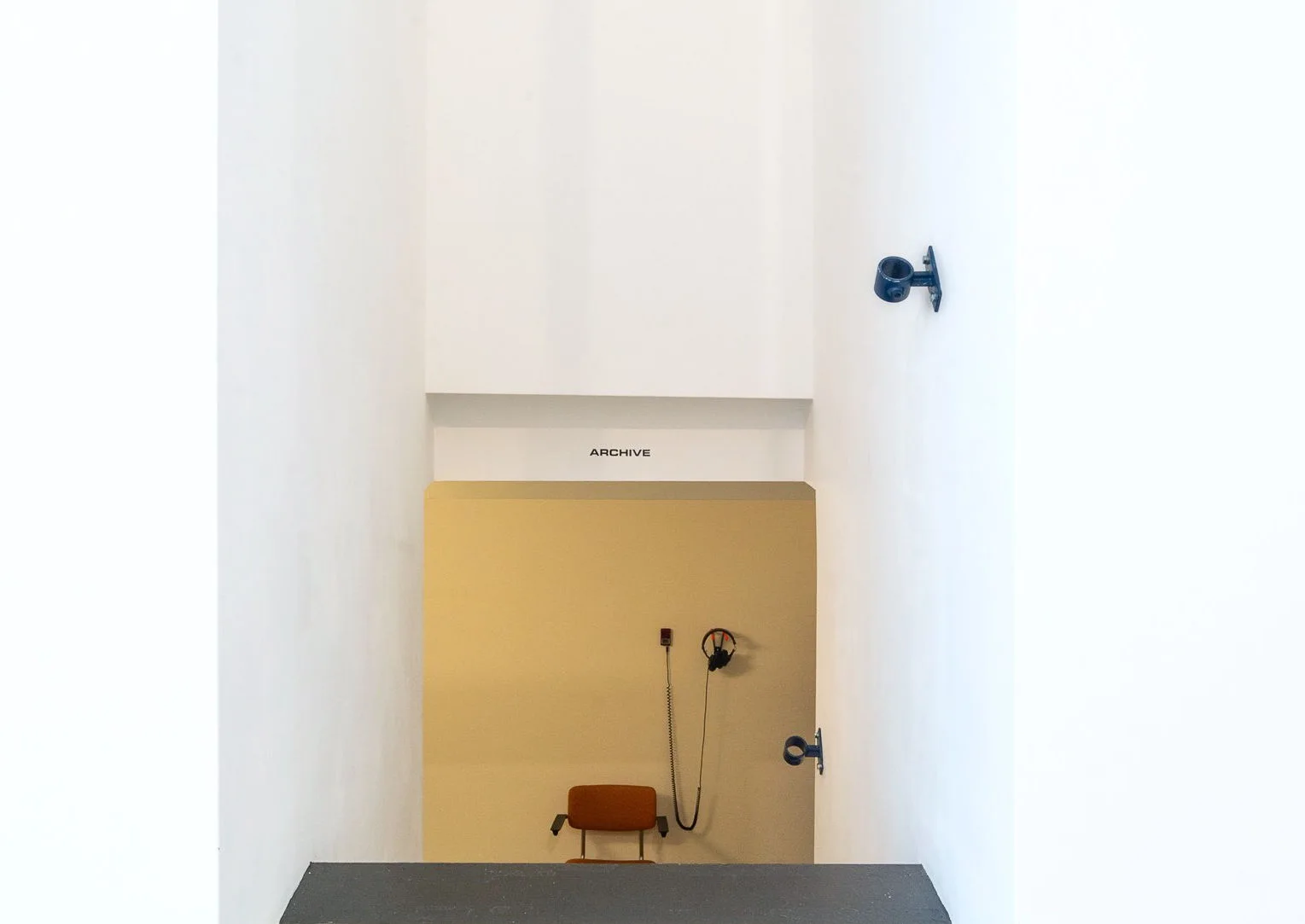
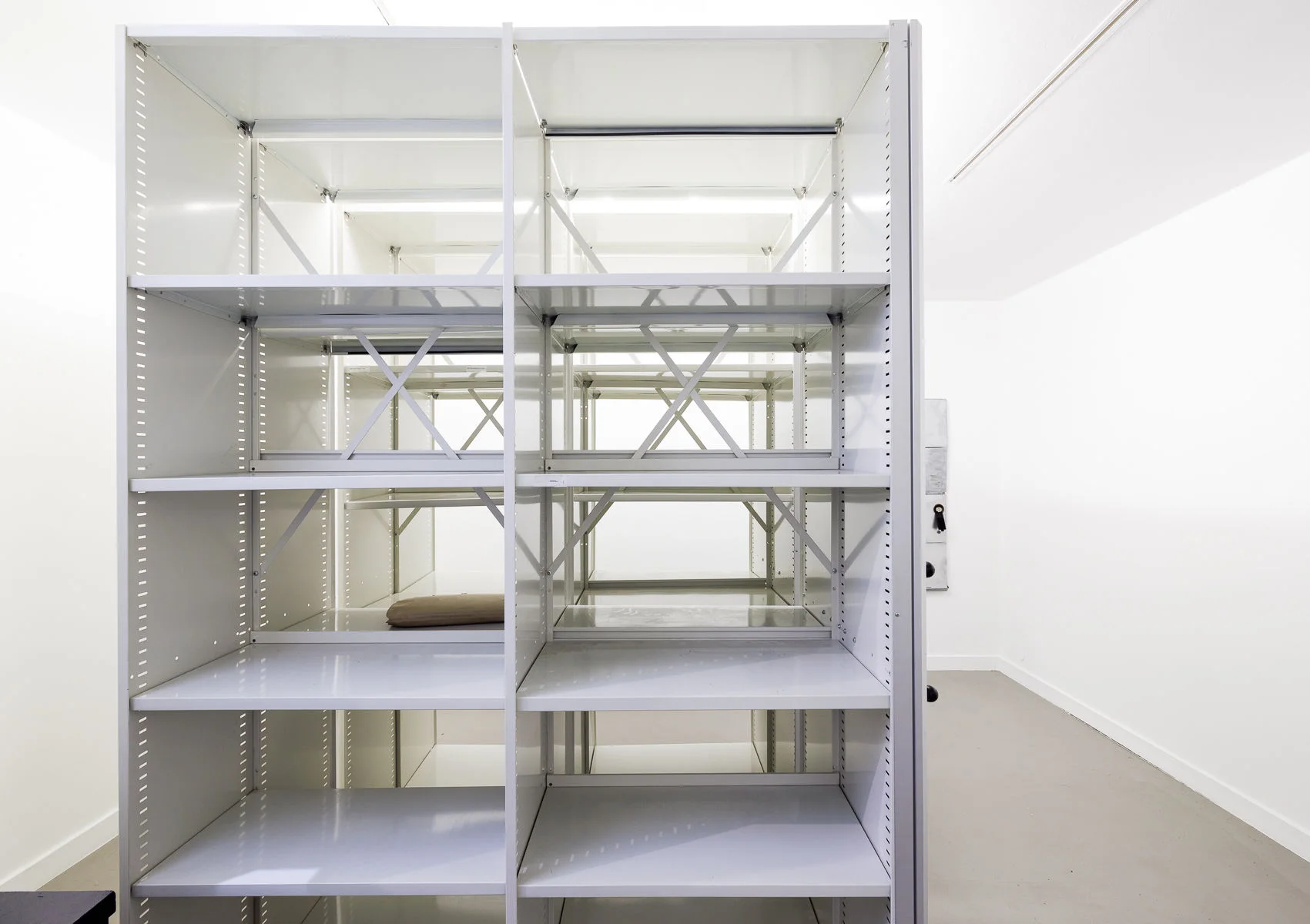
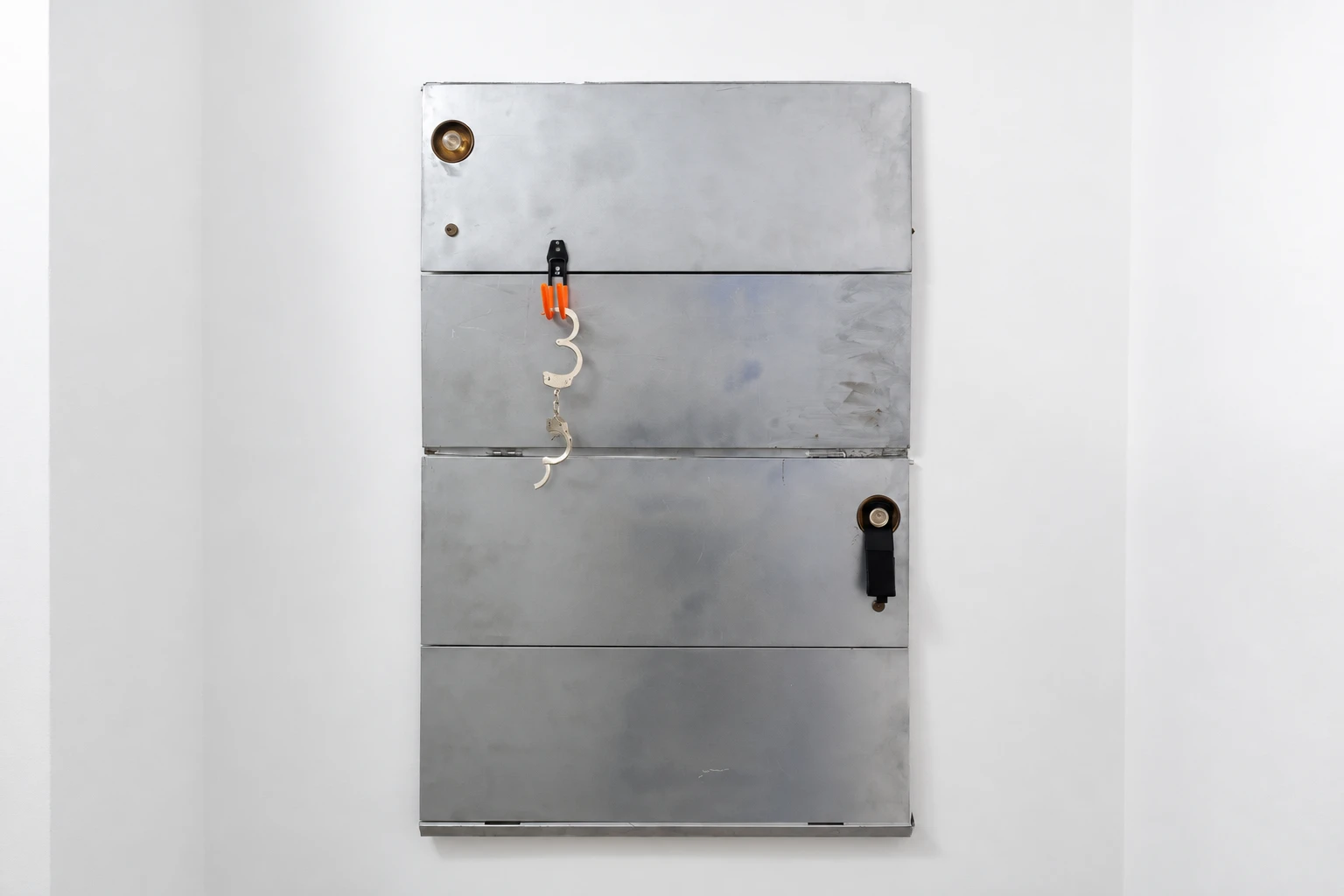
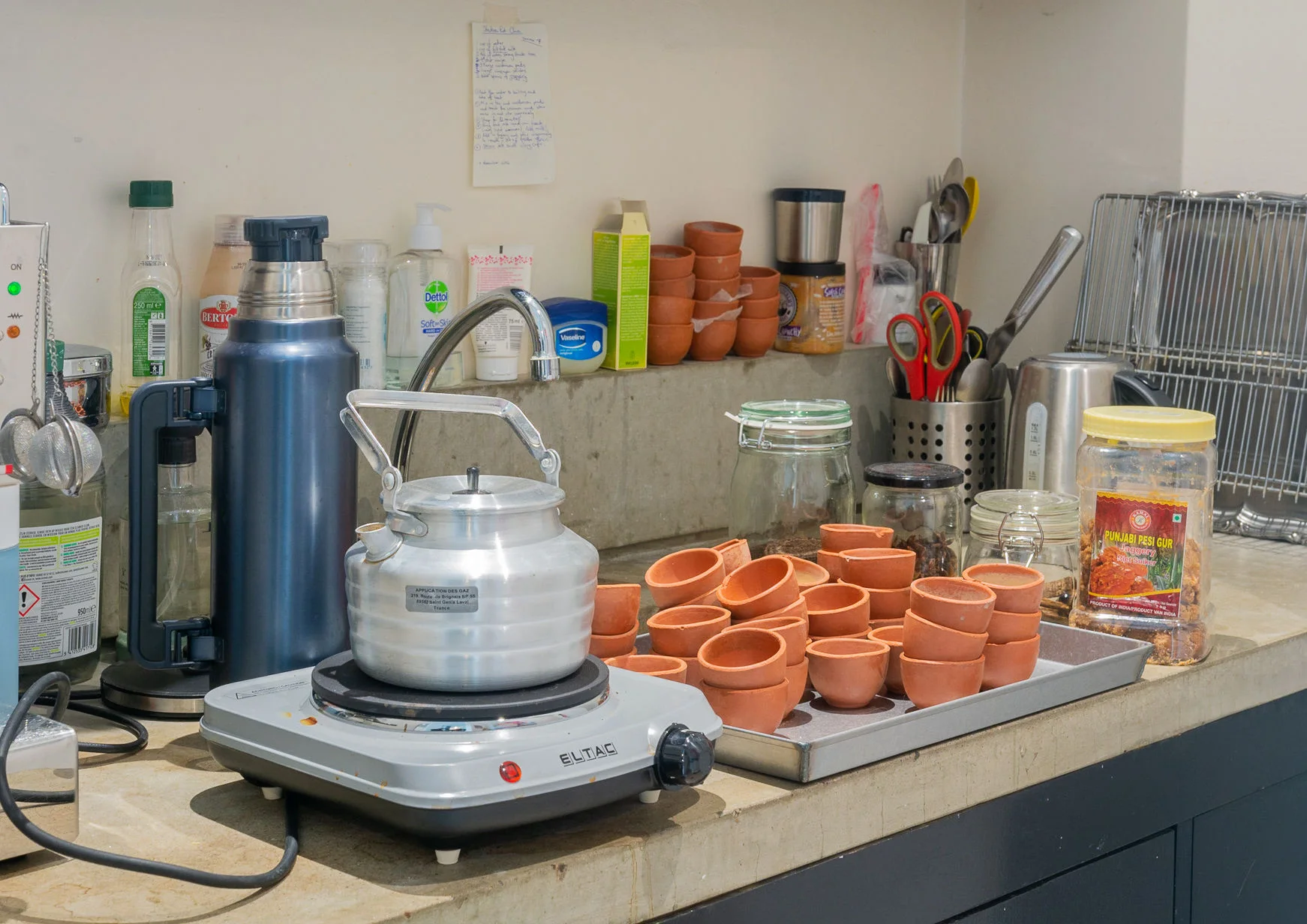
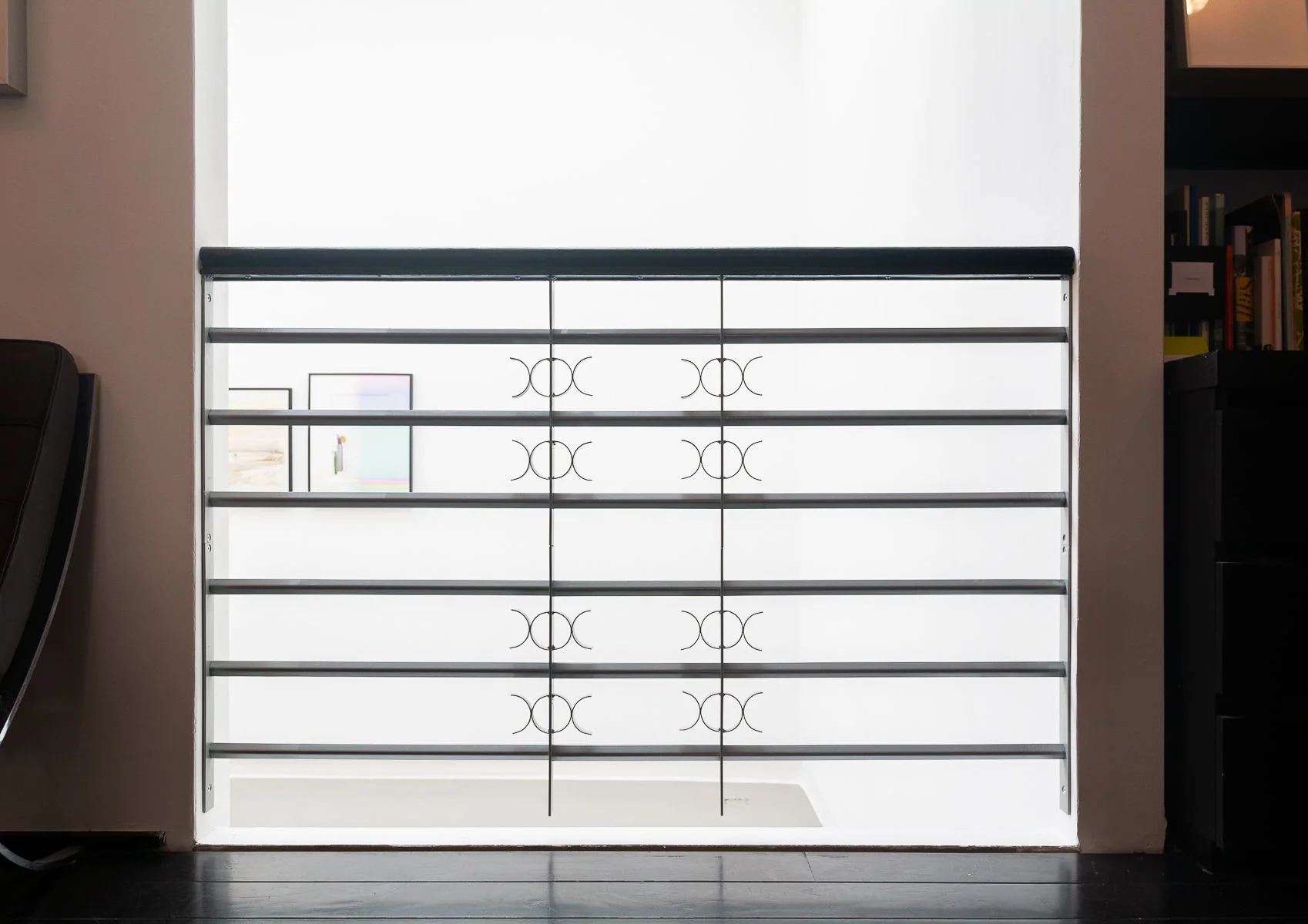
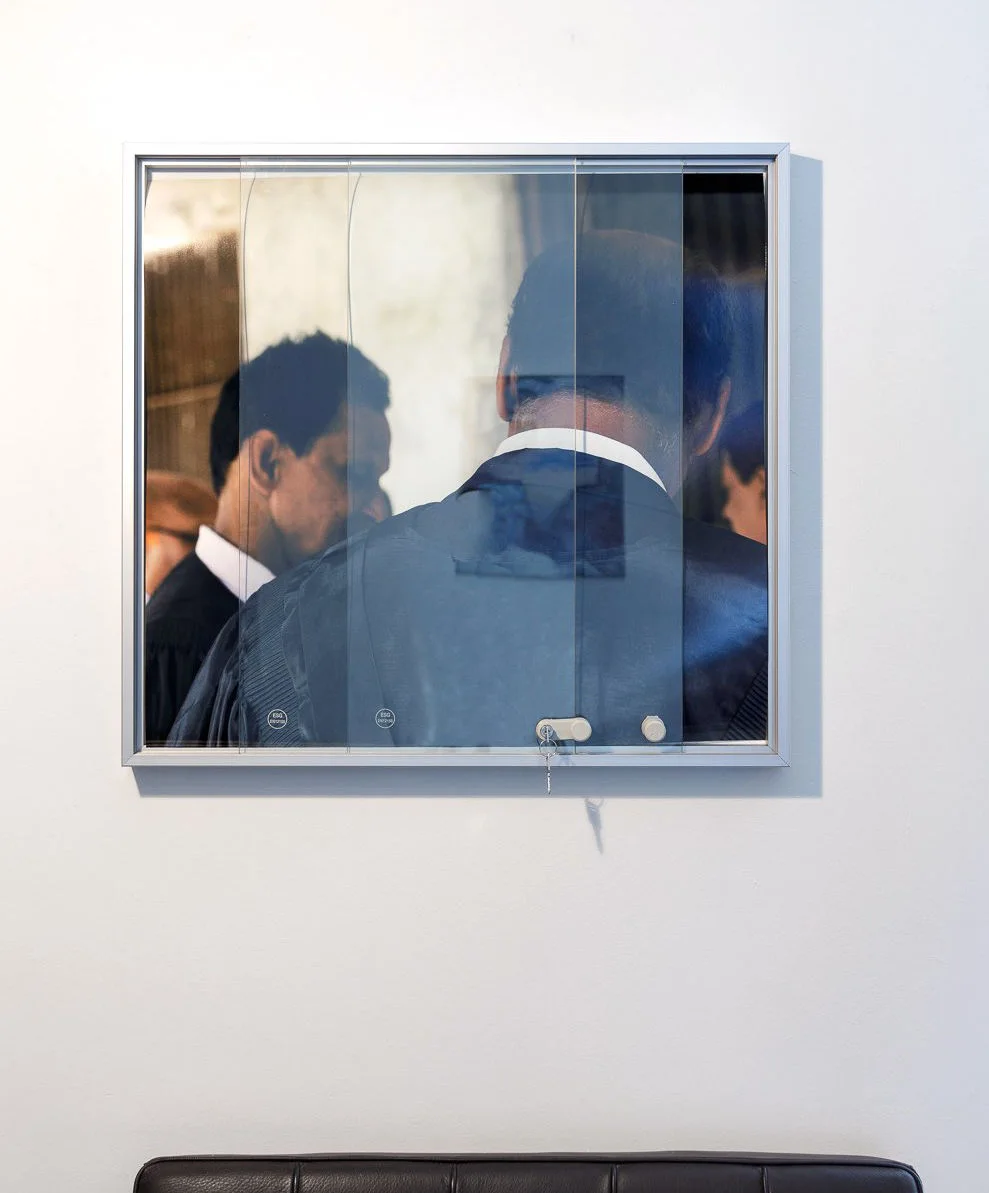
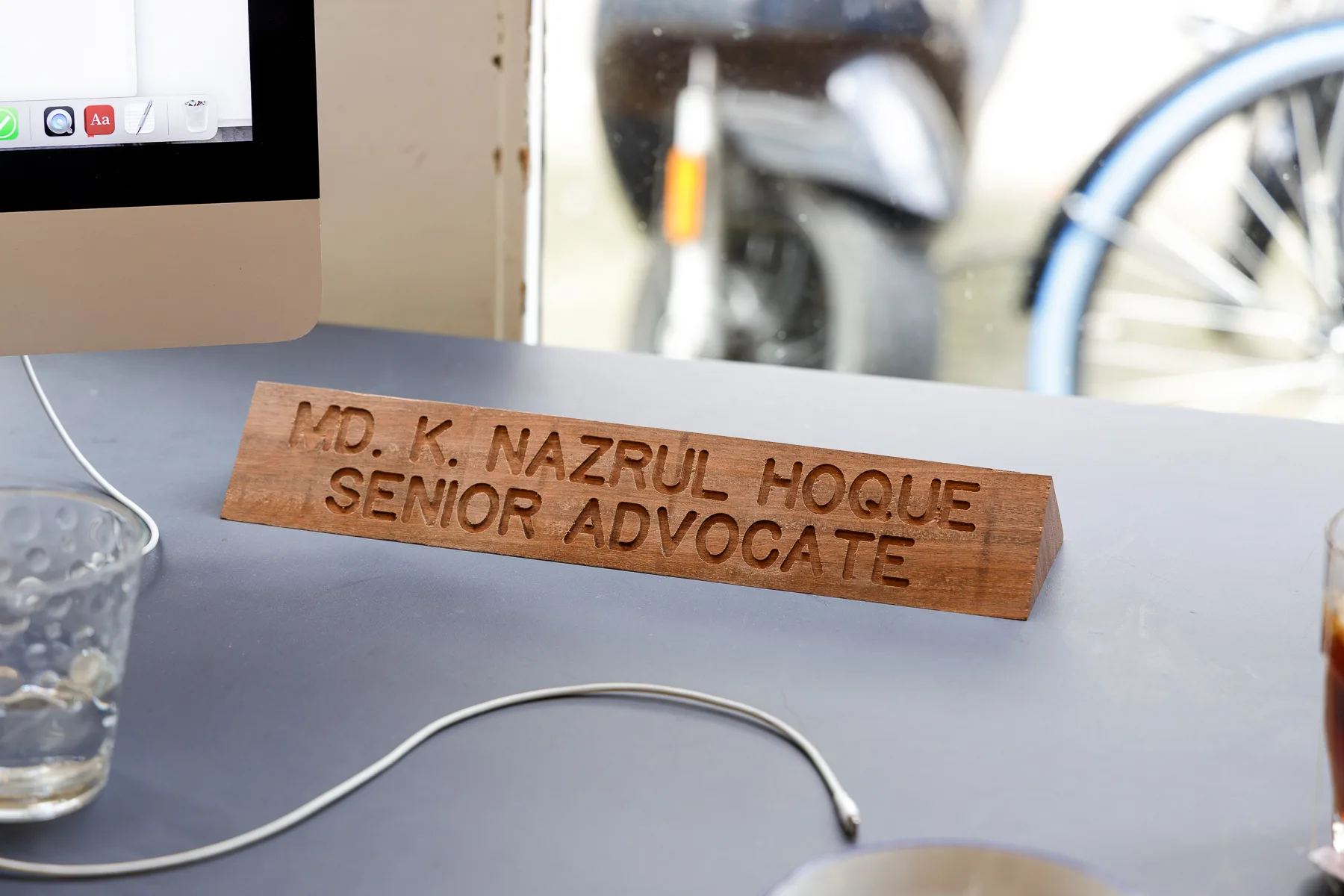
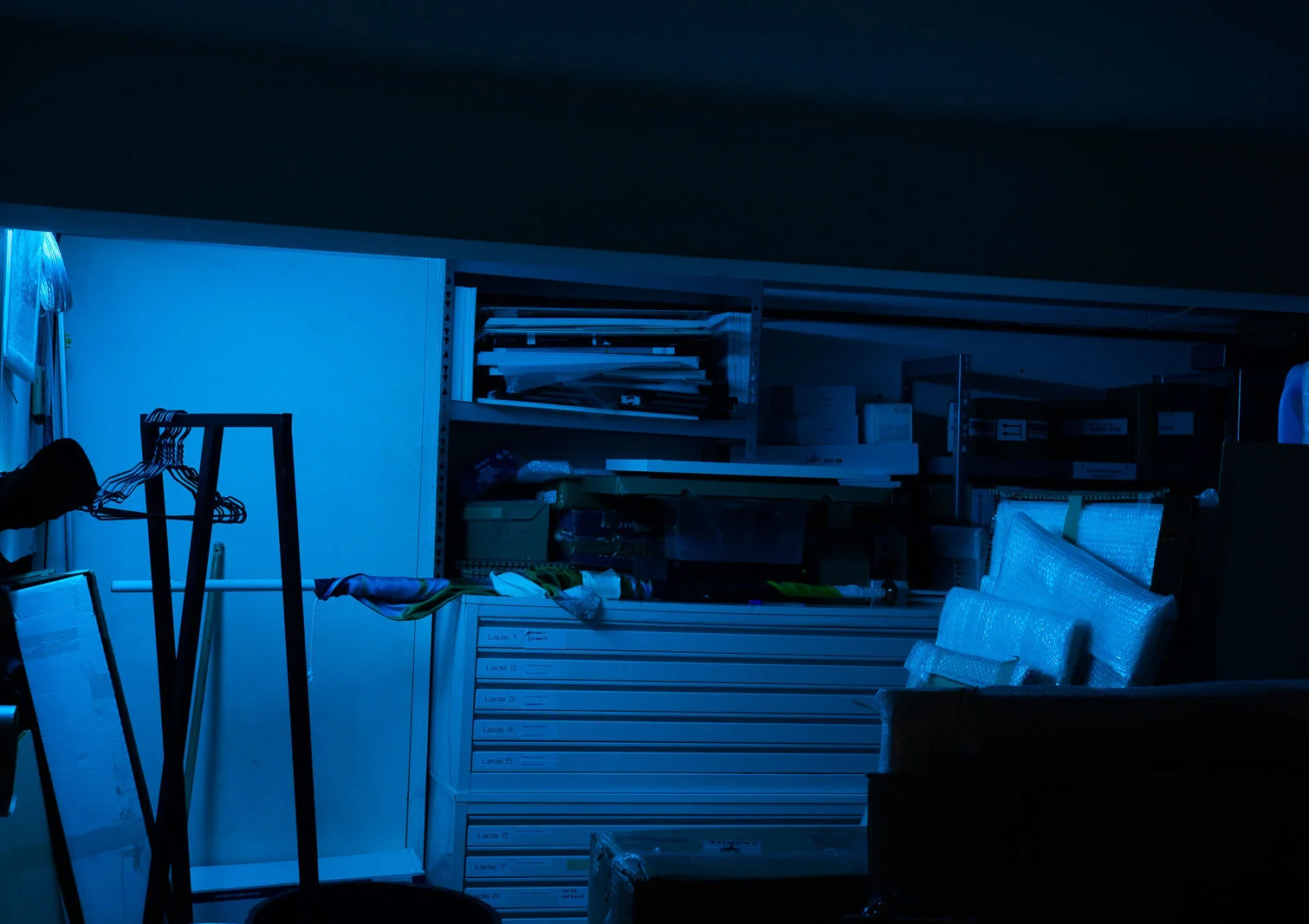
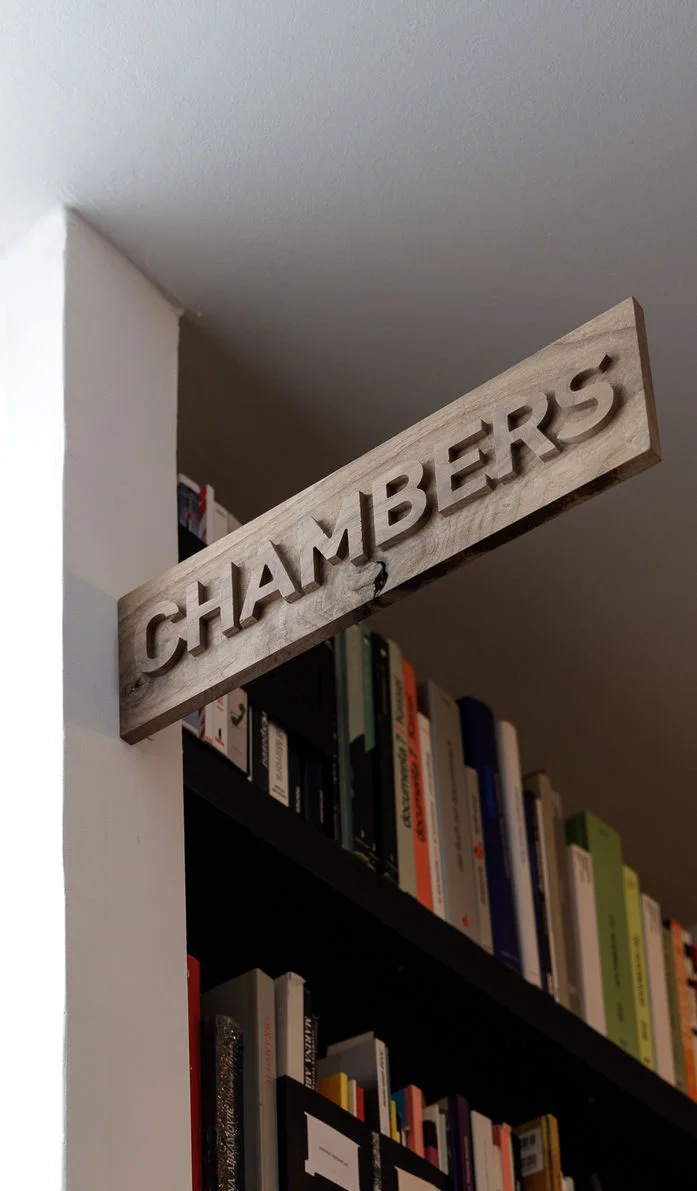
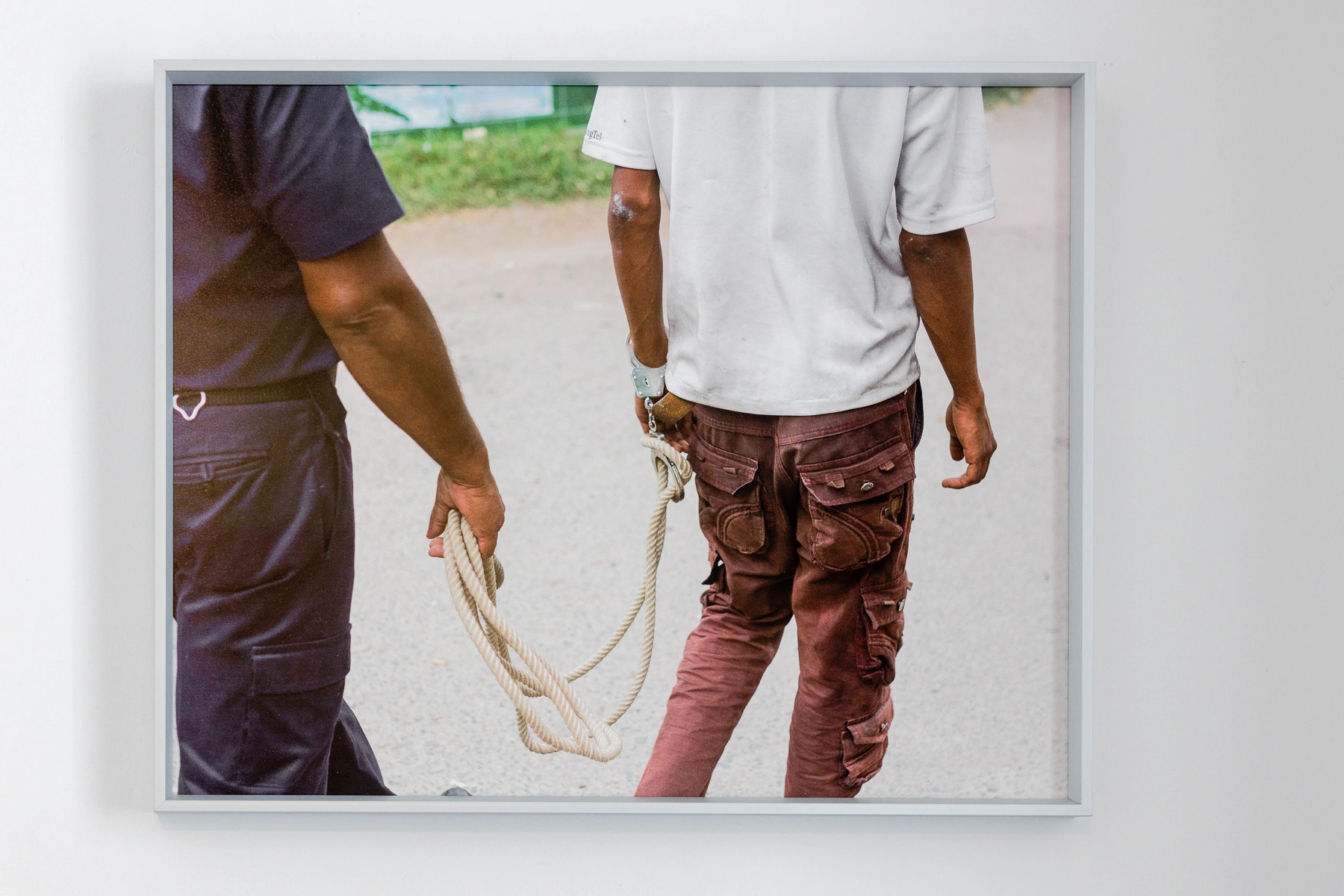
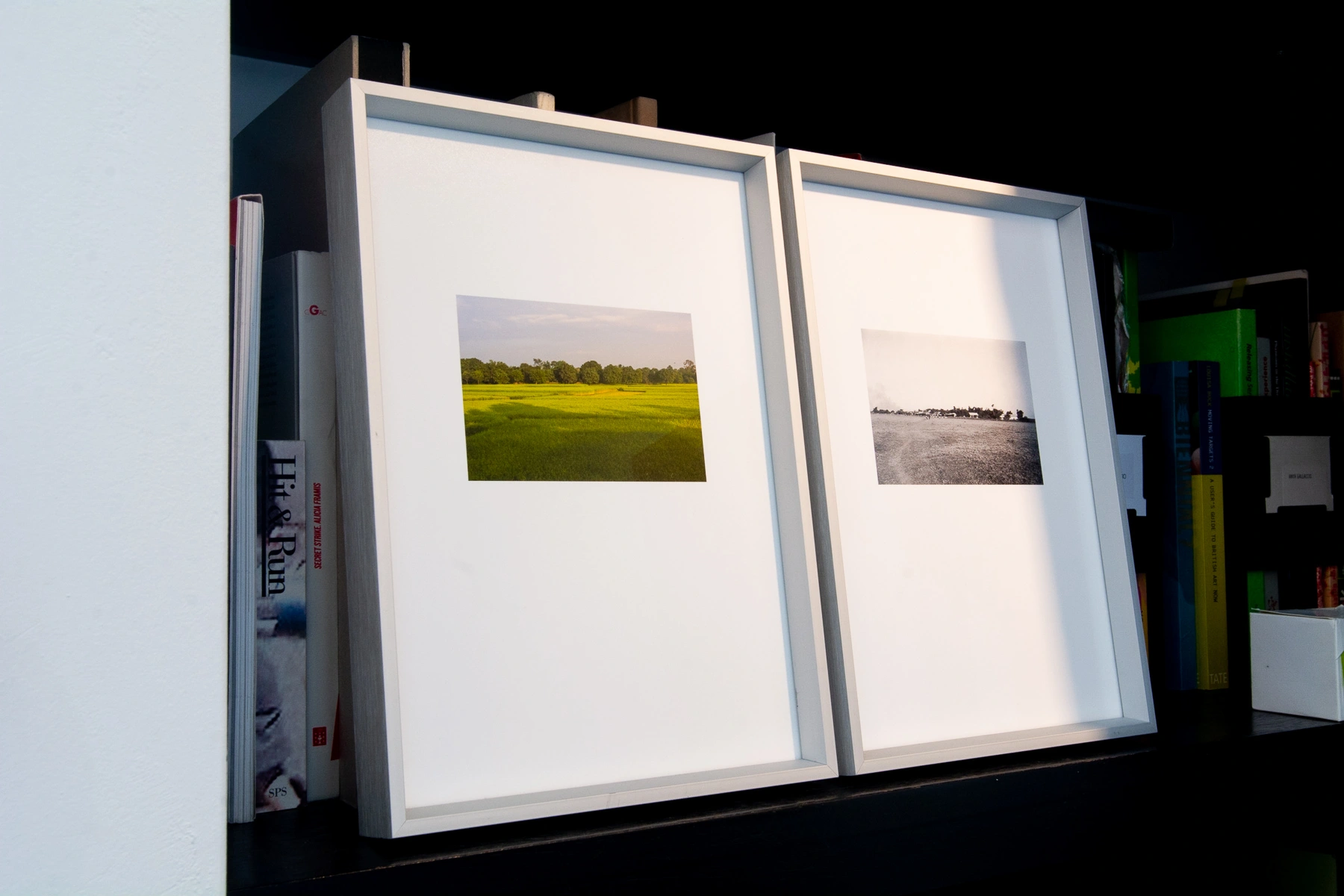
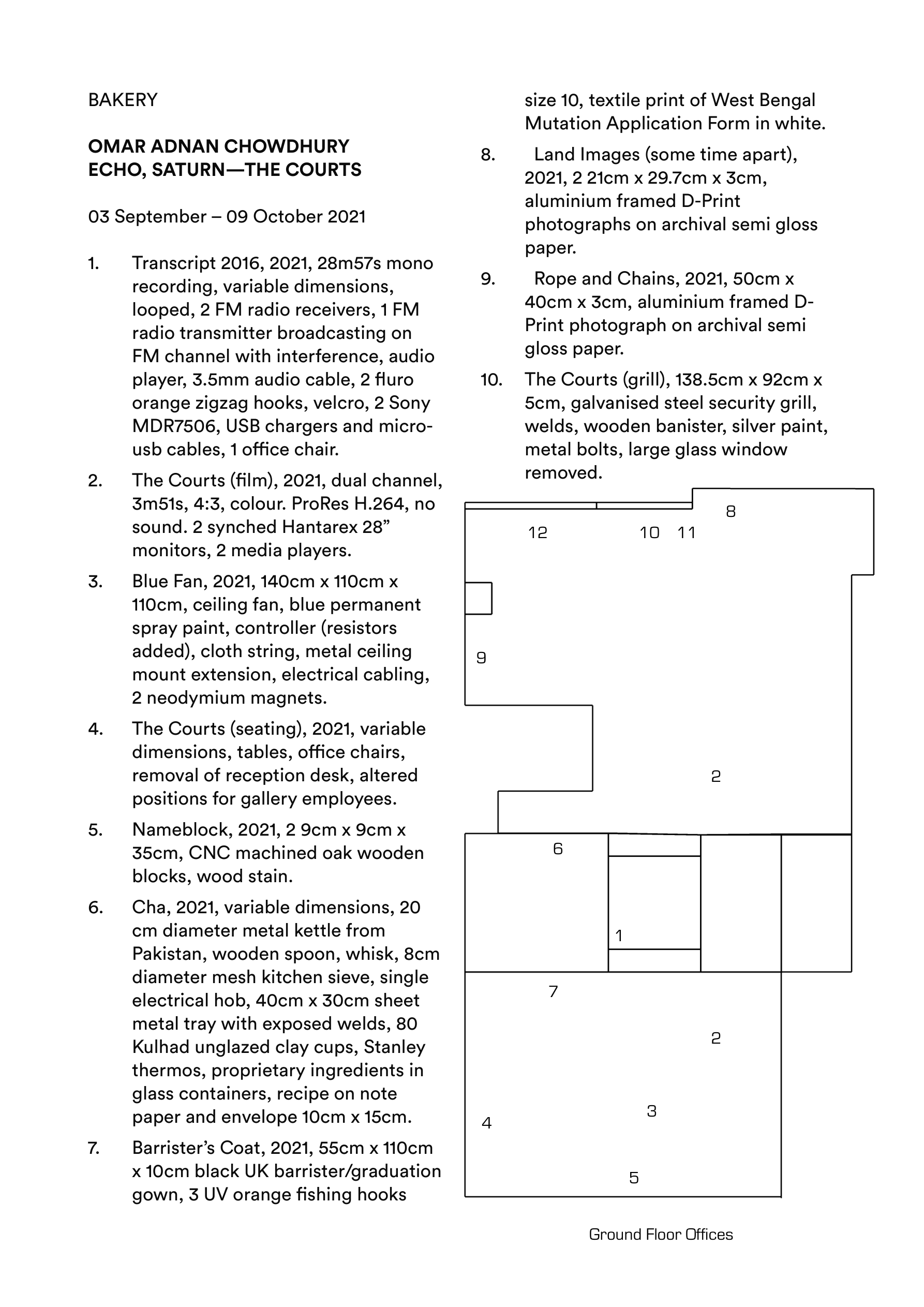
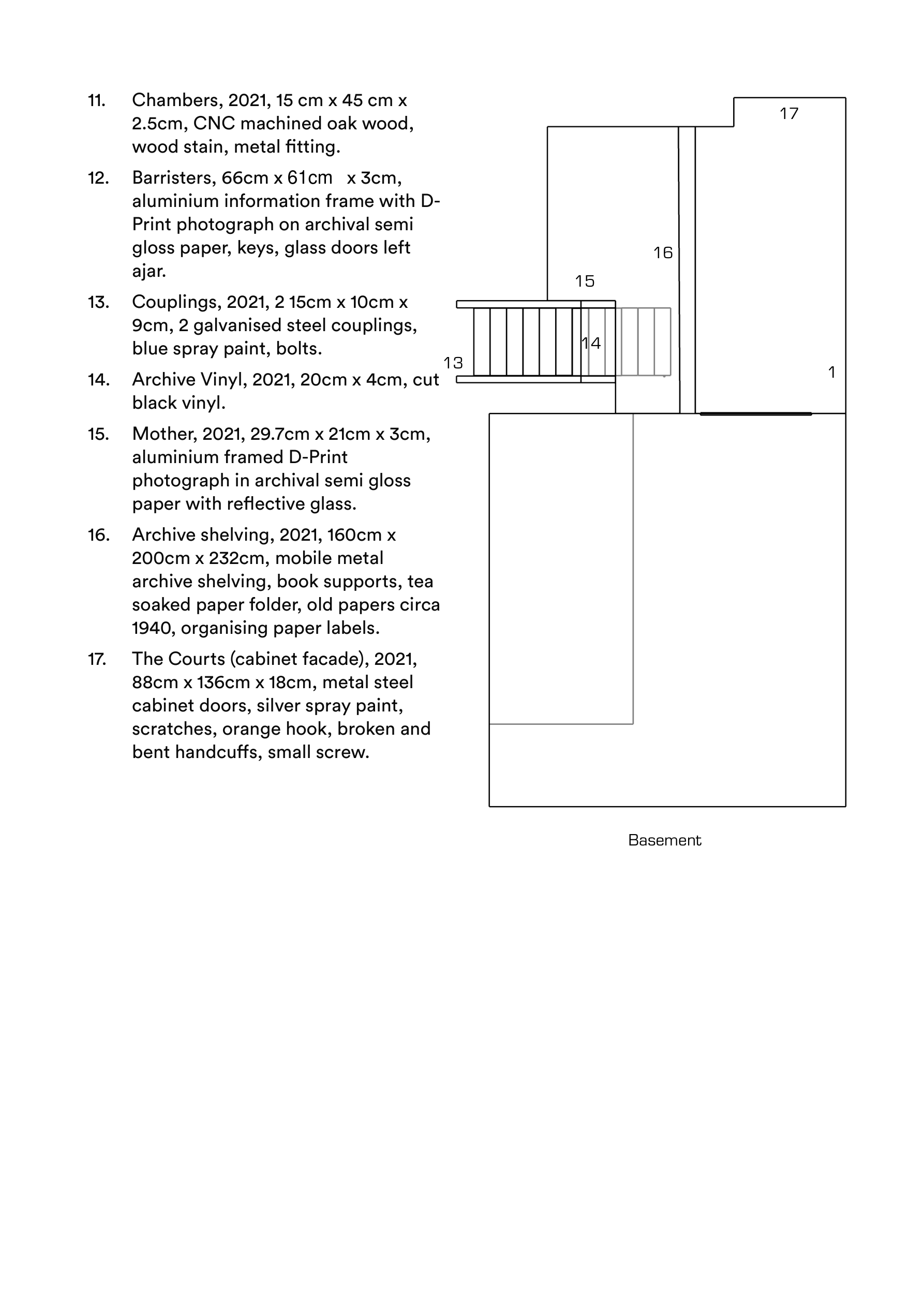
Echo, Saturn (II)—The Courts (2021) overlays the working spaces of Annet Gelink Gallery with fragments of the law courts and archives of Rajshahi: a city within a city. The reception, offices, kitchen and basement remain in use, while taking on the atmosphere of crowded lawyers’ chambers, tea stalls, barred windows and deteriorating archives where papers disappear and petitioners wait. Gallery employees are recontextualised as visitors move between these two institutions, cities and moments in time. Bureaucracy emerges not as an abstract system but as a condition of delay, repetition and obstruction. Memory accumulates and every attempt to negate the past sinks one further into it.
Visitors encounter fragments: a barrister’s gown hangs in a passageway, tea is served in clay cups, a security grill replaces a window, and a ceiling fan turns overhead. Downstairs, mobile shelving, ageing papers, cabinet doors and broken handcuffs evoke the administrative viscosity of an archive slowly falling apart. The exhibition is haunted by Dr Shahidul Zaman, who visits the law courts of Rajshahi in the early 1980s, searching for the deeds to family land he hopes to sell to finance his emigration to Europe. Missing documents lead back to Partition, forced migration and an exchange of property between Hindu and Muslim families.
A ruptured voice arrives through headphones and an FM transmission disturbed by interference; two synchronised CRT monitors show silent images from Rajshahi; photographs recur like uncertain evidence. Moving through spaces normally hidden behind the gallery’s public face, the visitor becomes part client, part witness and part intruder. The exhibition produces a dissociative haunting in which memory, migration and bureaucracy become impossible to separate—and the past refuses to let its subjects leave.
Age of Saturn (2016) Bengal Foundation, Dhaka
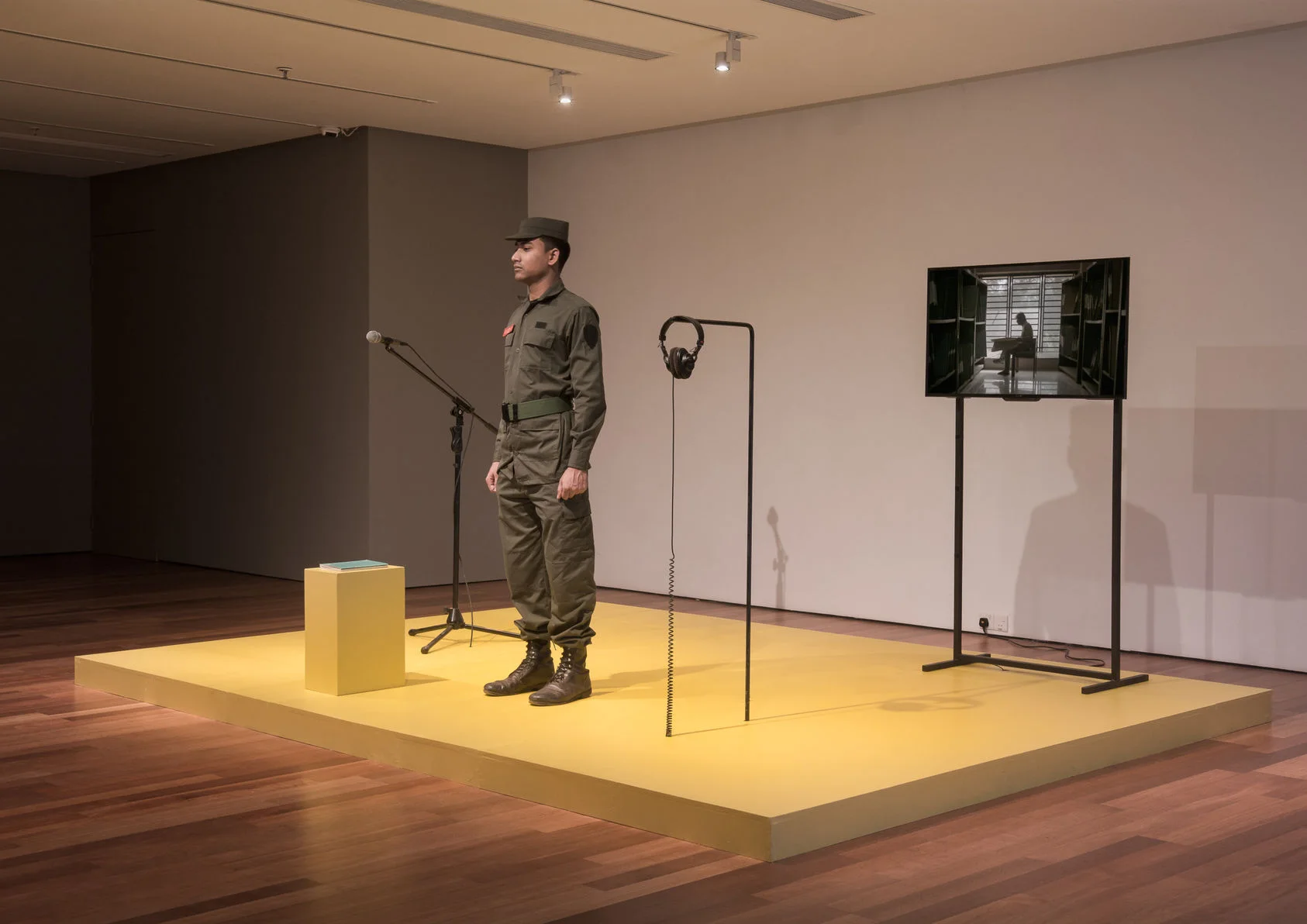
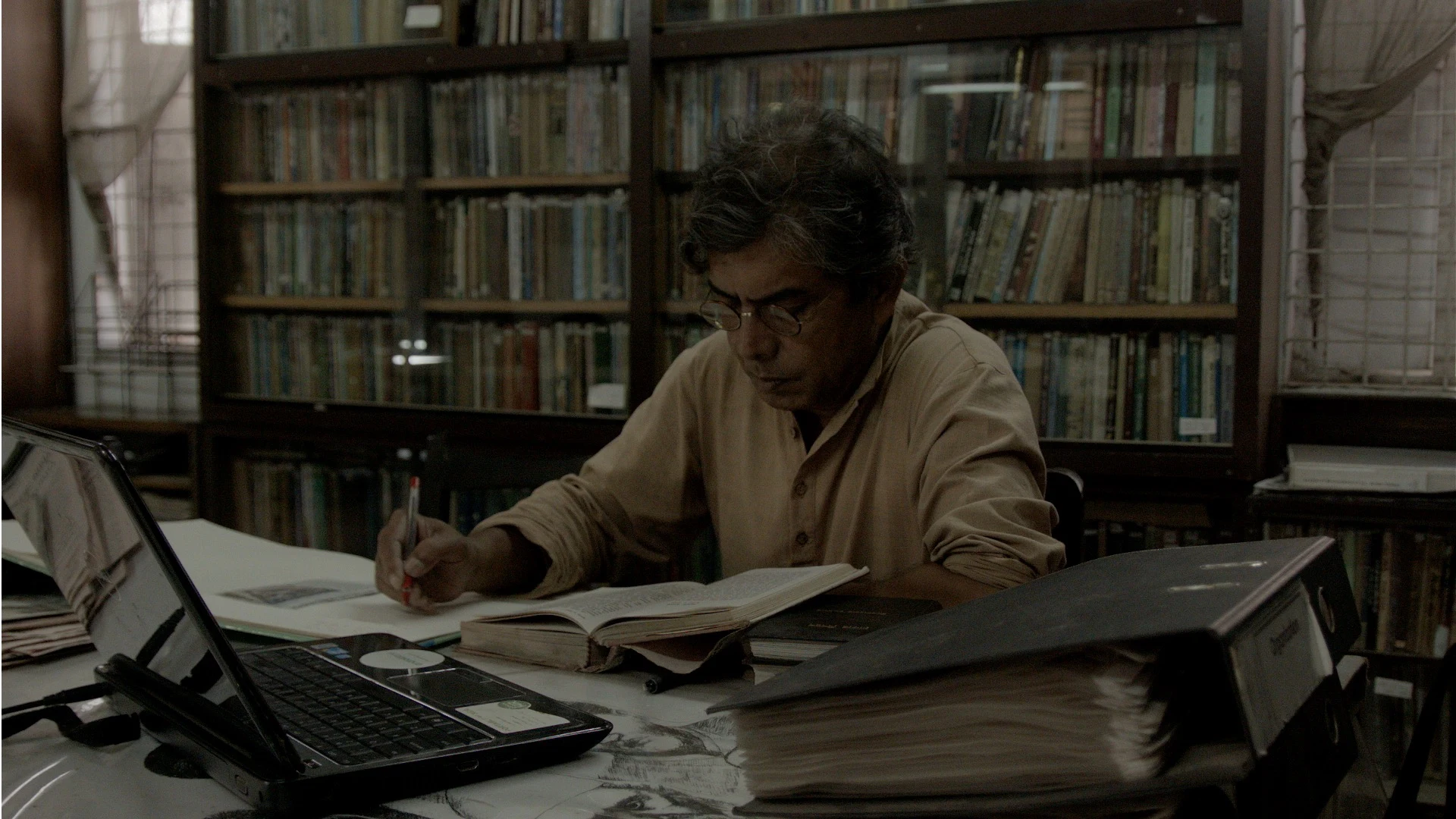
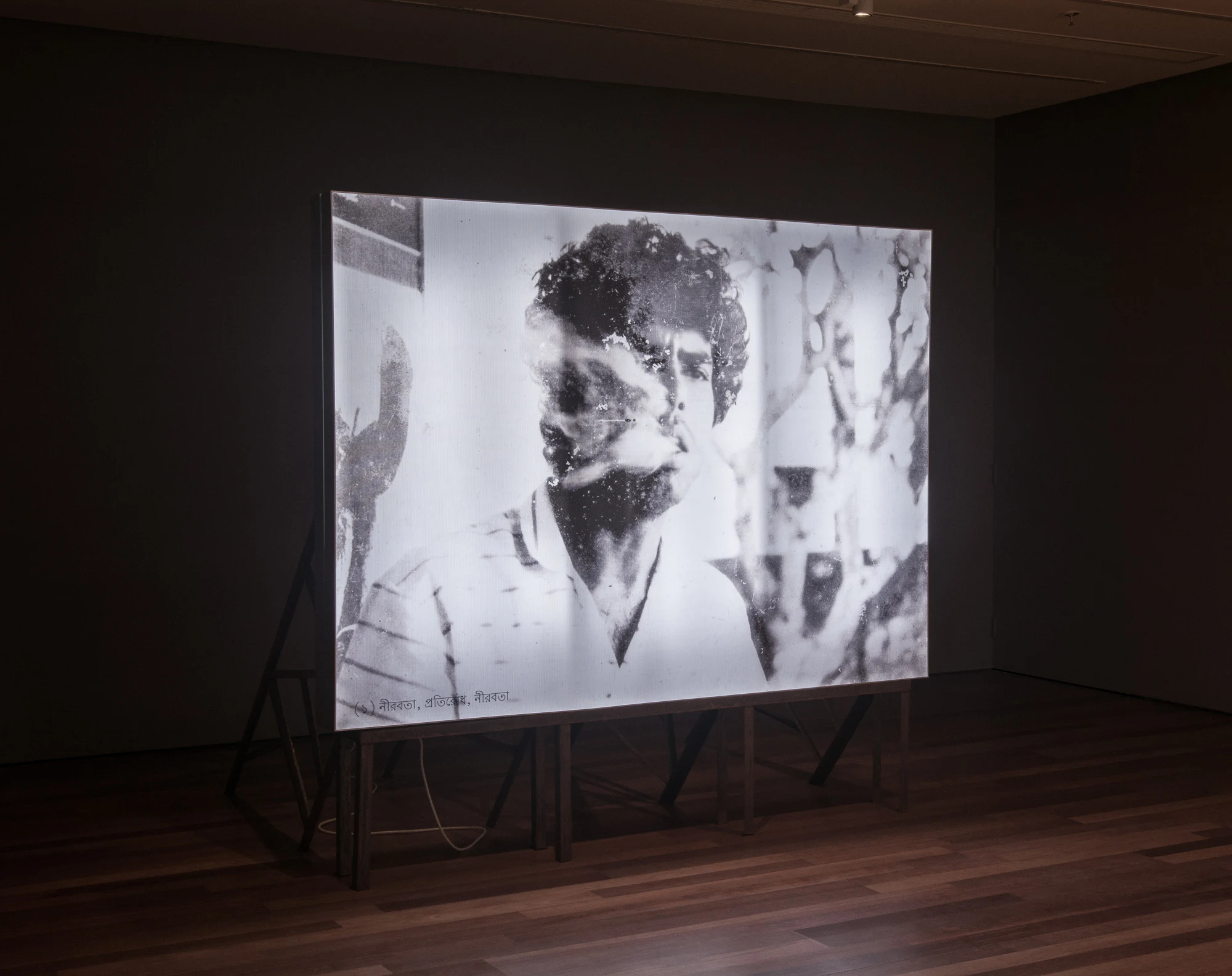
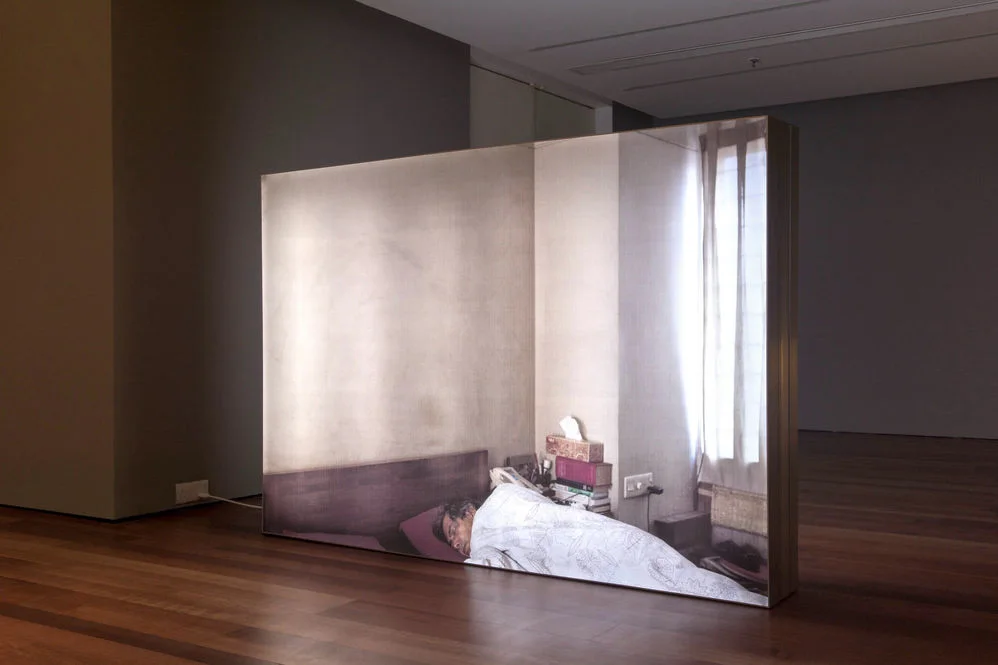
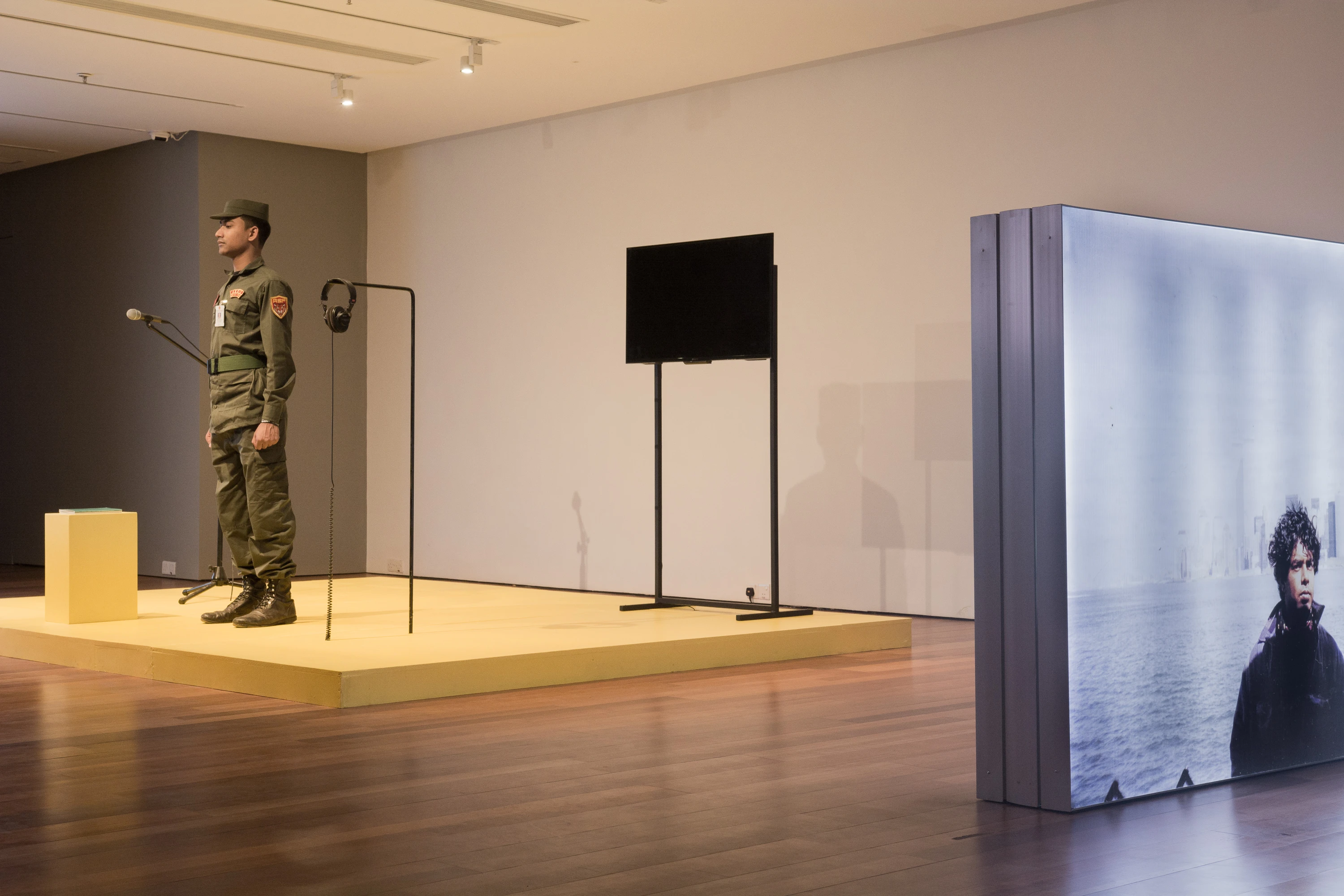
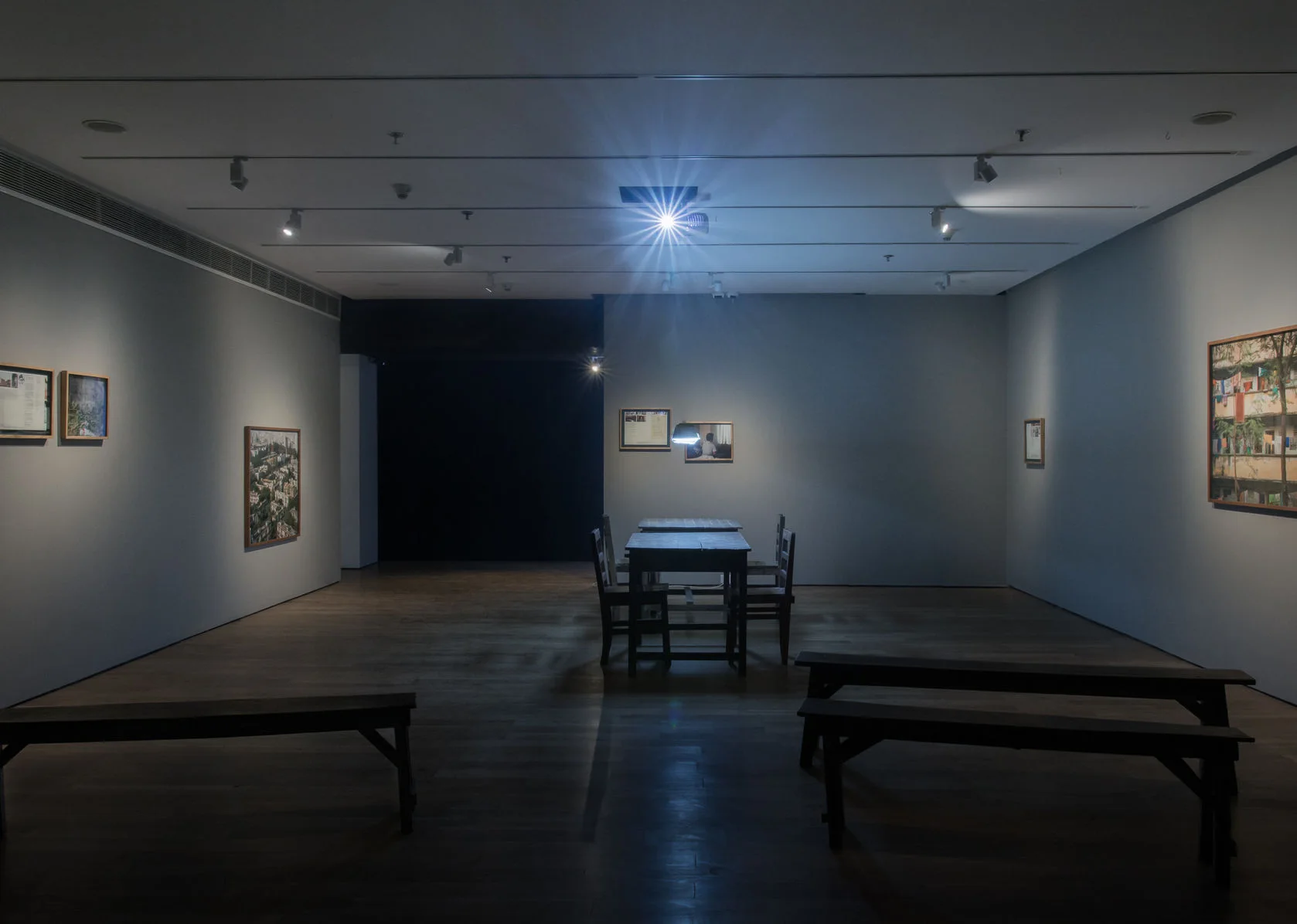
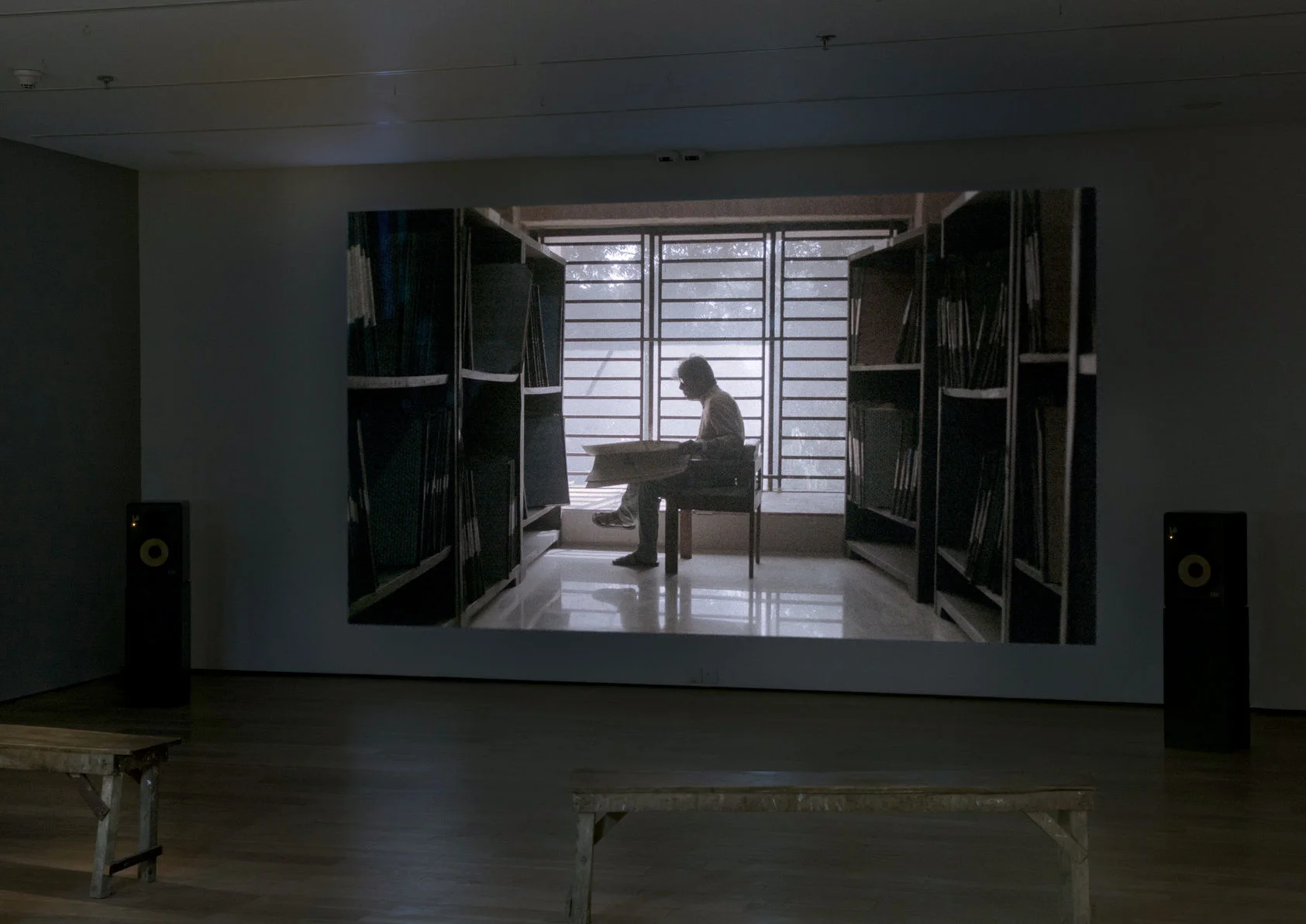
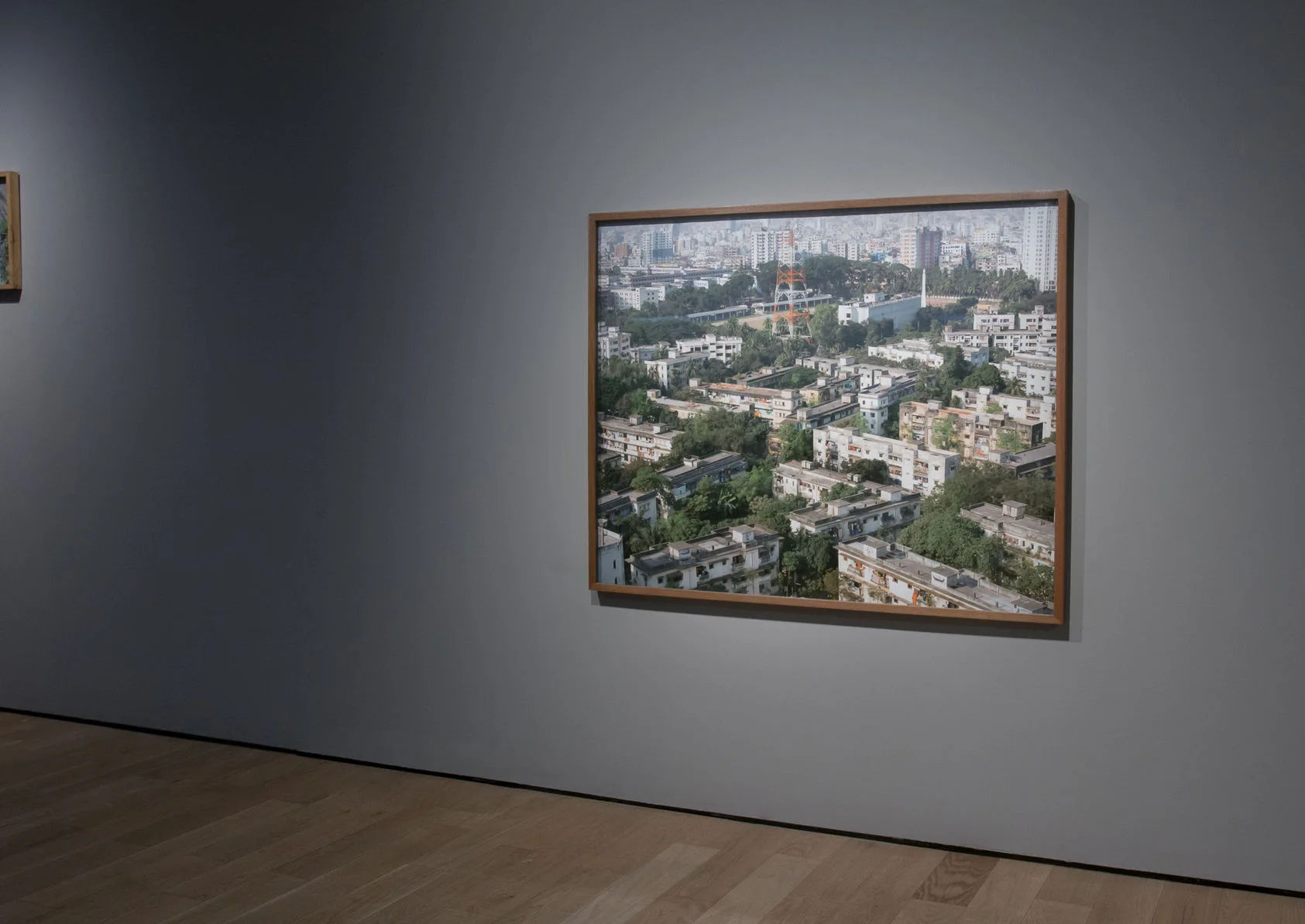
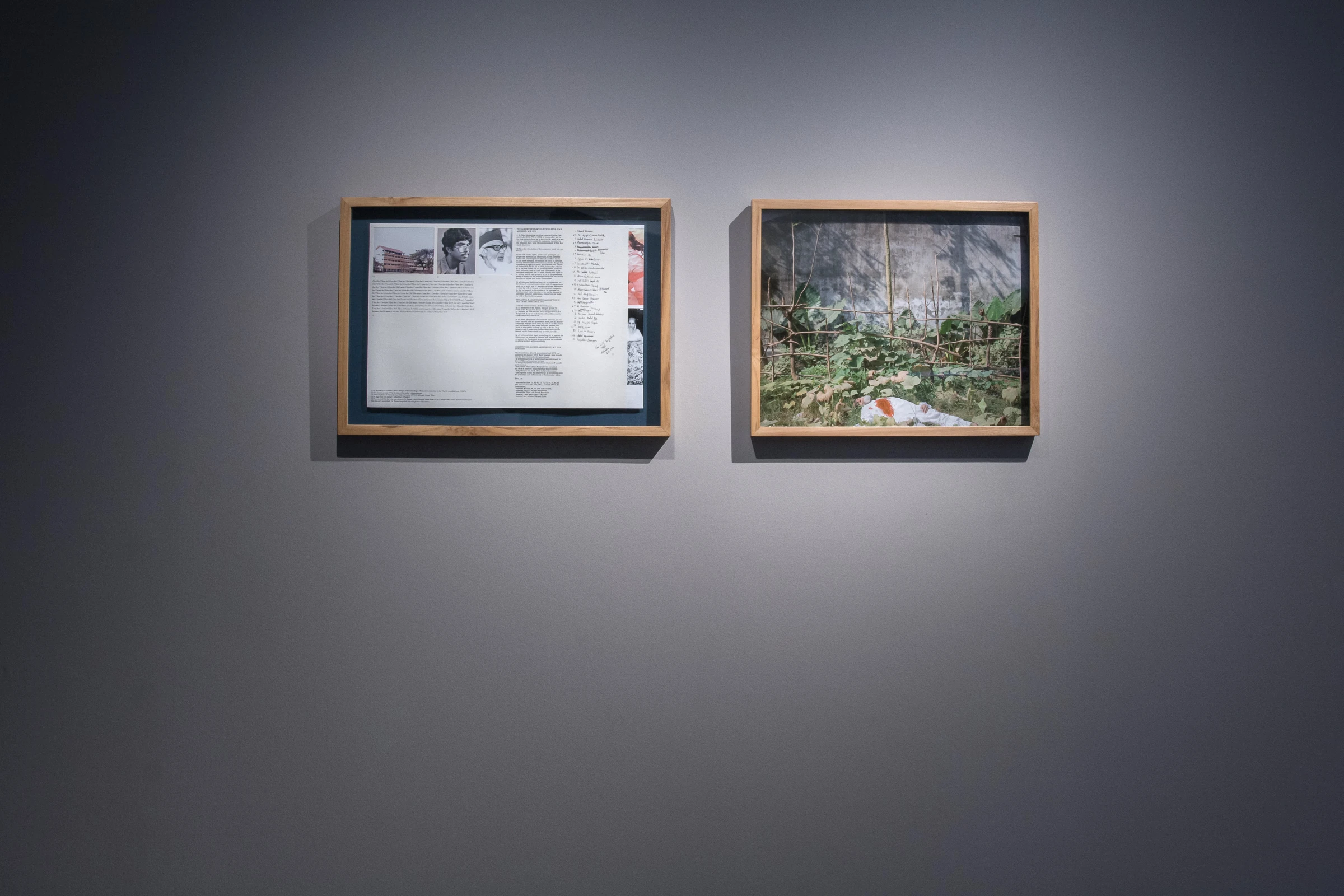
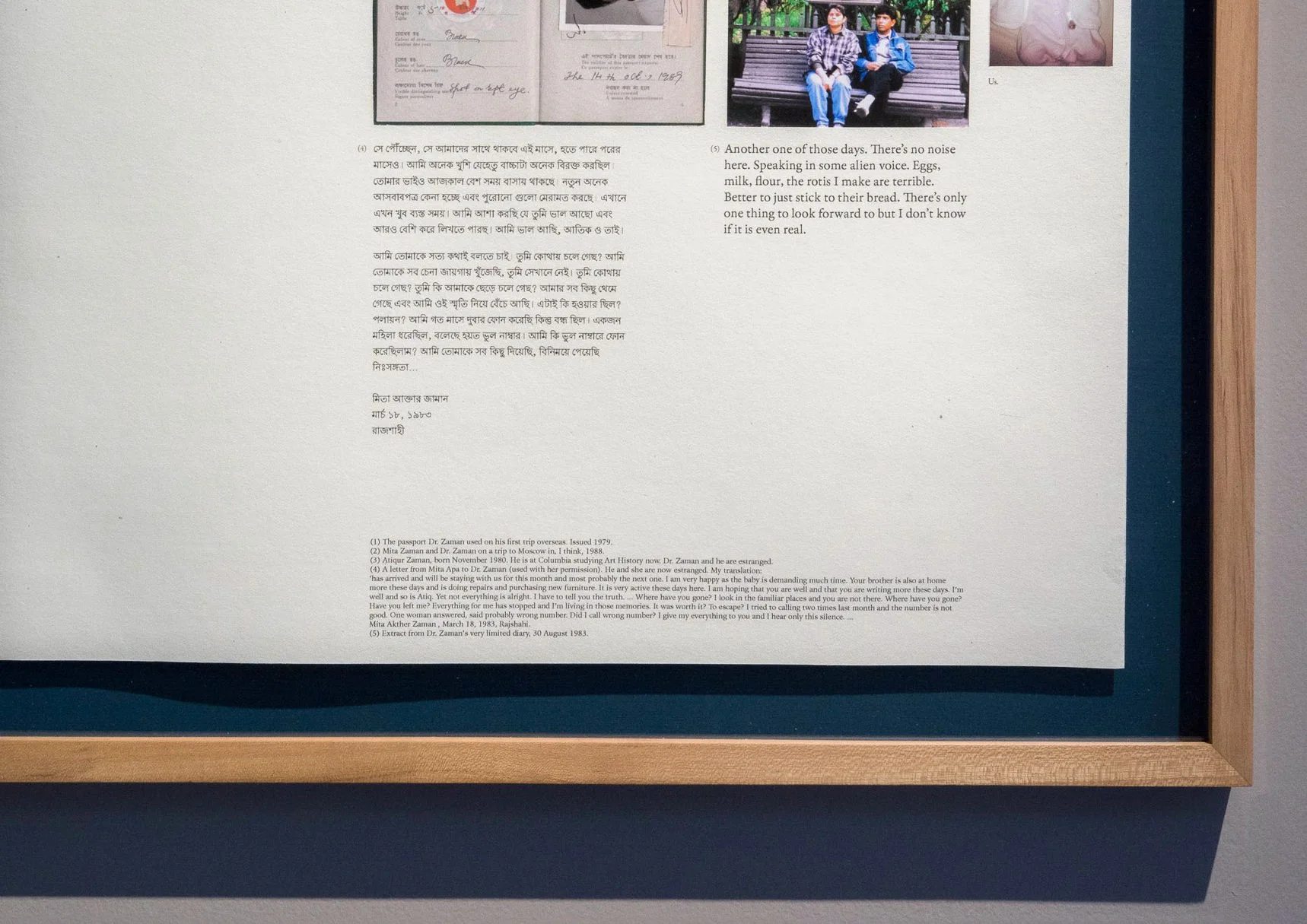
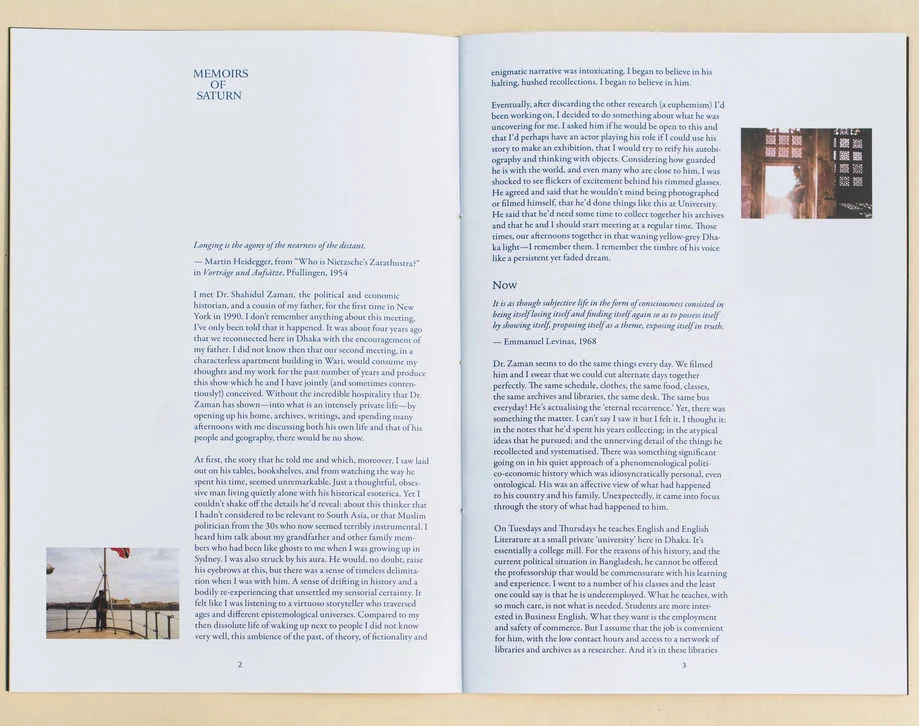
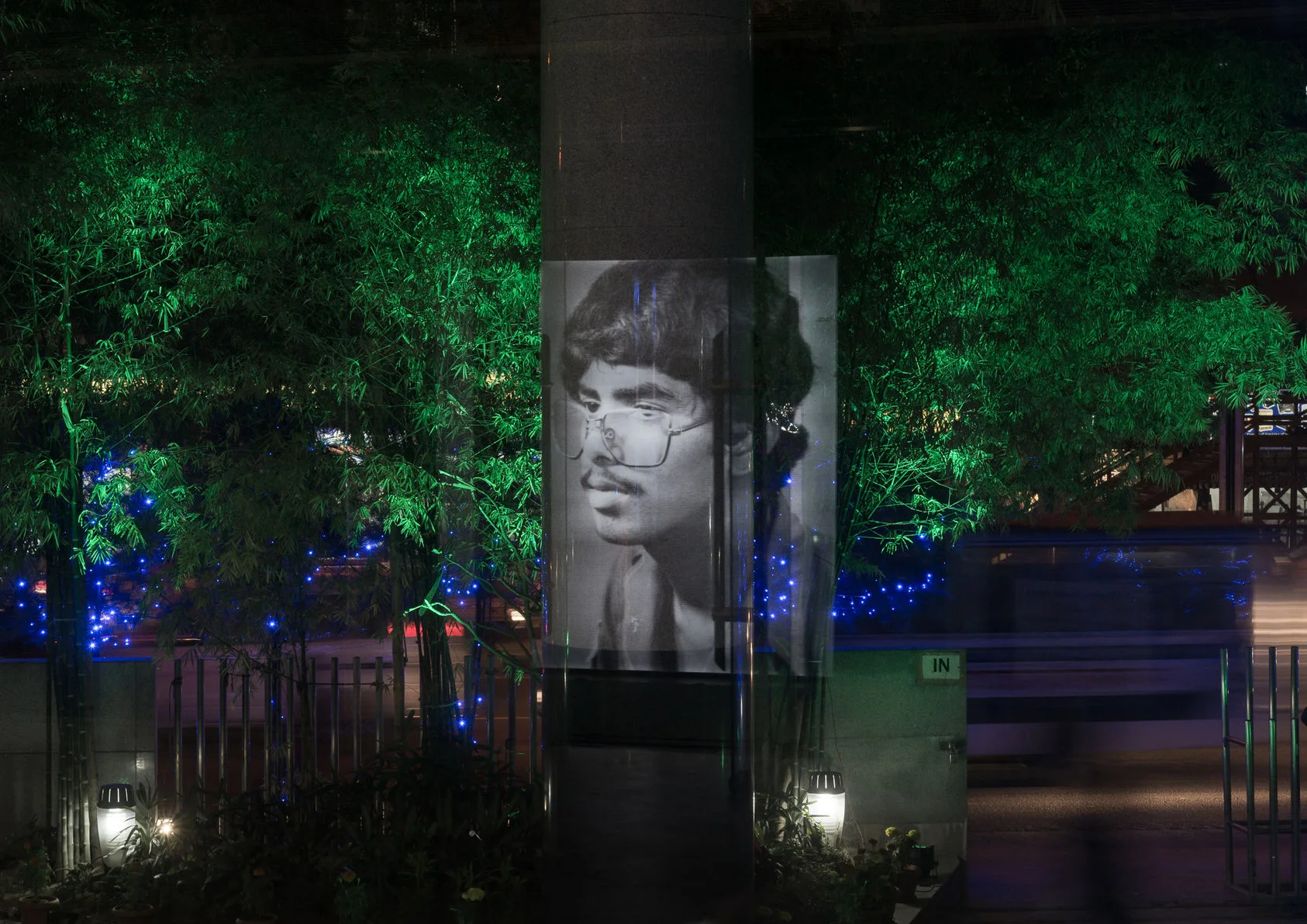
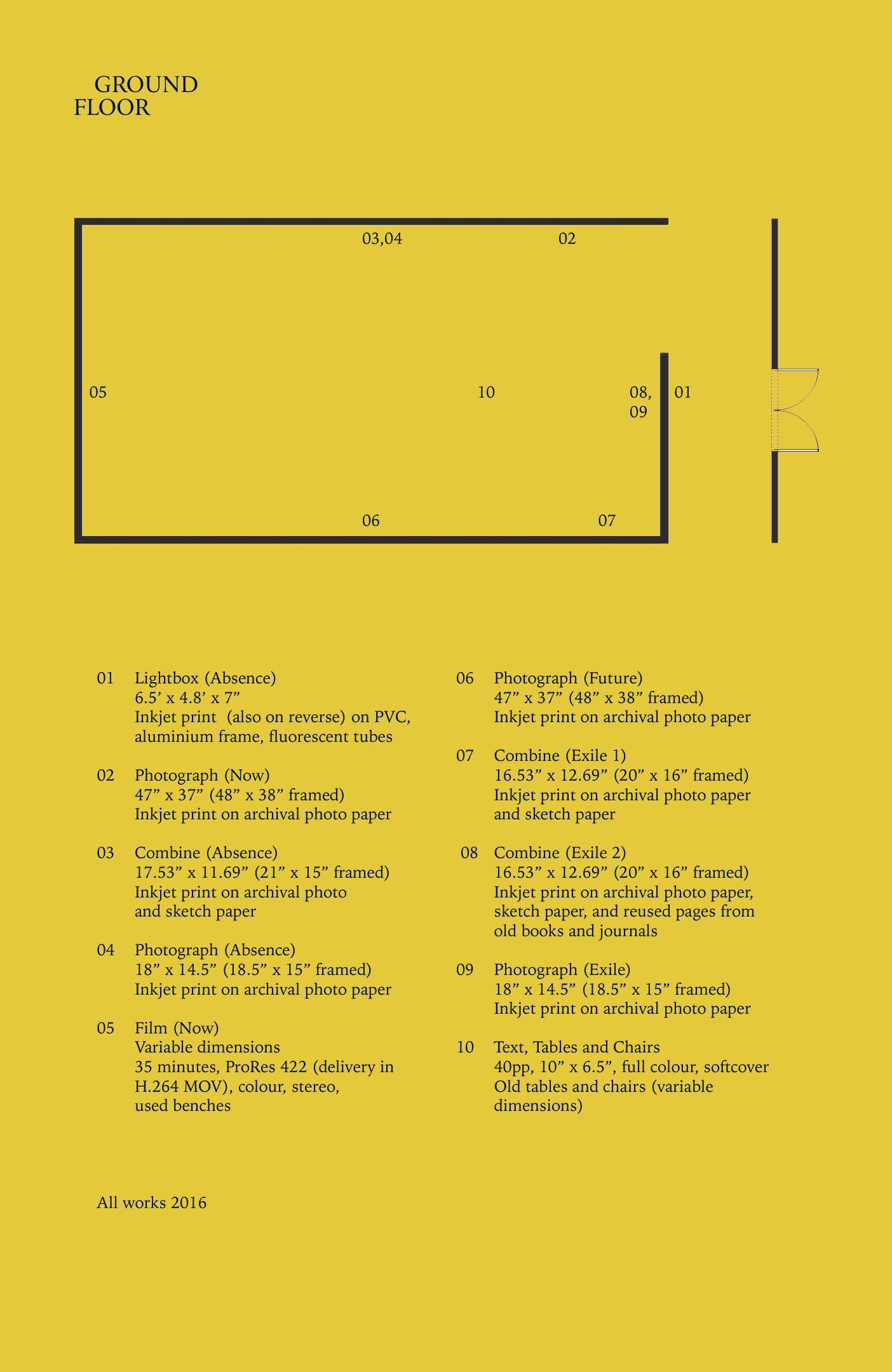
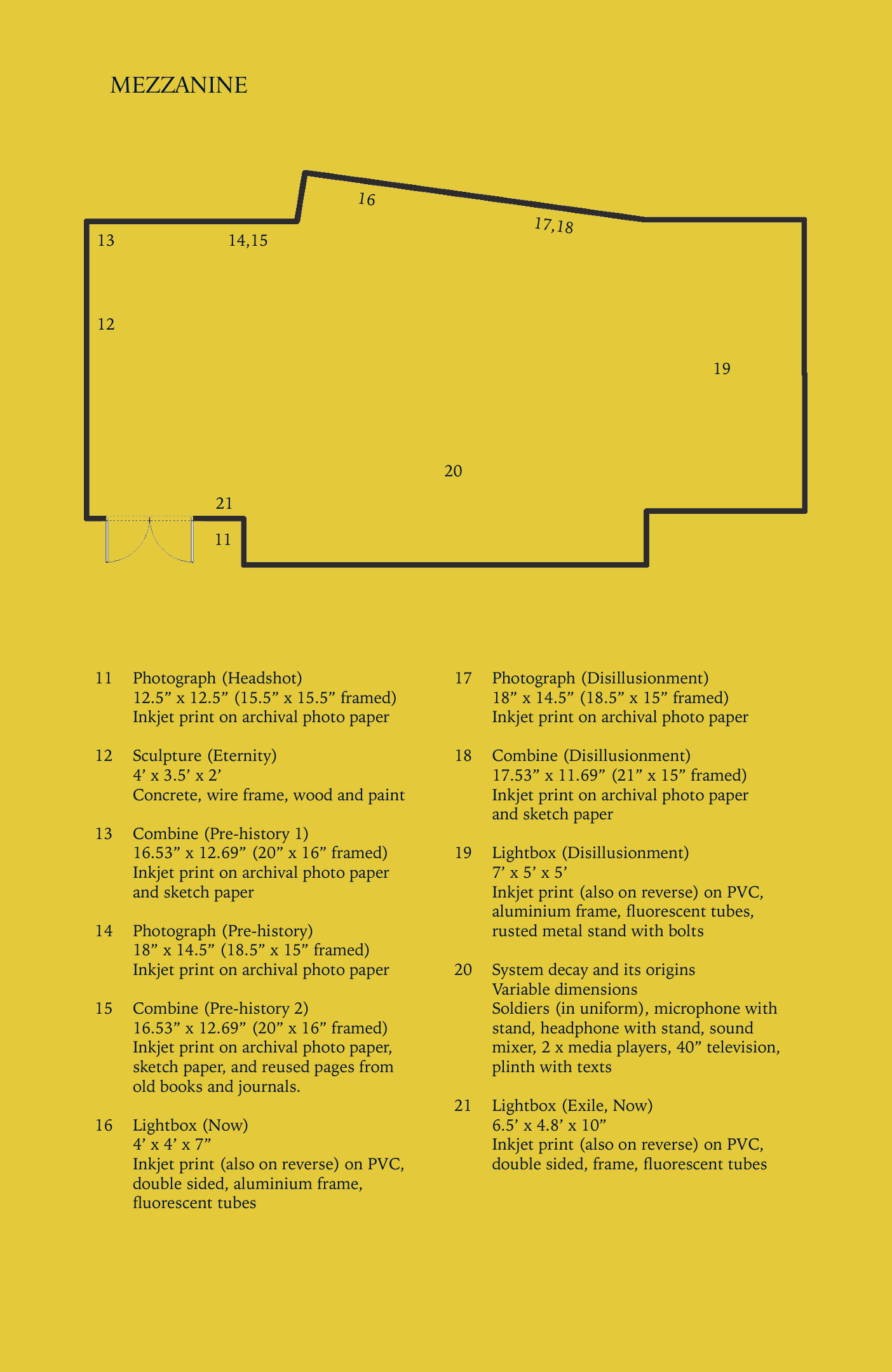
Age of Saturn began from the artist’s attempt to recover a broken relationship to Bengal through the contradictory life and archive of political historian Dr Shahidul Zaman. Rather than treating the archive as stable evidence, the exhibition staged memory as something performed, administered and repeatedly remade. Domestic photographs and national history entered the same unsettled field, asking who is permitted to speak for the past and under what conditions.
At its centre, the film and text Memoirs of Saturn follow a solitary figure—performed by the artist Dhali Al Mamoon—moving through apartments, classrooms, streets and archives. Around the film, monumental lightboxes, photographs, publications and archival composites collapse events separated by decades into one unsettled present. Dr Zaman’s life moves between family memory, Partition, political violence, exile and return.
In System Decay and Its Origins, uniformed performers classify visitors, grant or refuse access, direct selected people to read aloud and return their recorded speech to the installation. Colonial administration becomes a bodily encounter in which the viewer is made subject, witness and participant. The abrupt dismantling placed the work’s own mechanisms under pressure: censorship entered the project as another missing document, disputed memory and invisible force. This generated the wider Saturn cycle, in which whatever is repressed returns altered and doubled.
Janus Tussle (2022) British Council Transforming Narratives Festival; Beursschouwburg
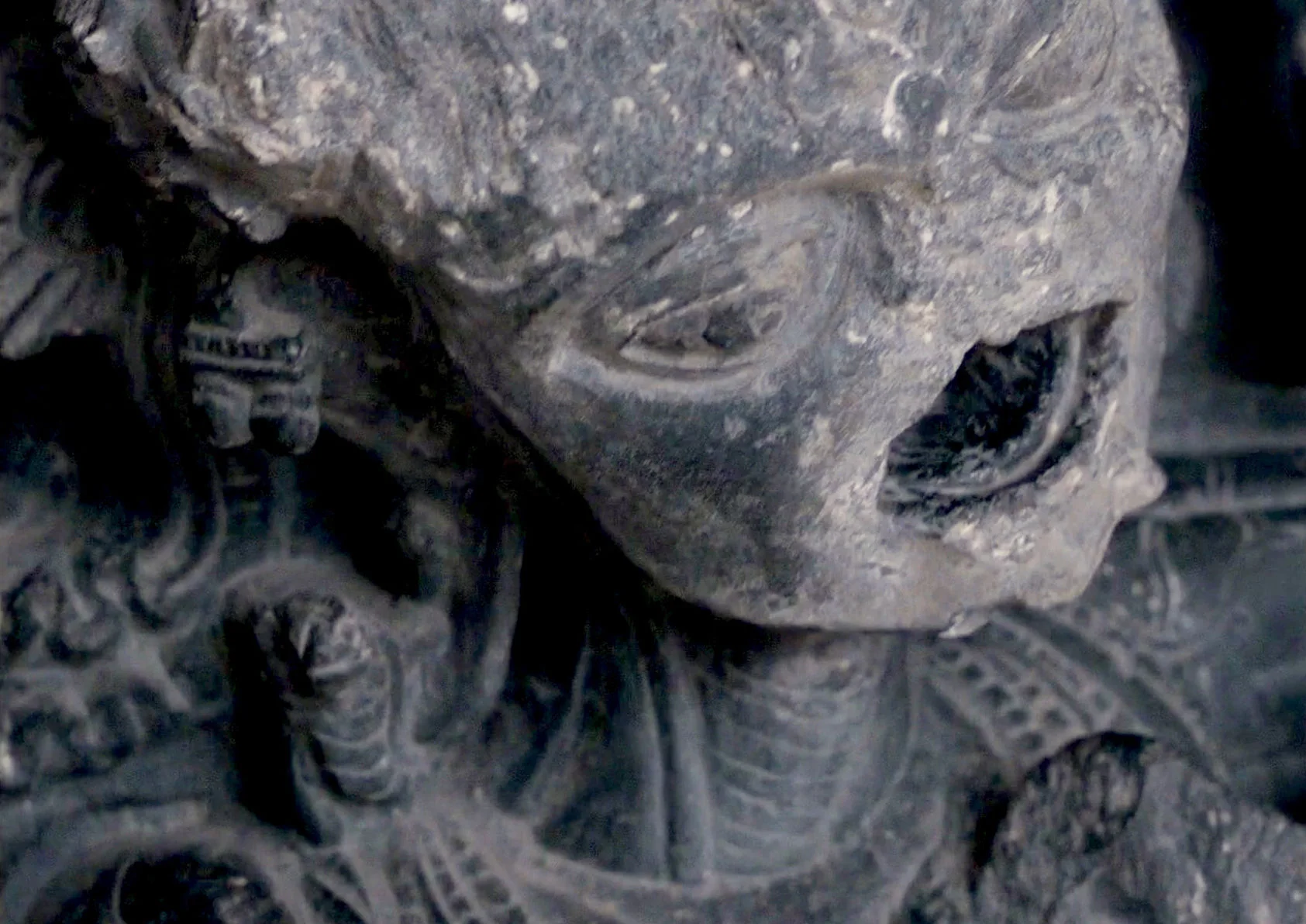
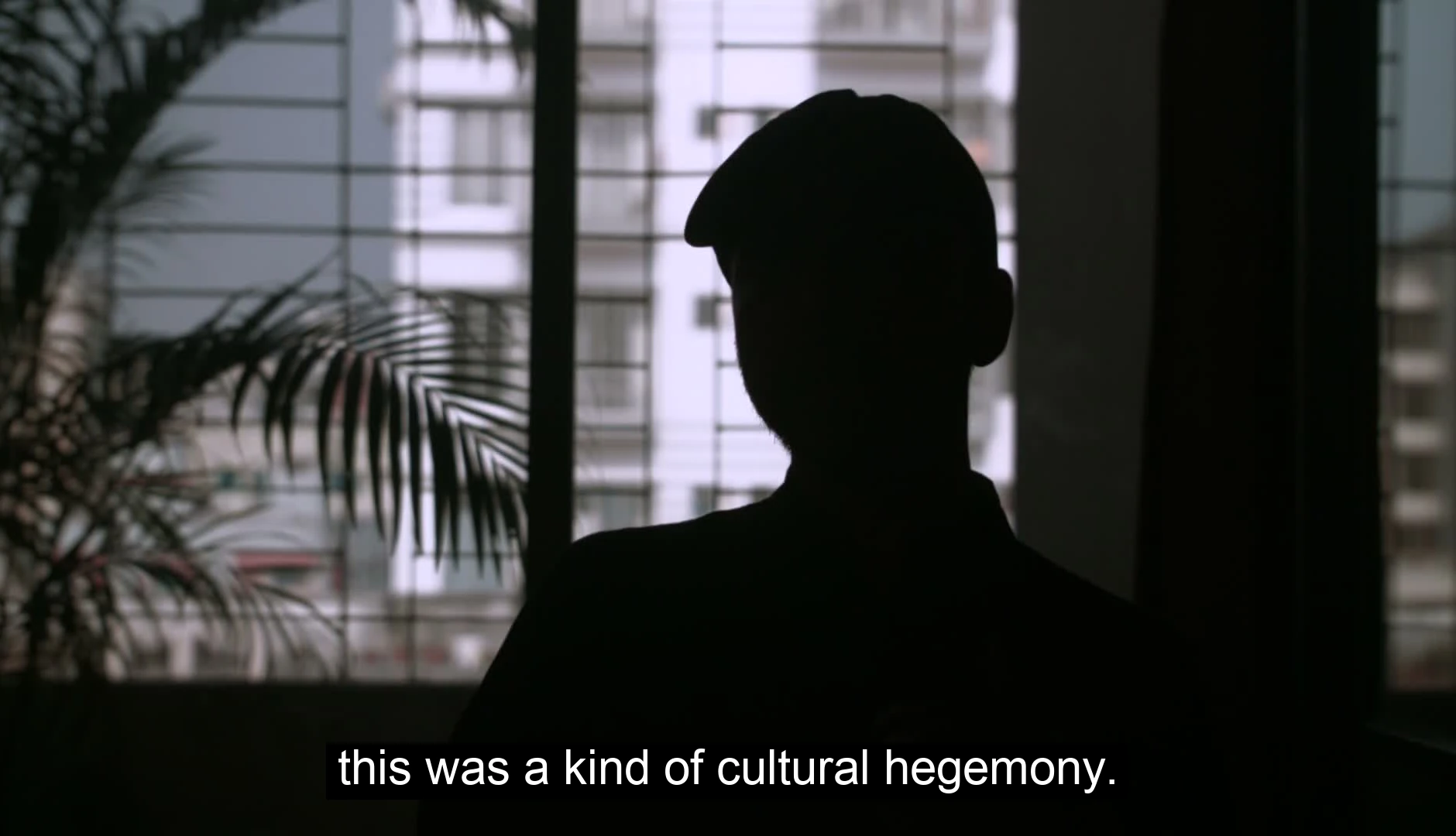
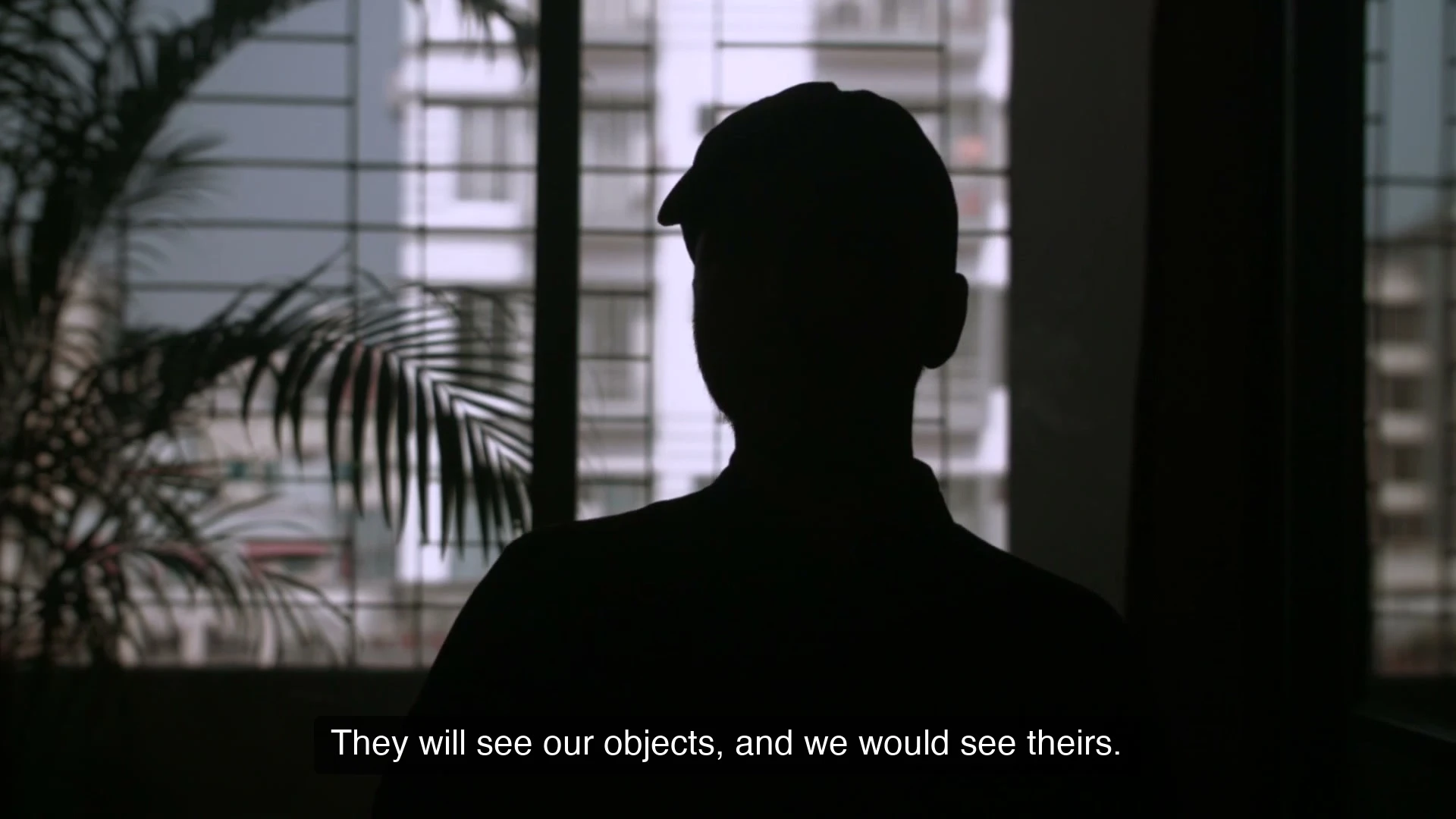
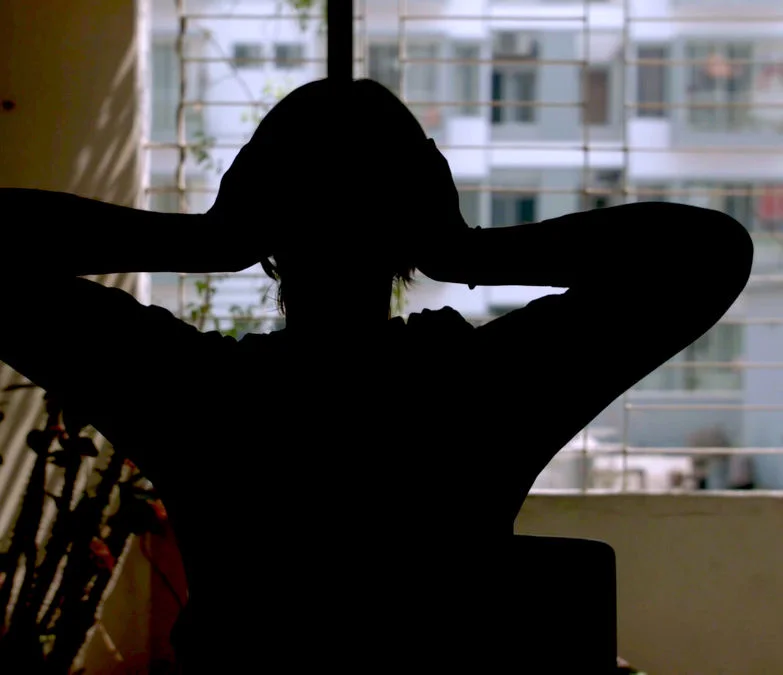
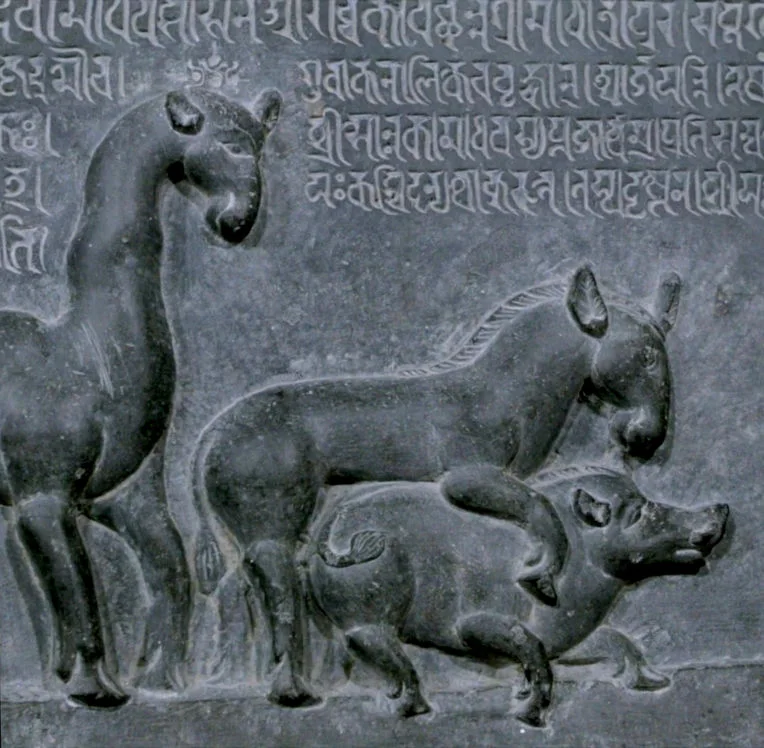
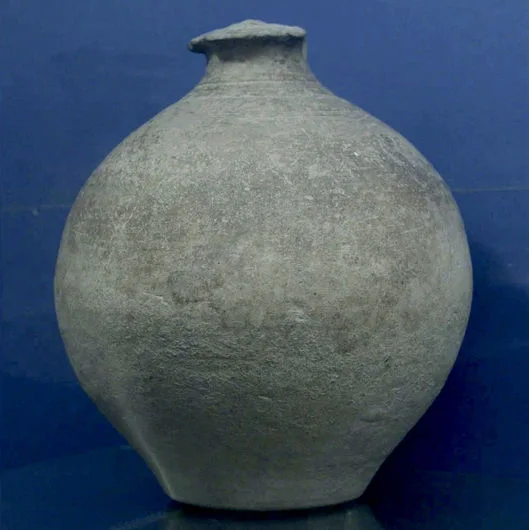
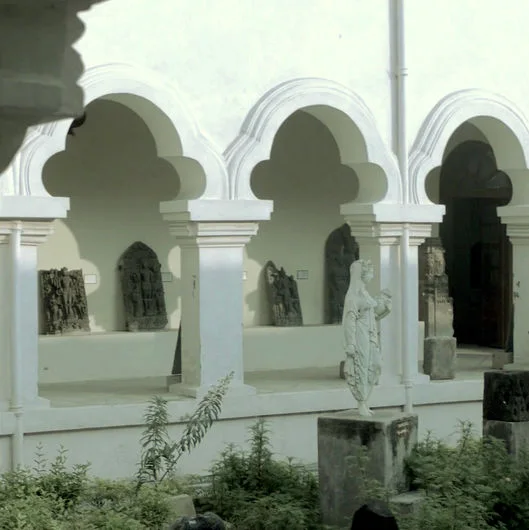
Janus Tussle (2022) is a film that investigates through structuralist techniques the aftermath and intrigue of a failed exhibition of priceless antiquities between Dhaka and Paris. Two anonymous, visually and aurally concealed sources offer conflicting accounts of what happened, shaped by rumour, political conviction and personal responsibility. Their stories involve street protests by enraged activists, priceless objects stolen and damaged by baggage handlers, the resignation of a culture minister and the sudden death of a young Bengali diplomat.
The exhibition was opposed as an unequal and potentially dangerous transaction: the antiquities were undervalued, their safe return appeared uncertain and the terms of exchange seemed to reproduce an older colonial imbalance. The film gradually complicates this account. The French institution becomes both antagonist and convenient proxy, while responsibility disperses across opaque government negotiations, neglected museums, cultural administrators and a civil society more capable of resisting an external threat than confronting its own structural failures.
Moving through obscured testimony, museum interiors and fragmentary historical traces, Janus Tussle is less concerned with establishing exactly what happened than with how the incident is remembered and what each participant needs it to mean. What remains is a postcolonial mystery in which exchange, trust, protection and abandonment become difficult to distinguish, still haunted by an unjust and traumatic past.
Faydabad To-Let (2021) Ke Ba Kahara, Dhaka
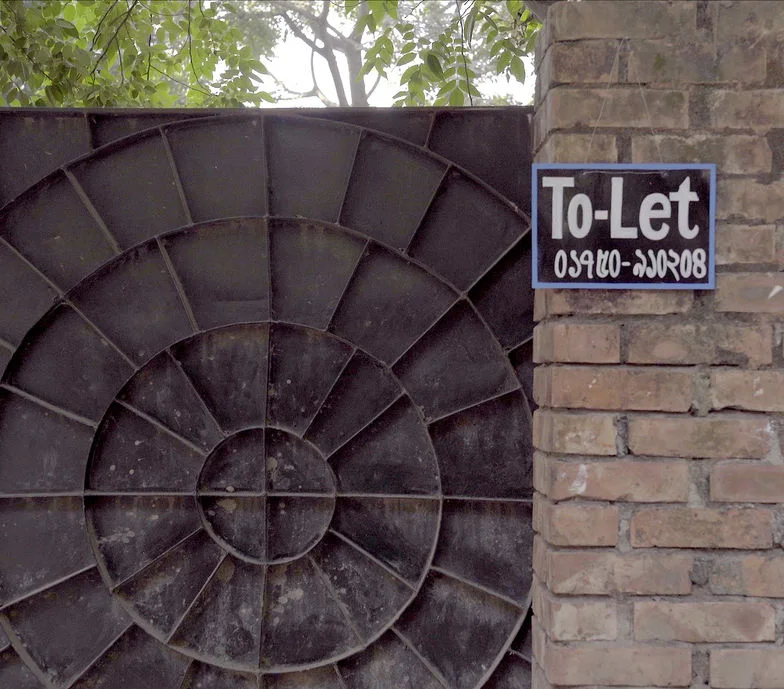
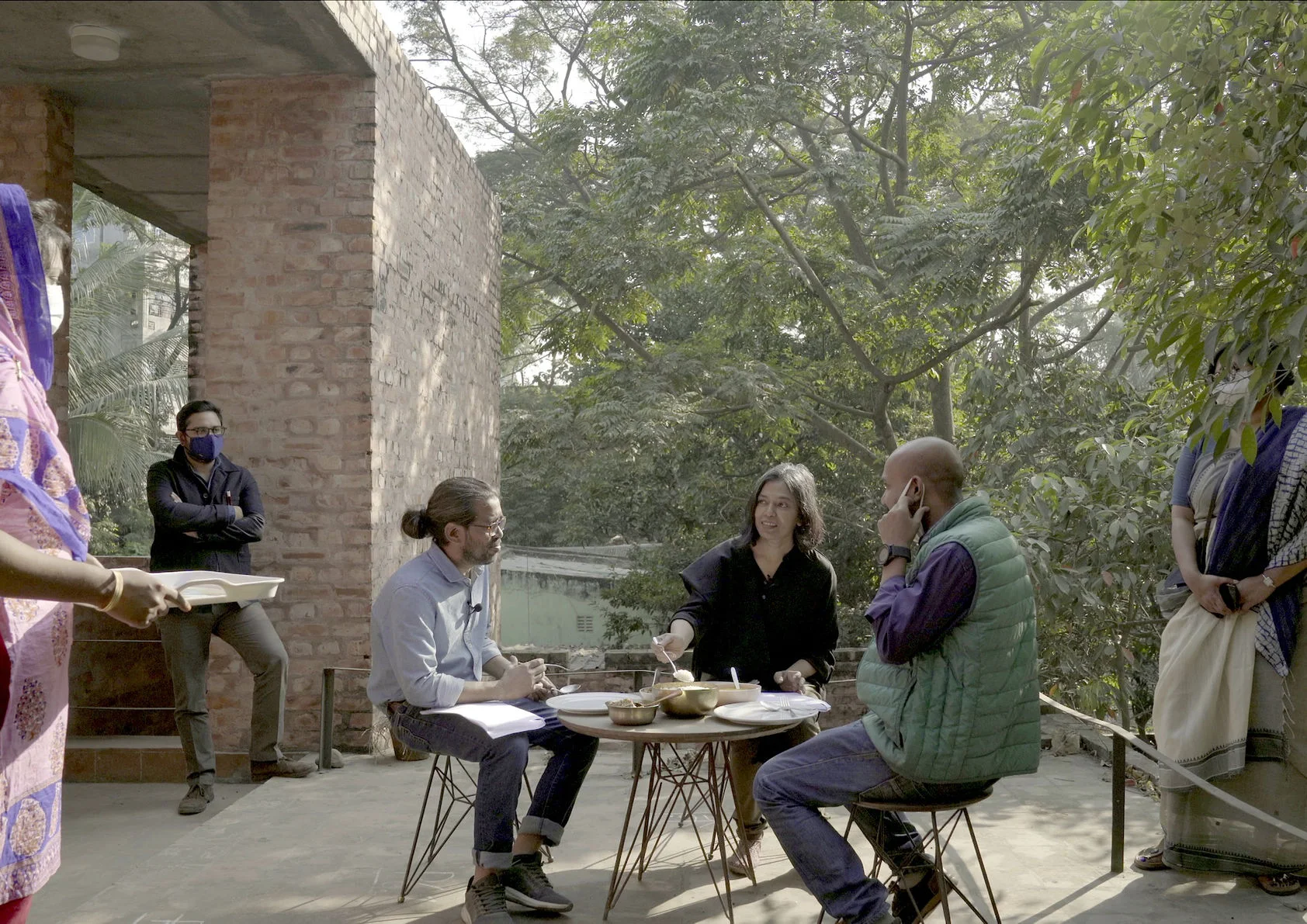
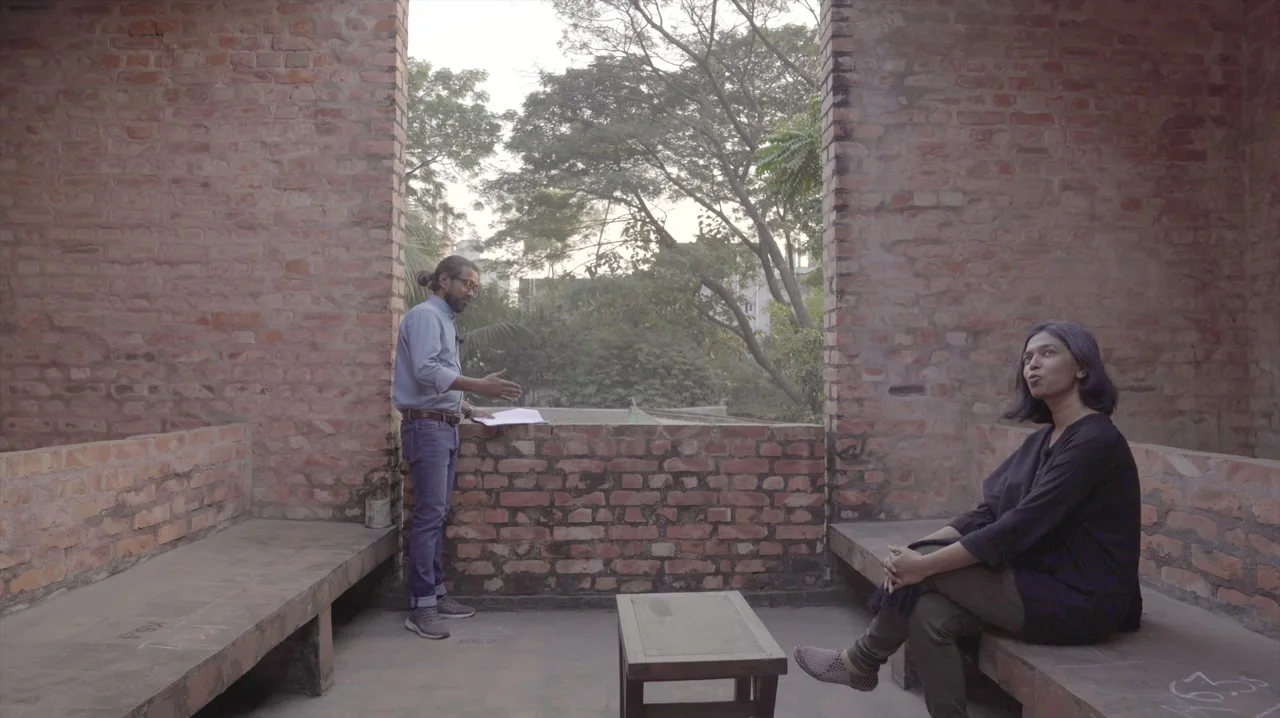
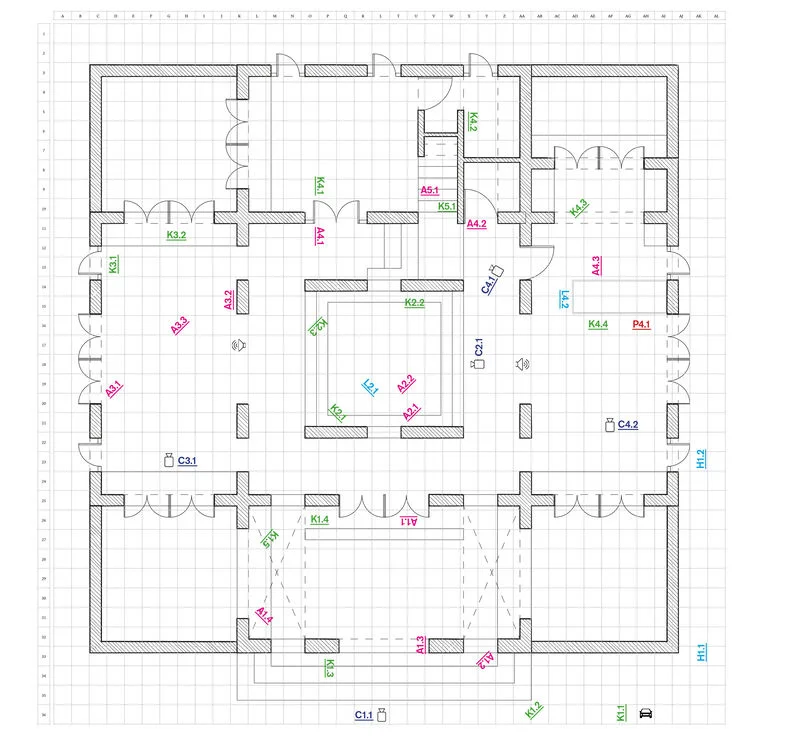
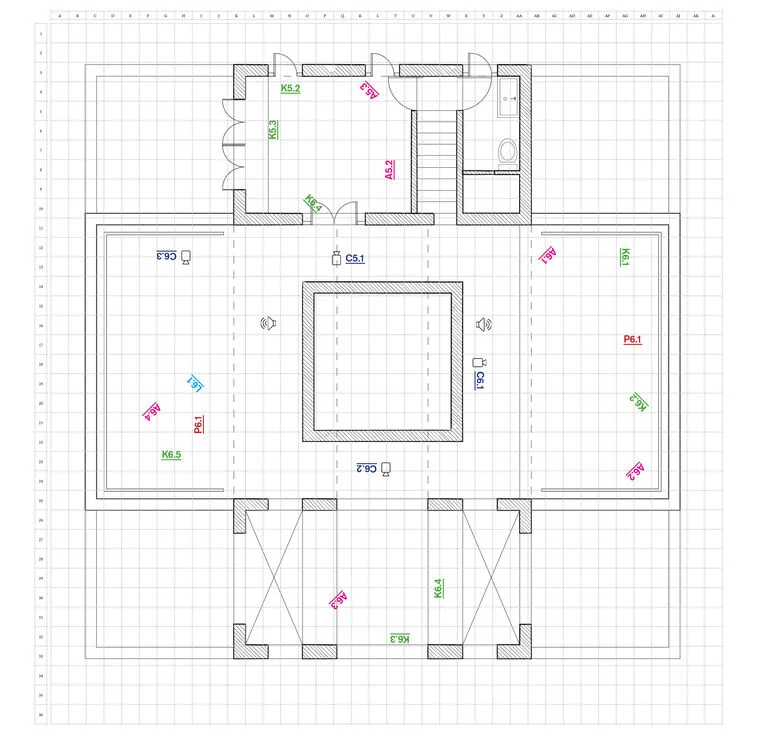
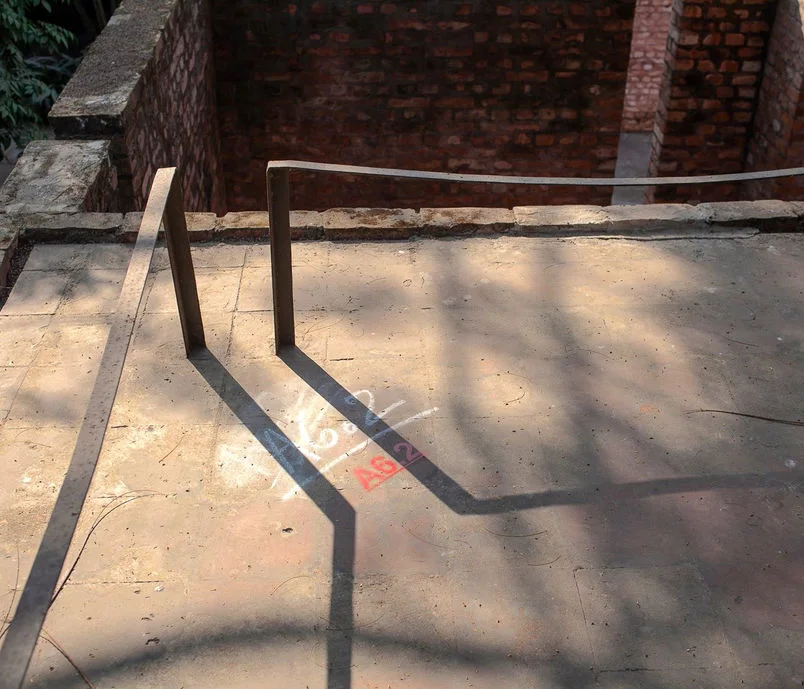
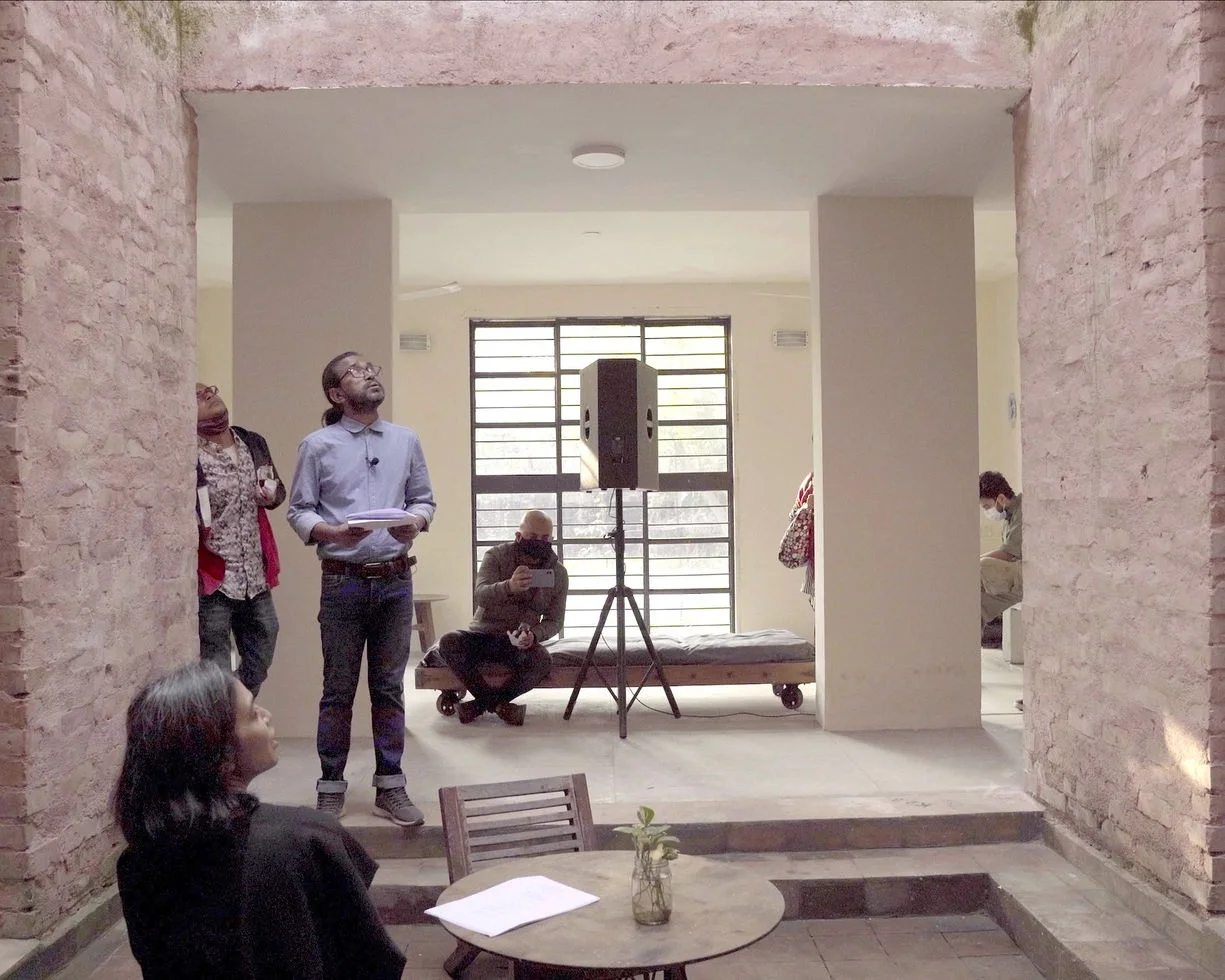
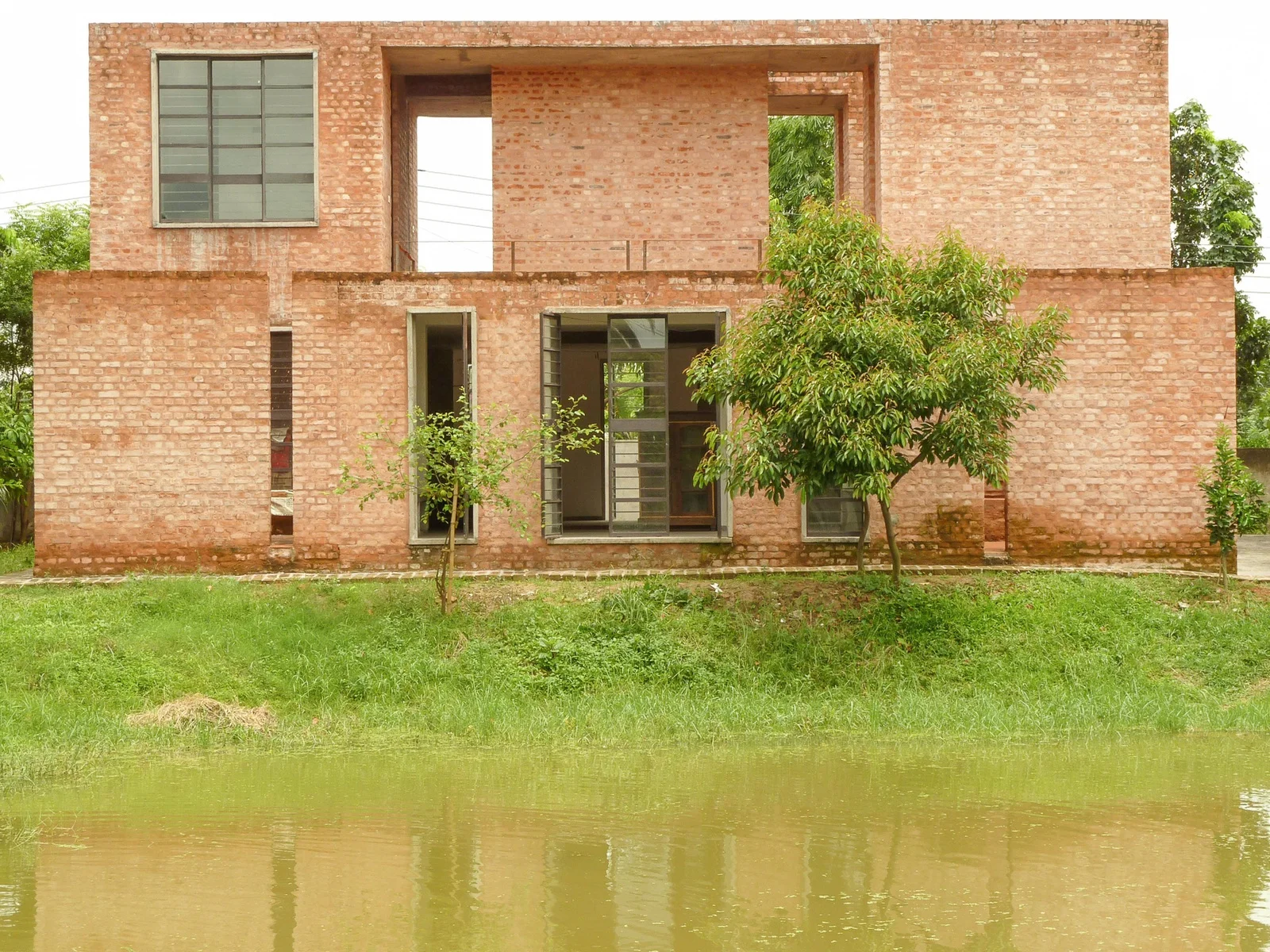
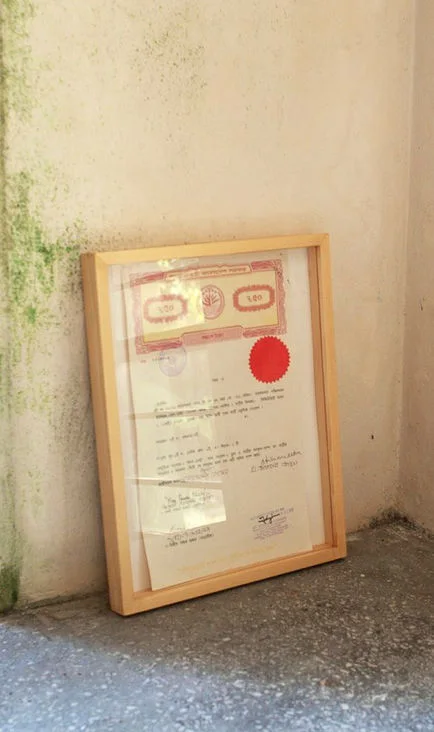
Faydabad To-Let (2021) is the first performance and installation in the Faydabad series, staged at a neglected modernist house by Bengali architect Marina Tabassum on the edge of Dhaka. Two performers, carrying scripts and following marks etched onto the floor, rehearse a scene in which one desperately tries to rent the house from the other. Drawing on regional theatre and the conventions of a property viewing, the performance uses each room and architectural feature to explore the introduction of modernism to Bengal, its possibilities and its entanglement with the difficult history of the state.
As the performers walk, sit and drink tea, the prospective renter imagines the life the house might contain. In reality, the building was unwanted and had fallen into disuse; nobody had been able to live there, and suspicions surrounded it. The renter nevertheless invests it with his ambitions. His optimism produces a melancholy reflection on the hopes carried by architects who brought Western modernism to the region, and on what remains when those ideas fail to take root.
Moving from outside to inside and from room to room, the performers continually displace the audience, which must find new ways to position itself within the building. The performers are miked, casting their voices through the rooms even when they cannot be seen. Pages from the eventual deed they sign—containing several strange conditions—hang on the walls. Outside, a small ‘To-Let’ sign displays a mobile telephone number: an inconspicuous intervention that transforms the abandoned building into something apparently available, and changes how visitors understand the site.
Echo, Saturn (I) (2019) Rijksakademie OPEN, Amsterdam
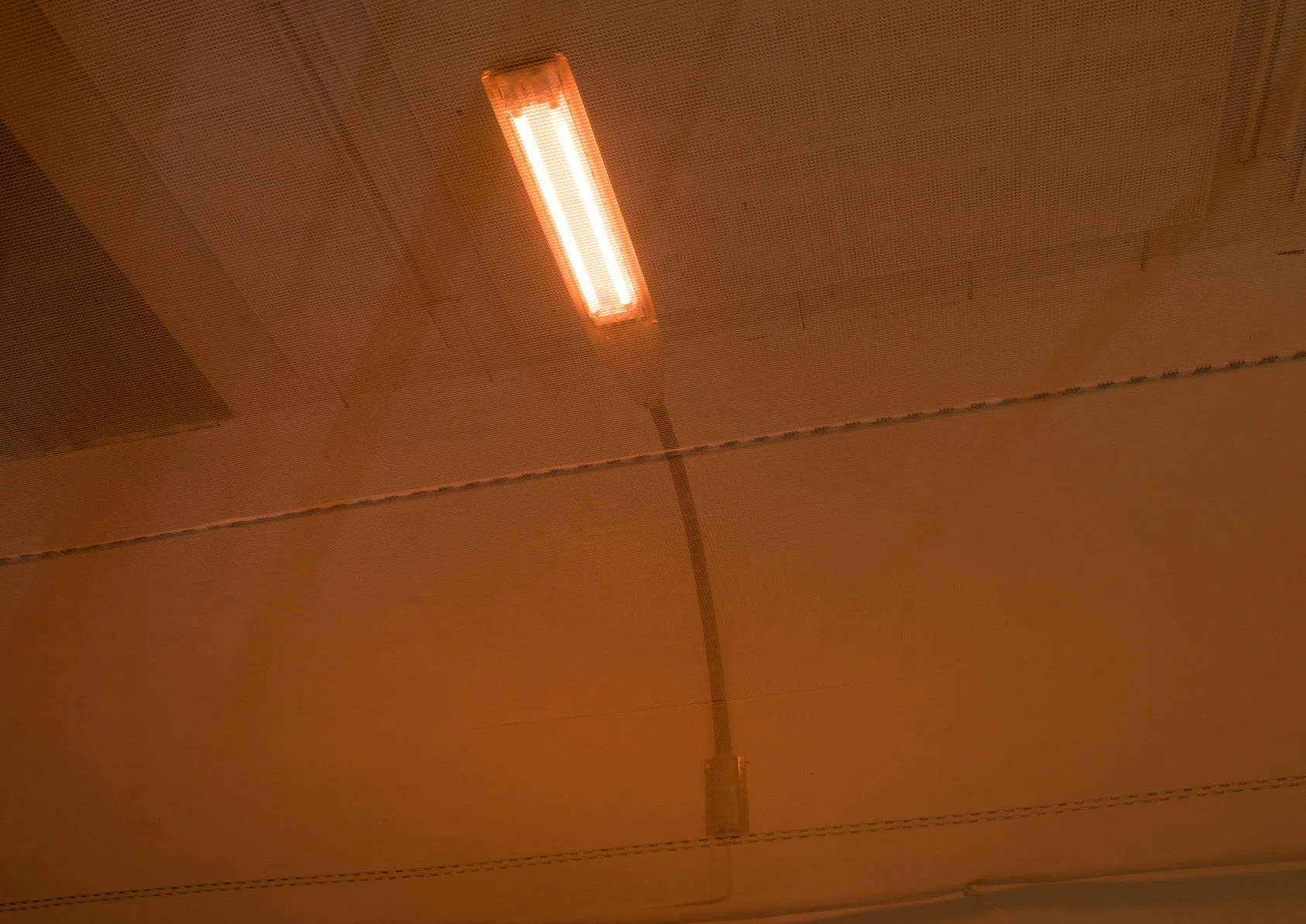
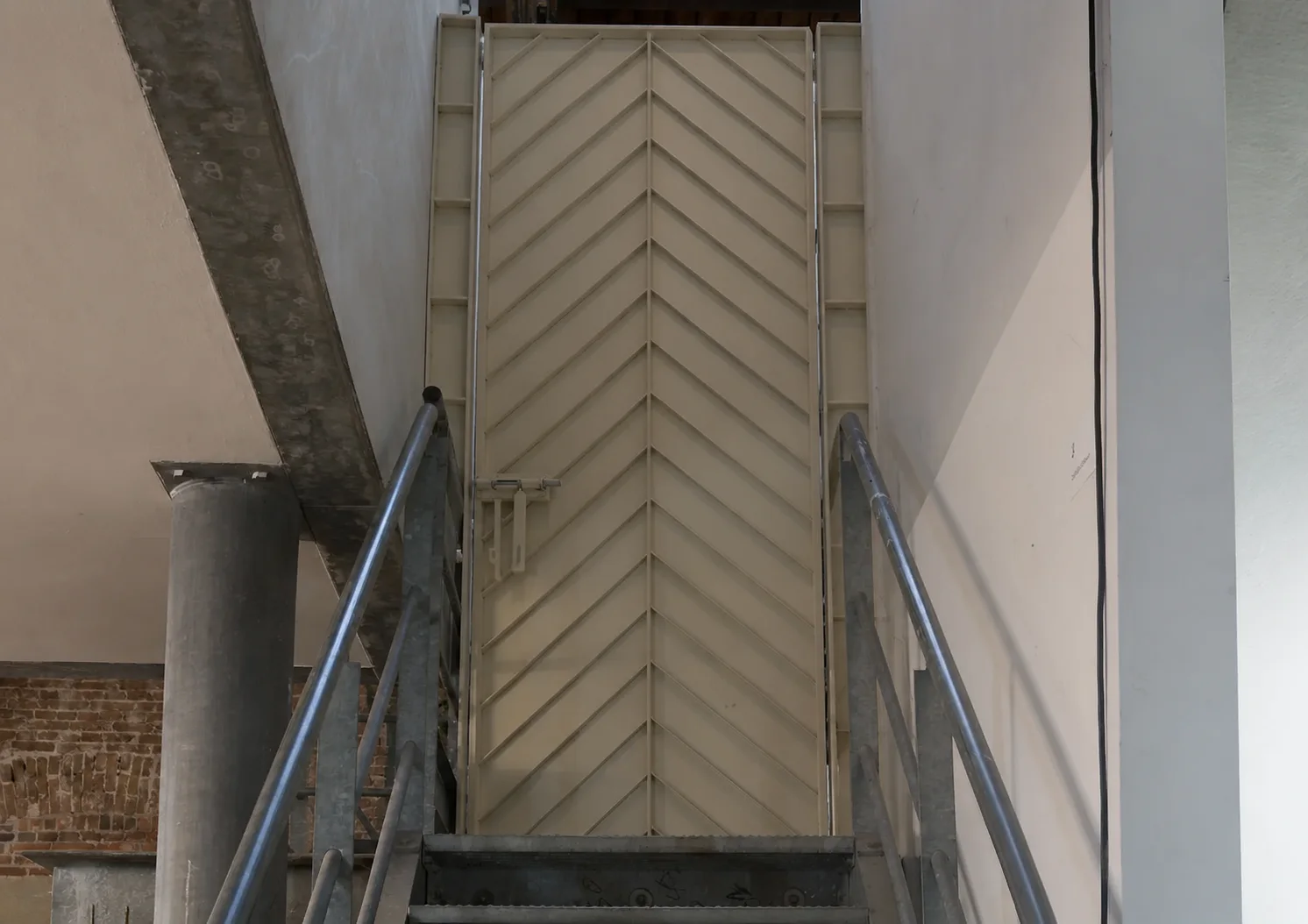
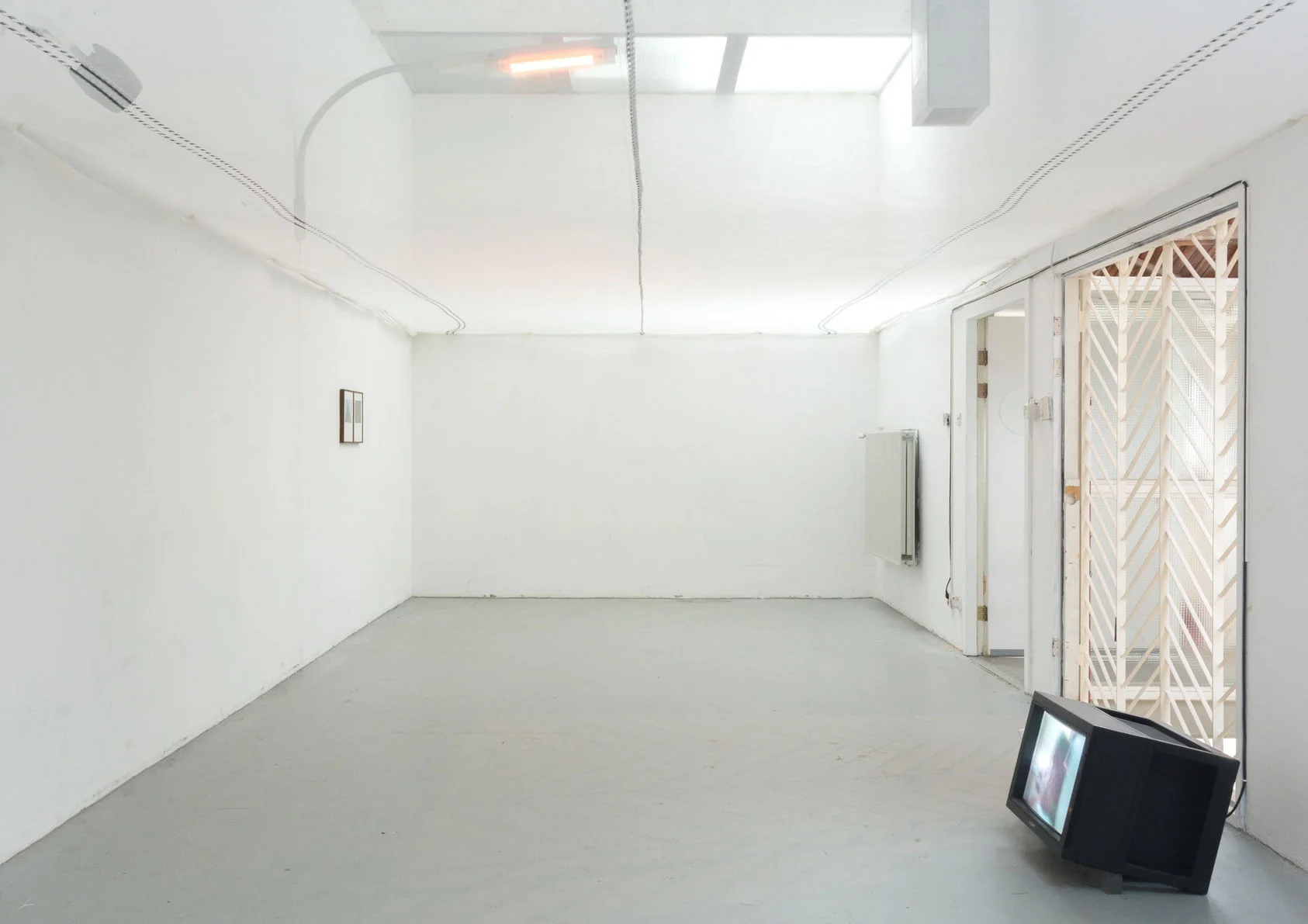
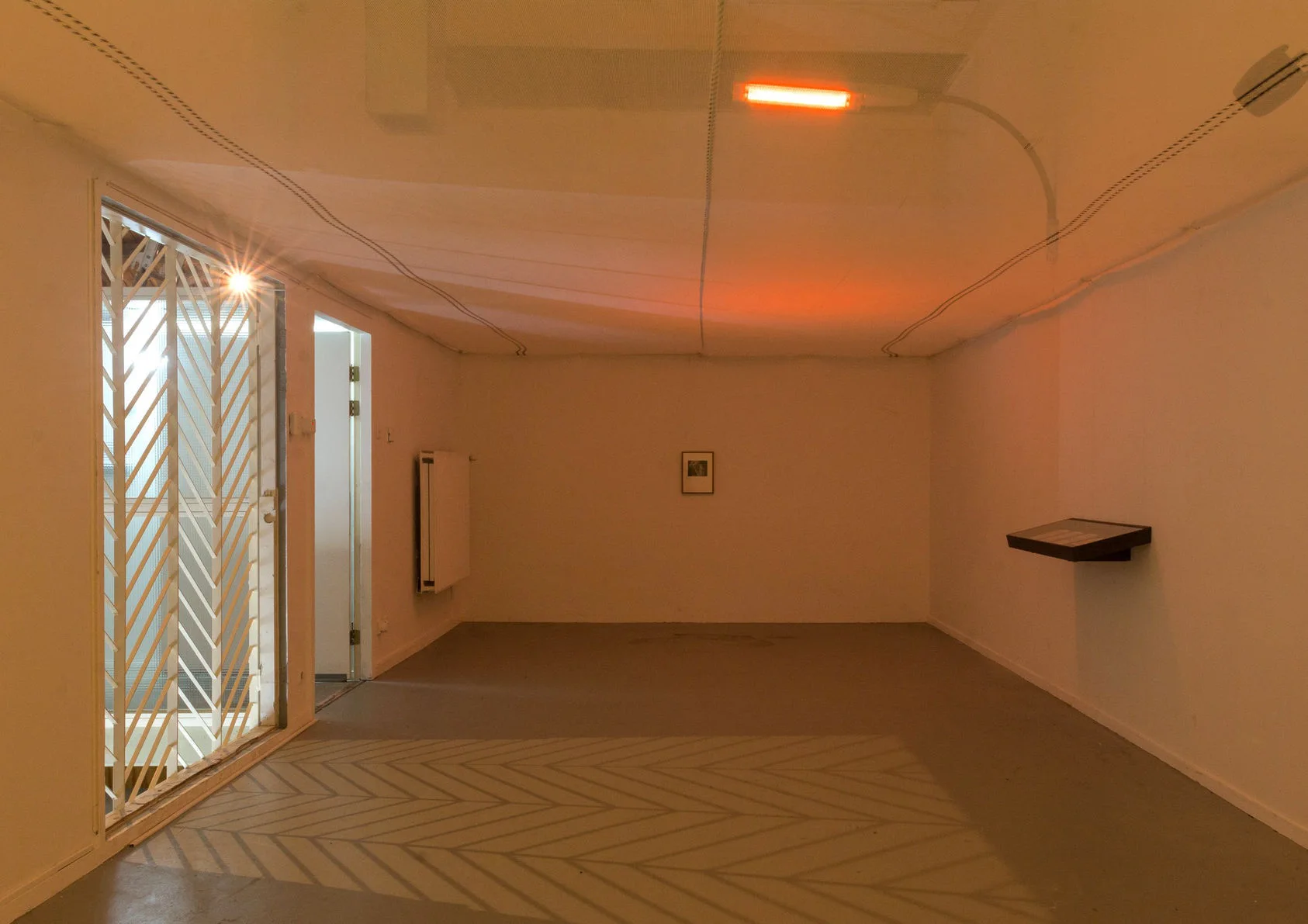
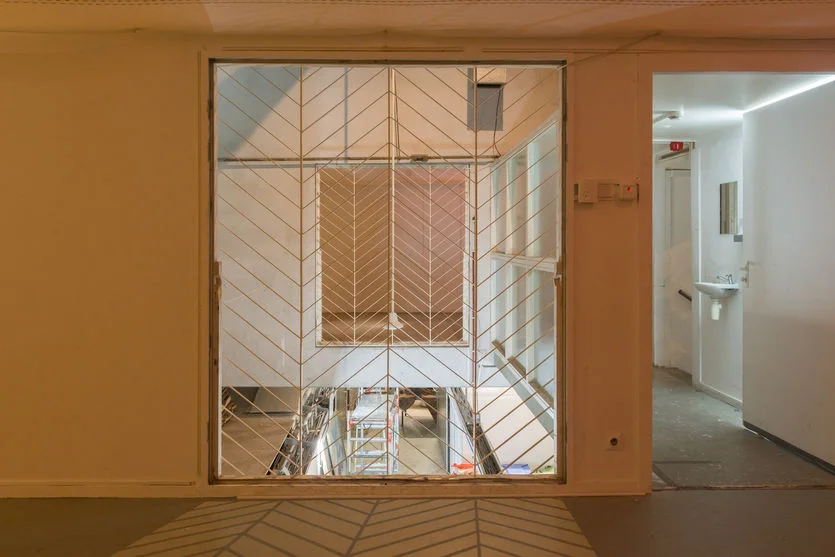
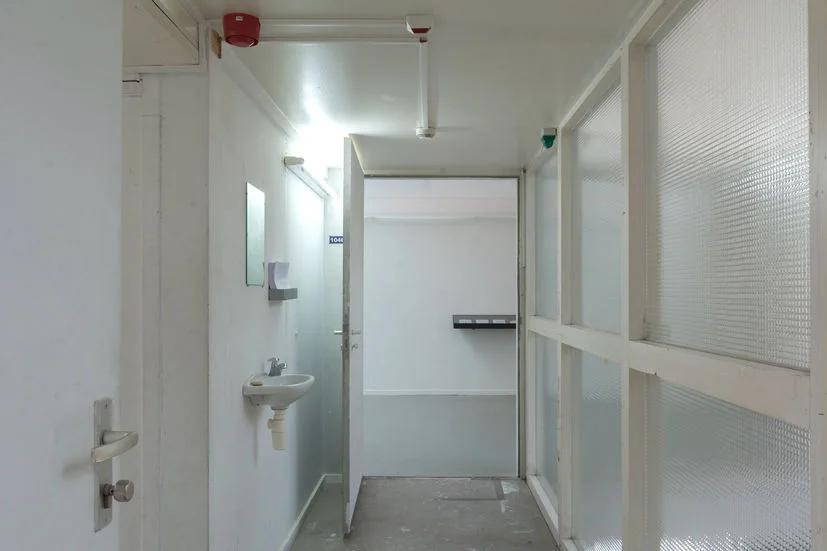
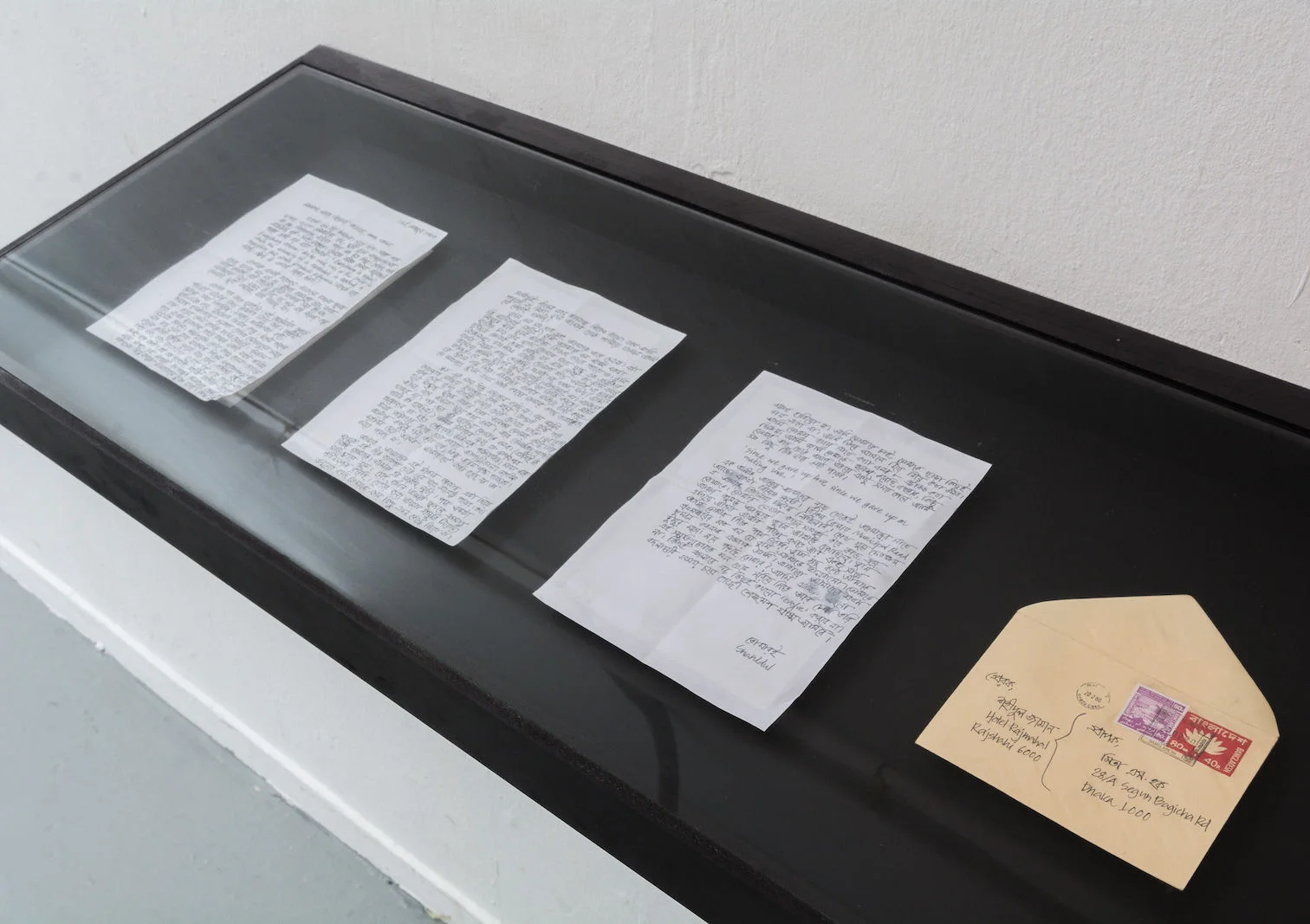
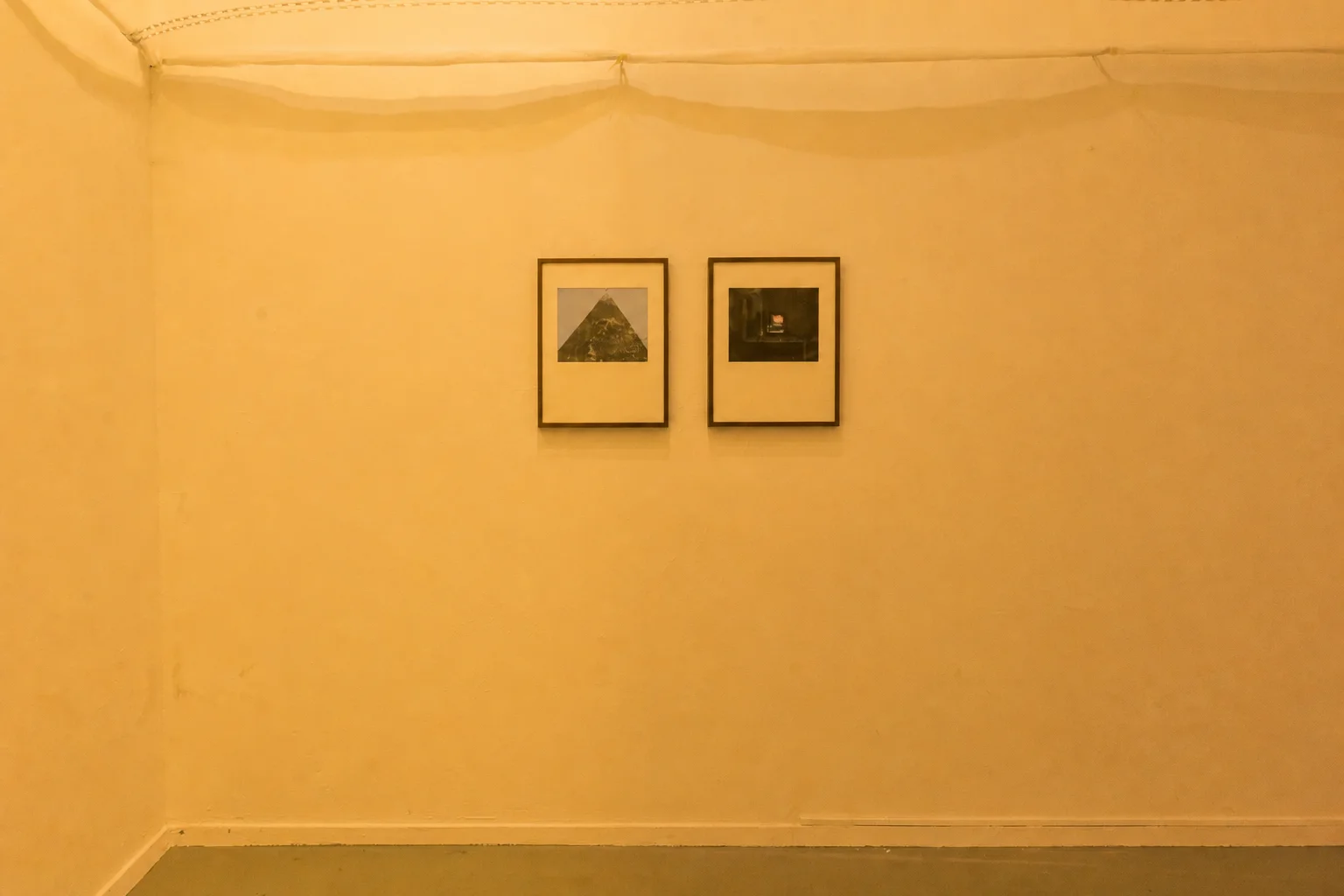
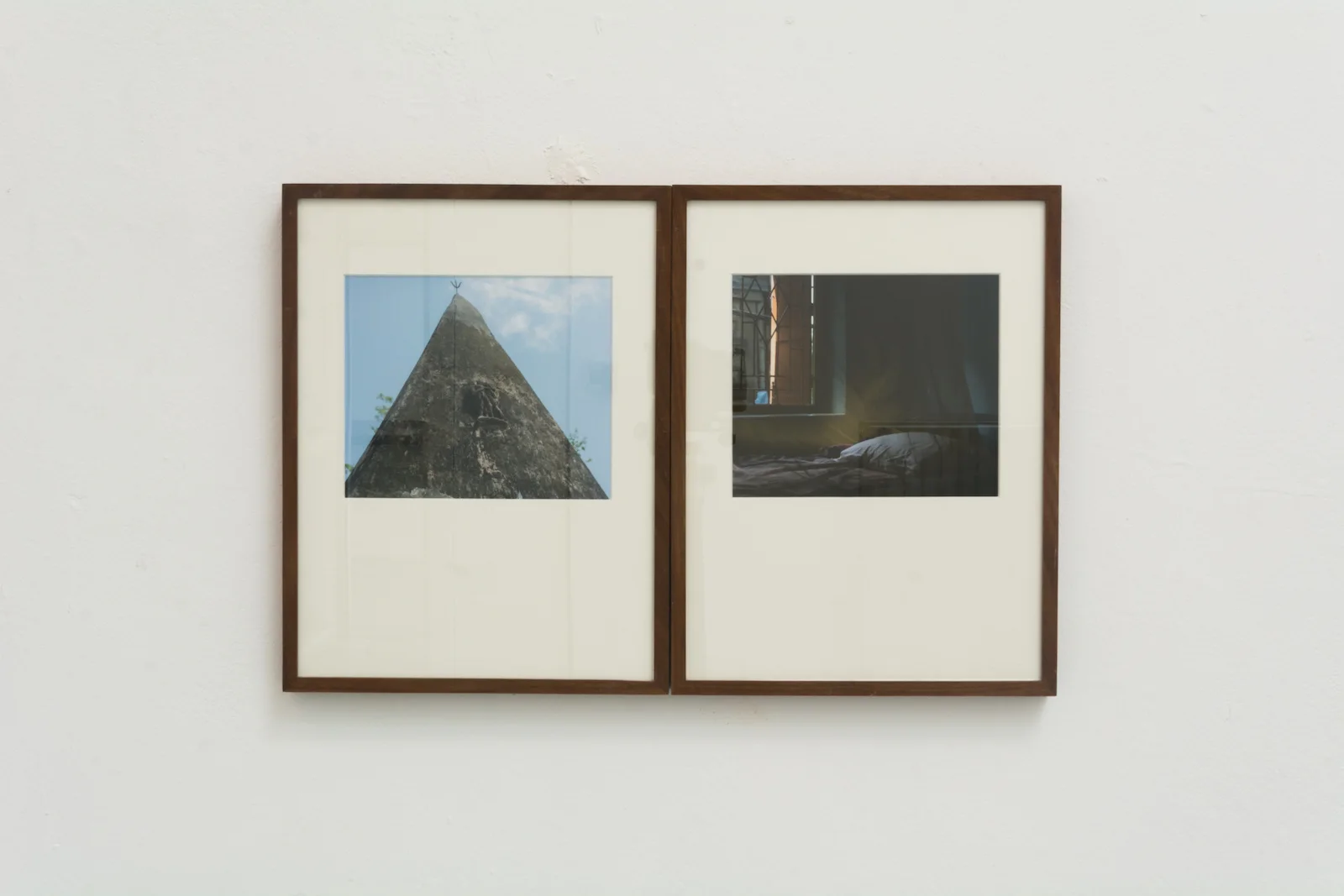
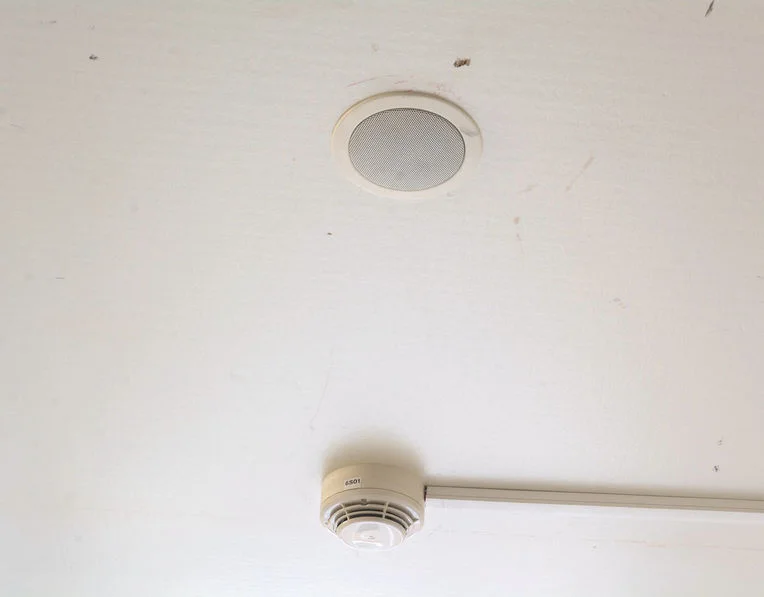
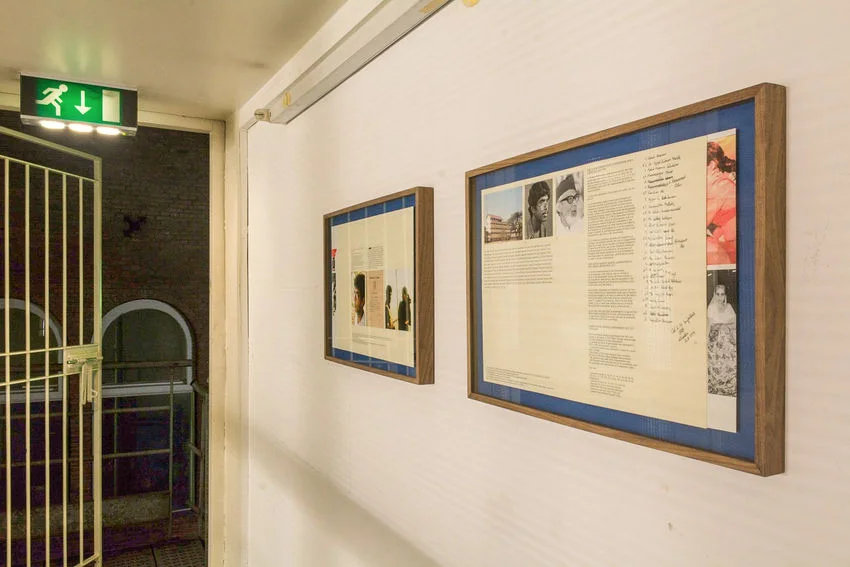
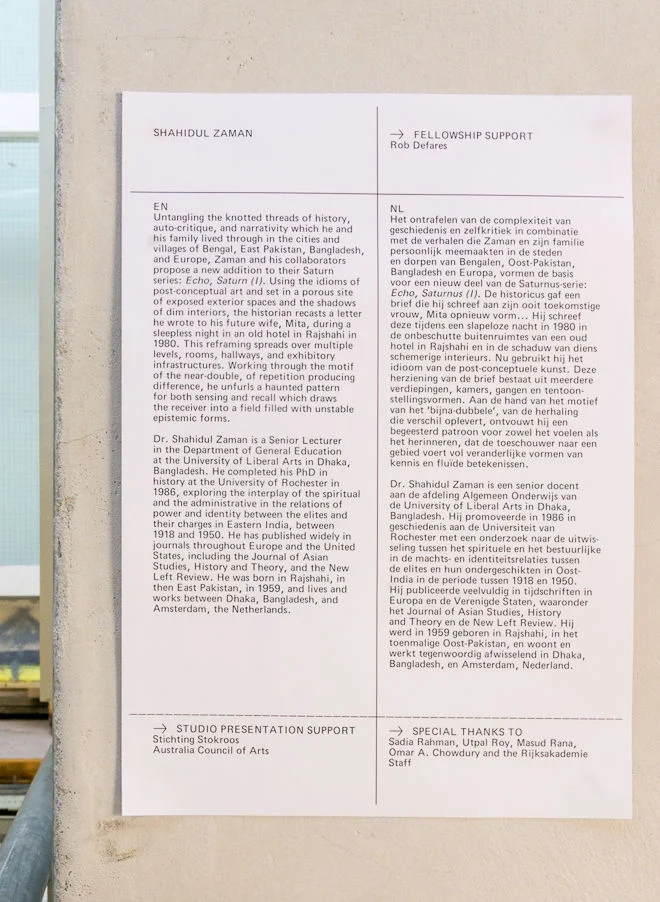
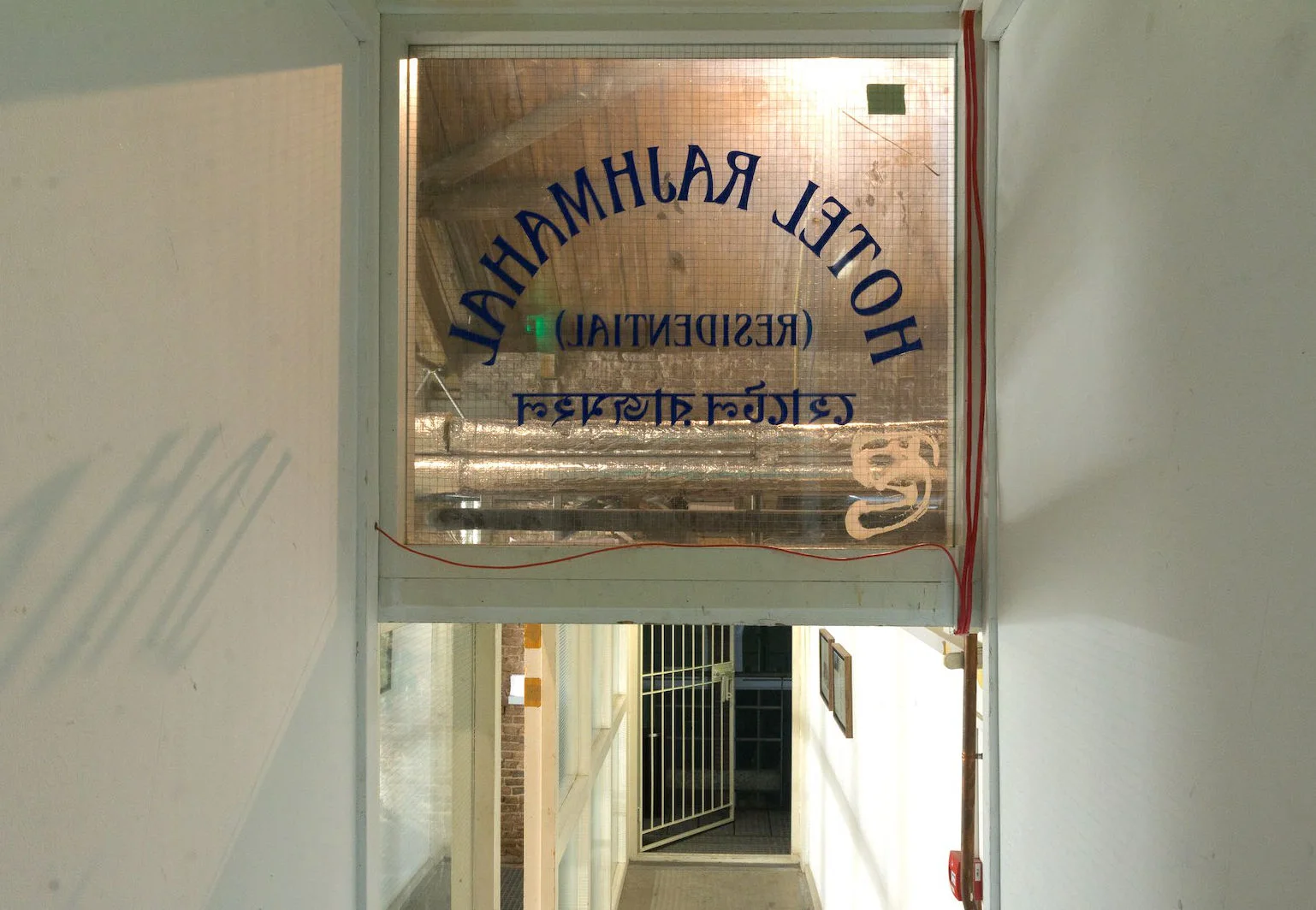
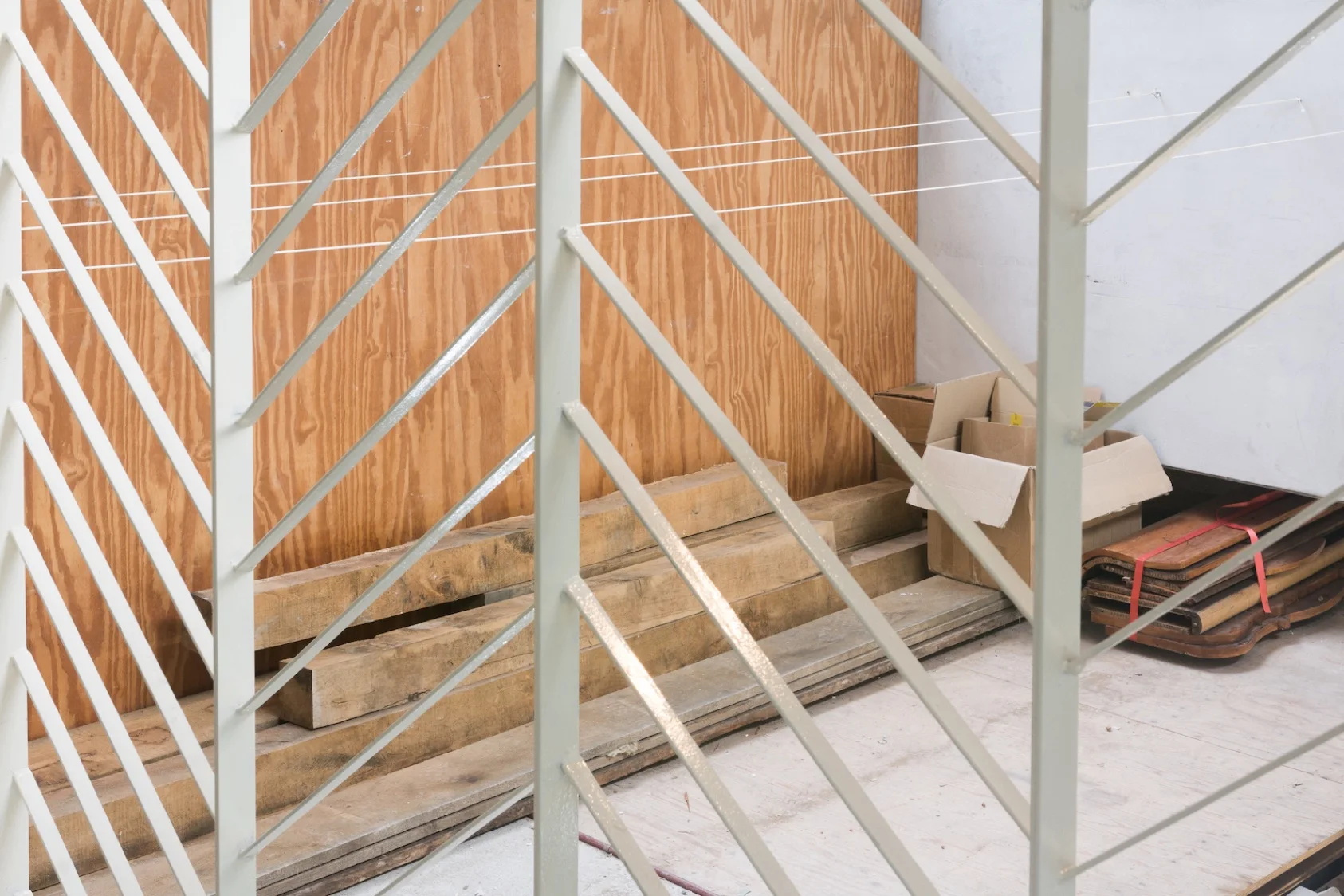
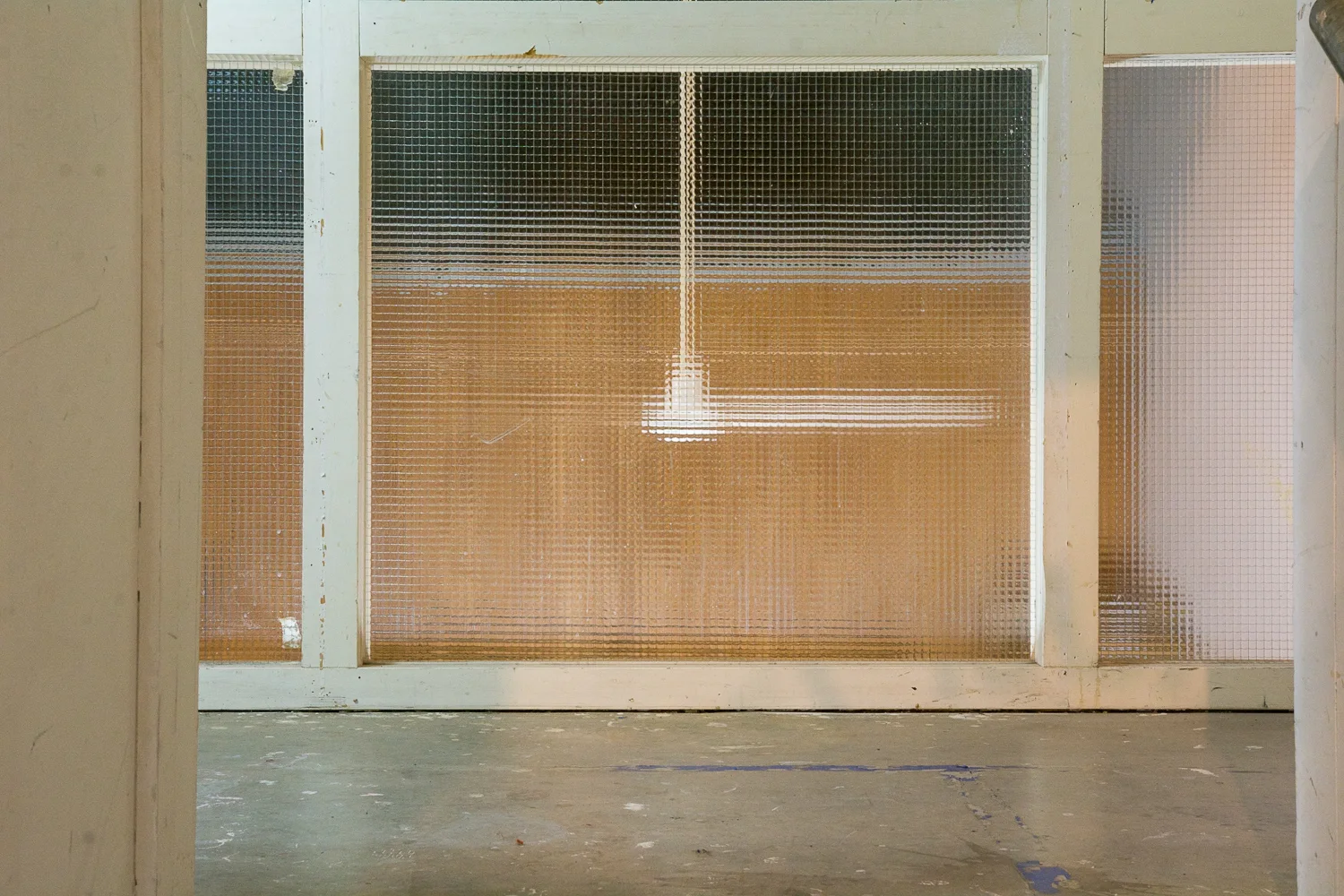
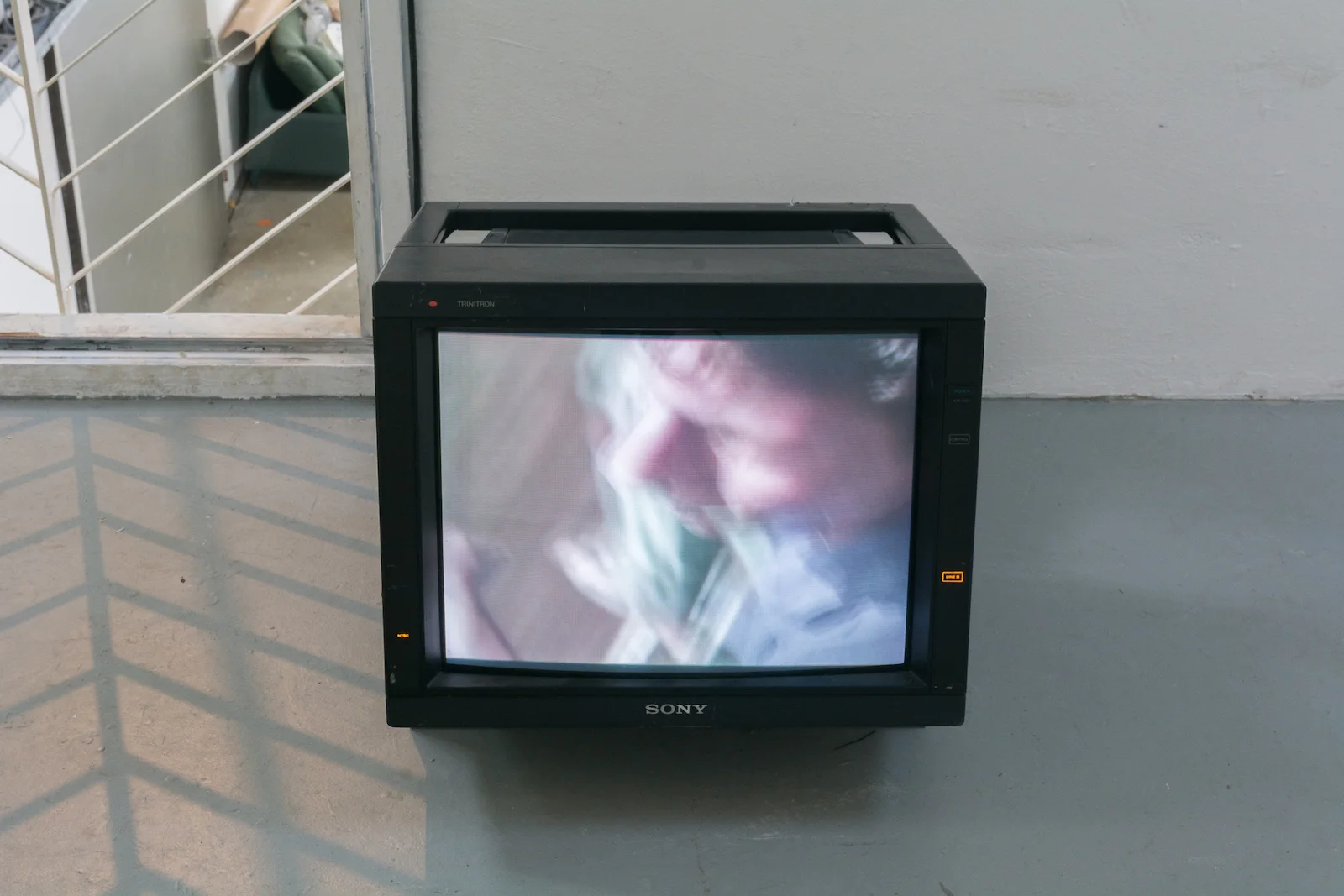
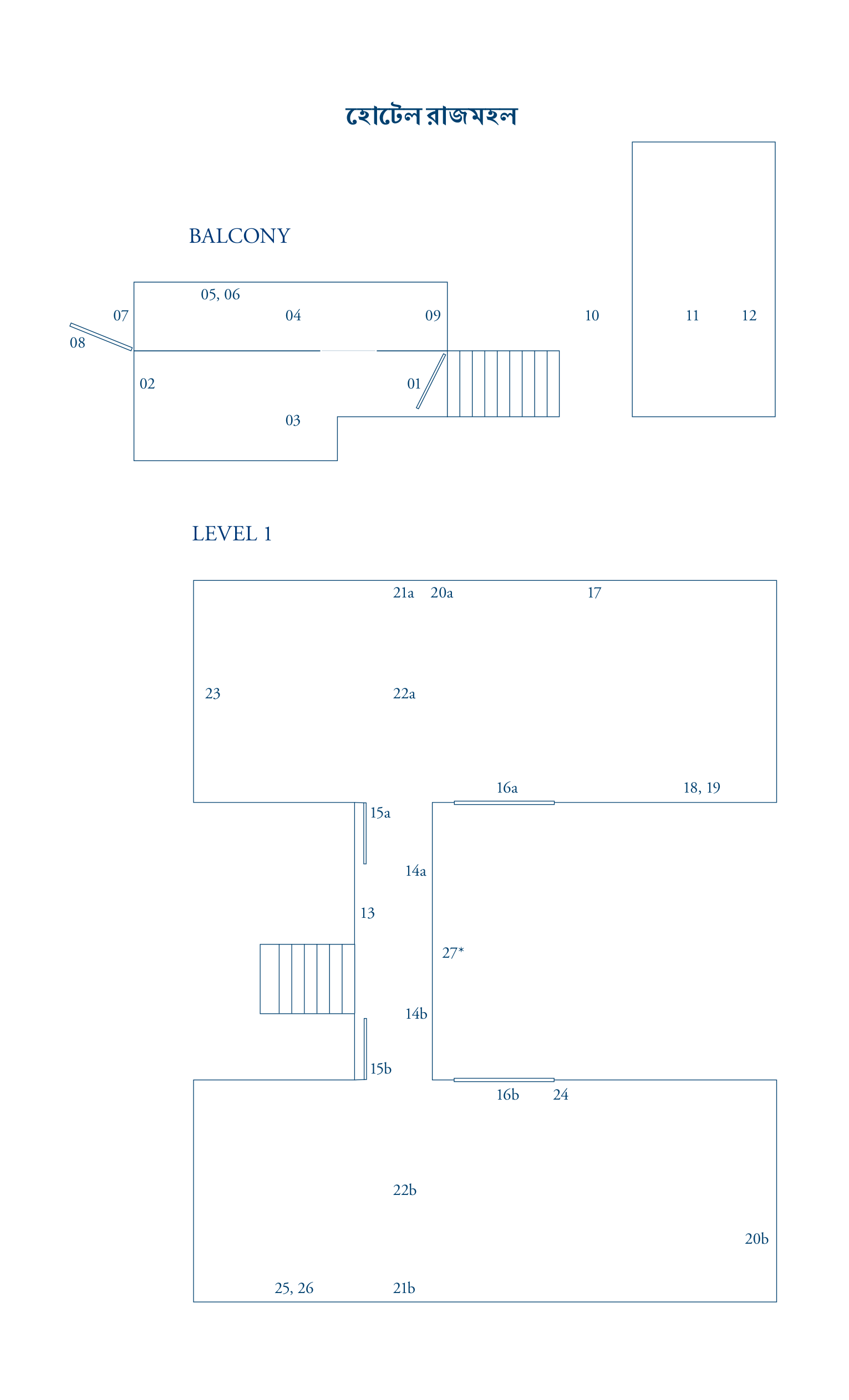
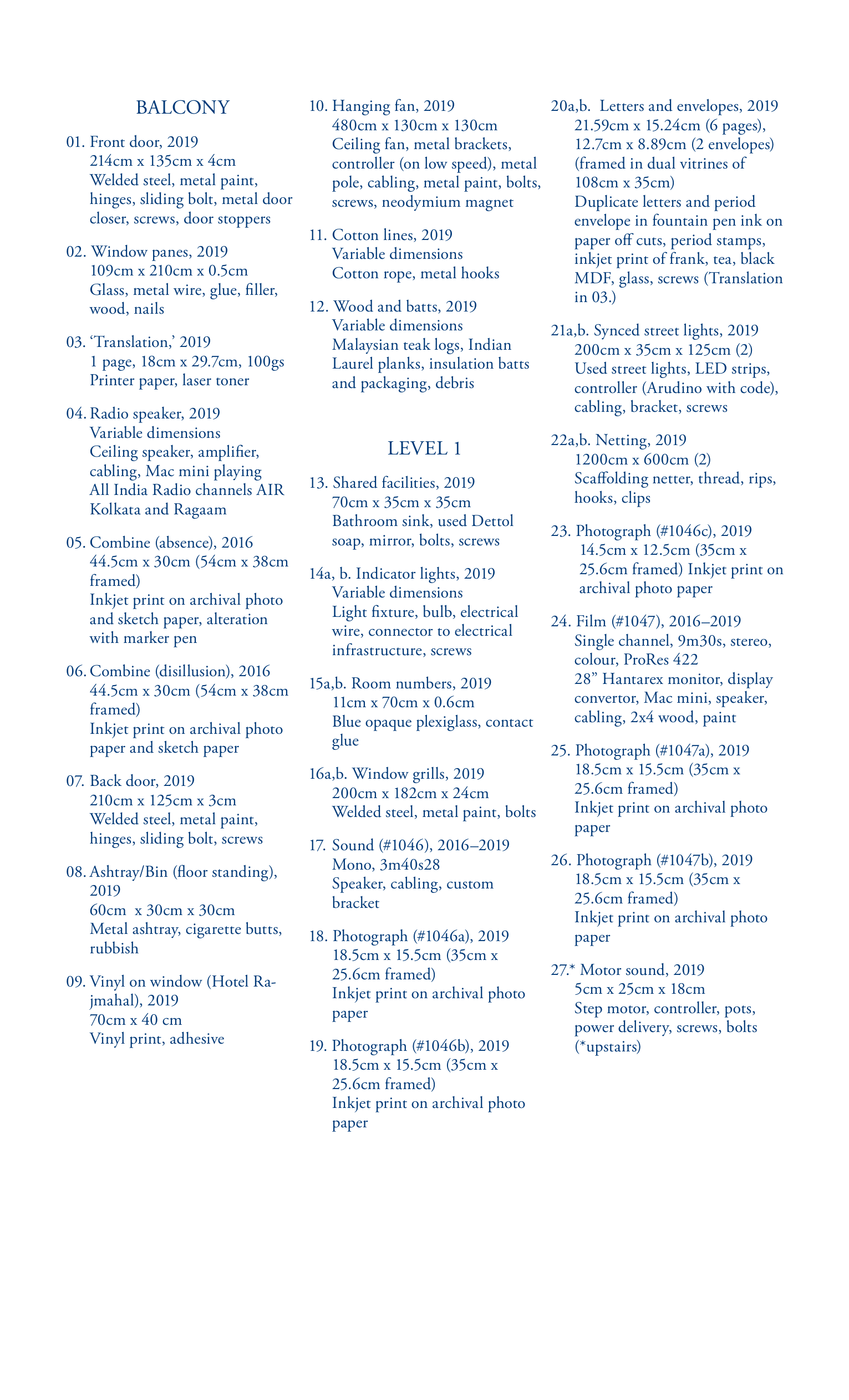
Echo, Saturn (I) (2019) transforms a two-storey Rijksakademie studio into the ghost of the Hotel Rajmahal in Rajshahi. Gates, window grilles, scaffolding netting, doubled streetlights, repeated room numbers and radio transmissions divide the building into near-identical spaces. Moving between exposed balconies and dim interiors, visitors enter an architecture that appears simultaneously protective and feverish: part hotel, family memory, transit point and trap. The exhibition is publicly attributed to Dr Shahidul Zaman, the historian and heteronym whose unstable memories shape the Saturn series.
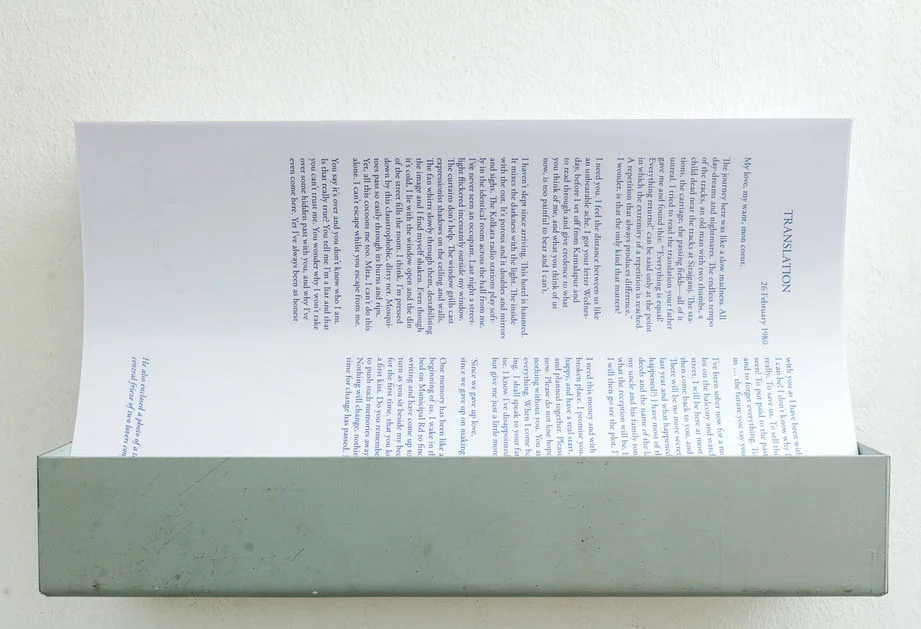
At its centre is a letter Zaman writes to his future wife, Mita, during a sleepless night at the hotel in February 1980. He has travelled to Rajshahi to locate and sell family land he has never seen, hoping to finance his departure for Europe and rescue their disintegrating relationship. In the letter, confession becomes inseparable from architecture: the hotel “doubles and mirrors and sighs”; a streetlight flickers outside; window grilles cast shifting shadows; torn netting traps him while also forming a cocoon. He promises Mita an escape and a shared future, even as the journey draws him more deeply into inheritance, secrecy and repetition.
The letter’s images spread throughout the building. Visitors pass through gates and grilles, encounter a shared washbasin and slowly turning fan, hear broadcasts from AIR Kolkata and find paired rooms illuminated by synchronised streetlights. Each element seems to confirm Zaman’s account while subtly altering it. Through near-doubles and repetitions that continually produce difference, Echo, Saturn (I) asks how personal memory becomes history—and whether a past reconstructed in order to escape it can ever be separated from one invented in the process.
Augustijn (2018–19) Netwerk Aalst; IFFR Mid-length; Forecast Festival; HKW Berlin
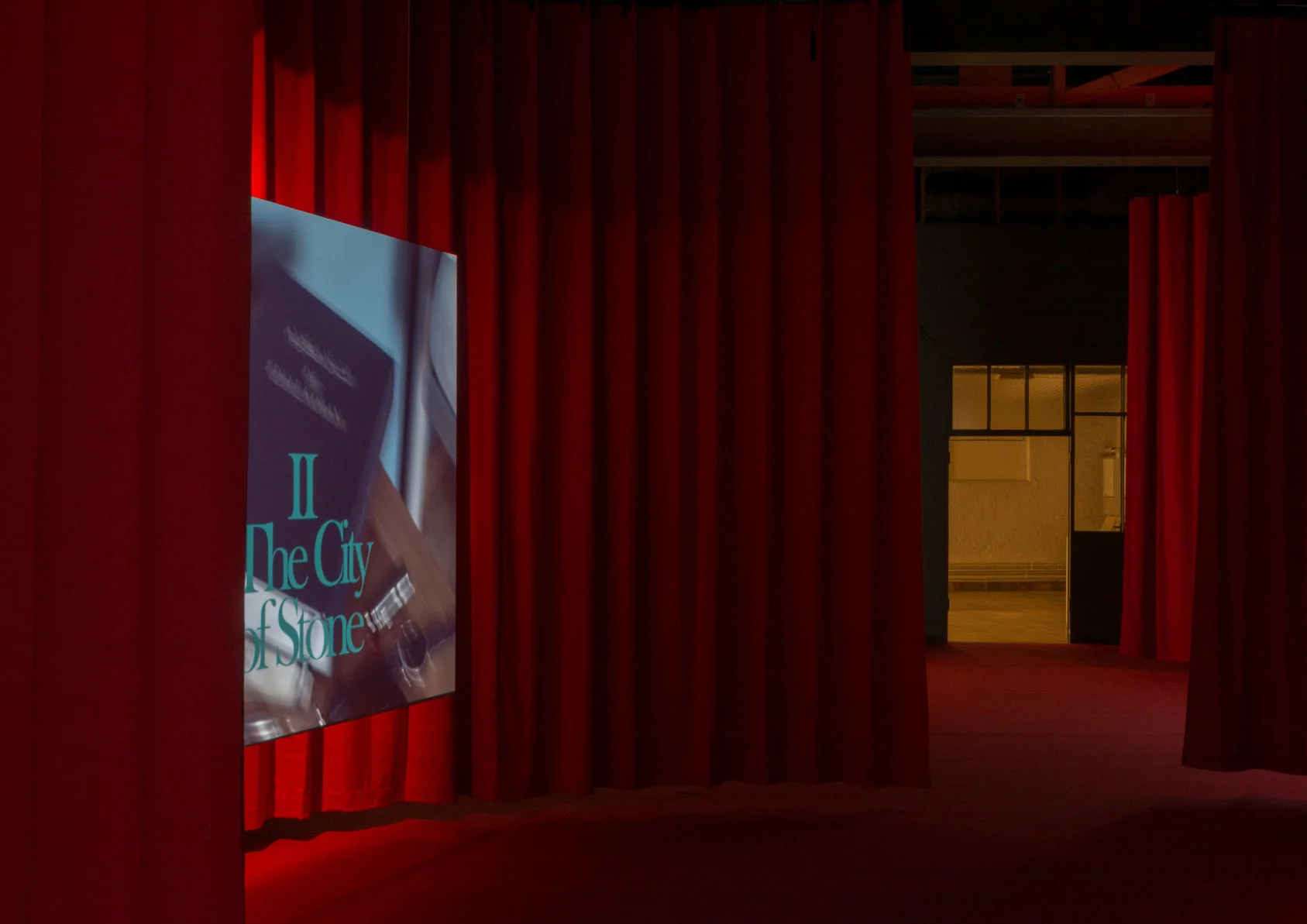
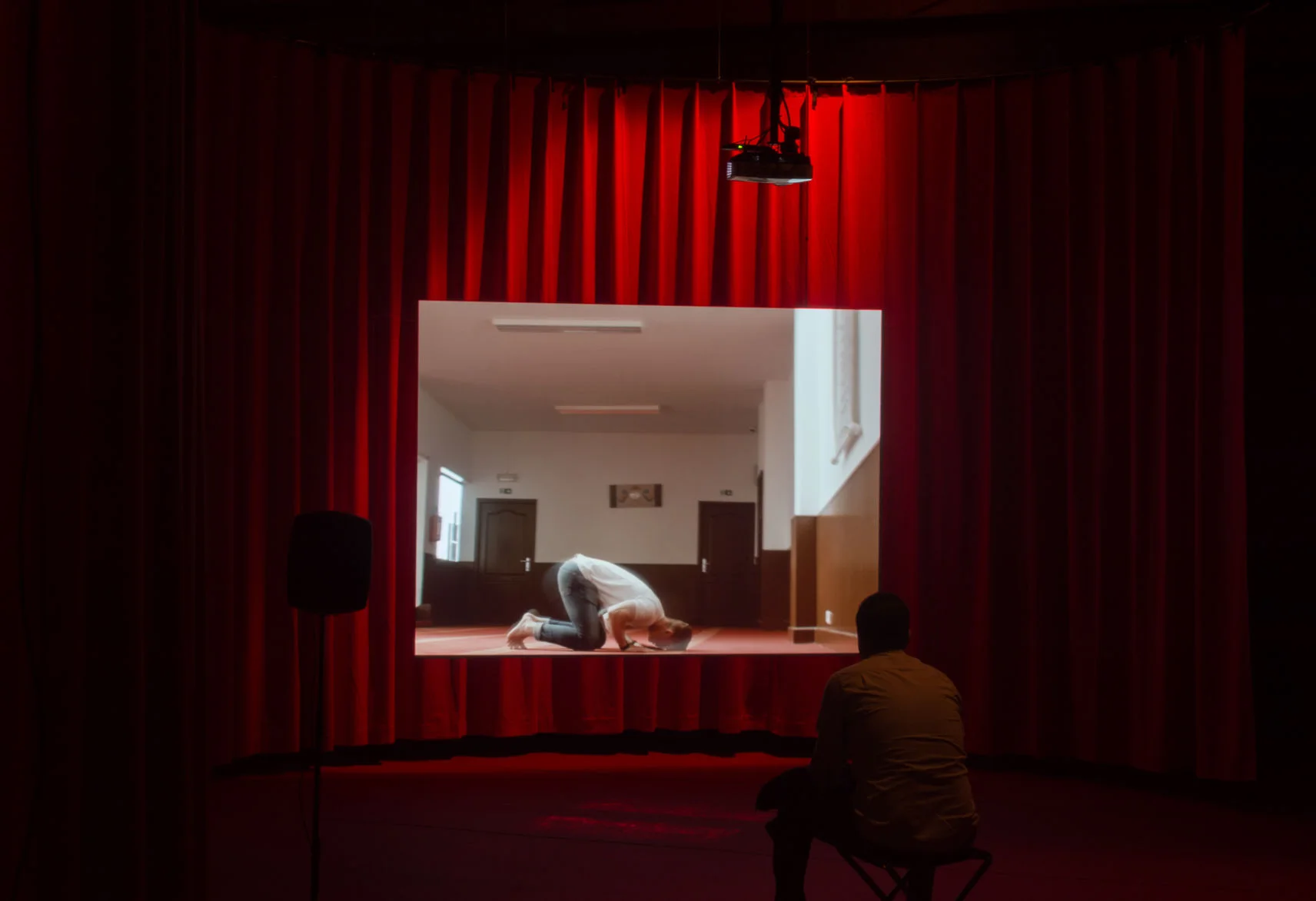
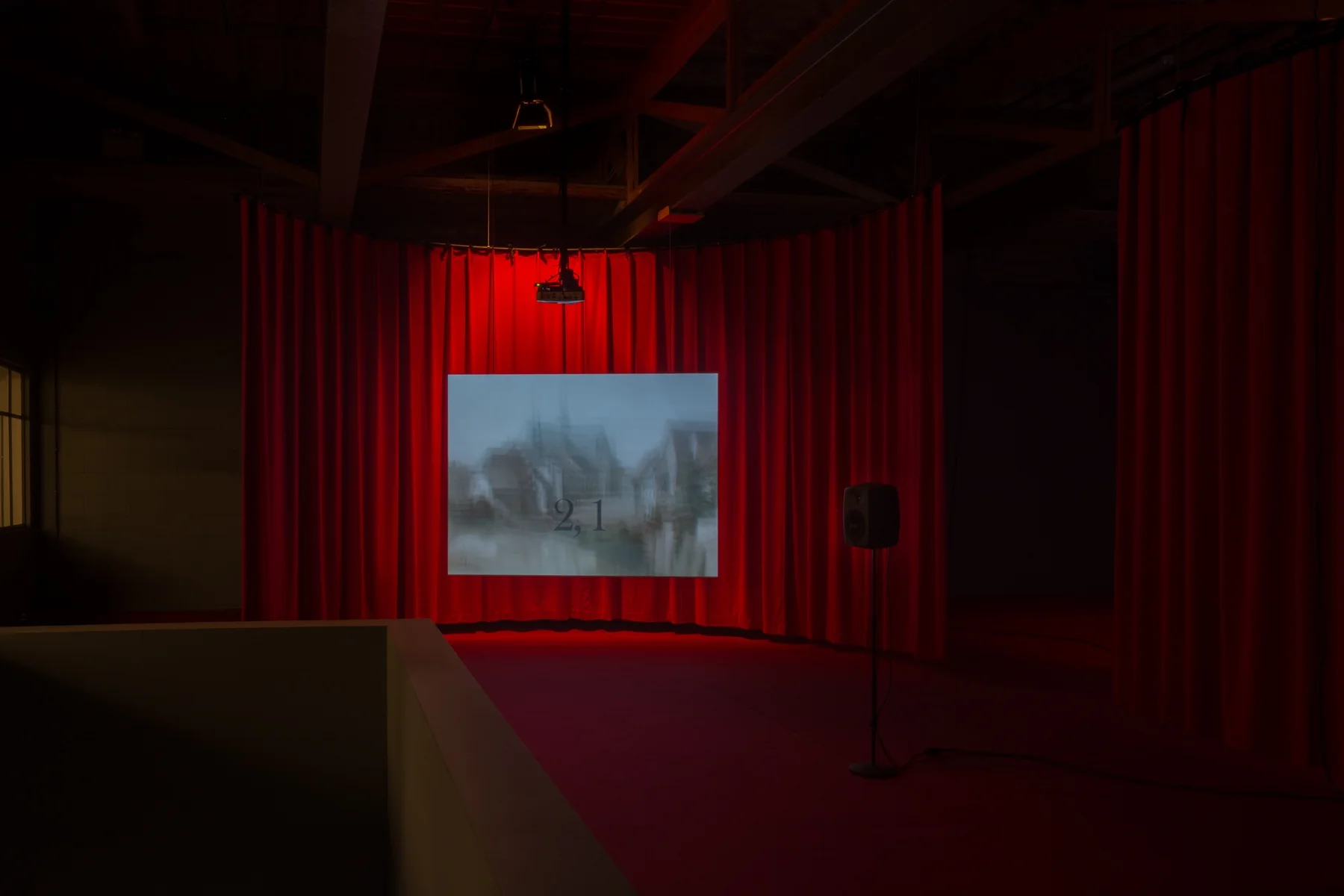
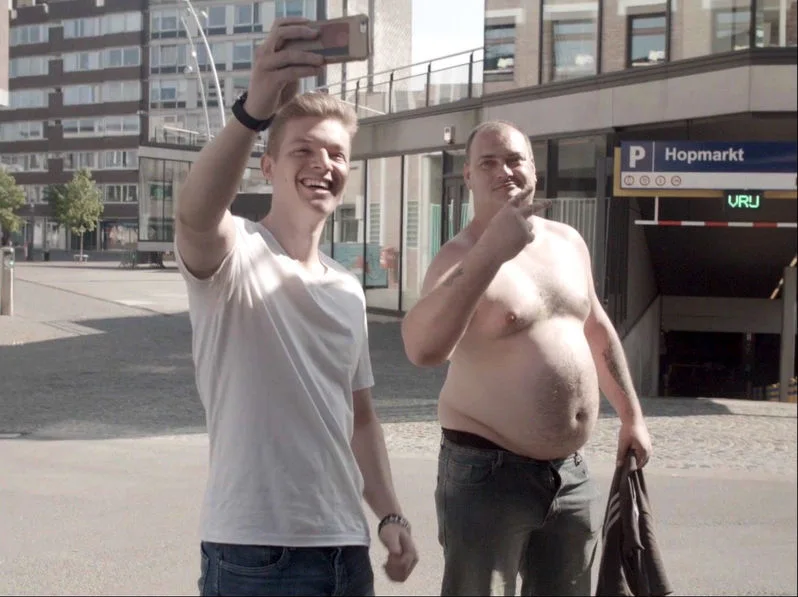
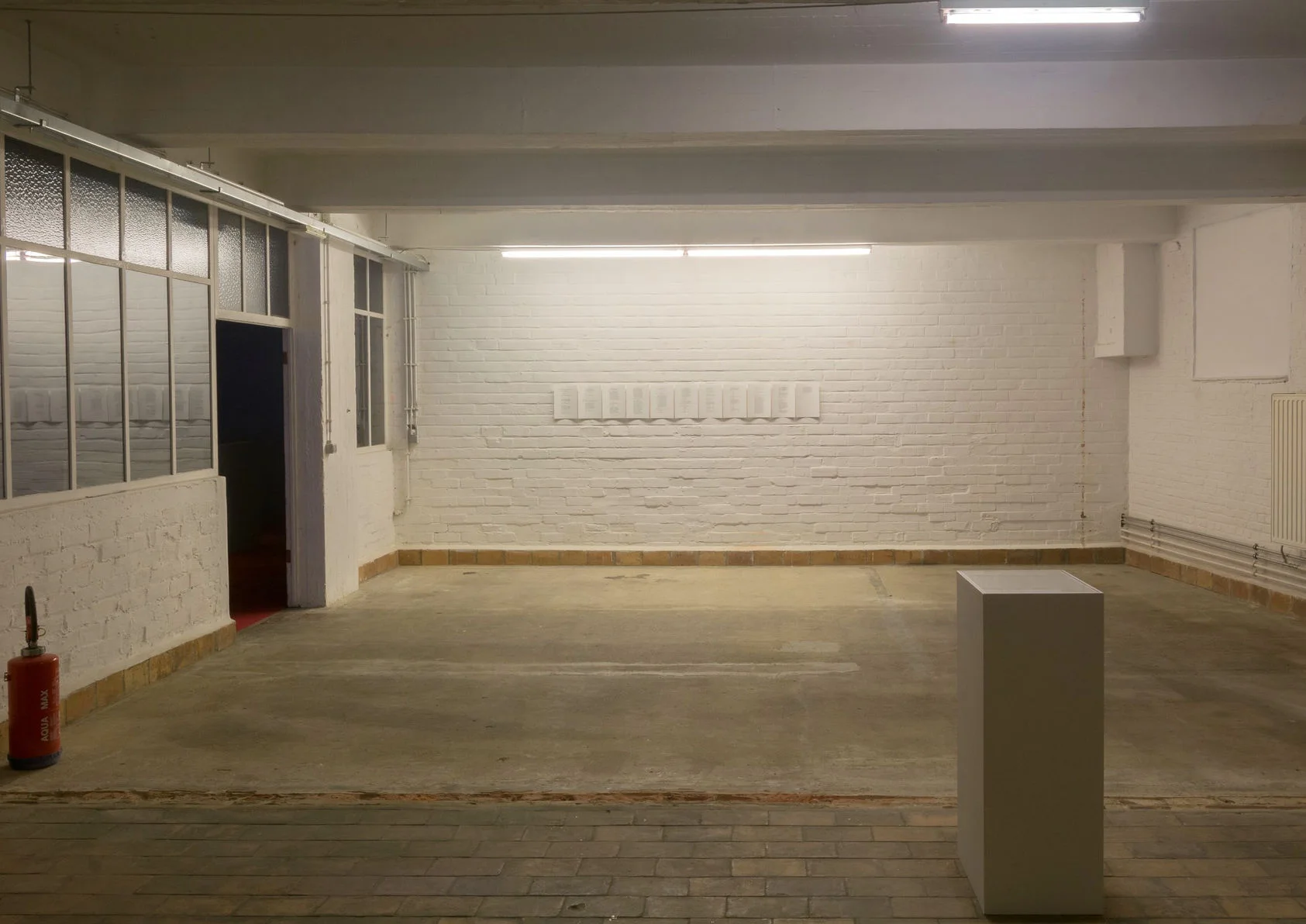
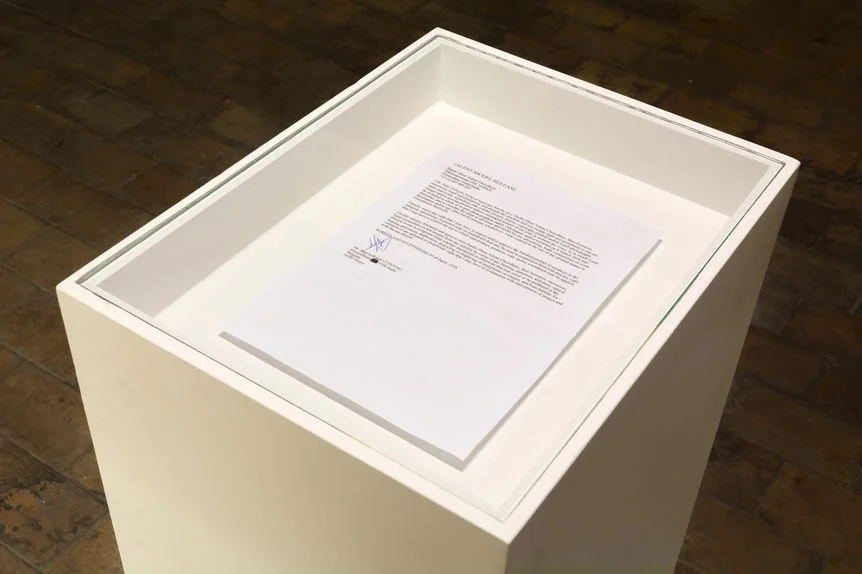
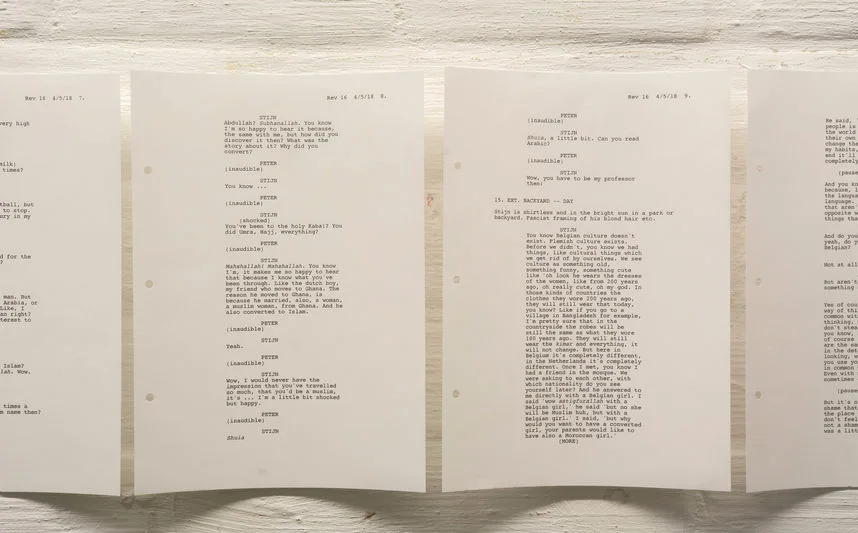


The three-channel film installation Augustijn (2018–19) begins with a real encounter on the wrong train. A blond, blue-eyed young Belgian named Stijn approaches Omar, a filmmaker from a Muslim background who has become an atheist. Stijn has travelled in the opposite direction, from Flemish secularism to an intense commitment to Islam. When they later reconstruct their meeting, they cannot agree on what happened: who spoke first, whether another passenger was drinking beer or why the conversation began. Each recognises that the other version may simply be the better story.
Filmed around Stijn’s hometown of Aalst—in churches, schools, cars, streets and empty rooms—the work follows him as he revisits the Catholic childhood he rejected and describes the faith he adopted. He remembers praying to the Virgin Mary with his great-grandmother, plots a political party for believers, and reflects on masculinity, sex, family and the possibility of turning an empty exhibition room into a mosque. His declarations move between conviction, contradiction, humour and self-reproach. Omar remains behind the camera, questioning, prompting and occasionally correcting him; yet Stijn repeatedly anticipates the film being made, performs his own image and redirects its argument.
Scenes recur with altered framing, timing or language. Statements that initially appear documentary return as rehearsals or scripted takes, while spontaneous exchanges acquire the polish of fiction. Premiered as both a forty-seven-minute film at IFFR and as a multichannel installation, Augustijn allows competing versions of the encounter to remain audible at once. The portrait gradually becomes a negotiation over belief, desire and authorship between two men who recognise themselves in each other’s reversed trajectories. Neither can remain simply filmmaker or subject, believer or unbeliever; each uses the other to test the story he tells about himself.
Unsaturn (2018–24) Het Bos, Antwerp; LUCA, Brussels; De Appel, Amsterdam; Club Solo, Breda
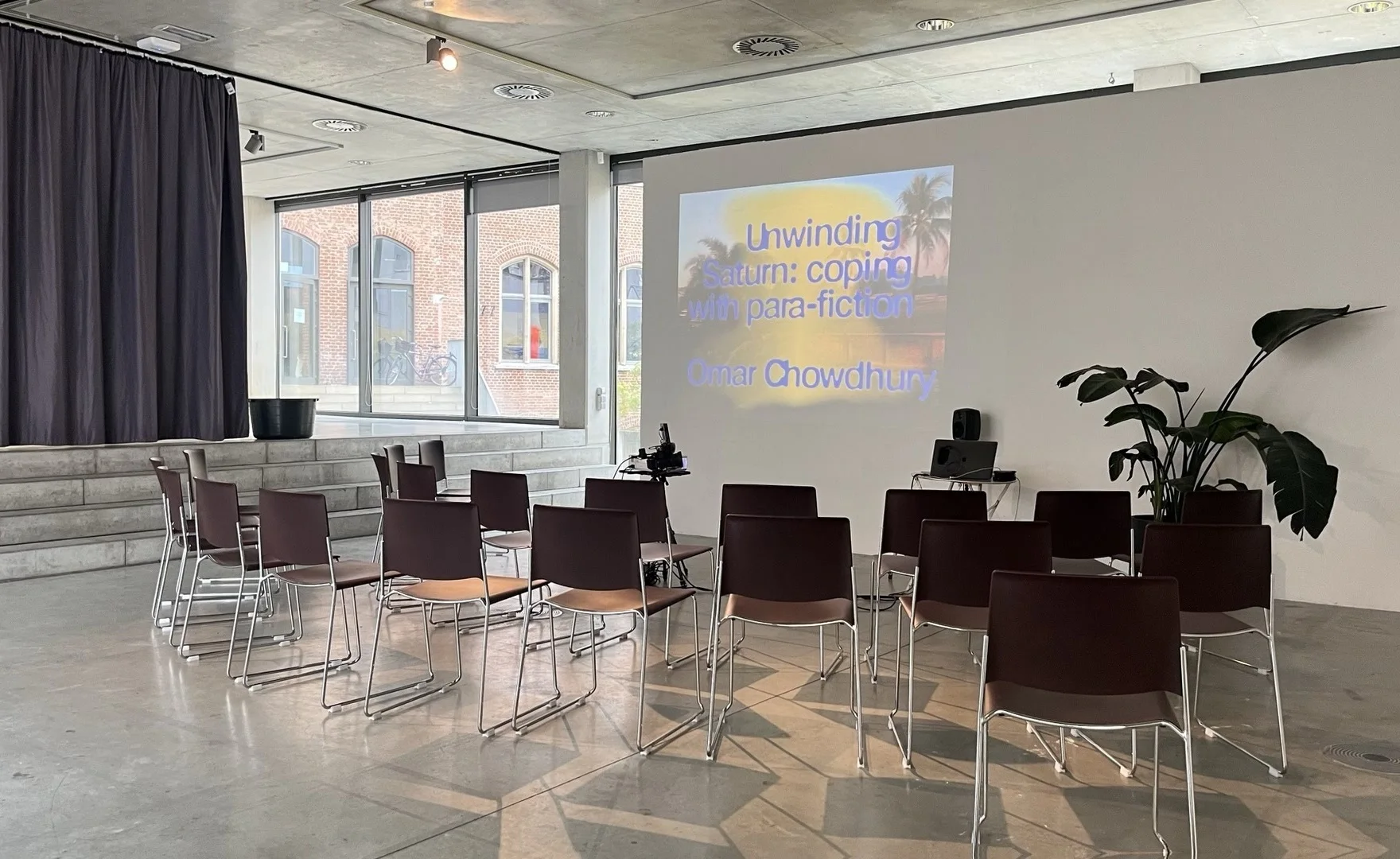
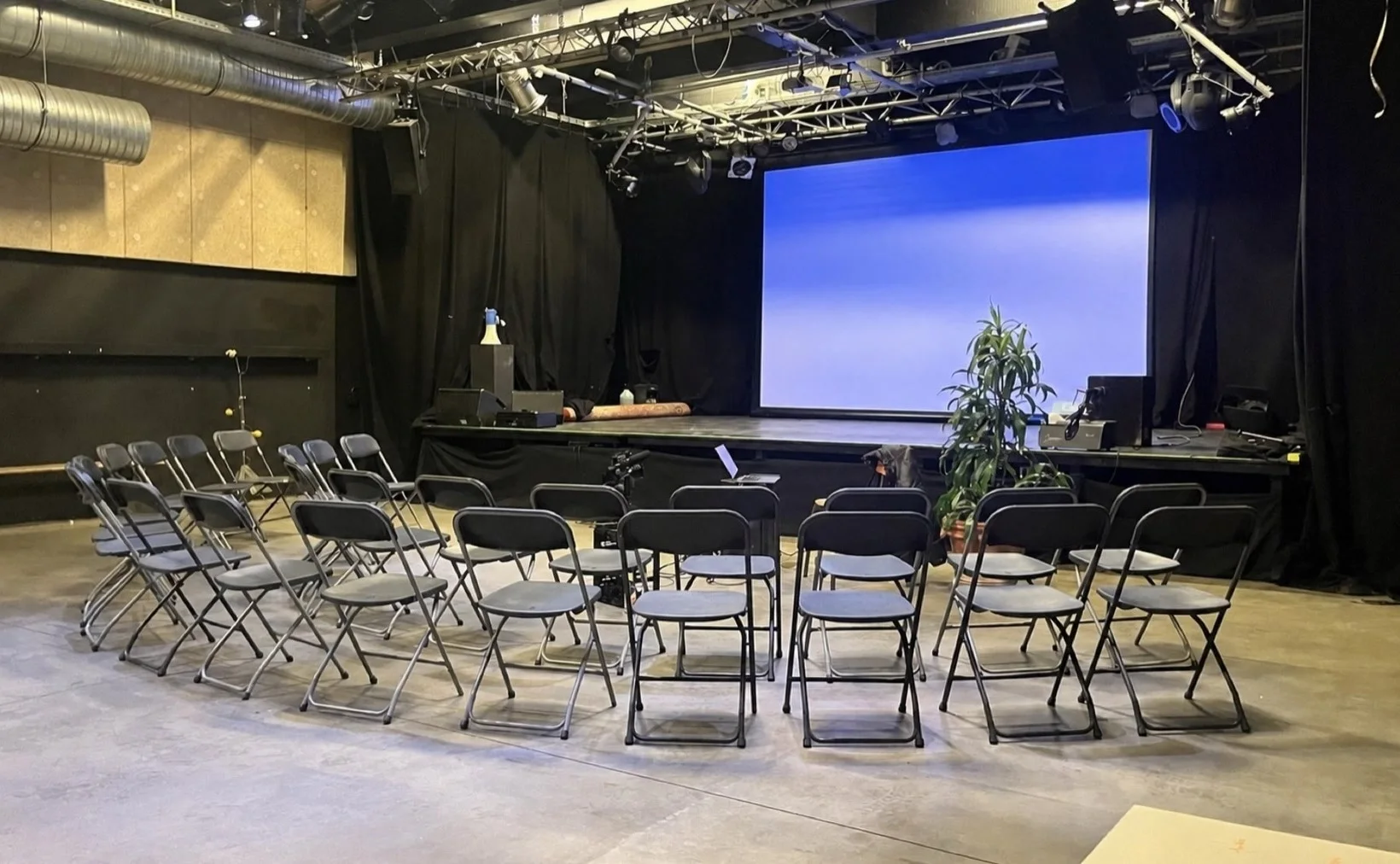
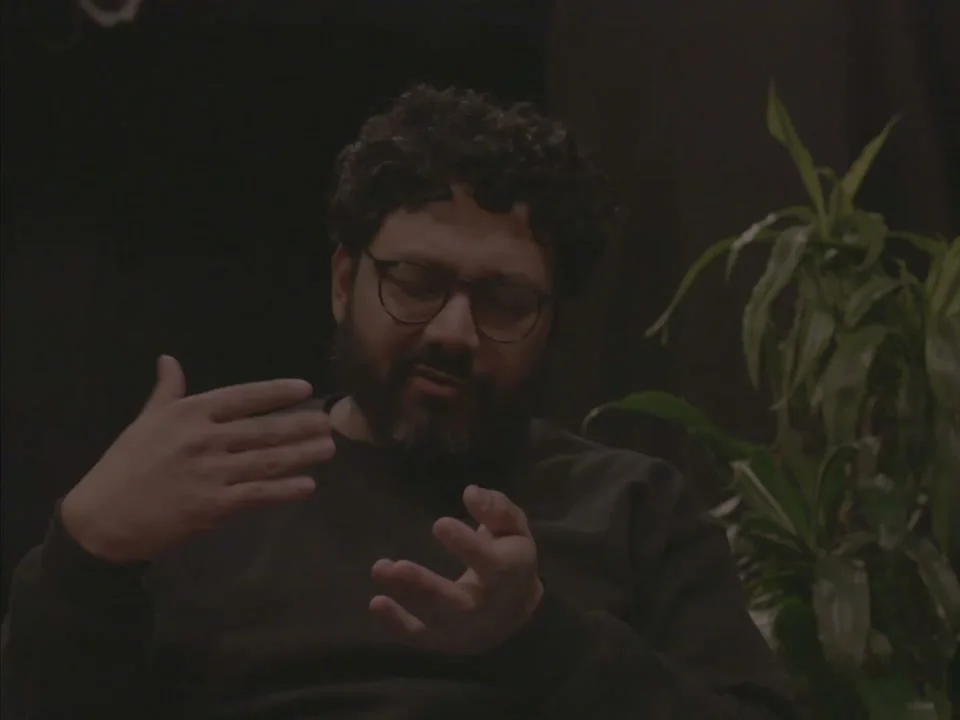
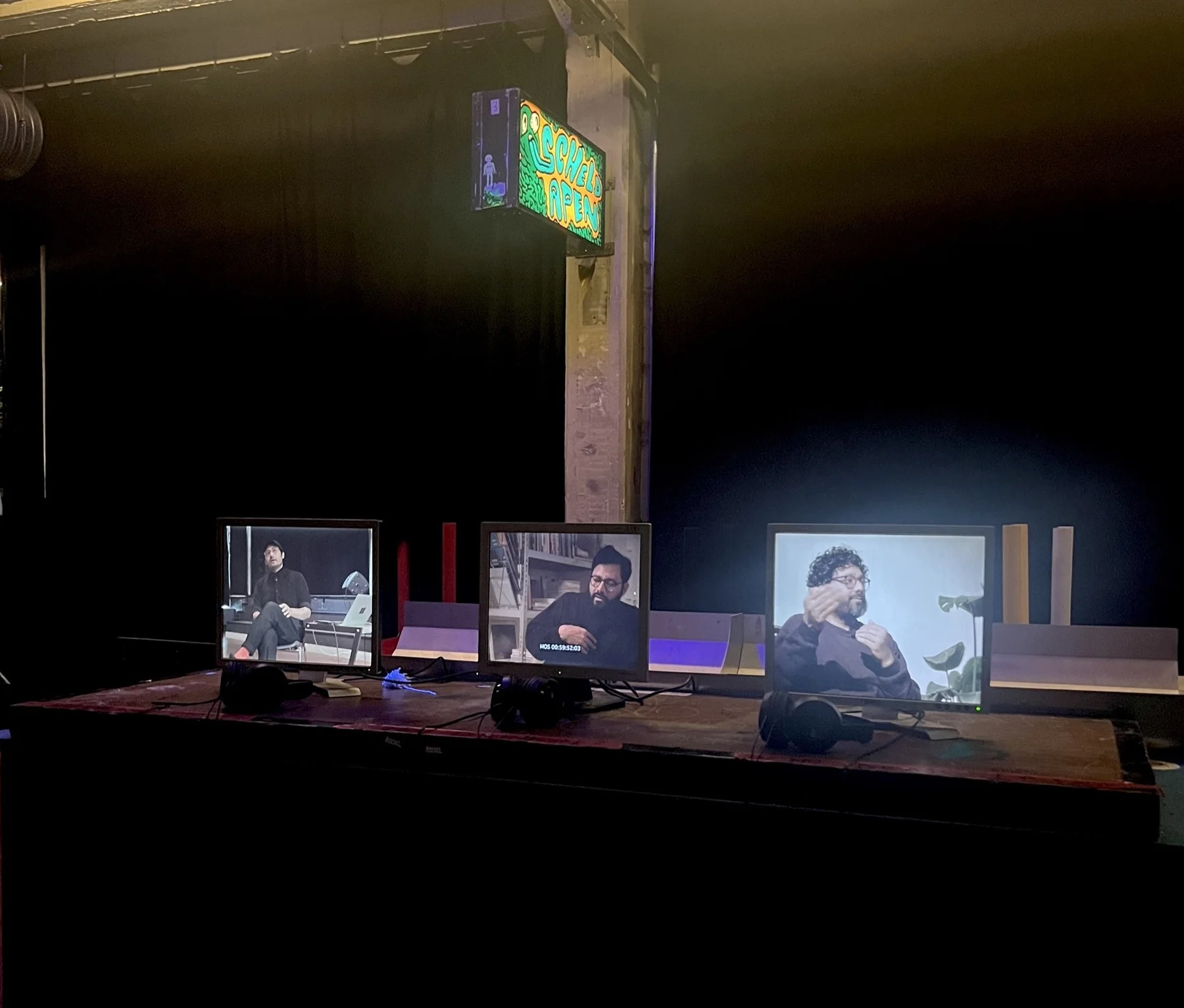
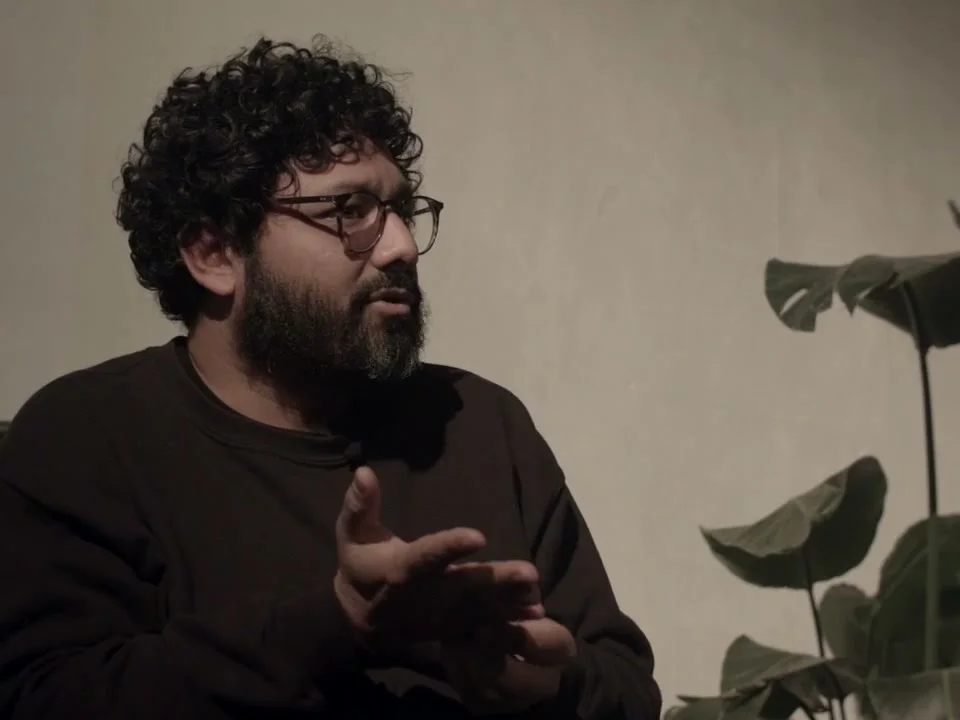
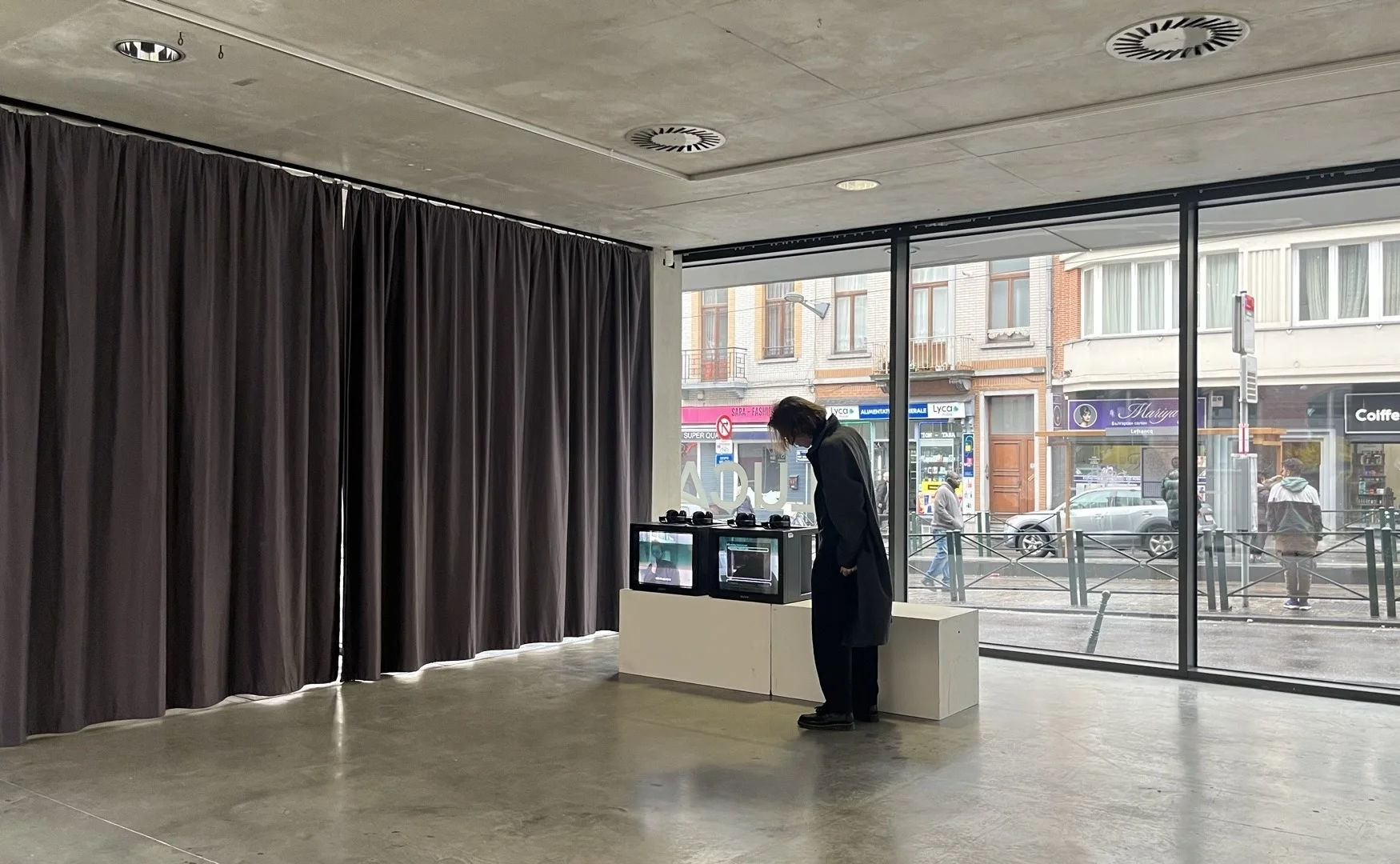
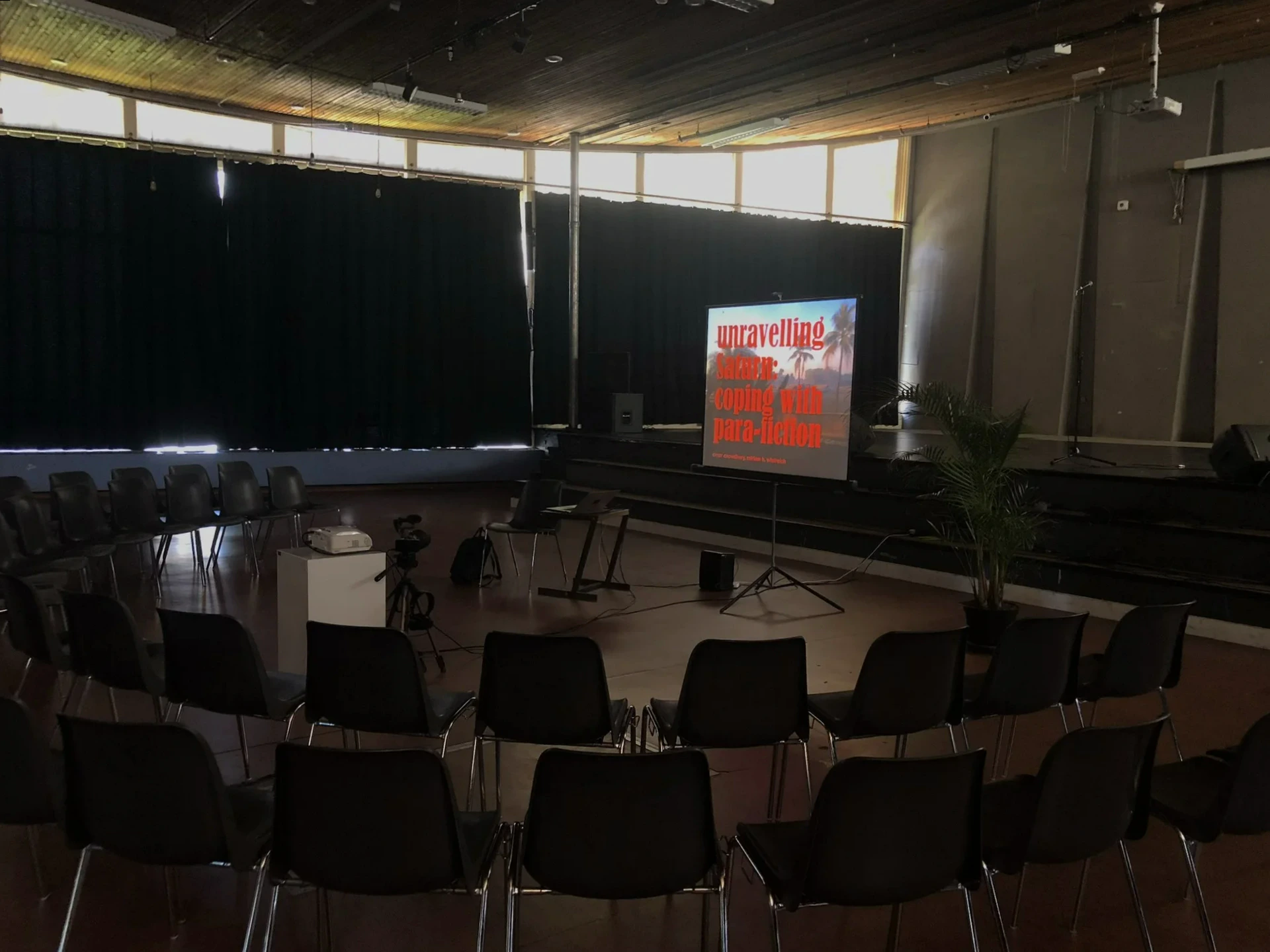
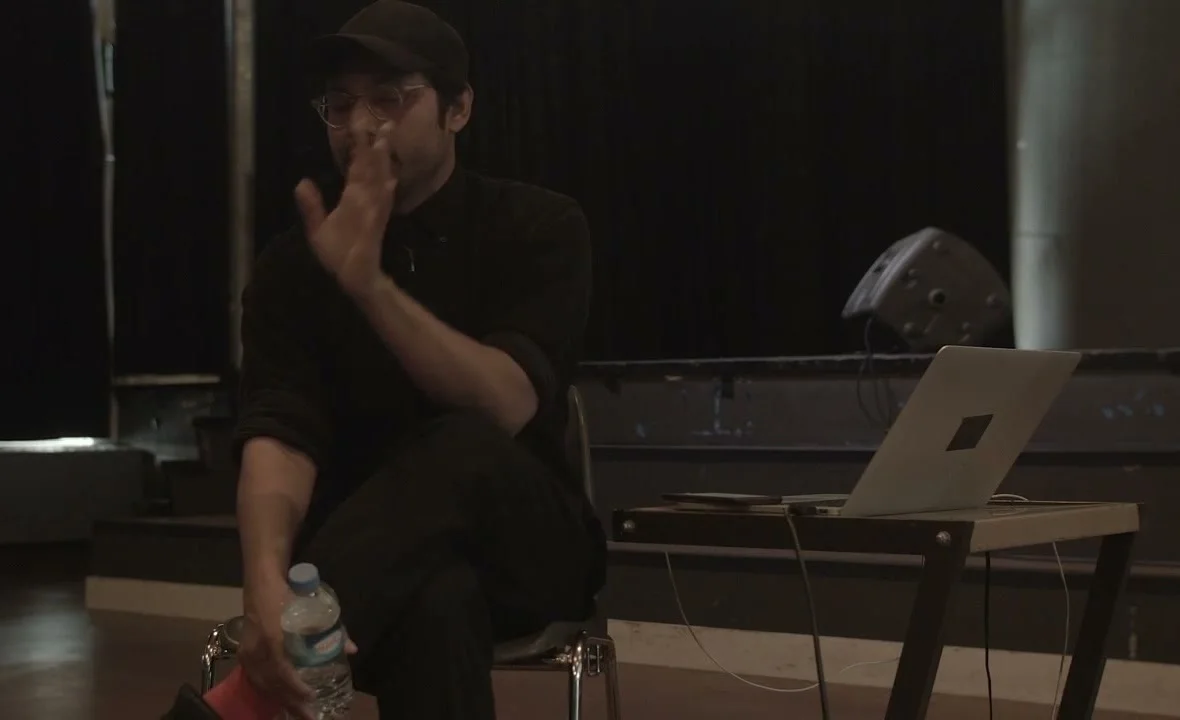
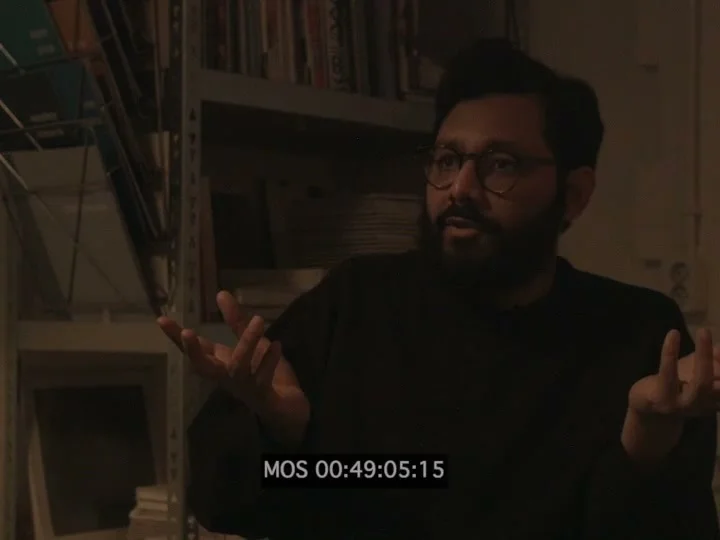
Unsaturn (2018–24) is the overarching title Omar Chowdhury has given to four historically titled long-form performances: Uncoiling Saturn (2018), Unravelling Saturn (2018), Unwinding Saturn (2023) and Unmasking Saturn (2024). In each, Chowdhury reconstructs the disputed closure of Age of Saturn, his 2016 exhibition in Dhaka, as though the story were being told publicly for the first time, whenever he feels he is beginning to forget things. Using films, photographs, diagrams, correspondence and shifting recollections, he moves between testimony, confession, accusation and tribunal.
Chowdhury appears simultaneously as witness, unreliable narrator, injured party and author implicated in the conflict. Political censorship, institutional self-protection, collaborators’ withdrawal and disputes over consent remain possible, overlapping causes. Hesitation, humour, contradiction and audience interruption are part of the work: spectators question the evidence, challenge his account and propose how he might proceed. No performance arrives at a stable verdict.
From 2023 onwards, recordings of every preceding performance play on monitors beside the live telling. The room therefore contradicts its claim to first disclosure, while Chowdhury’s earlier selves become witnesses the present narrator cannot fully control. As memory recedes, the archive grows. Repetition preserves the event while altering it, testing whether an artwork can survive ethical rupture without turning that rupture into further material.
Echo, Saturn—Prologue (2018) Rijksakademie OPEN, Amsterdam
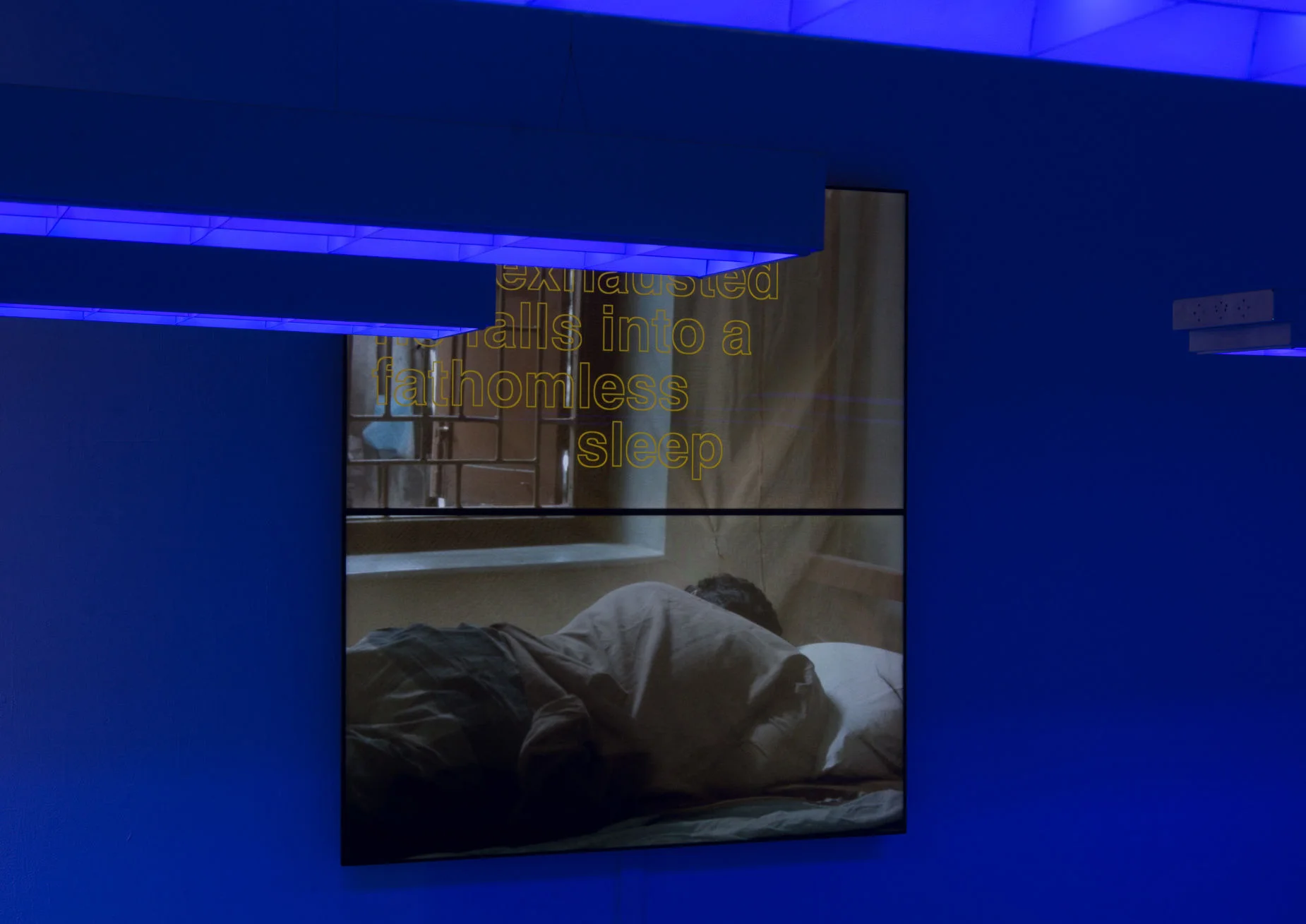
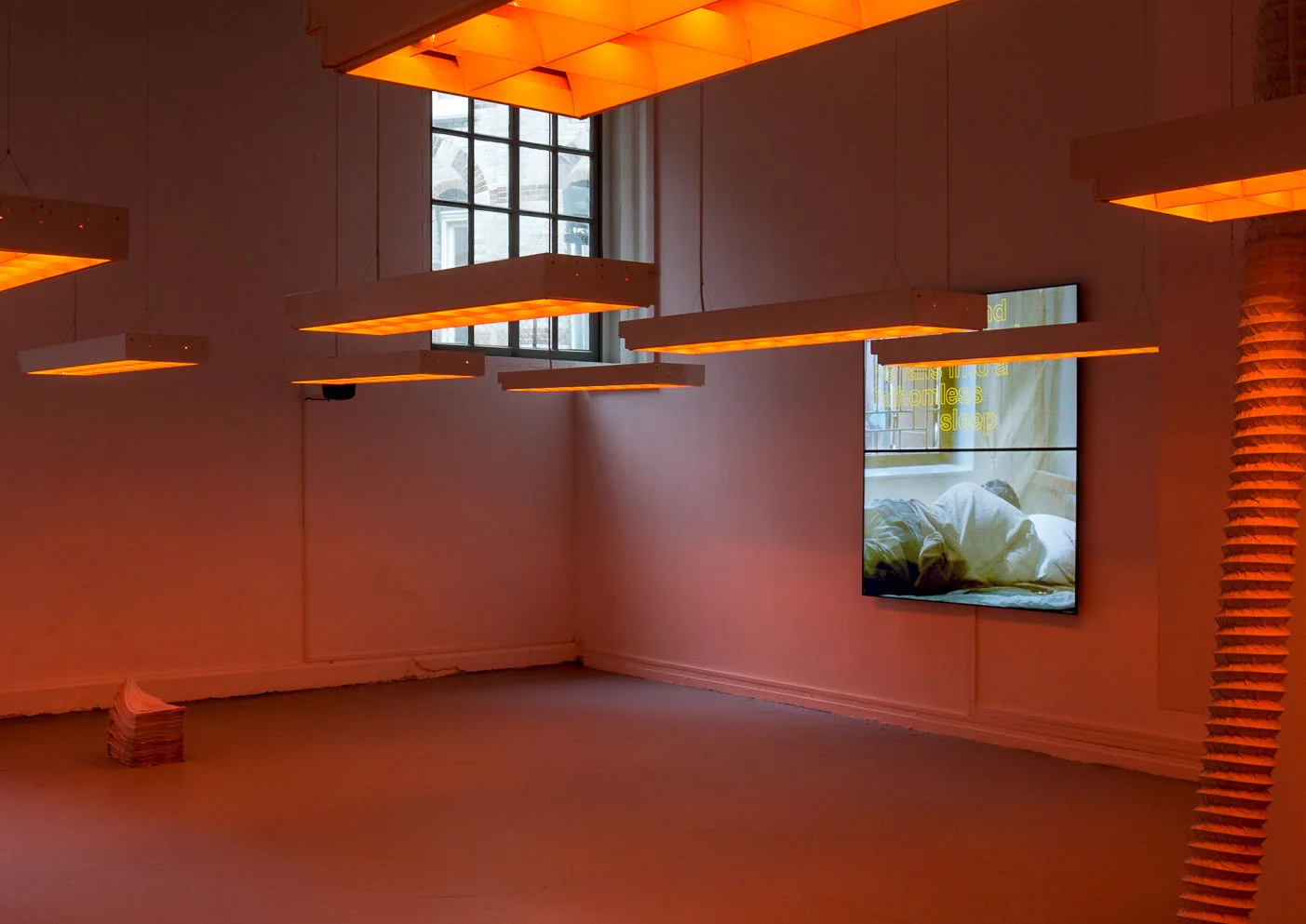
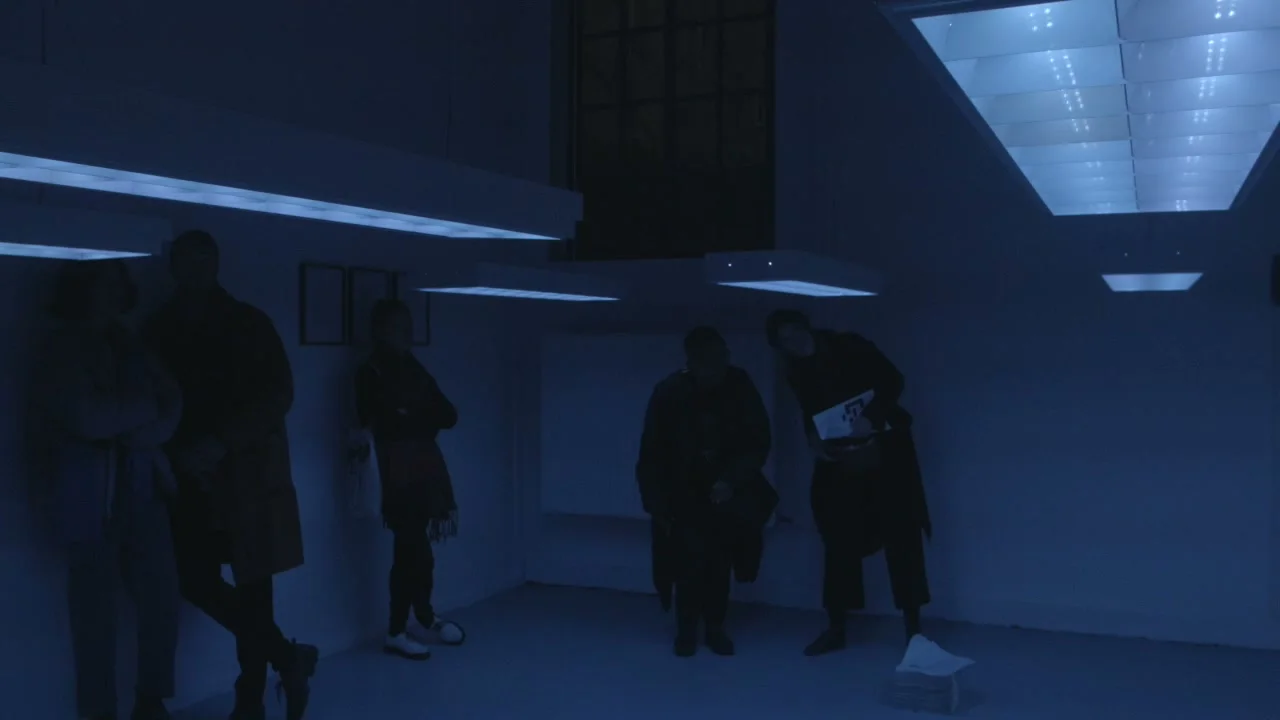
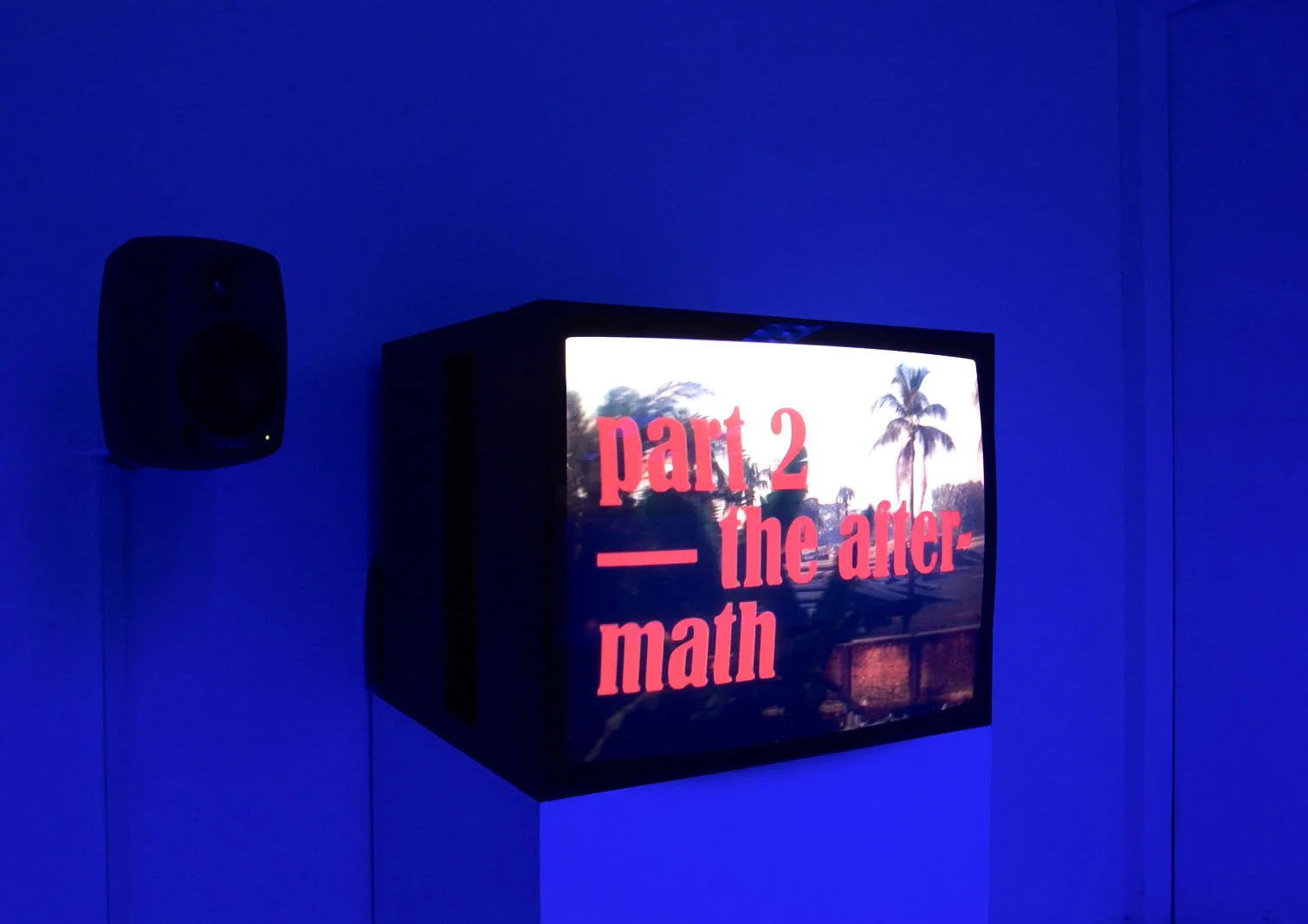
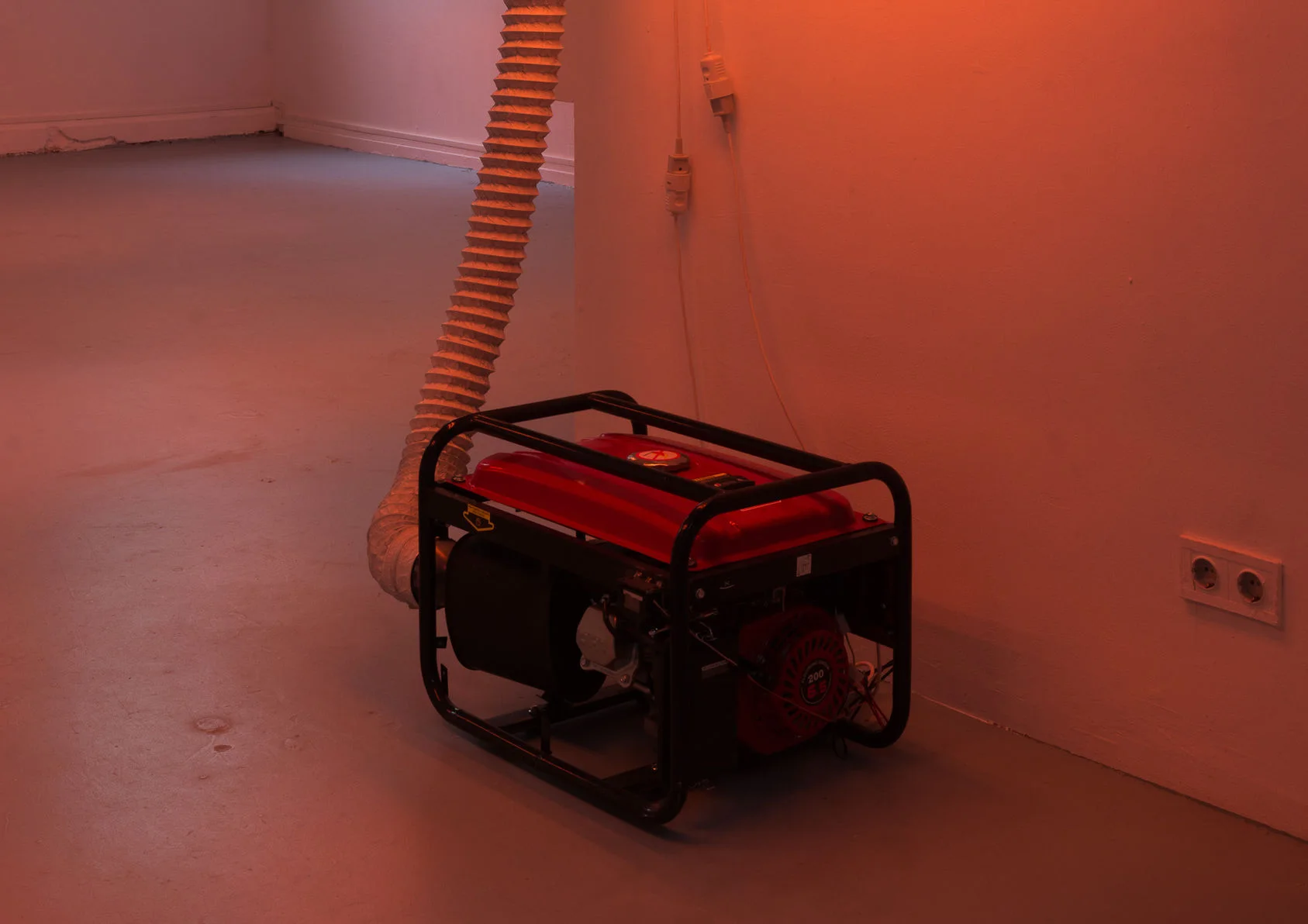
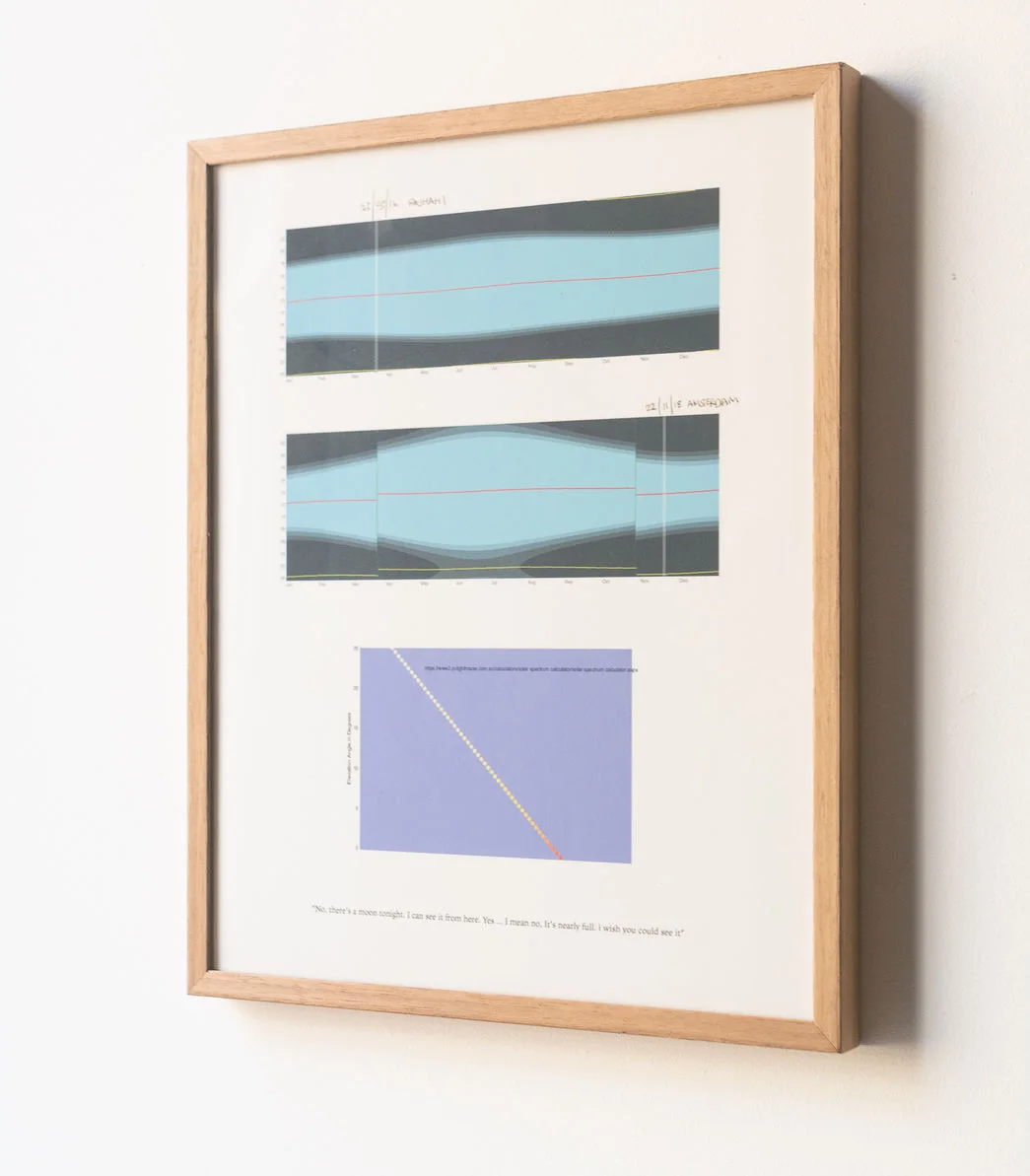
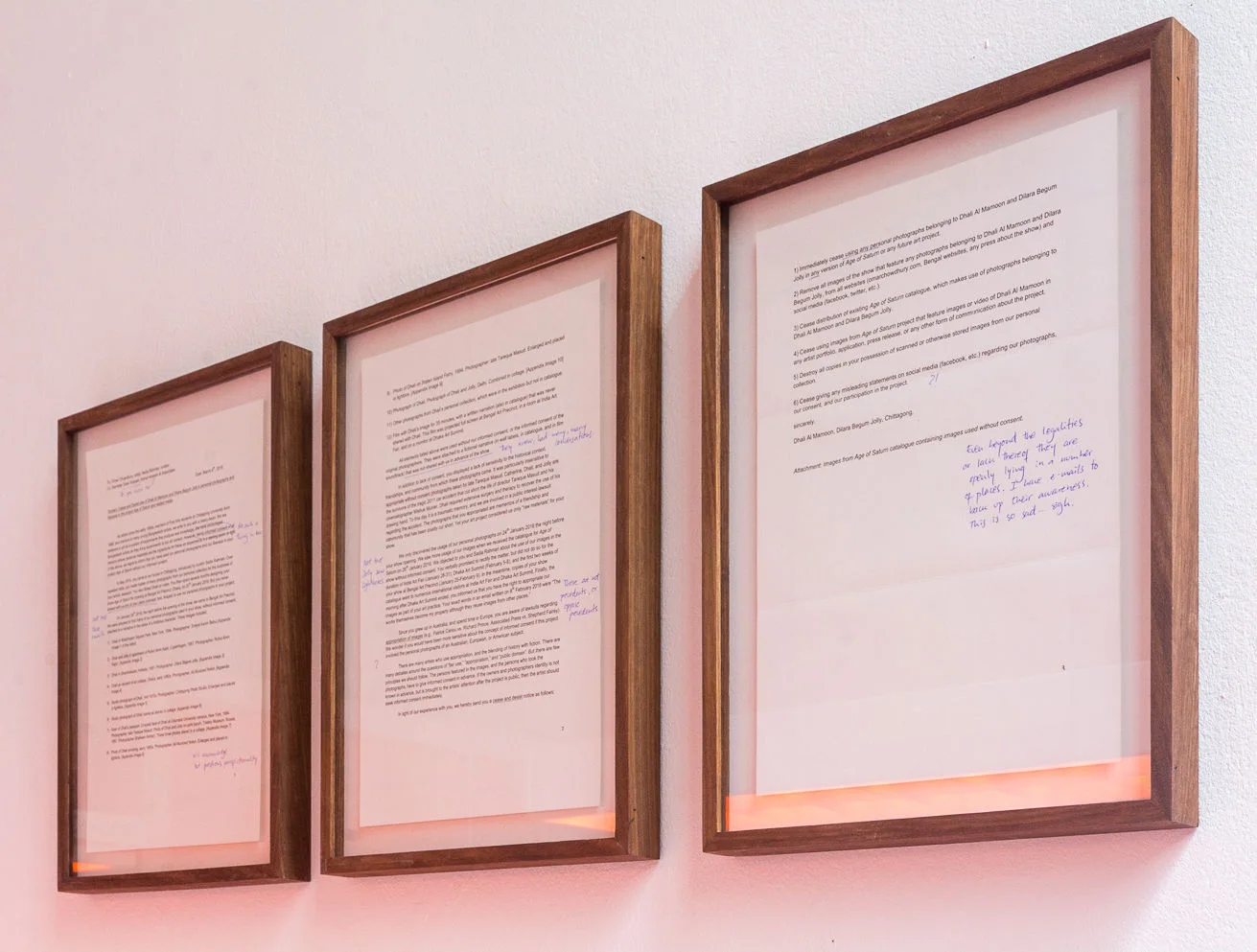
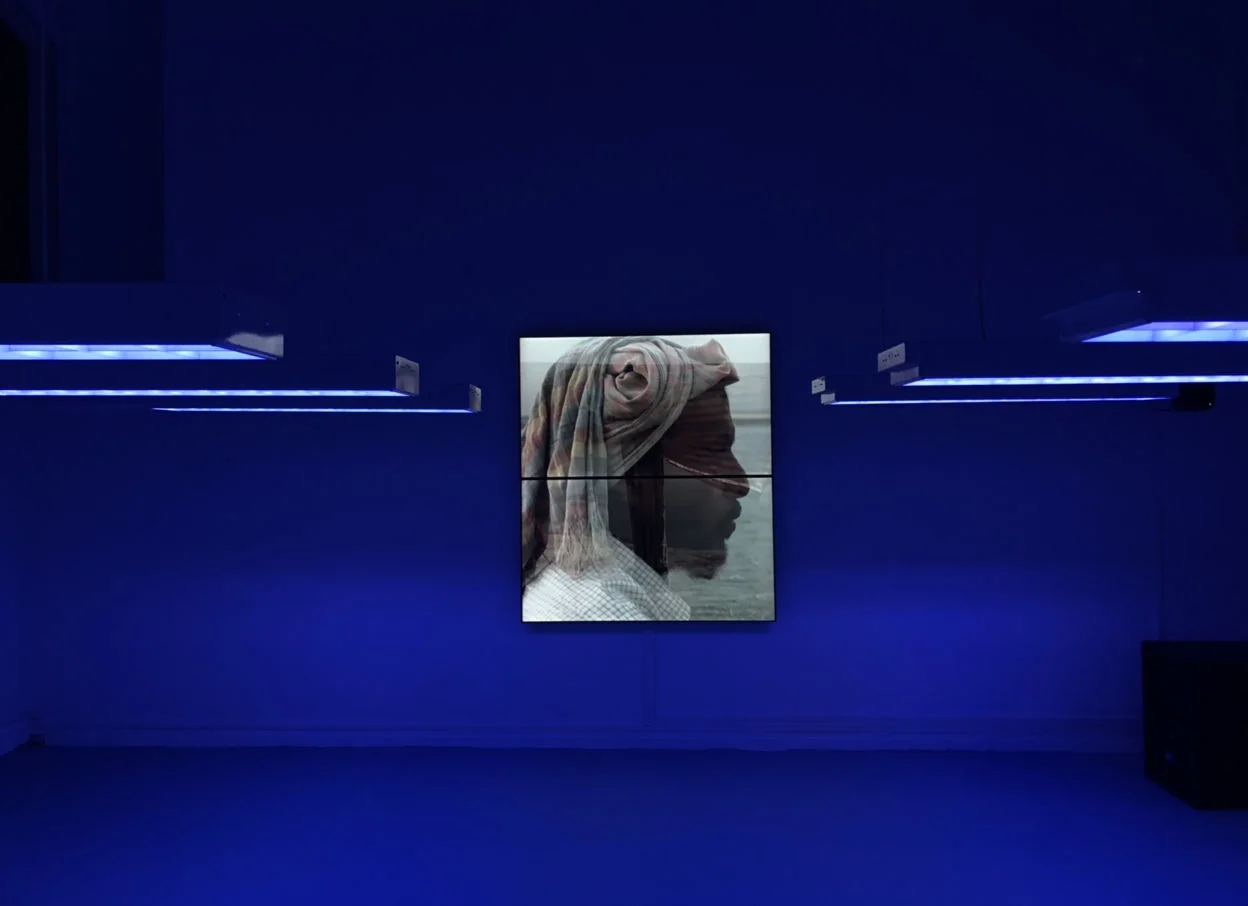
Echo, Saturn—Prologue (2018) is a parafictional installation about returning to a destabilised history. It reopened the Saturn series after Age of Saturn was suppressed in Bangladesh and former collaborators threatened legal action. The installation’s technical, administrative and juridical forms—data charts, programmed lighting, failing electrical systems, archival documents and legal correspondence—suppress a supposed “painful” history. Recollection, evidence and invented biography occupy the same field: a past so confused and distorted that it cyclically erases and replaces itself.
Twelve fluorescent-style fixtures, converted to RGBW LEDs and suspended at eye level, replay the changing light of a significant day in Rajshahi. Across sixteen hours, yellow daylight passes through red sunset into deep blue night. A hand-annotated chart translates this remembered atmosphere into data and code, while programmed power cuts cause a diesel generator to start and run until the simulated electrical supply returns. Light becomes both an emotional register and a fragile infrastructure—remembered, measured and repeatedly interrupted.
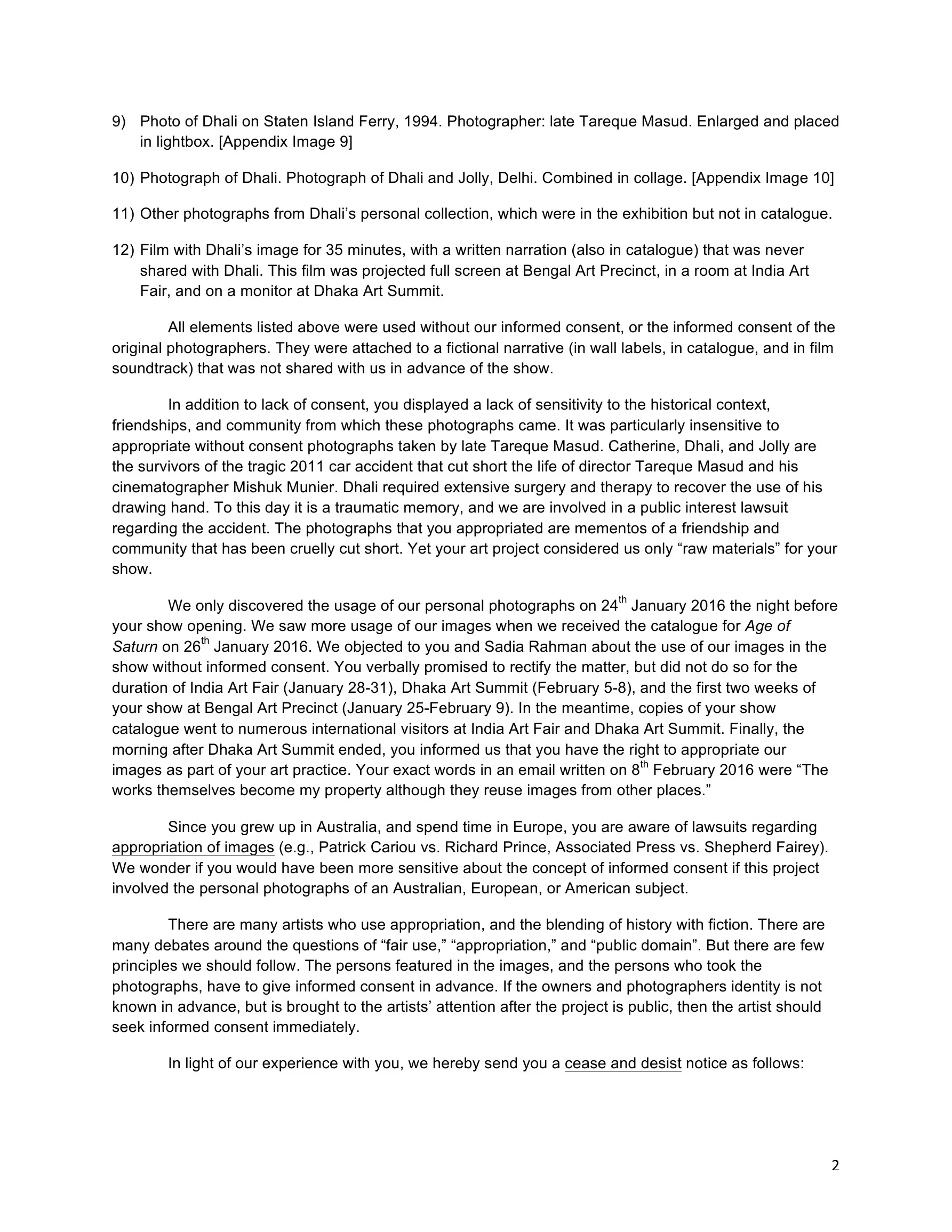
A dual-screen film follows the artist’s arrival in Rajshahi “in the footsteps of a ghost.” Its romantic, oneiric language is countered by a ninety-minute lecture-performance examining the history and collapse of the Saturn project. A three-page cease-and-desist letter brings the conflict into the exhibition, while stacks of The Age of Saturn essay return its foundational narrative as an unstable archive. Visitors could experience the work immediately as colour, sound and intermittent darkness, or remain with its slower accumulation of testimony and doubt—where nostalgia meets threat, fiction acquires real consequences and the past refuses to remain intact.
Order (2018) Fondazione Antonio Ratti, Como
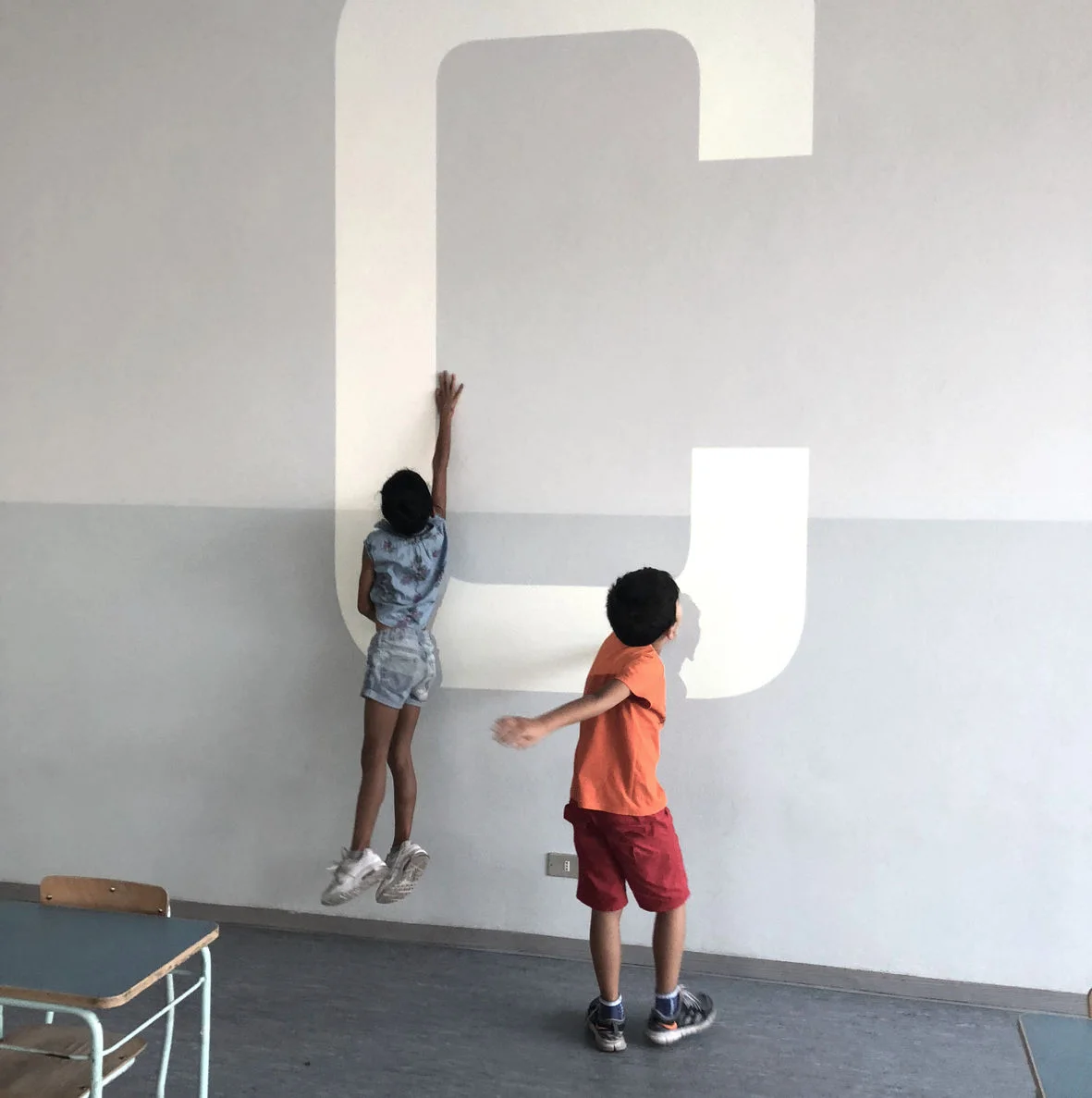
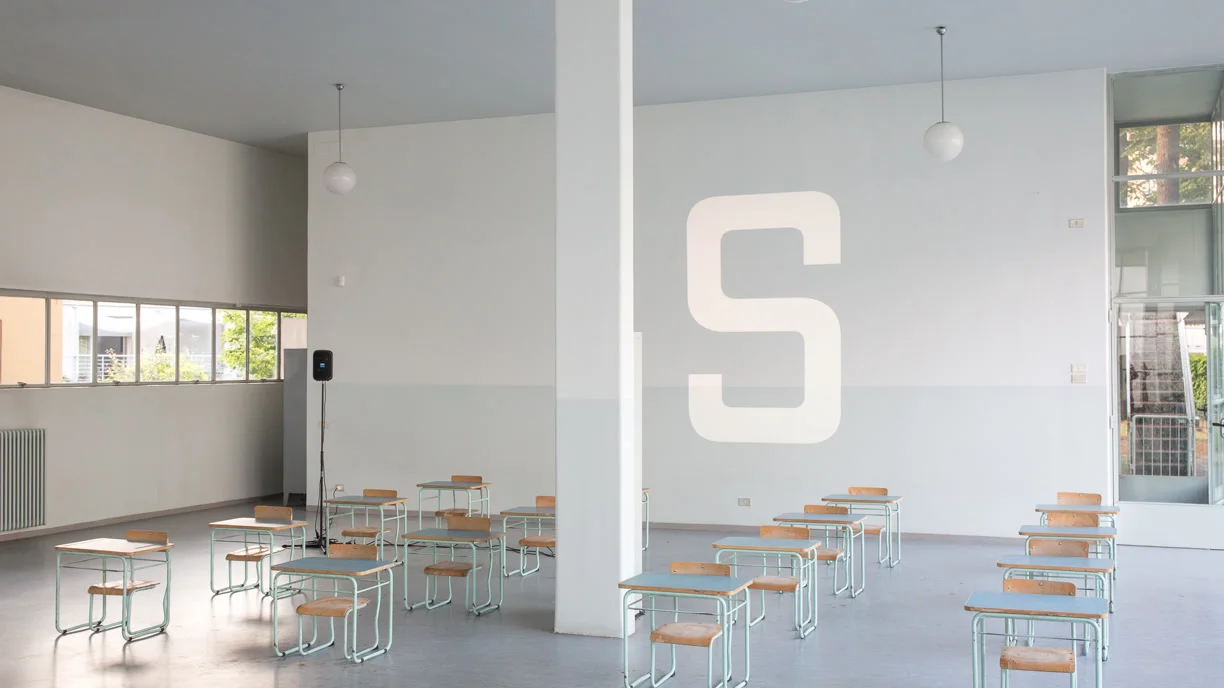
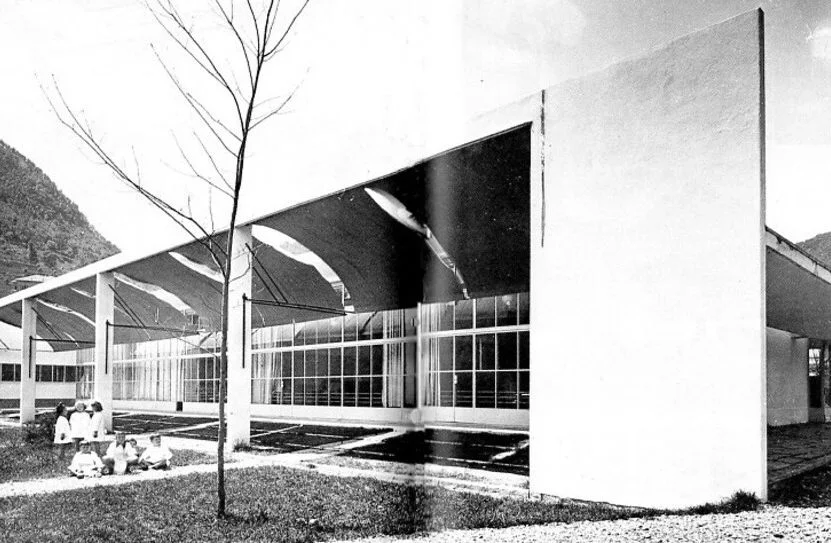
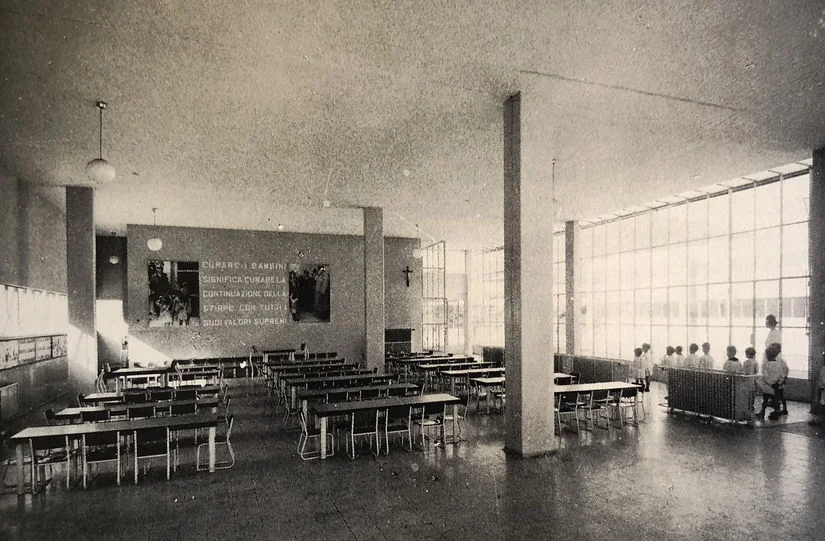
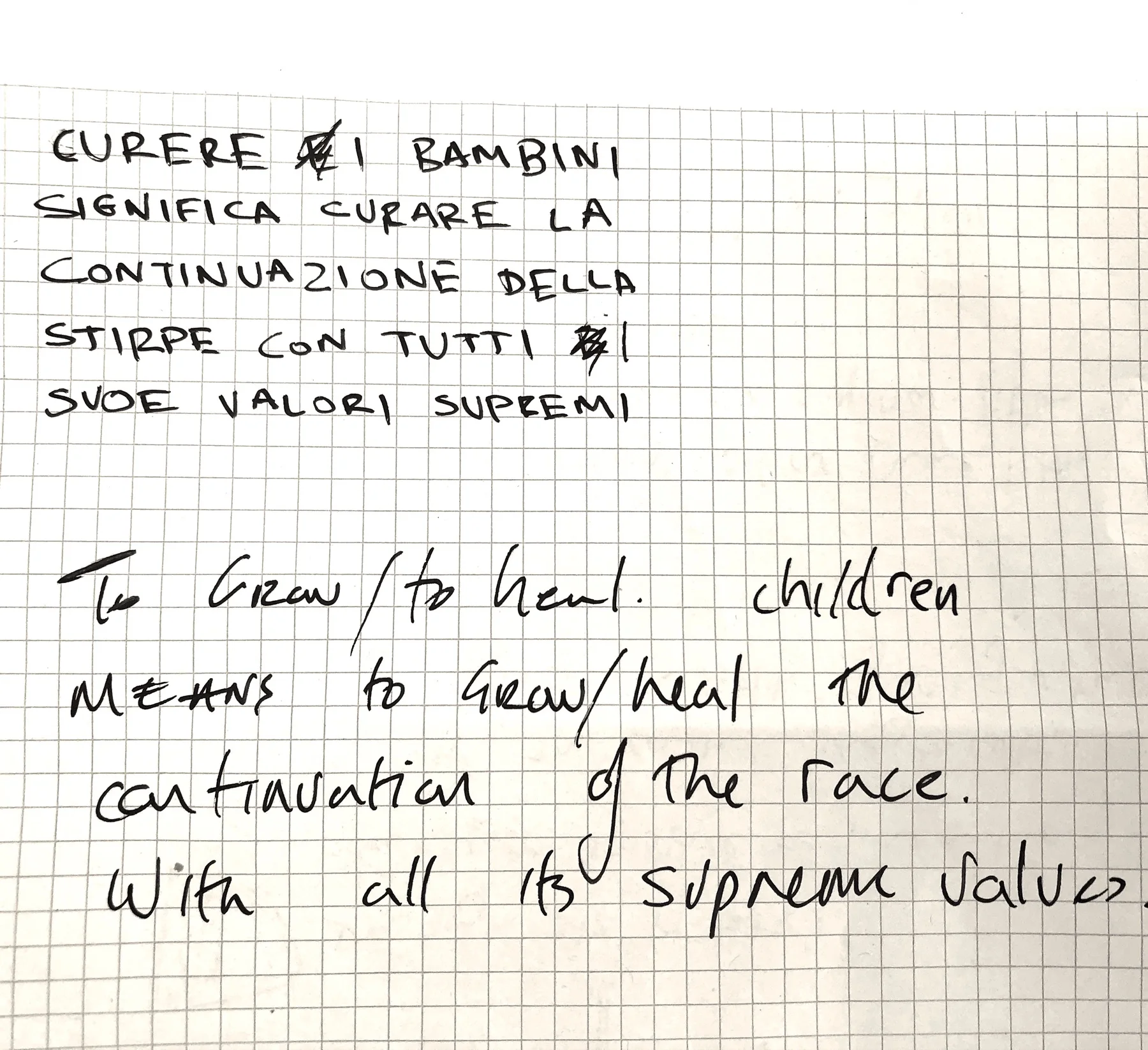
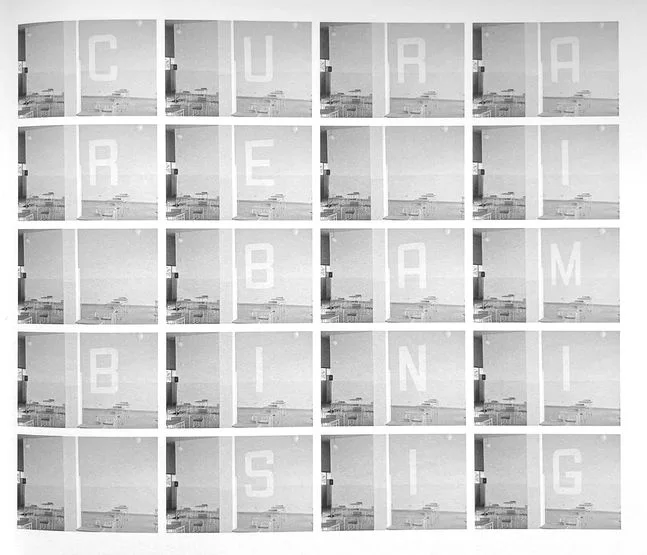
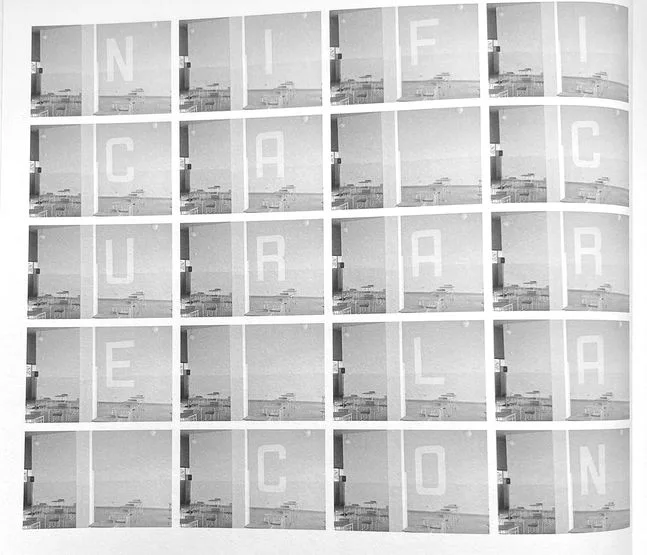
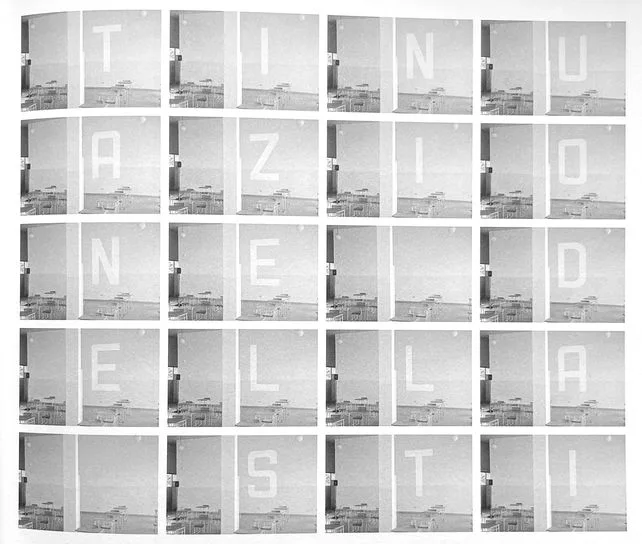
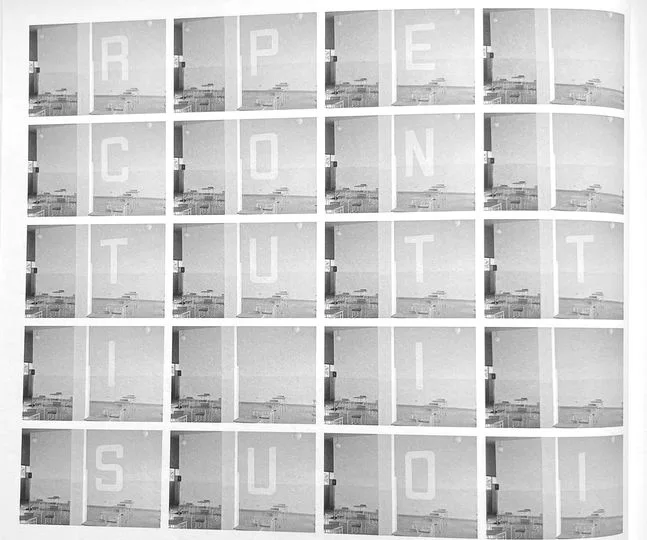
Order (2018) occupies the Asilo Sant’Elia in Como, a modernist nursery designed by the Italian Rationalist architect and committed Fascist Giuseppe Terragni. A film is projected onto a wall before orderly rows of children’s tables and chairs designed by Terragni. Isolated letters slowly appear and disappear while the voice of his granddaughter, Maddalena Terragni, recites them aloud. The letters are drawn from a dark Fascist sentence formerly inscribed on the walls of the school. They hover between an elementary reading exercise, an architectural remnant and a political command.
The original paint scheme draws a horizontal line across the bottom of the projection like the guide in a child’s handwriting book. Through this deceptively simple arrangement, Order dismantles the sentence into its smallest components and cautiously releases it back into the building. Language no longer communicates its ideology coherently, yet neither can it be made innocent: every letter retains something of the system from which it came. Set against the beauty, openness and precision of Terragni’s architecture, the work asks how authoritarian ideas become embedded in apparently benevolent forms—schools, furniture, alphabets and ideals of care—and how aesthetic order can preserve a history that the removal of its words has not erased.
The original sentence translates as: “To nurture children is to nurture the continuation of the race, with all its supreme values.”
Desiring the Meeting of Vilhelm Hammershøi and Ram Chandra
Vishnayaghar in Copenhagen, November 1906 (with a Guide) (2017)
Governor’s Mansion, Ghent
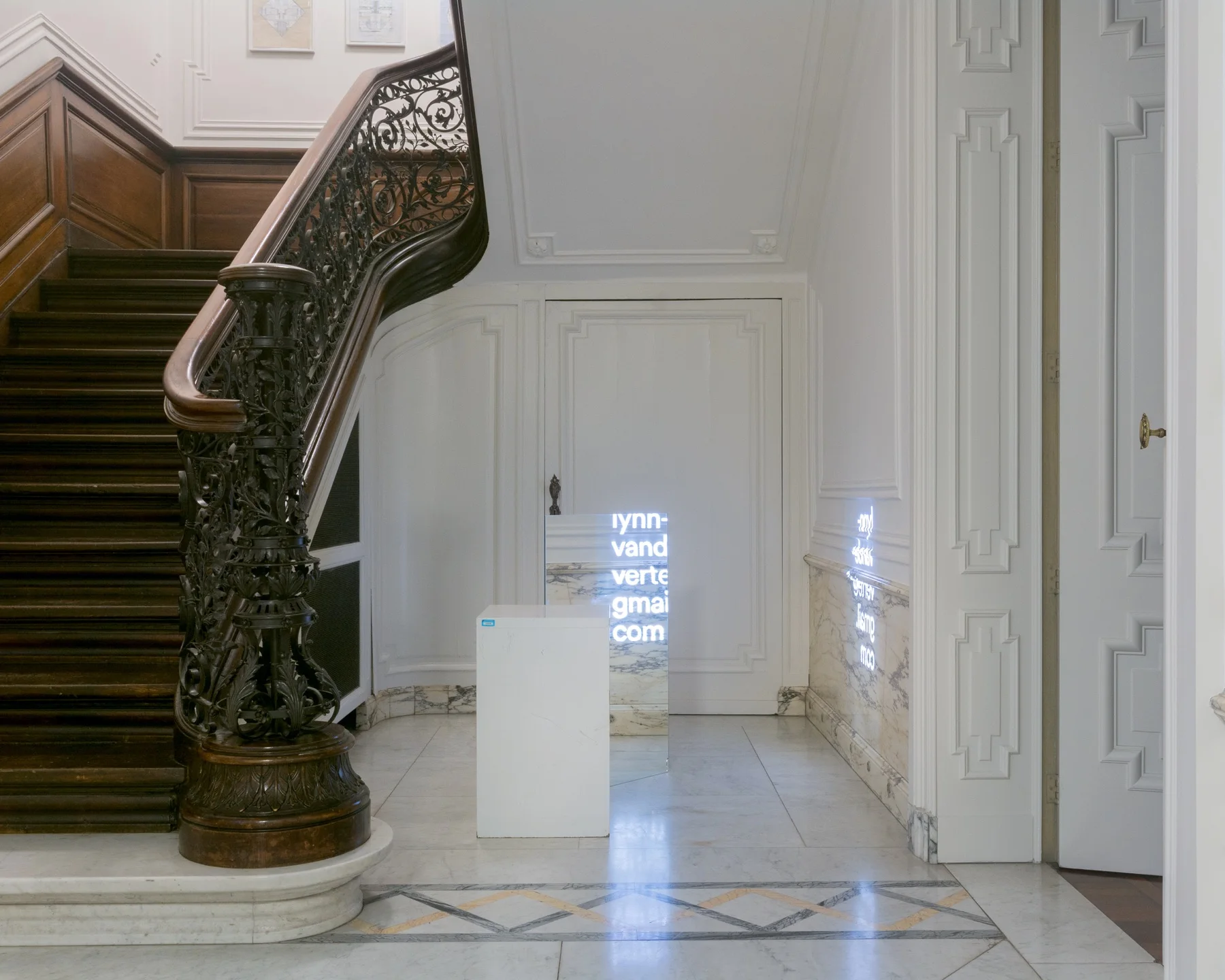
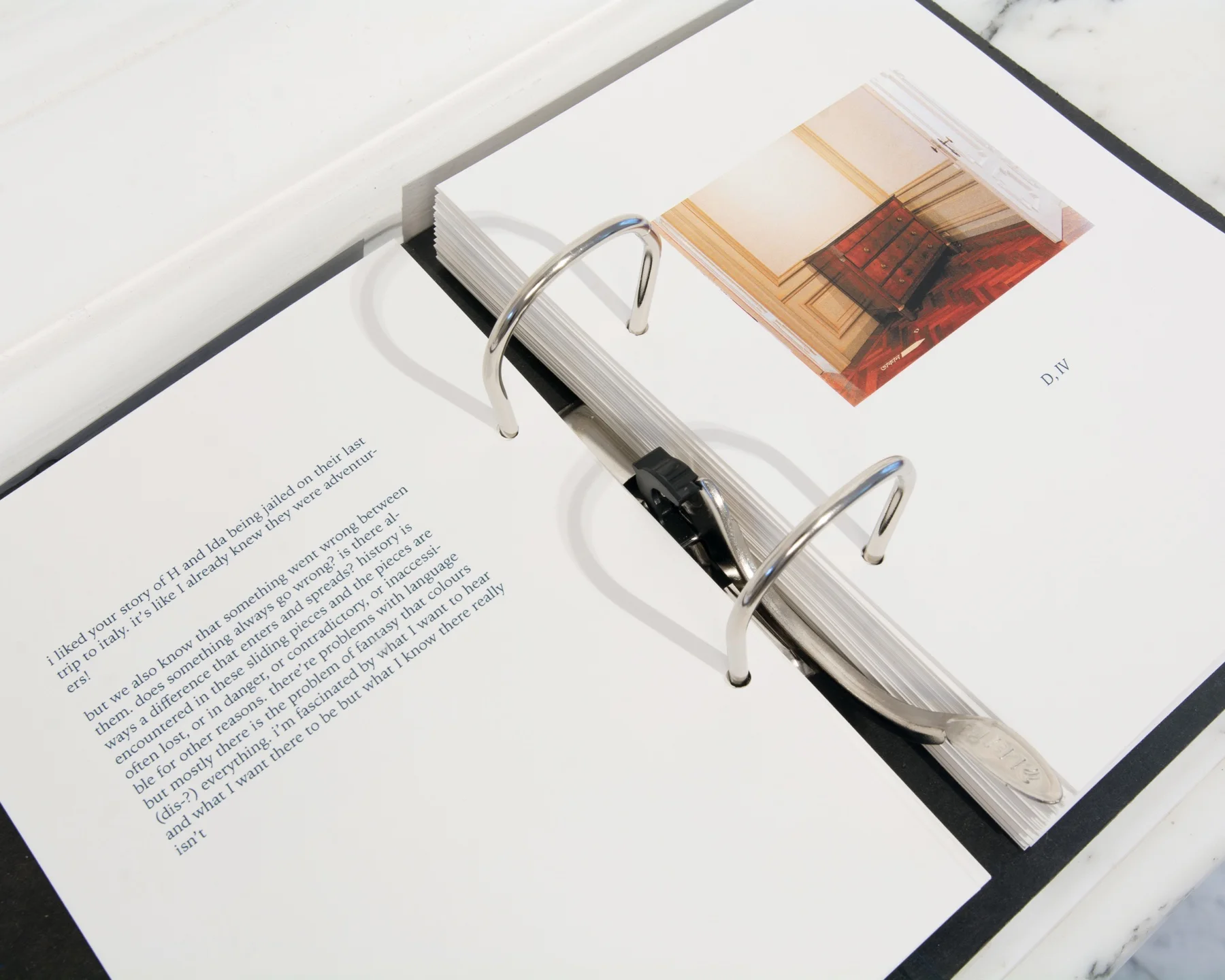
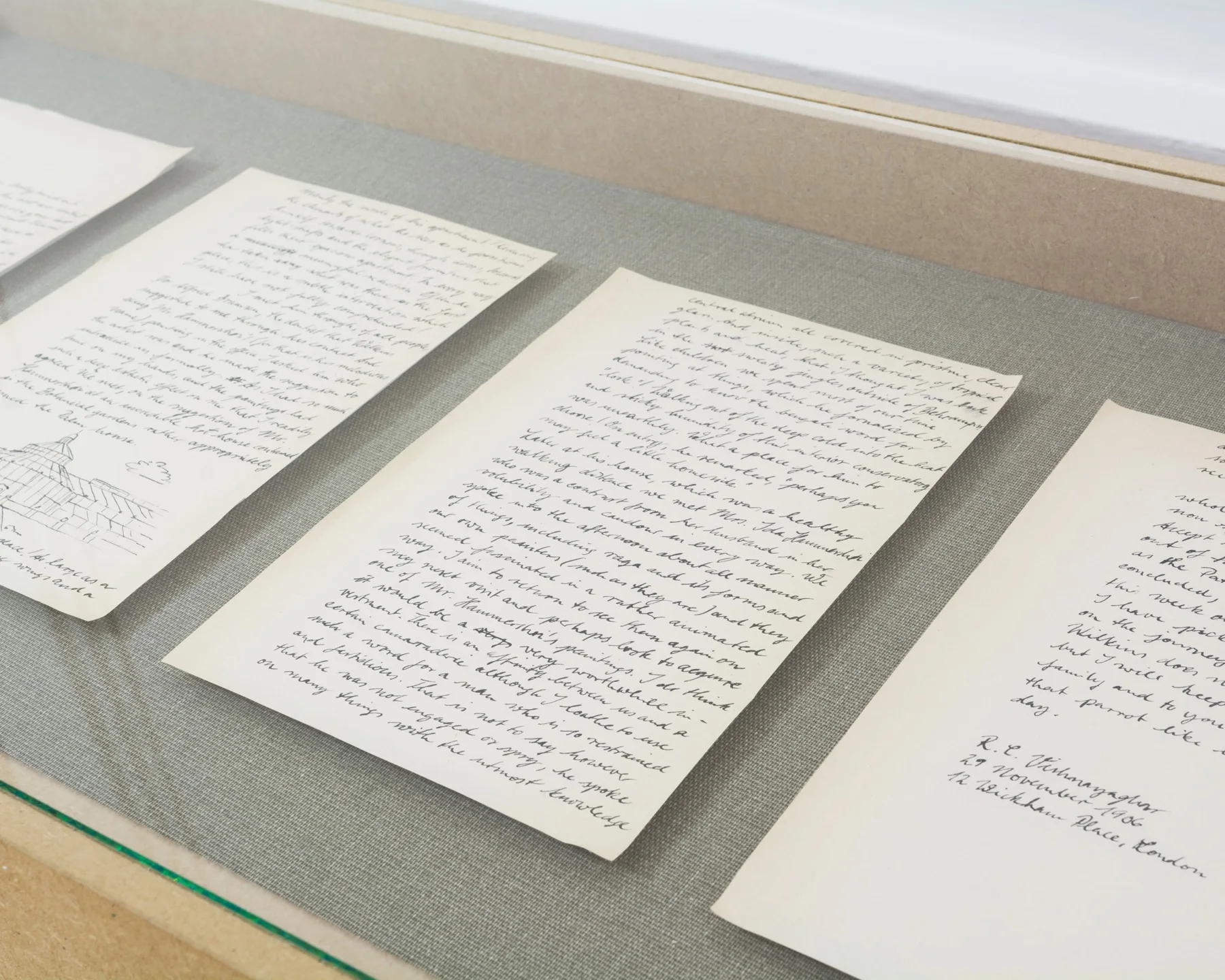
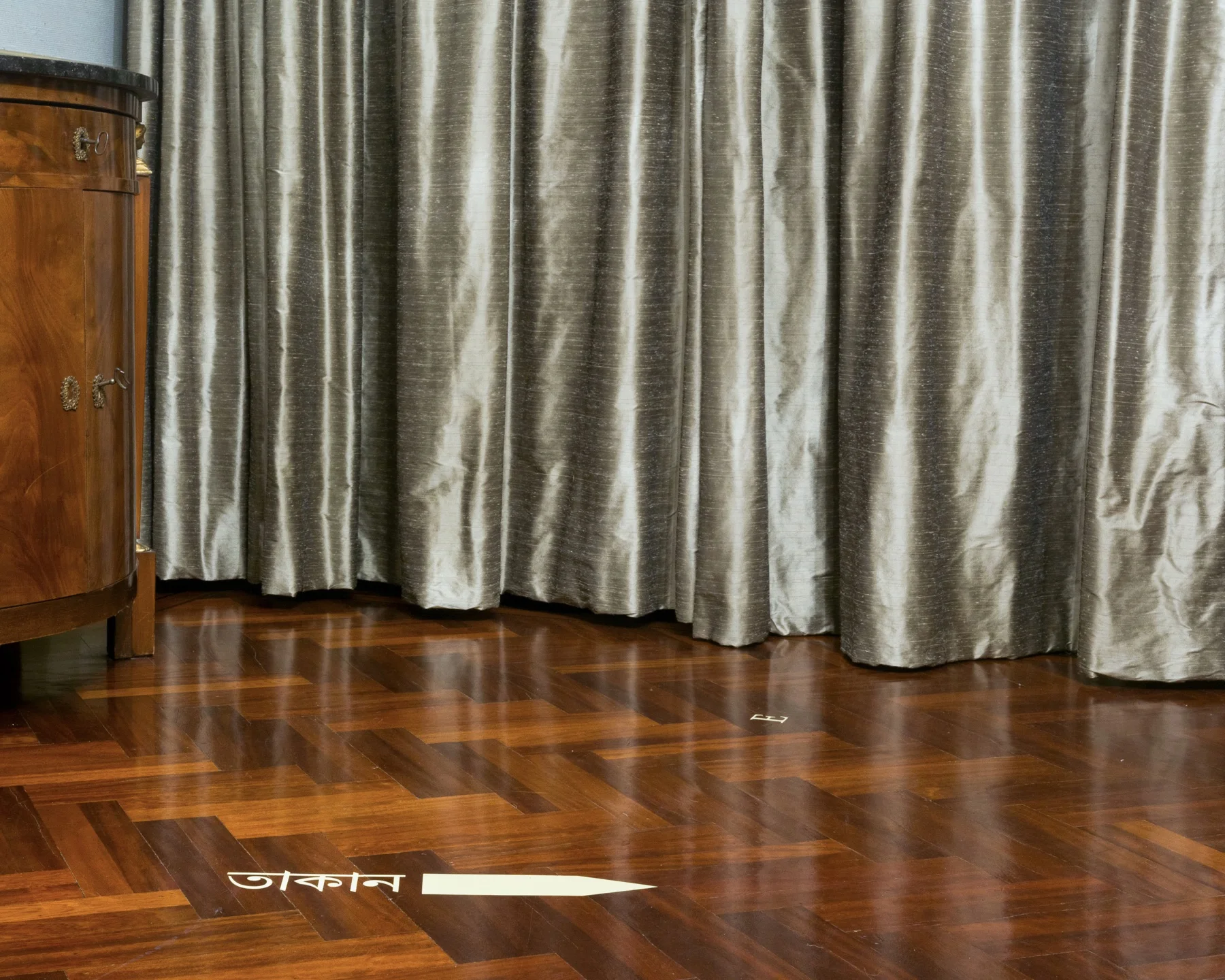
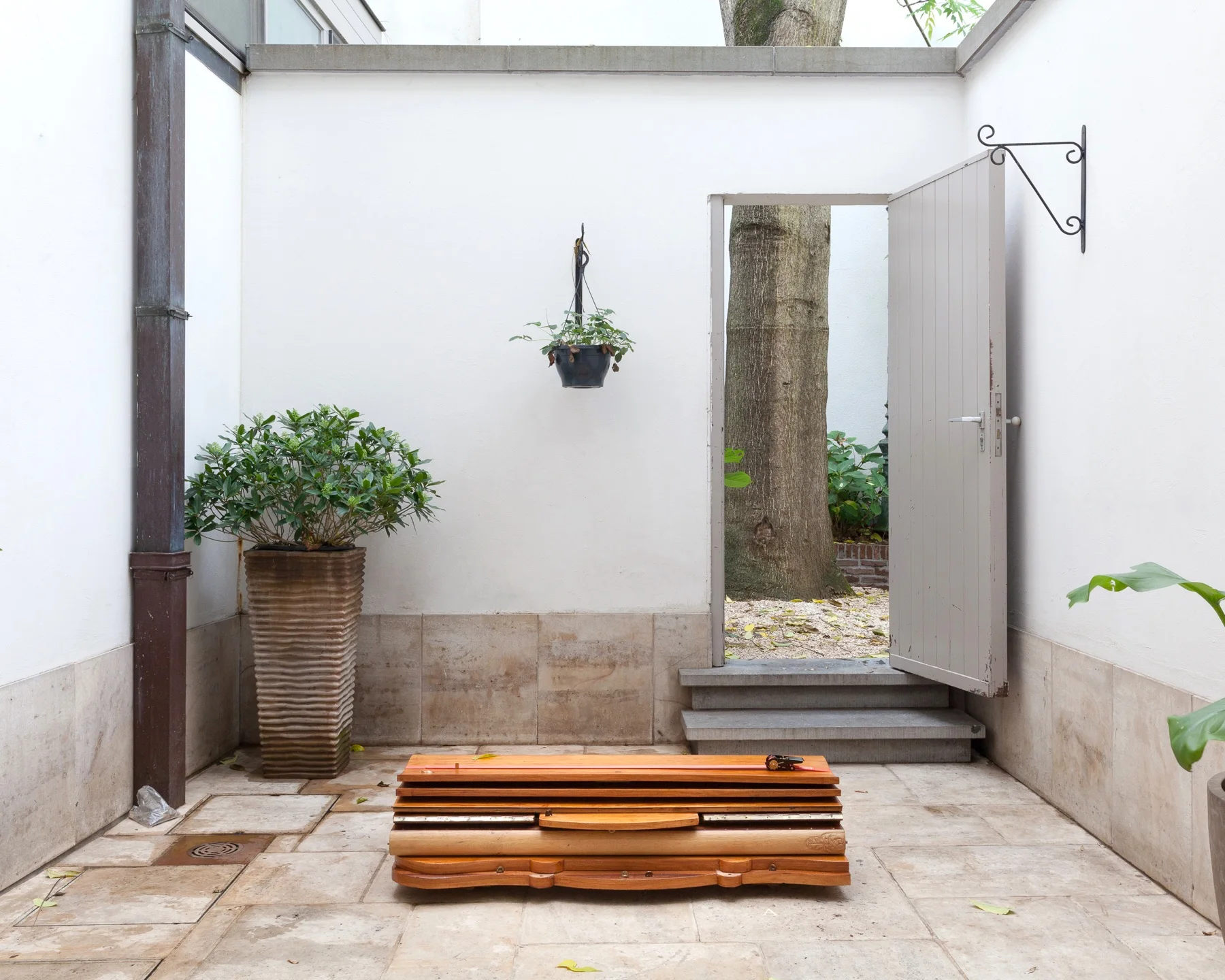
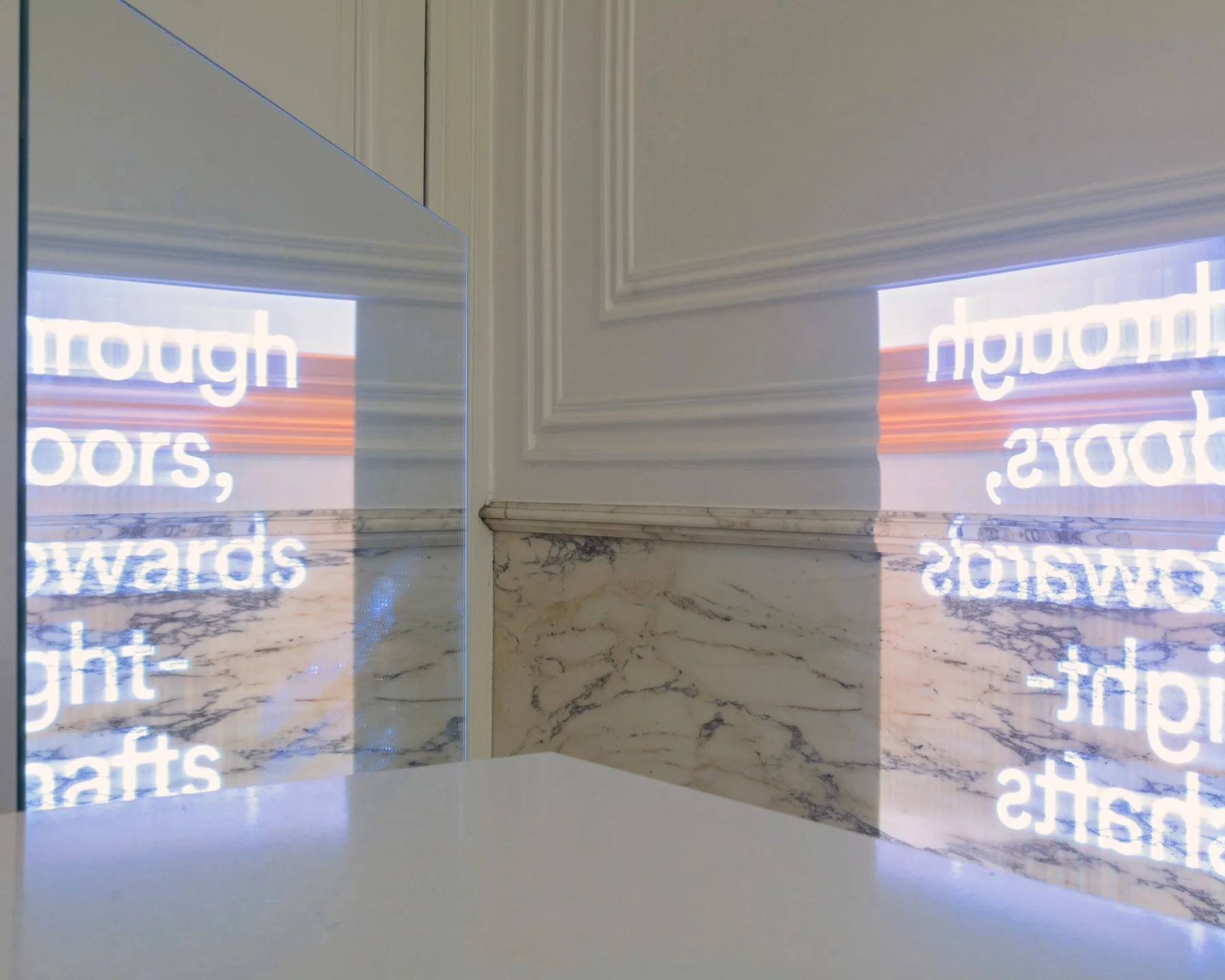
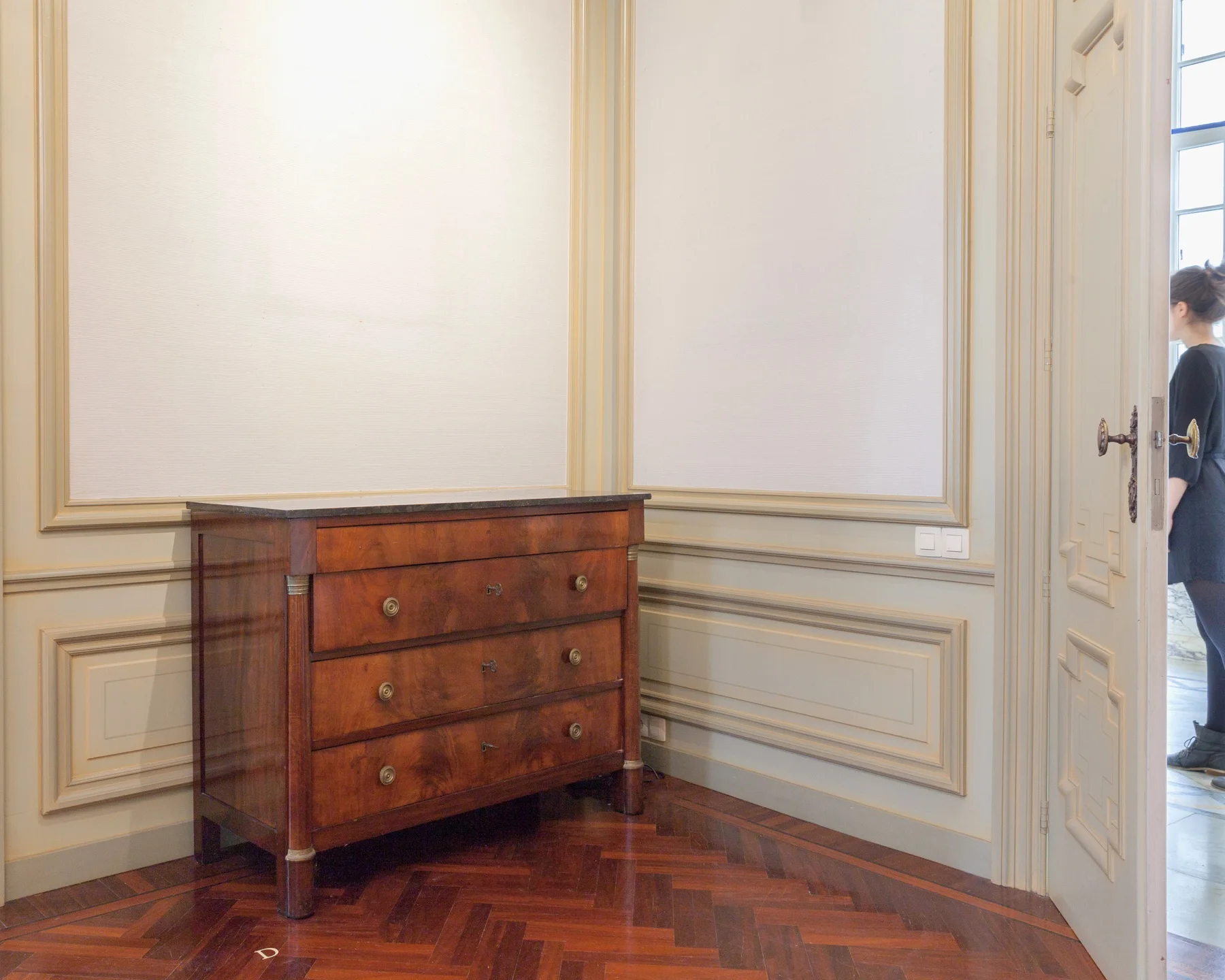
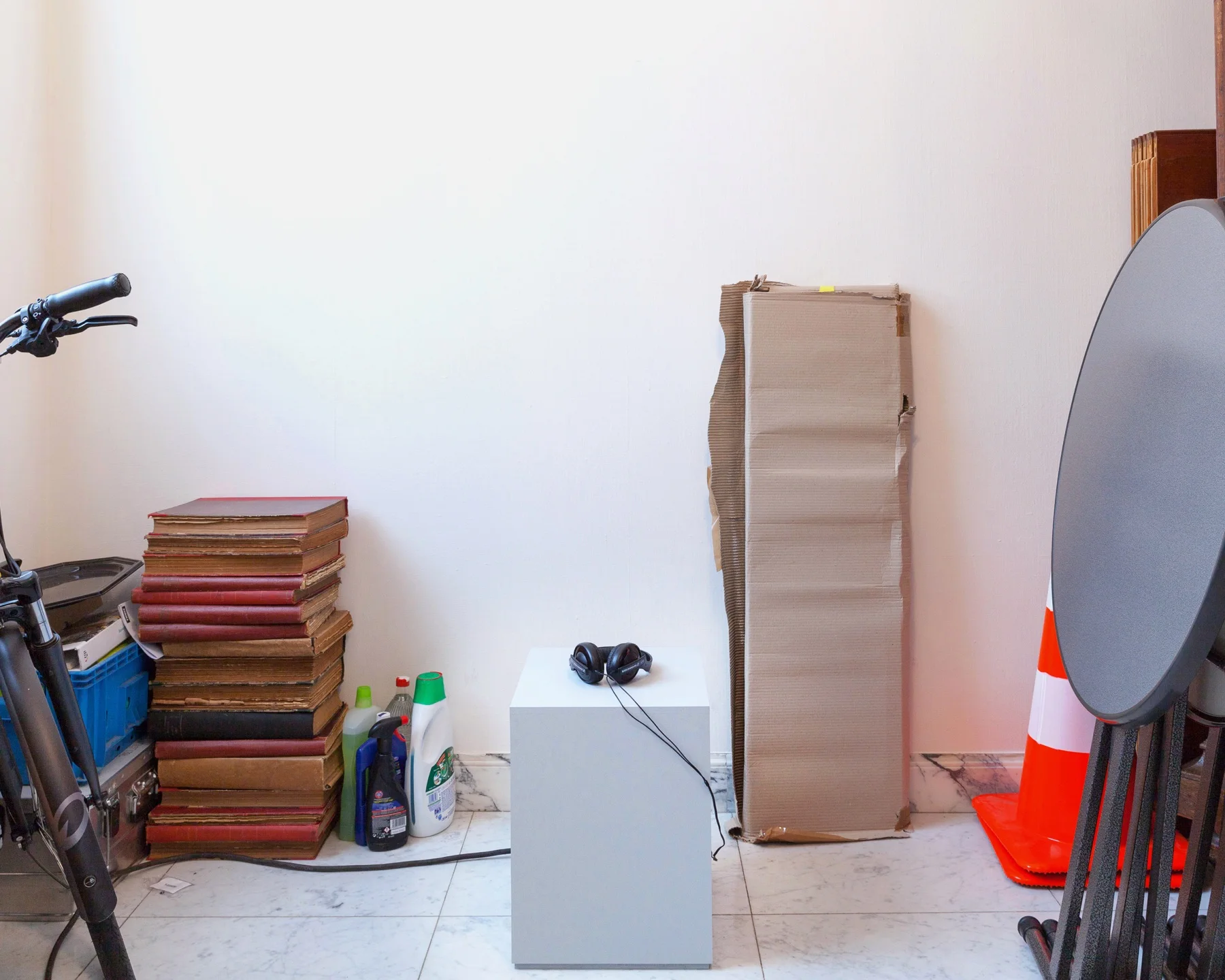
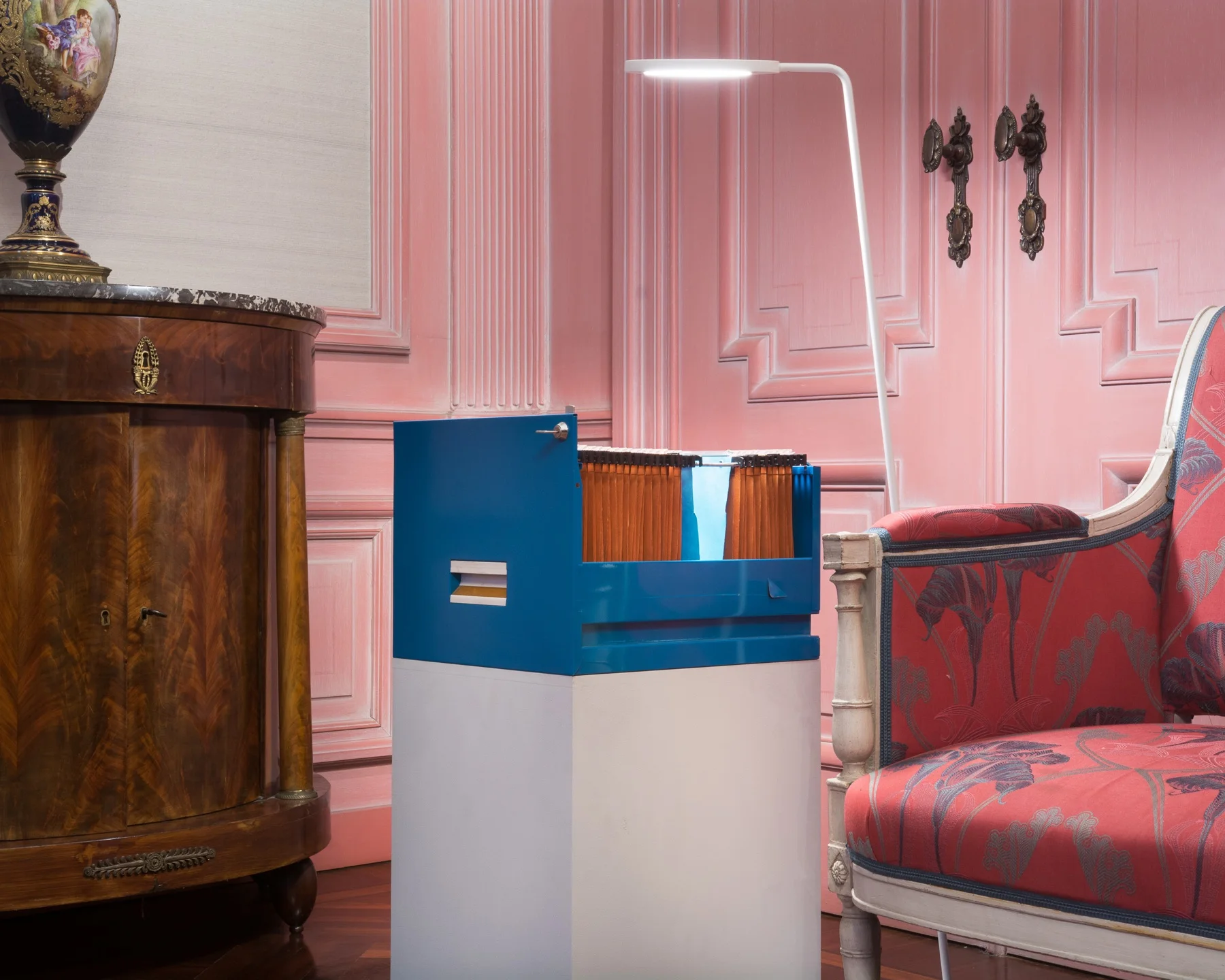
Desiring the Meeting… (2017) produces—and then destabilises—the desires and relationships involved in obsessive research. Across the Governor’s Mansion, evidence of an alleged 1906 meeting between Bengali trader Ram Chandra Vishnayaghar and Danish painter Vilhelm Hammershøi is continually rearranged. Dr Zaman’s recollection, an attributed letter and the artist’s notebook deplete their authority through their fractured placement, until the house itself resembles evidence.
Visitors—described as “receivers”—encounter the story through incomplete forms of access. A filing cabinet must be searched, projected material deciphered through a mirror, and the Bengali instruction তাকান—“look”—temporarily converts the mansion into a Hammershøian interior. A conversation can pass almost imperceptibly into performance as the person speaking moves smoothly in and out of character. A telephone call remains present but inaccessible, while dismantled furniture preserves a room’s parts but prevents reconstruction.
The components cycle positions, producing analogue retellings and re-experiences with no definitive sequence. A 120-page guide recombines the letter, research images and correspondence into forty-nine configurations. By exposing the artist’s investment, grant framing and retention of the letter, fantasy, institutional language and archival traces manufacture authority together. Its subject is not whether the meeting occurred, but how wanting it to have occurred reorganises documents, relationships and space.
Presented in Trust in the Unexpected, The Governor’s Mansion, Ghent, 13 October–3 December 2017. Curated by Elena Sorokina.
Means (2014) ALASKA Projects, Sydney
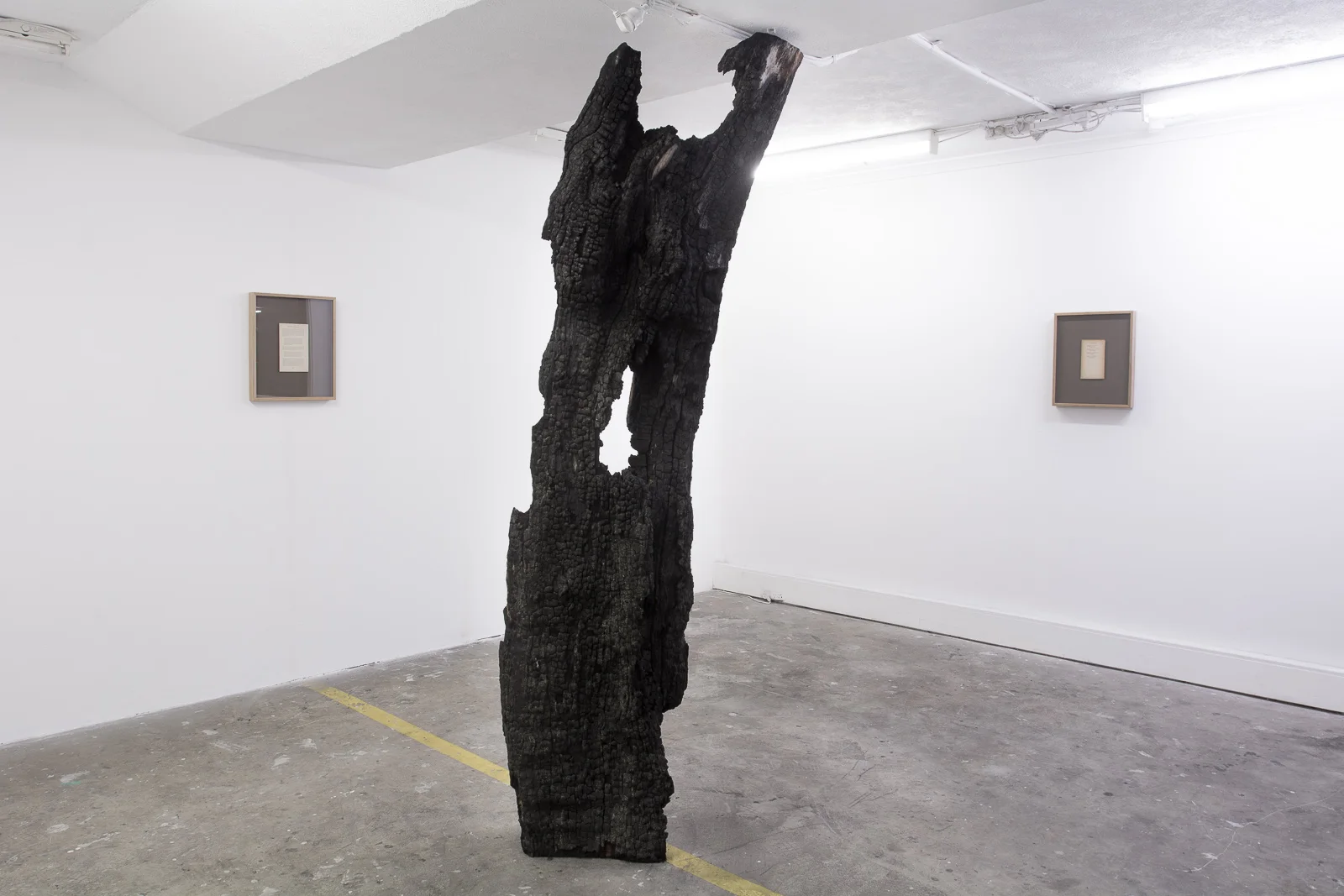
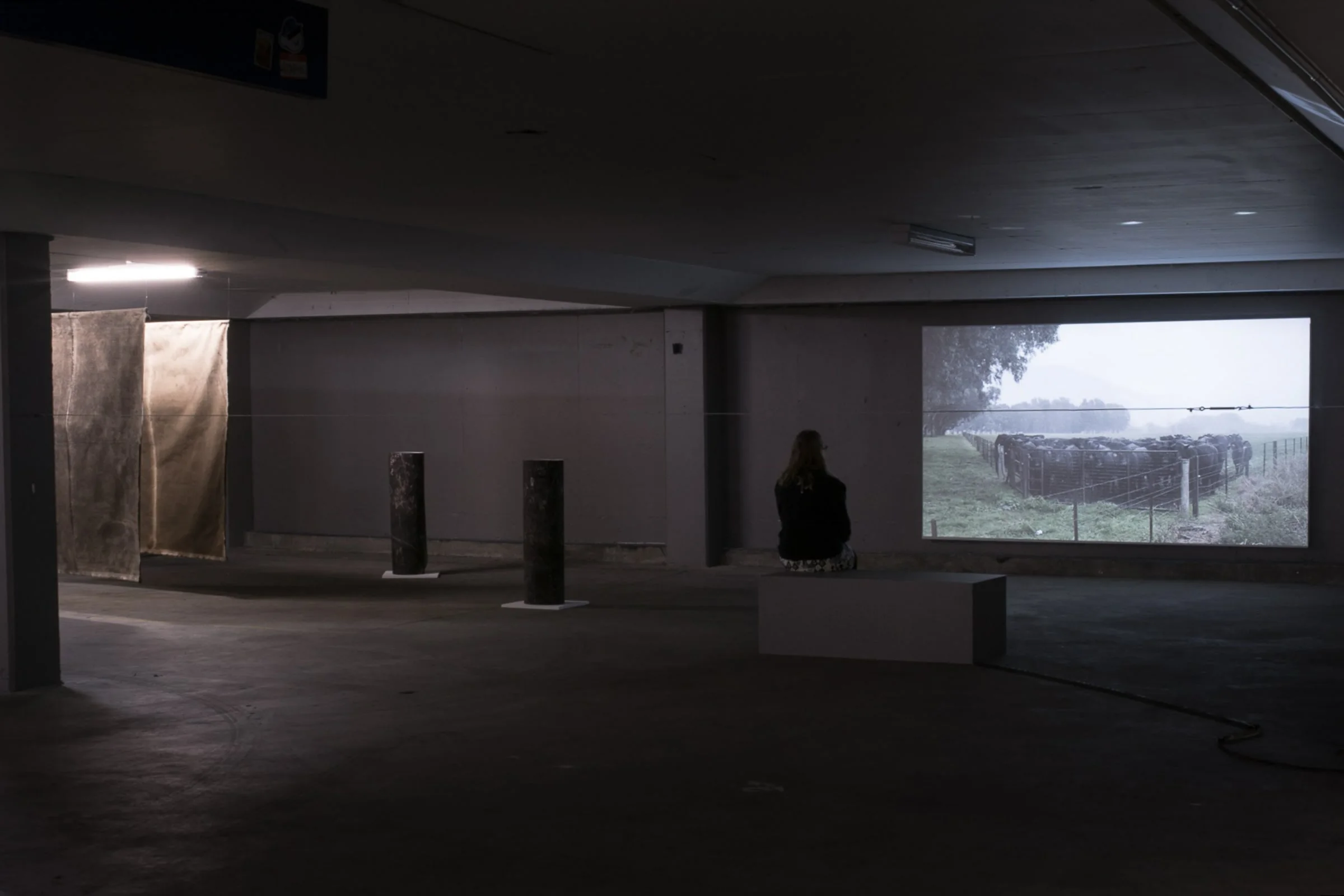
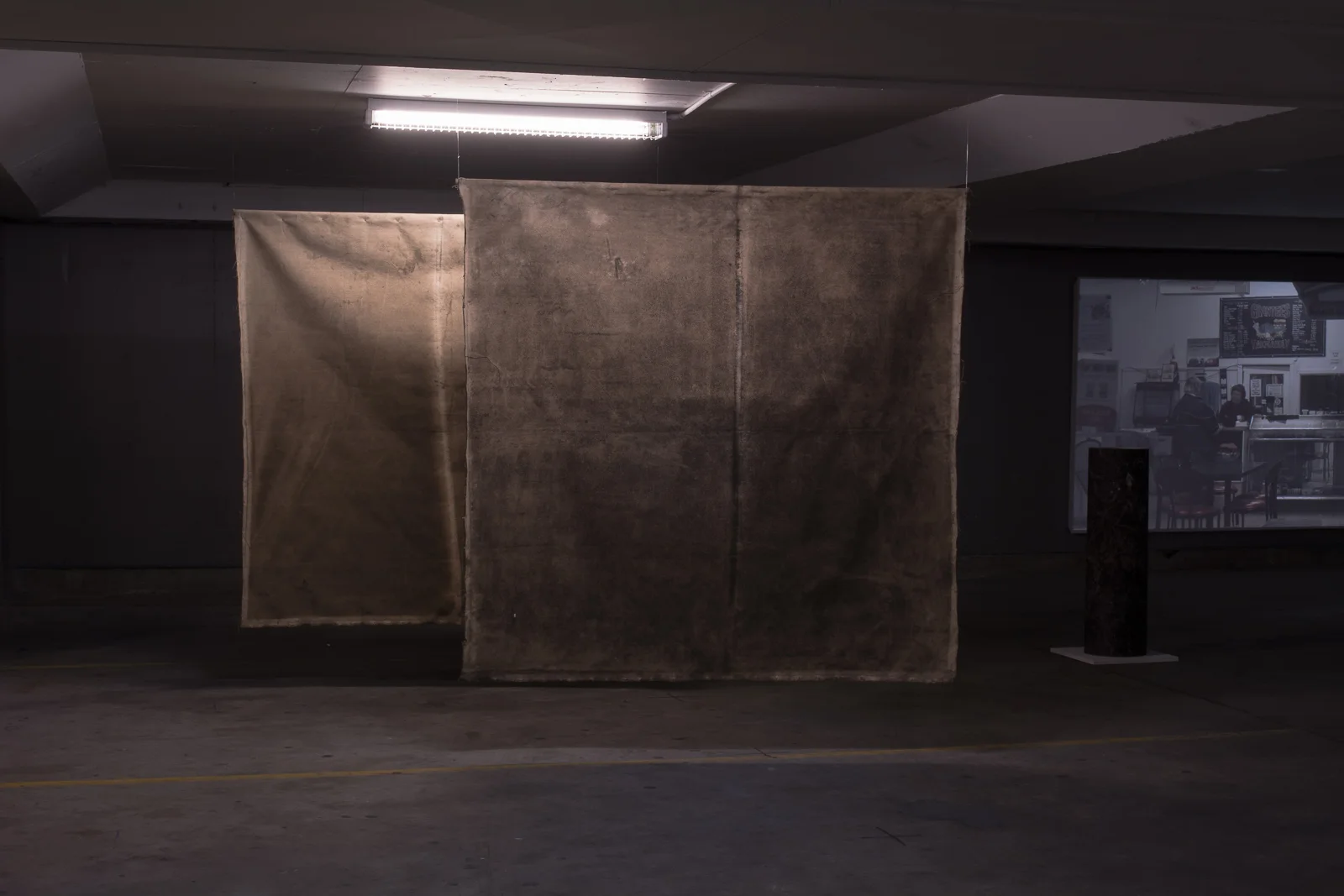
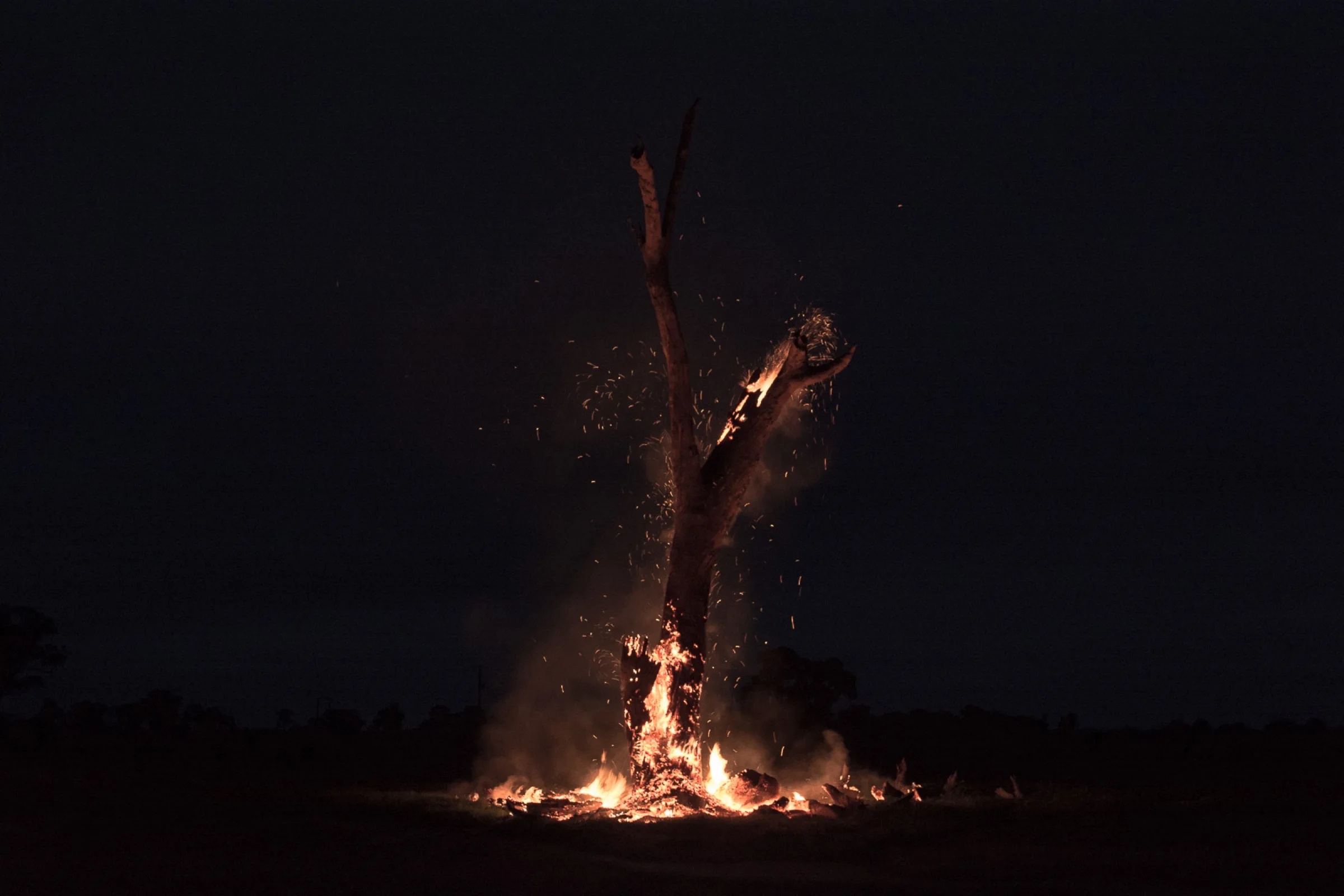
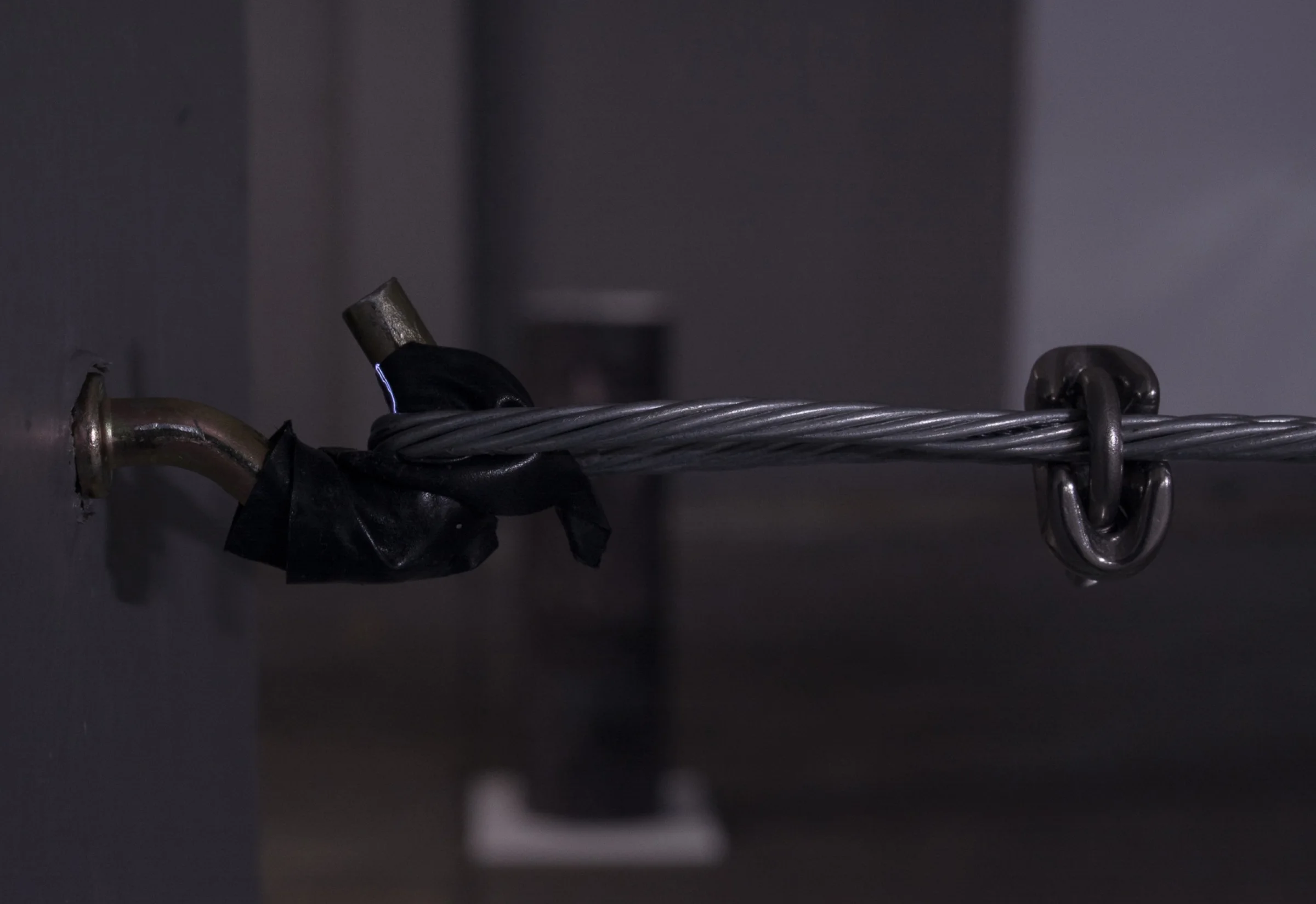
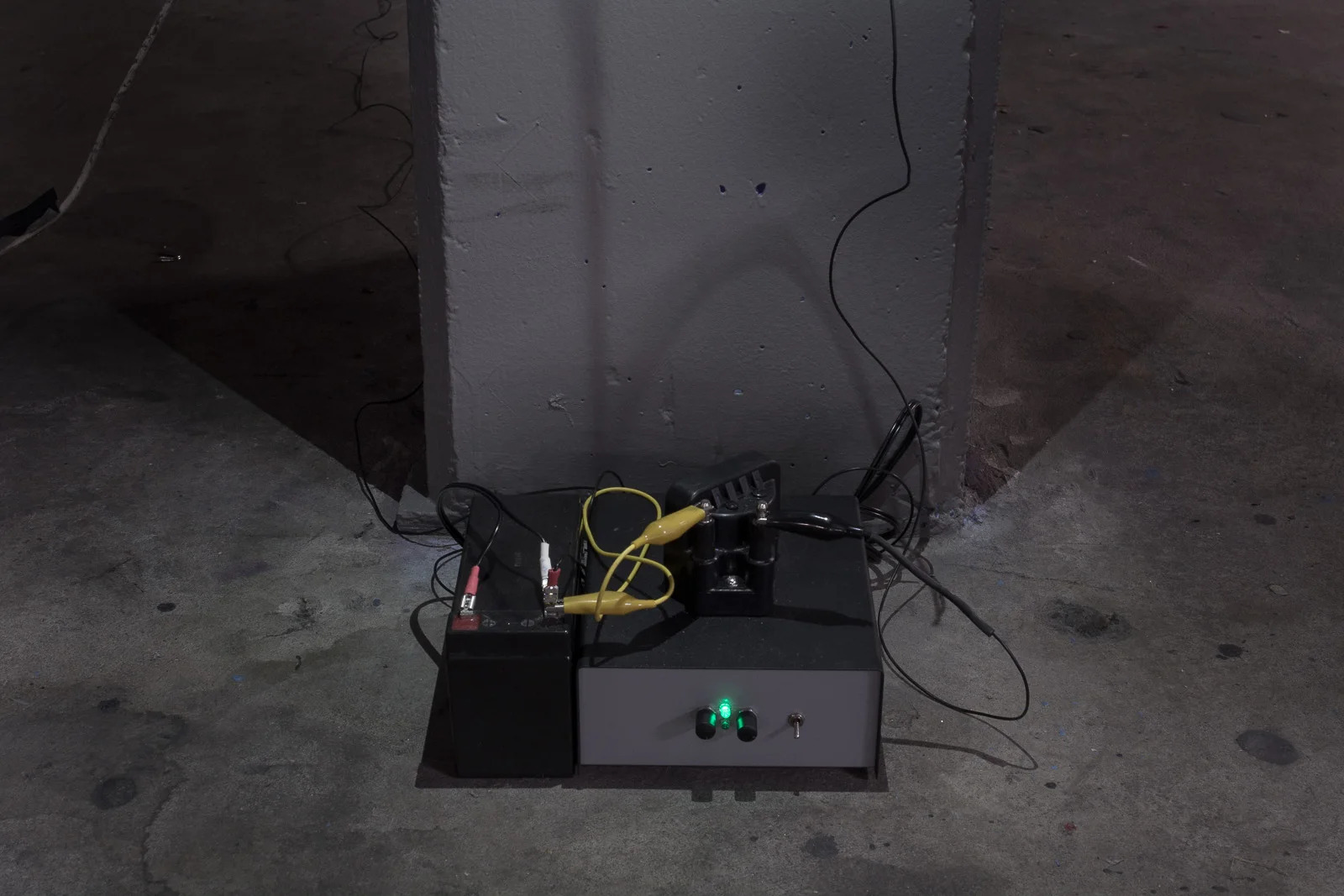
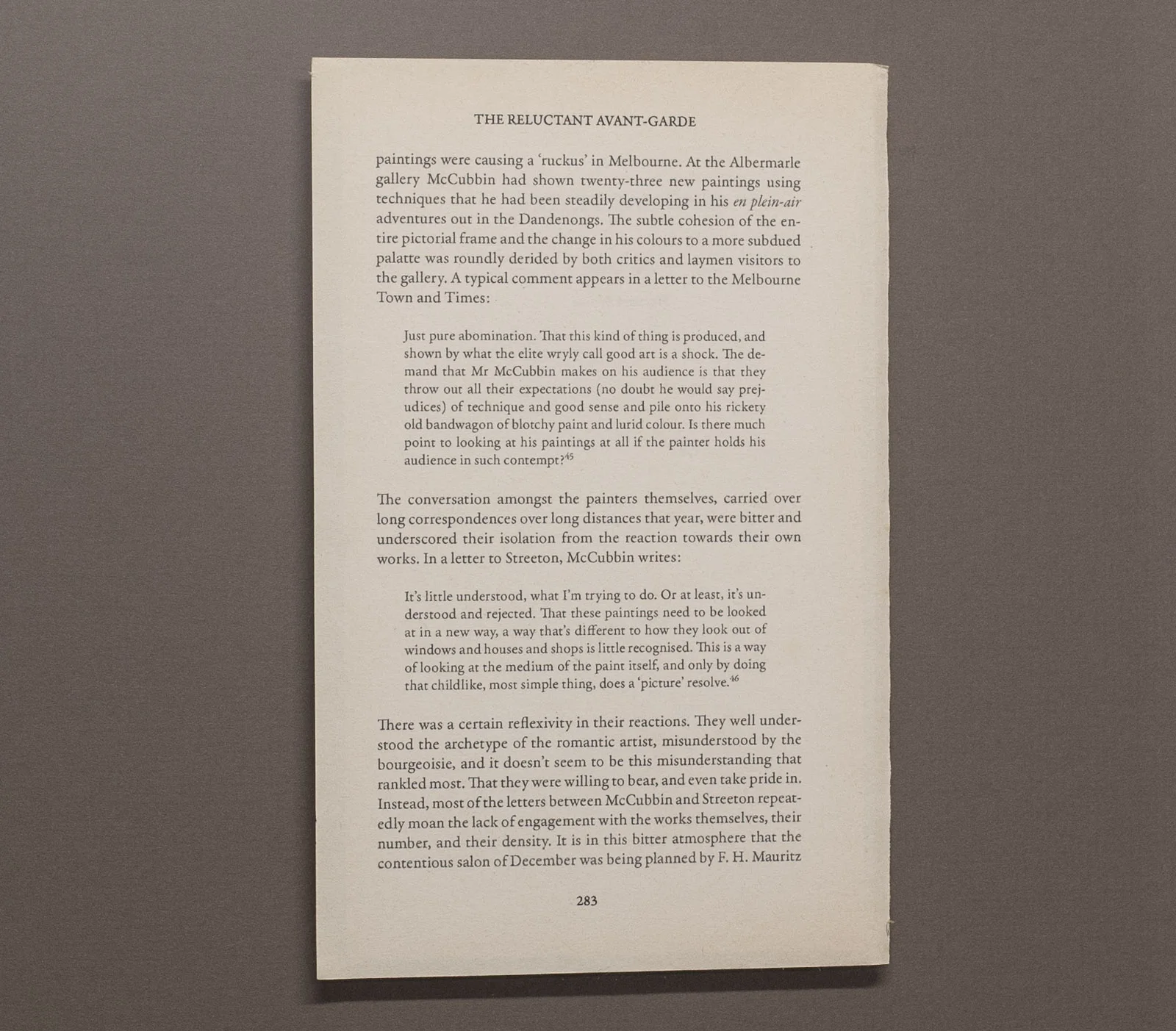
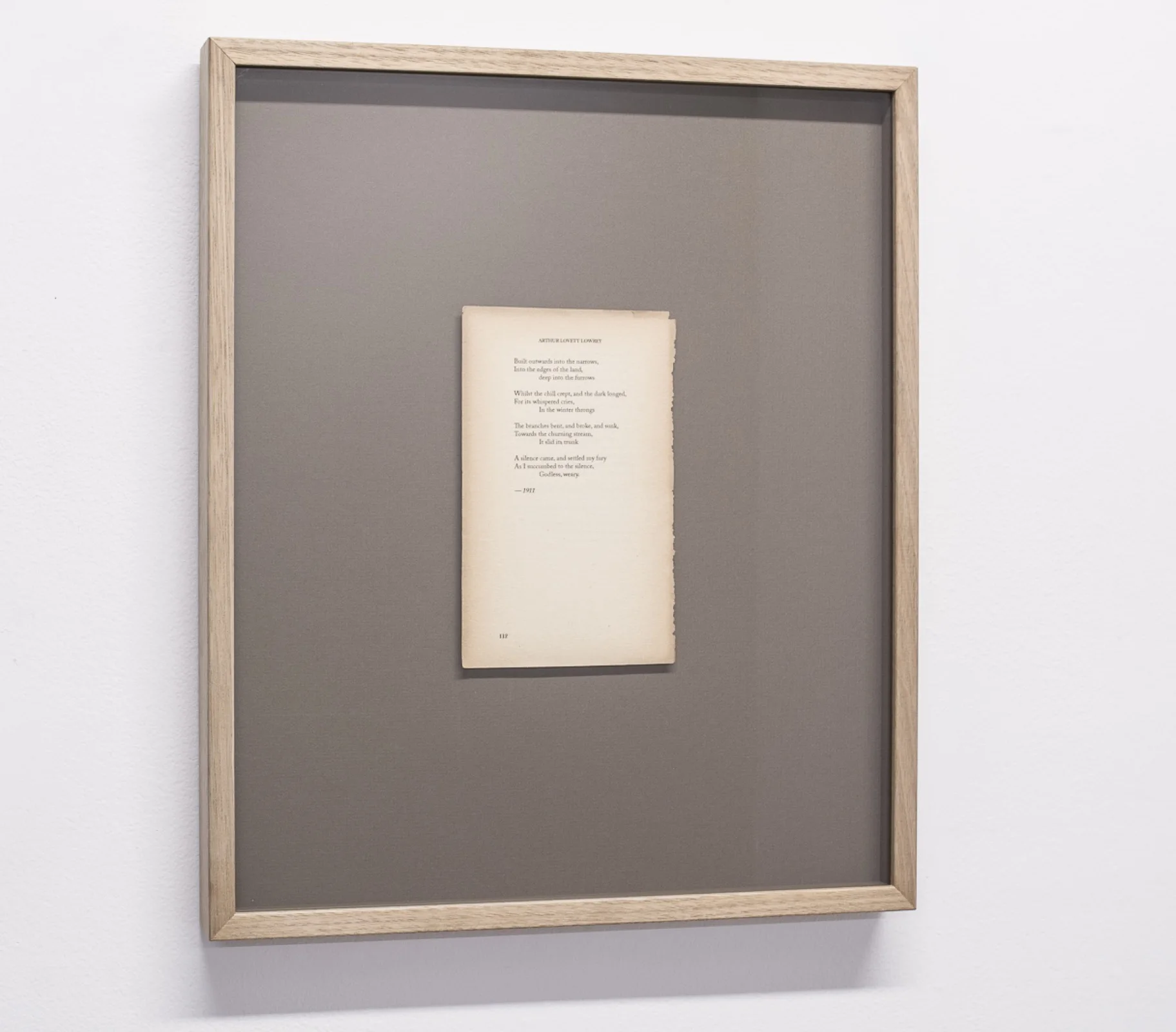
Means (2014) asks how looking intently at the Australian bush might become a way of never belonging to it. Film, photography, sound, charred wood, smoke-darkened cotton, steel wire and fictional texts draw together journeys through the Southern Highlands, Great Dividing Range and Victorian gold towns.
Installed through the estranged levels of a functioning Sydney car park, the works behave less like discrete media than instruments trained on the same uncertain terrain. The Colonies at Dusk moves among cattle, snakes, rocks, burning trees, machinery and isolated people; a thirty-minute sound work carries the distant infrastructure of the Snowy Hydro scheme through the space. Two large cotton panels retain cooking smoke. A fire-blackened trunk becomes both found body and sculpture, while steel wire drawn across the car park gives a Minimalist line weight, risk and obstruction.
Fragments of invented journals, poetry and criticism borrow the authority of aged paper and art-historical voice, drawing Australian painting, New Topographics, contemplative cinema, Arte Povera and Minimalism into the journey. Each work offers only a partial way of looking. Together they produce an unstable belonging: the bush appears totemic, theatrical and indifferent, and looking outward becomes a test of the artist’s place within it.
Ways (2014) 4A Centre for Contemporary Asian Art, Sydney
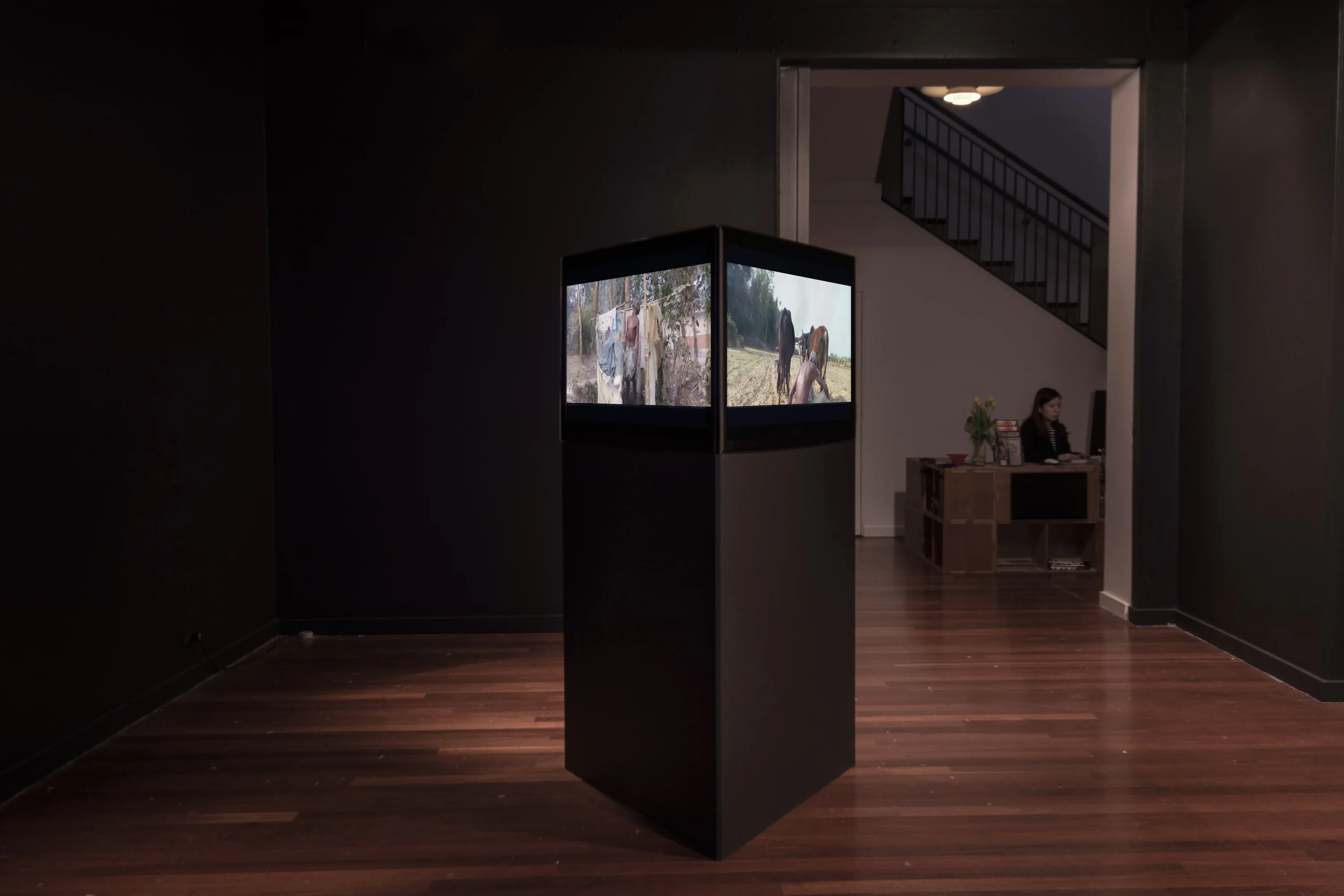
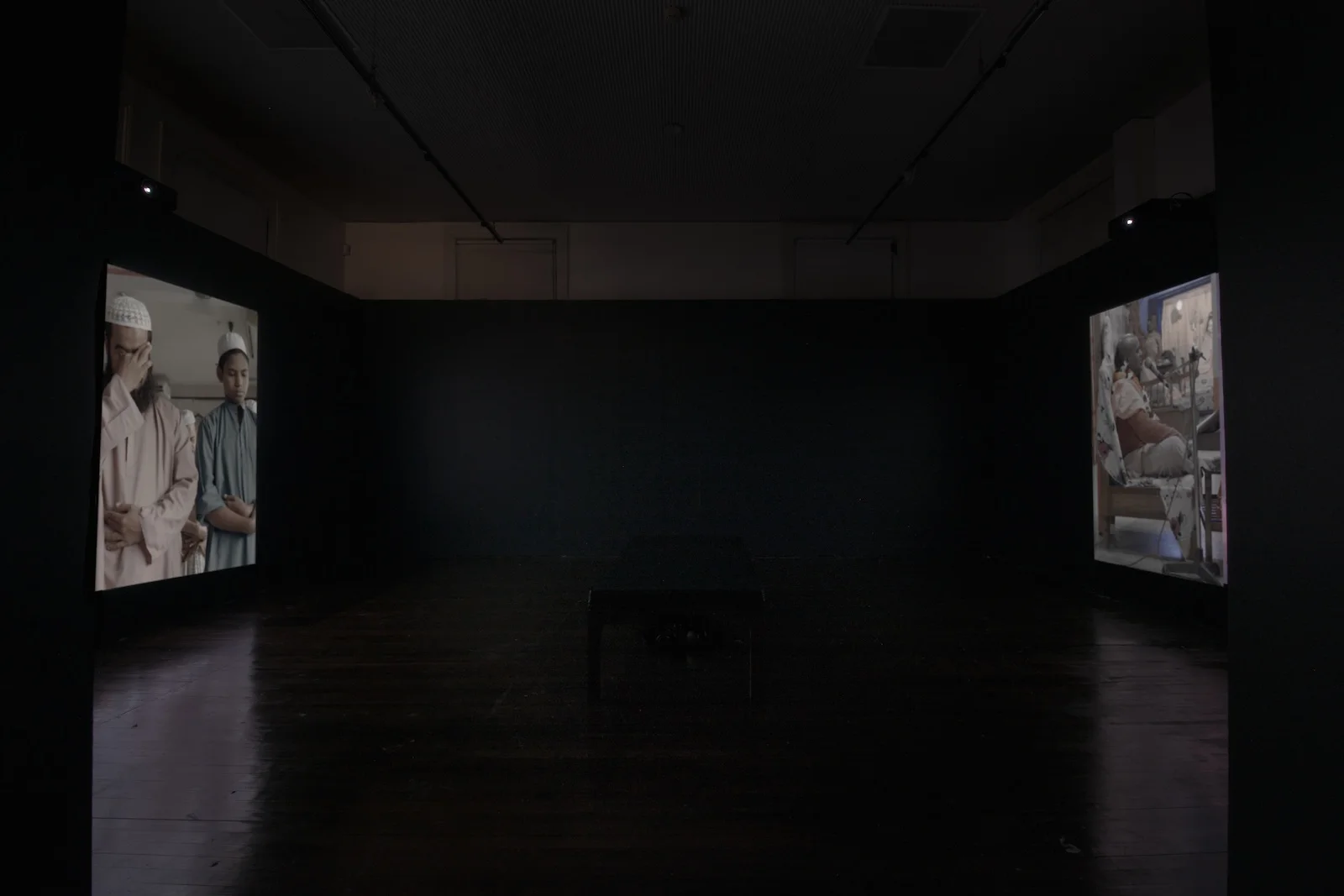
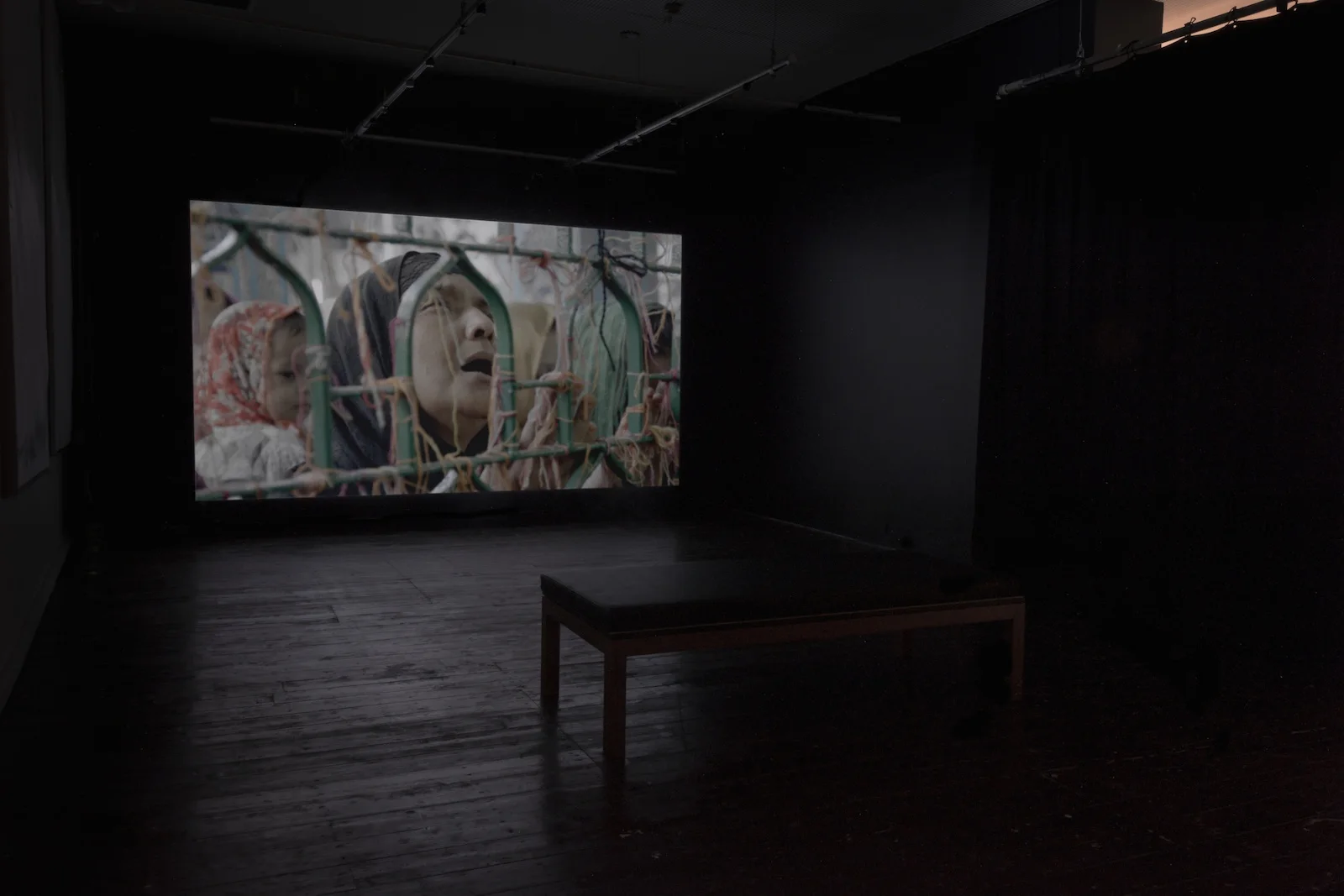
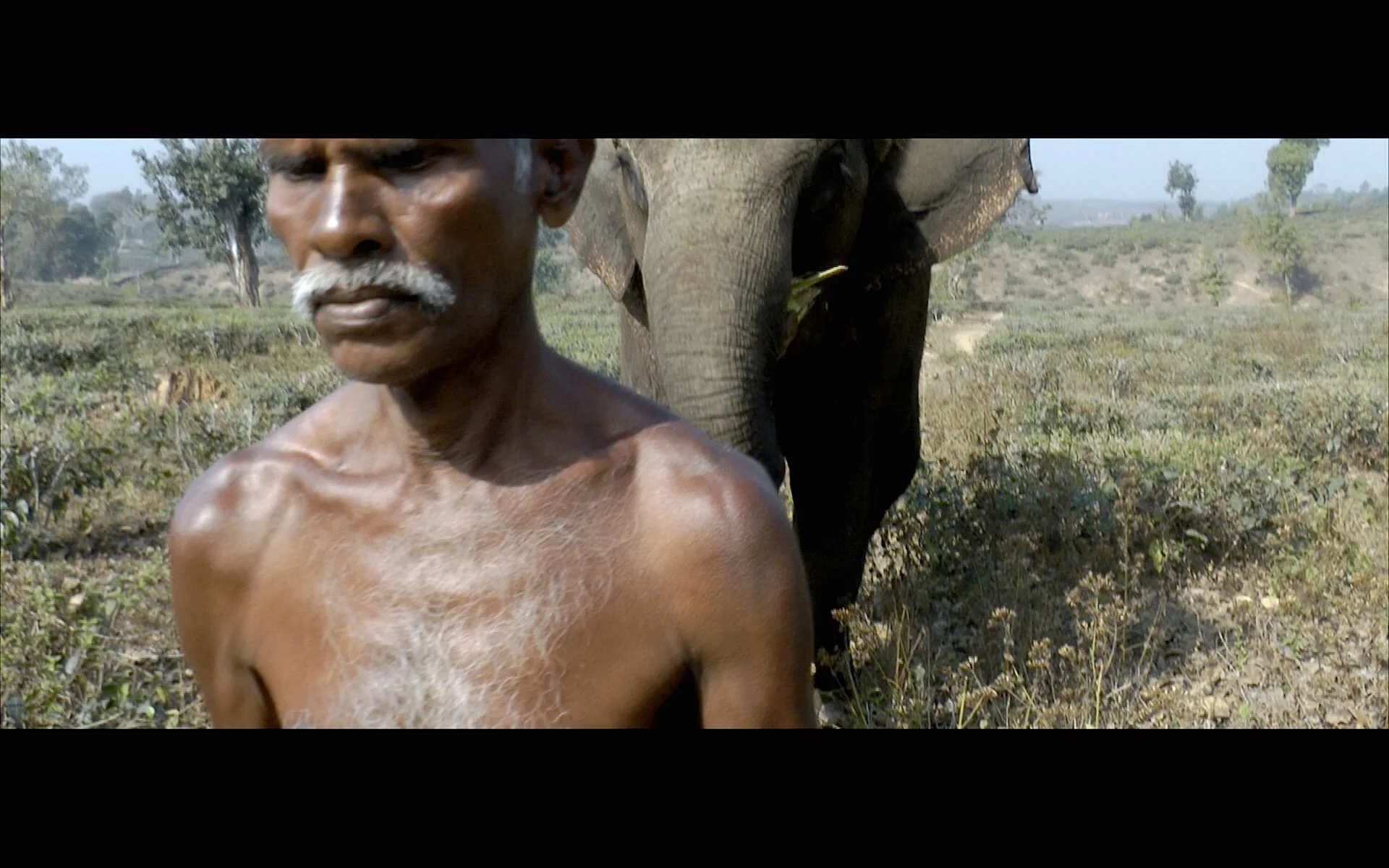
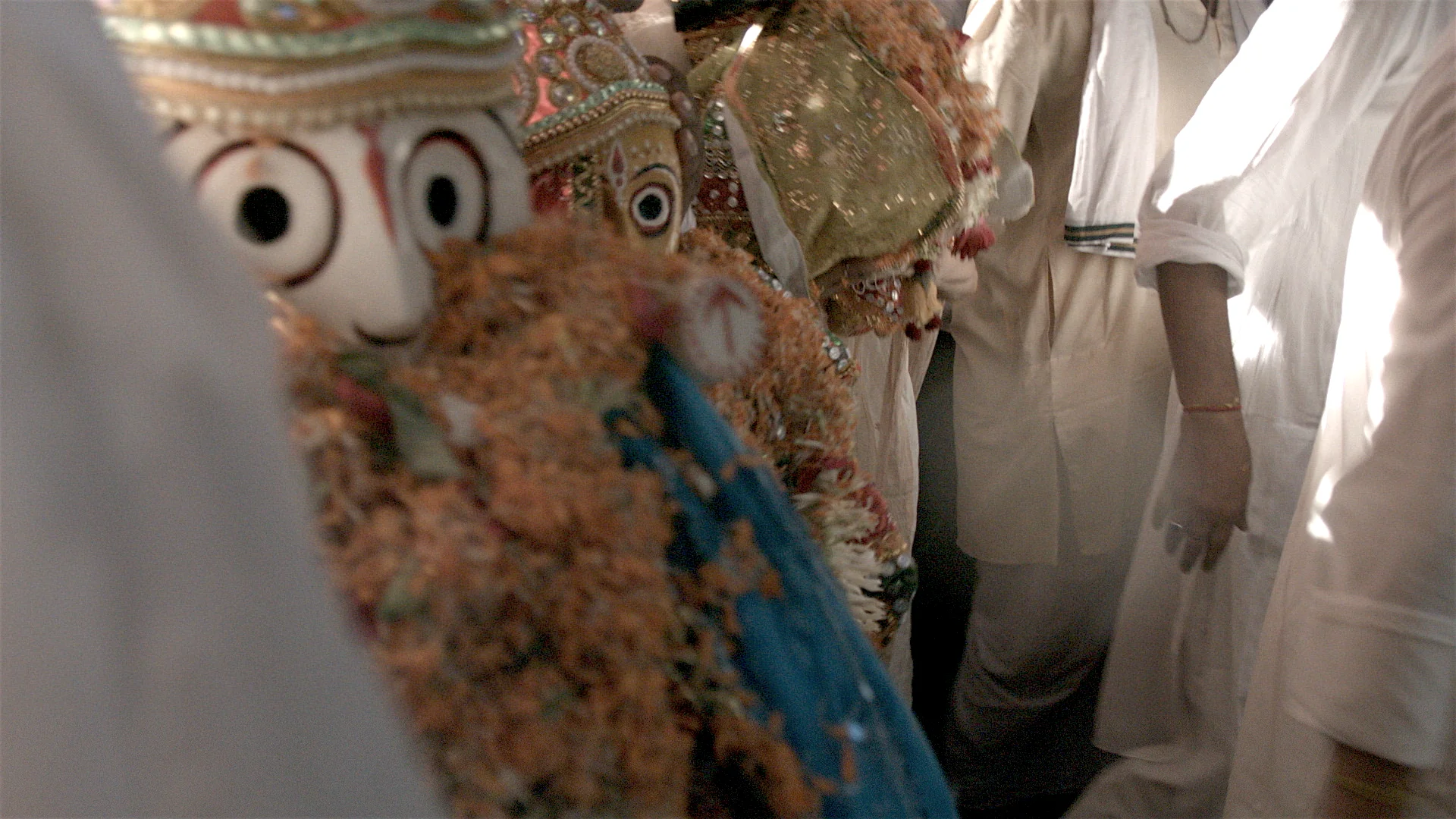
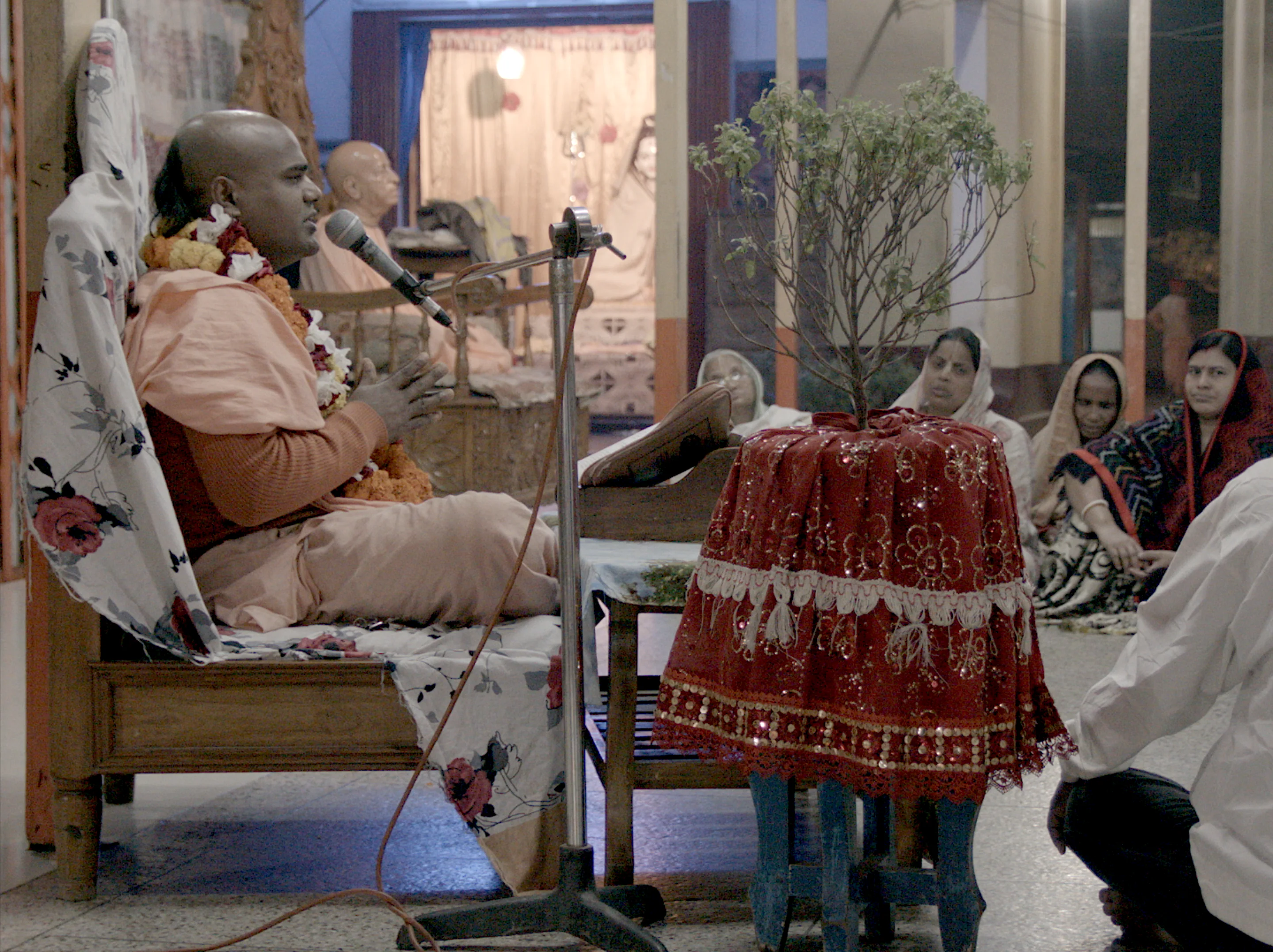
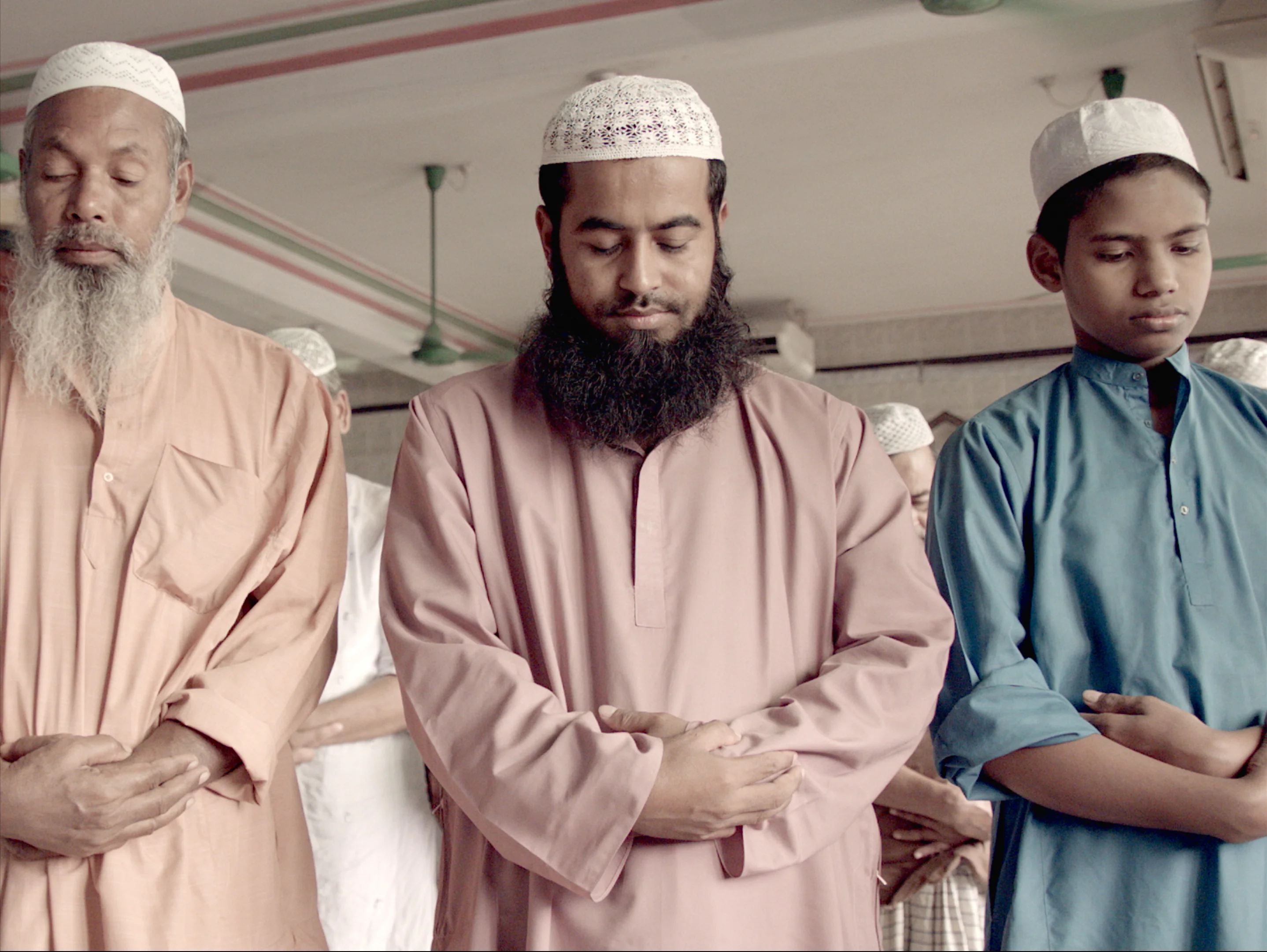
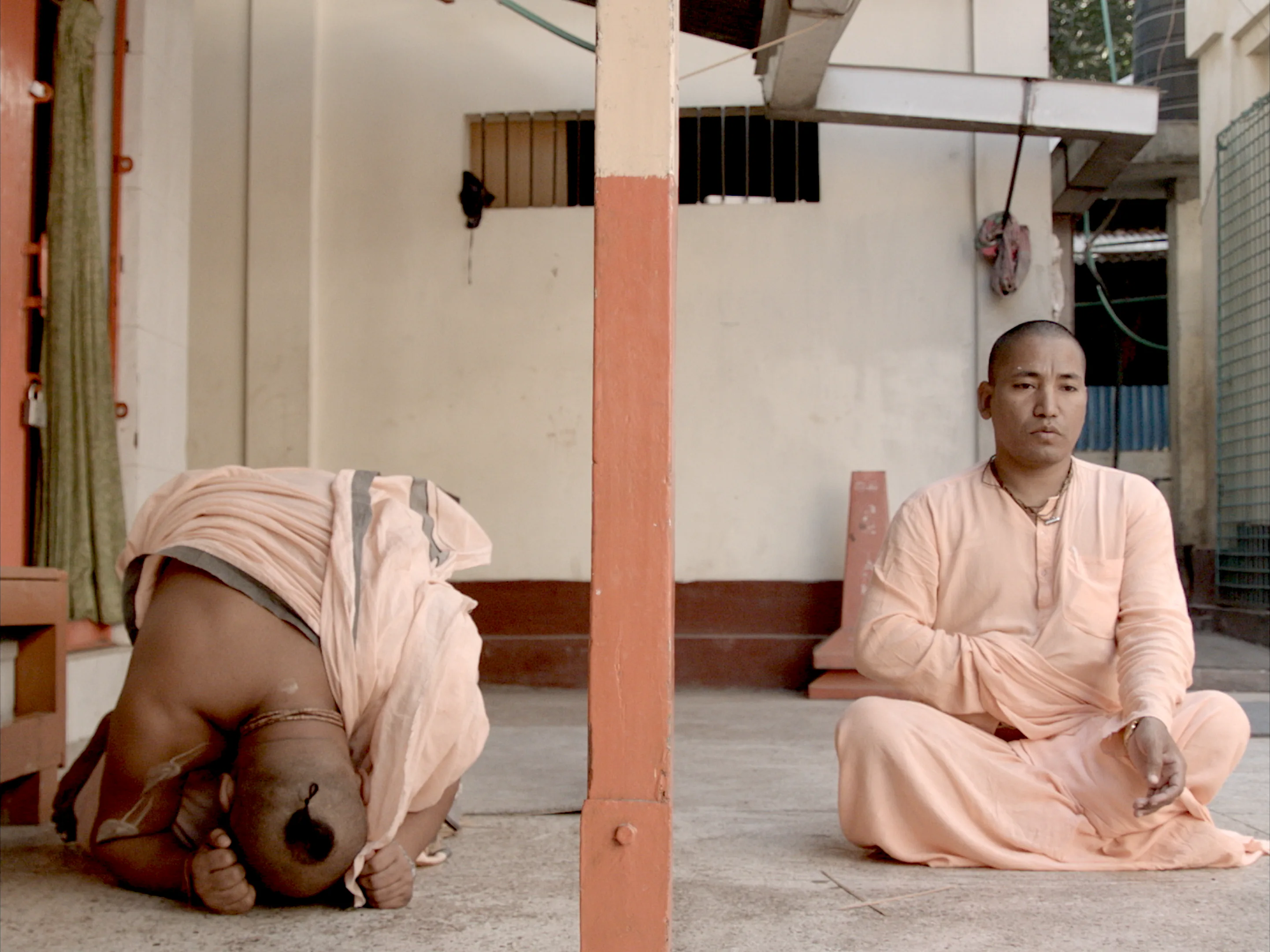
Across 4A’s two floors, Ways (2014) brings together three durational moving-image installations made through sustained immersion in spiritual spaces. Across a tea plantation, a Hindu procession, Shia mourning rites, a Hare Krishna temple and a Sunni mosque, the exhibition questions how spiritual experience becomes visible through bodies, routines, architecture and cinematic time.
On 4A’s ground floor, the three-channel Vastness in Eclipse moves between documentary observation, fiction and images of its own making, turning an elderly plantation worker’s daily life into a meditation on mortality. Upstairs, Torsions compresses the crowds of Ratha Yatra and Muharram into a 106-minute rhythm: ecstasy, grief, spectacle and exhaustion approach and disturb one another.
Behind it, Locus I and II place films made over several years inside an ISKCON temple and a Sunni mosque beside the Buriganga River on facing screens. Their long takes attend to prayer, chant, sleep, maintenance, conversation, contradiction and humour. Headphones make spectators turn physically and mentally between two distinct spiritual worlds.
Ways refuses explanatory survey or devotional certainty. Its demanding durations convert 4A into an architecture of attention, asking viewers to encounter faith not as doctrine or exotic image but as embodied labour, communal rhythm and unresolved form.