Echo, Saturn (II)—The Courts (2021)
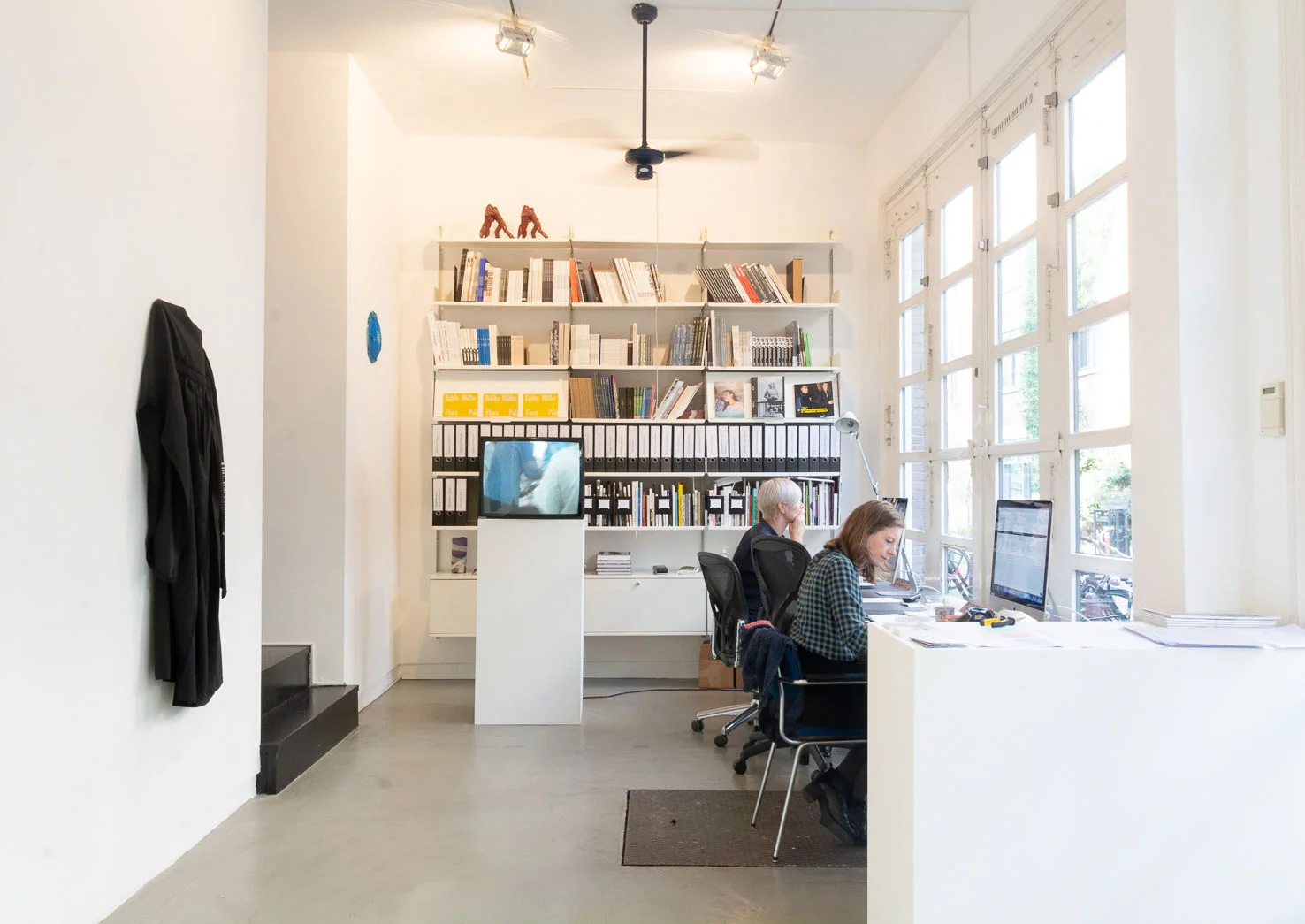
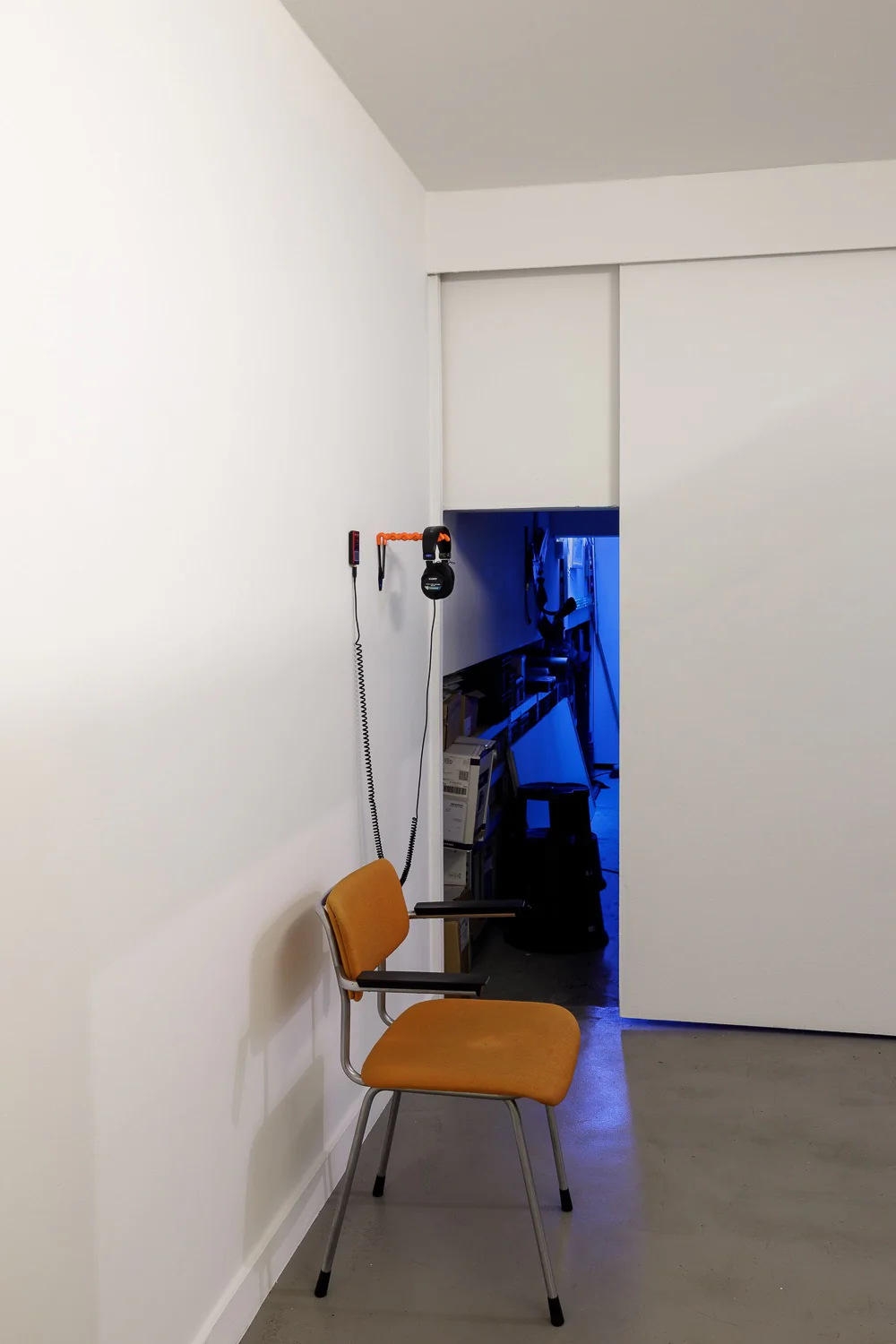
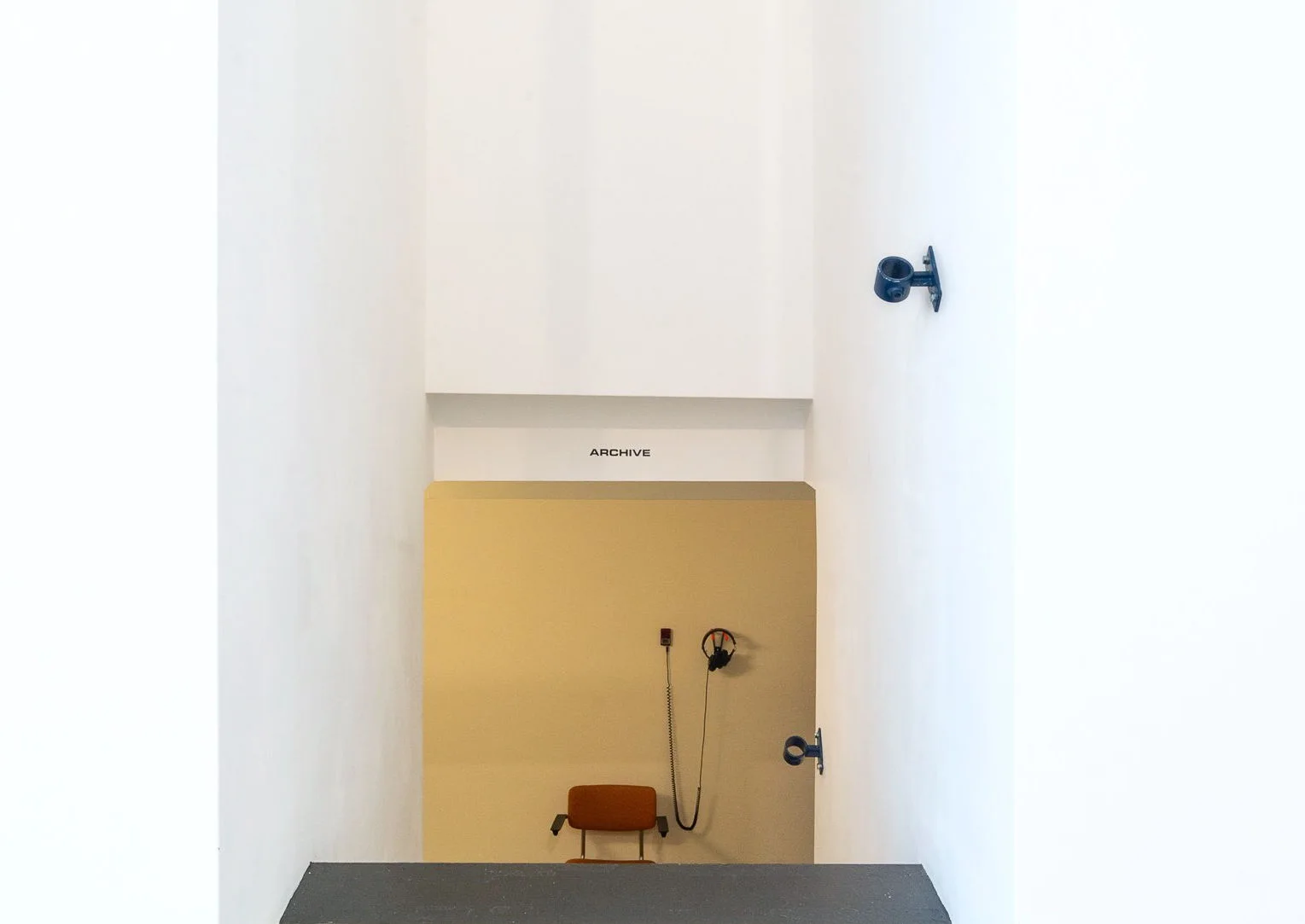
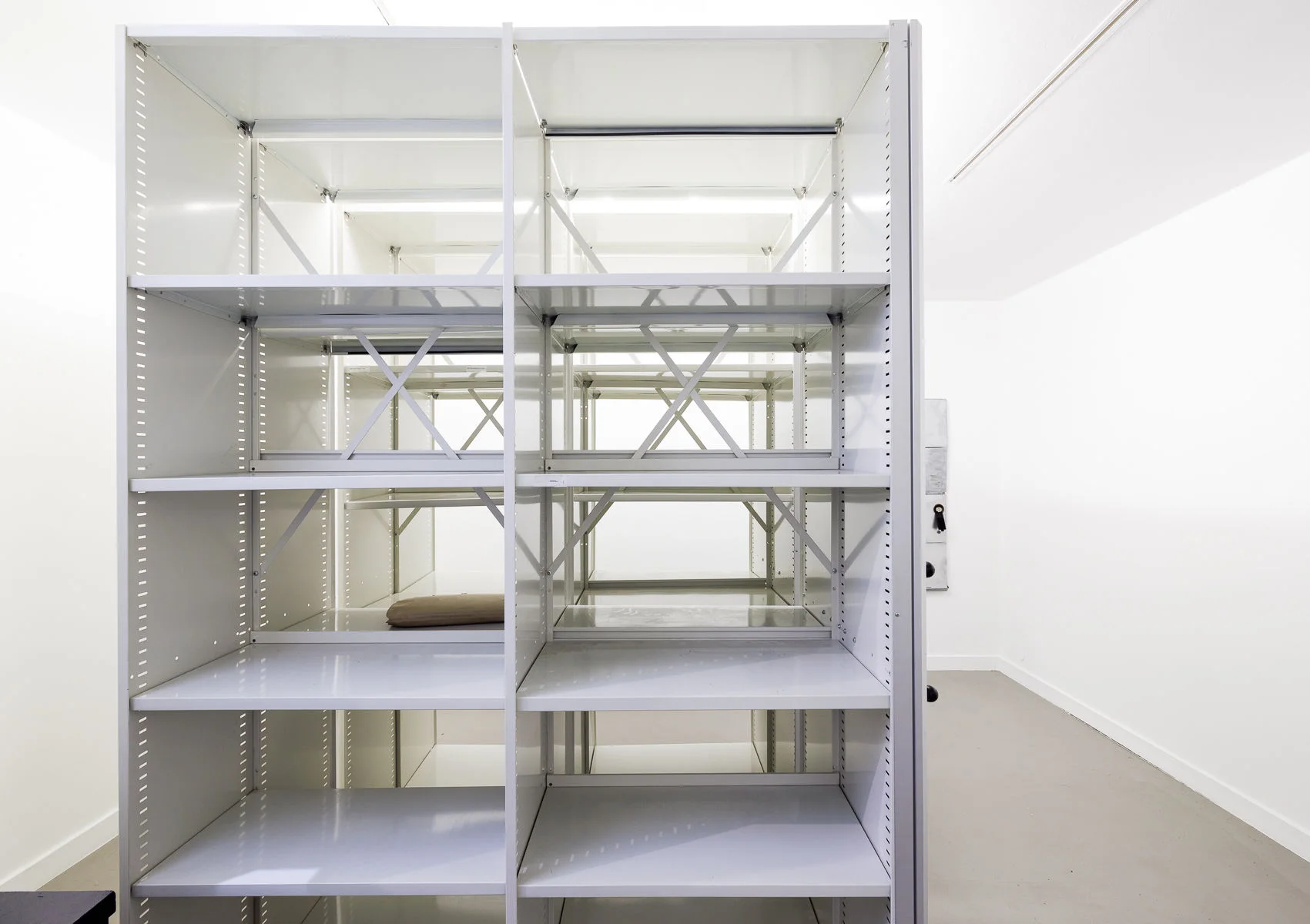
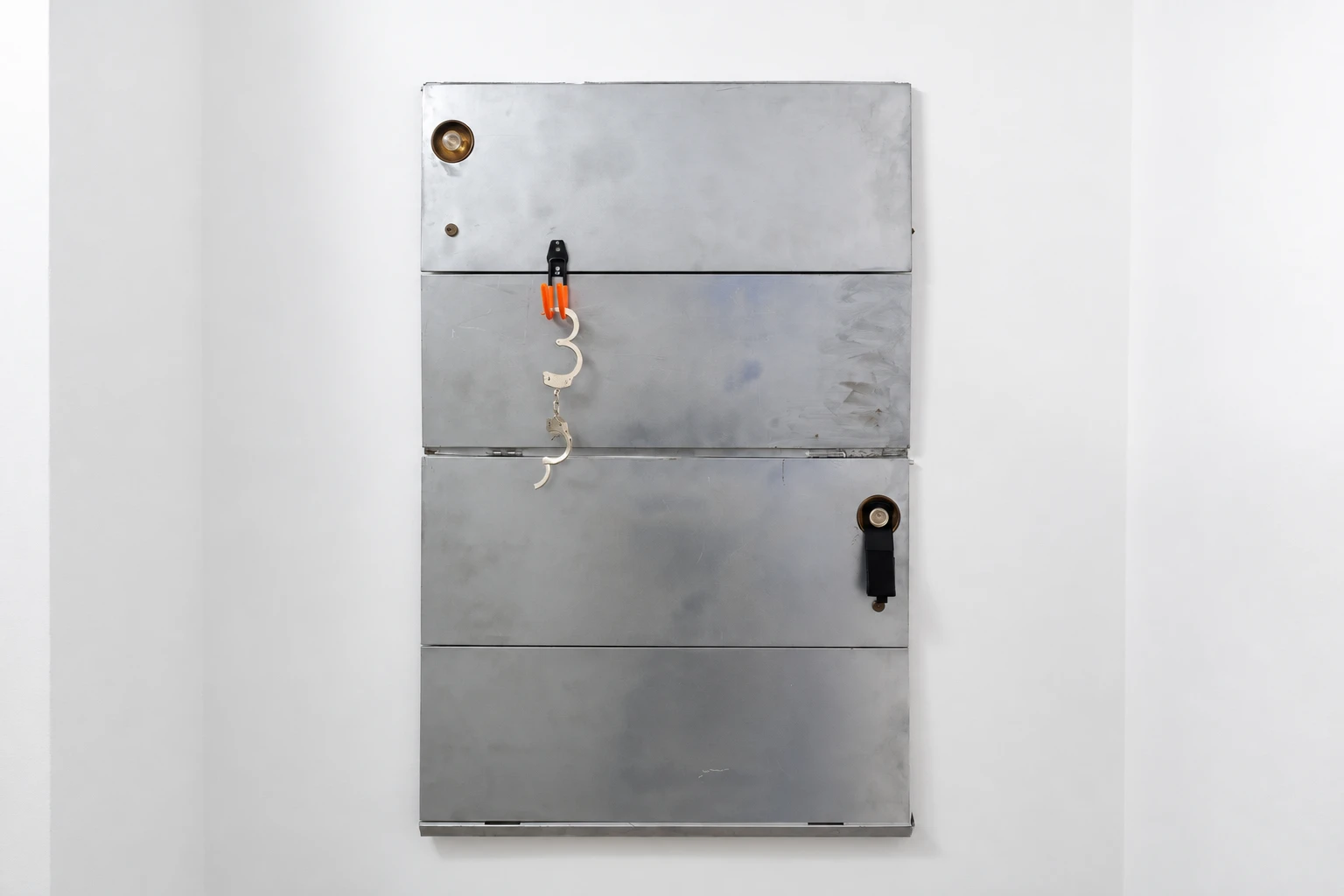
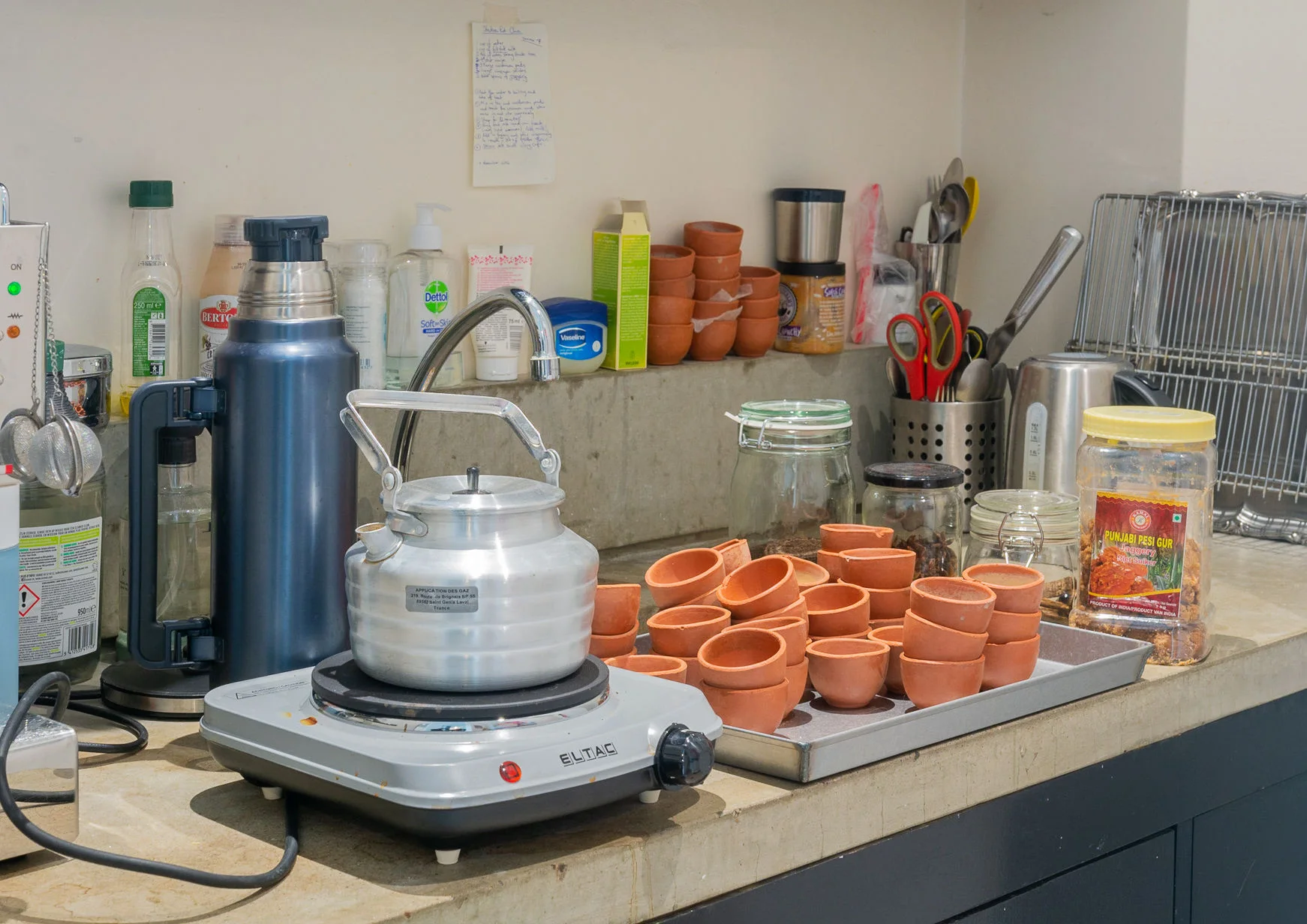
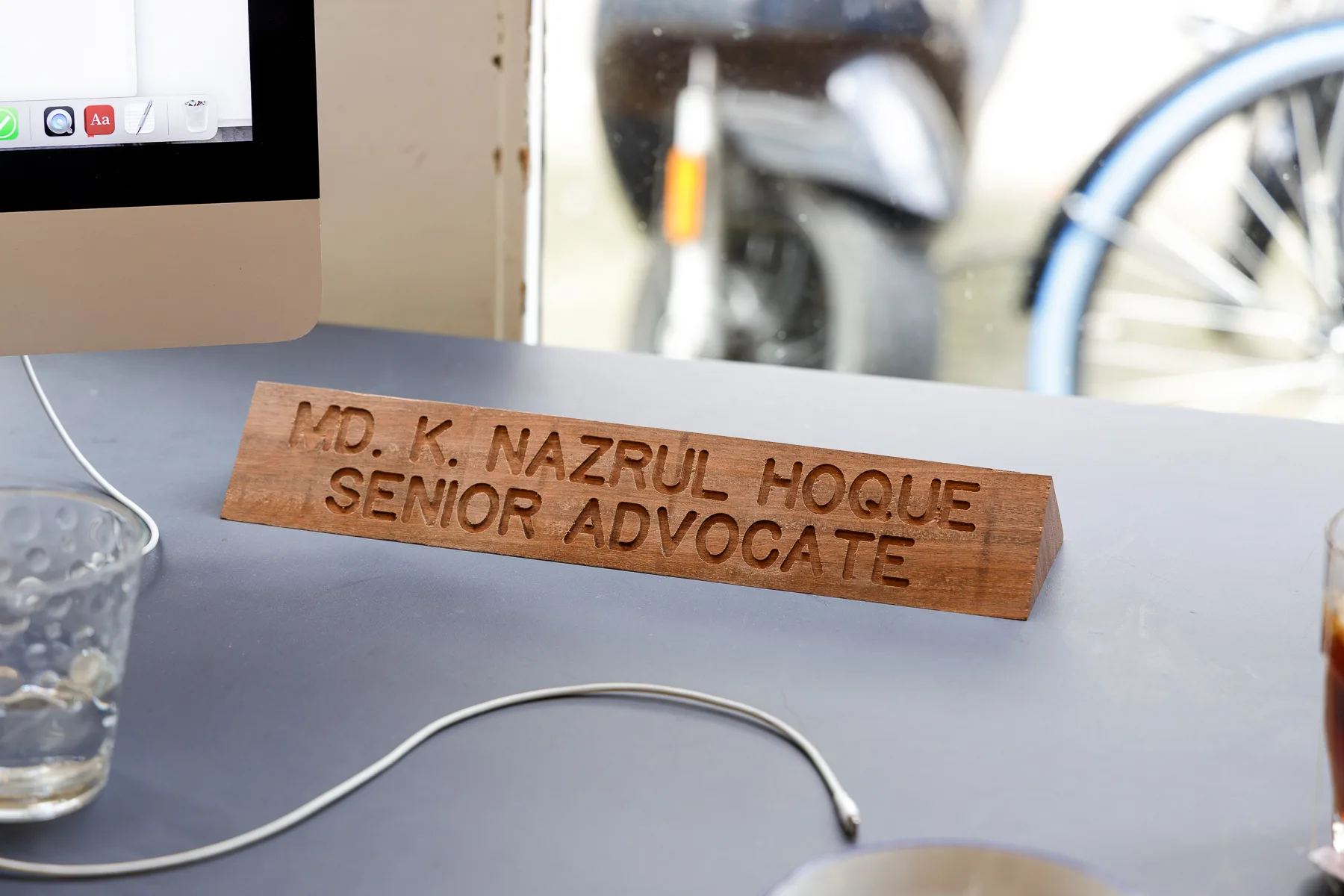
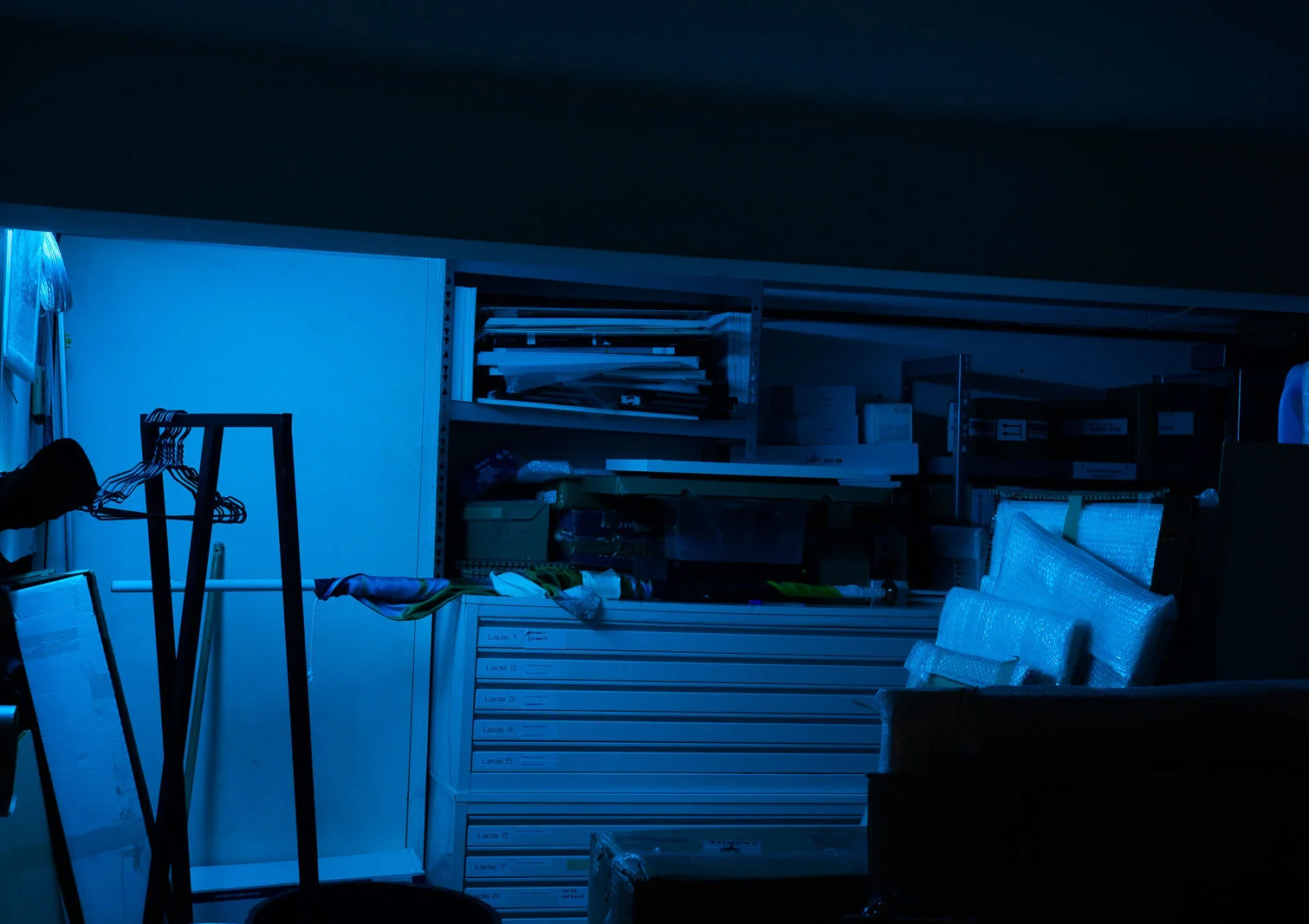
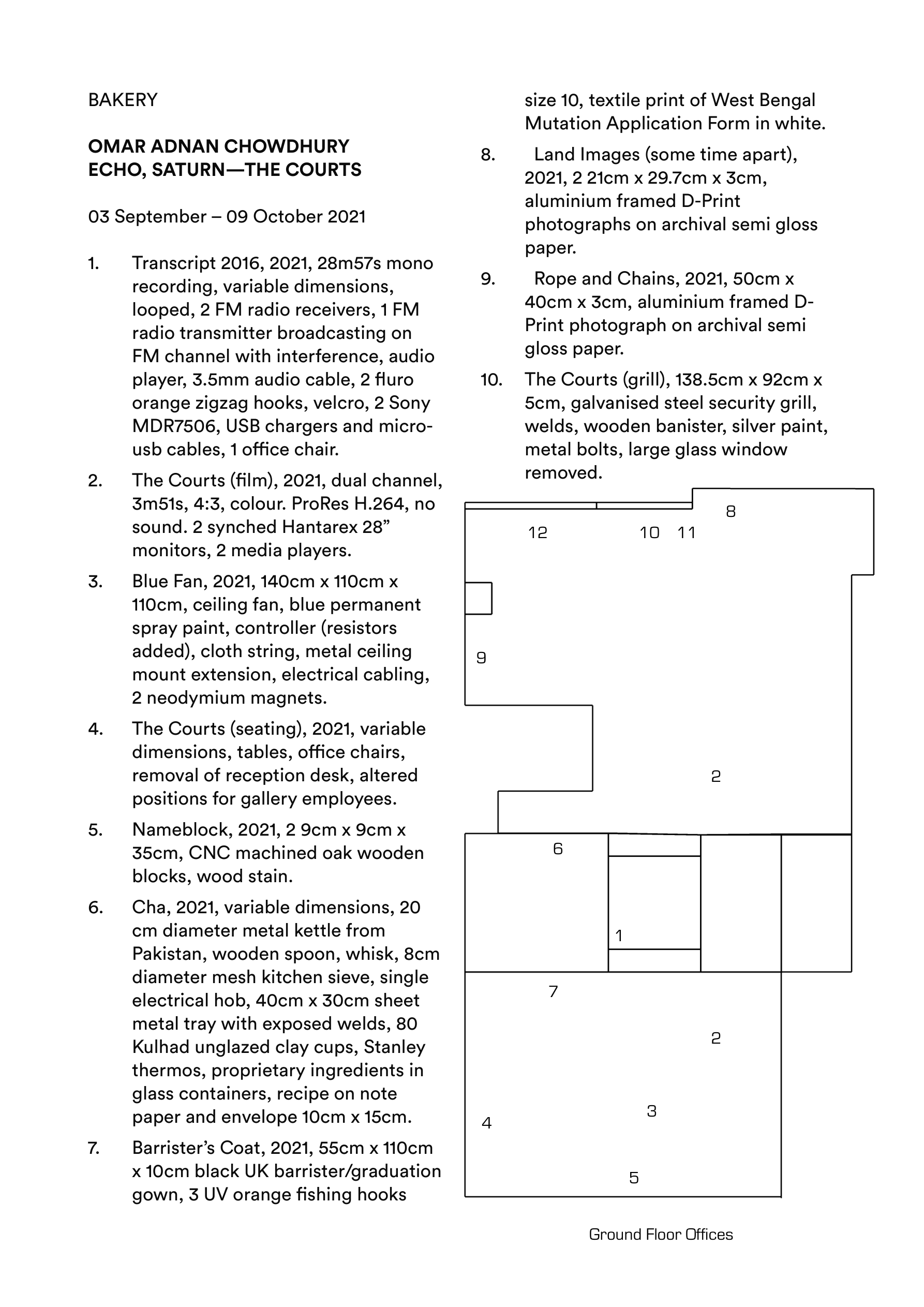
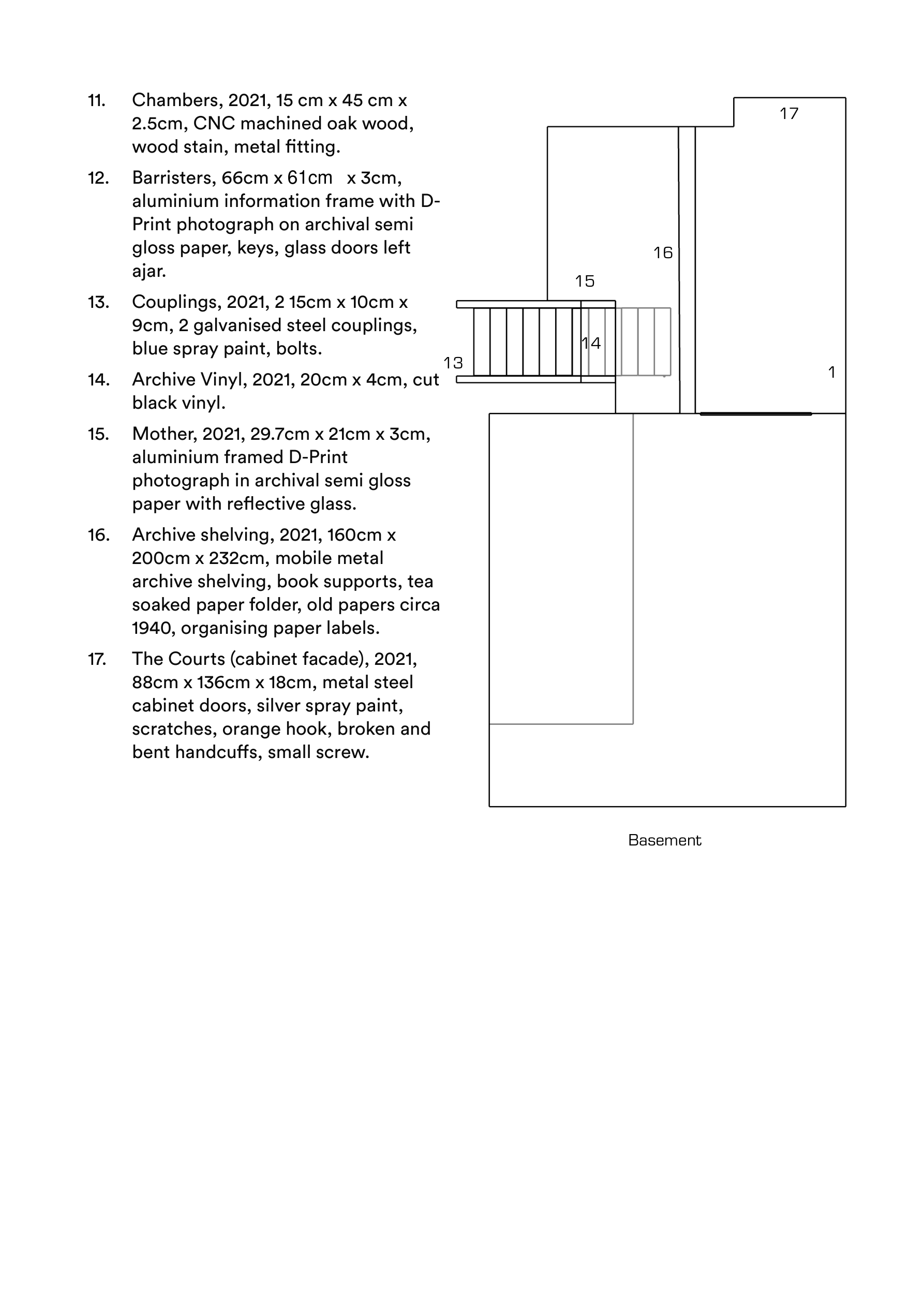
Echo, Saturn (II)—The Courts (2021) overlays the working spaces of Annet Gelink Gallery with fragments of the law courts and archives of Rajshahi: a city within a city. The reception, offices, kitchen and basement remain in use, while taking on the atmosphere of crowded lawyers’ chambers, tea stalls, barred windows and deteriorating archives where papers disappear and petitioners wait. Gallery employees are recontextualised as visitors move between these two institutions, cities and moments in time. Bureaucracy emerges not as an abstract system but as a condition of delay, repetition and obstruction. Memory accumulates and every attempt to negate the past sinks one further into it.
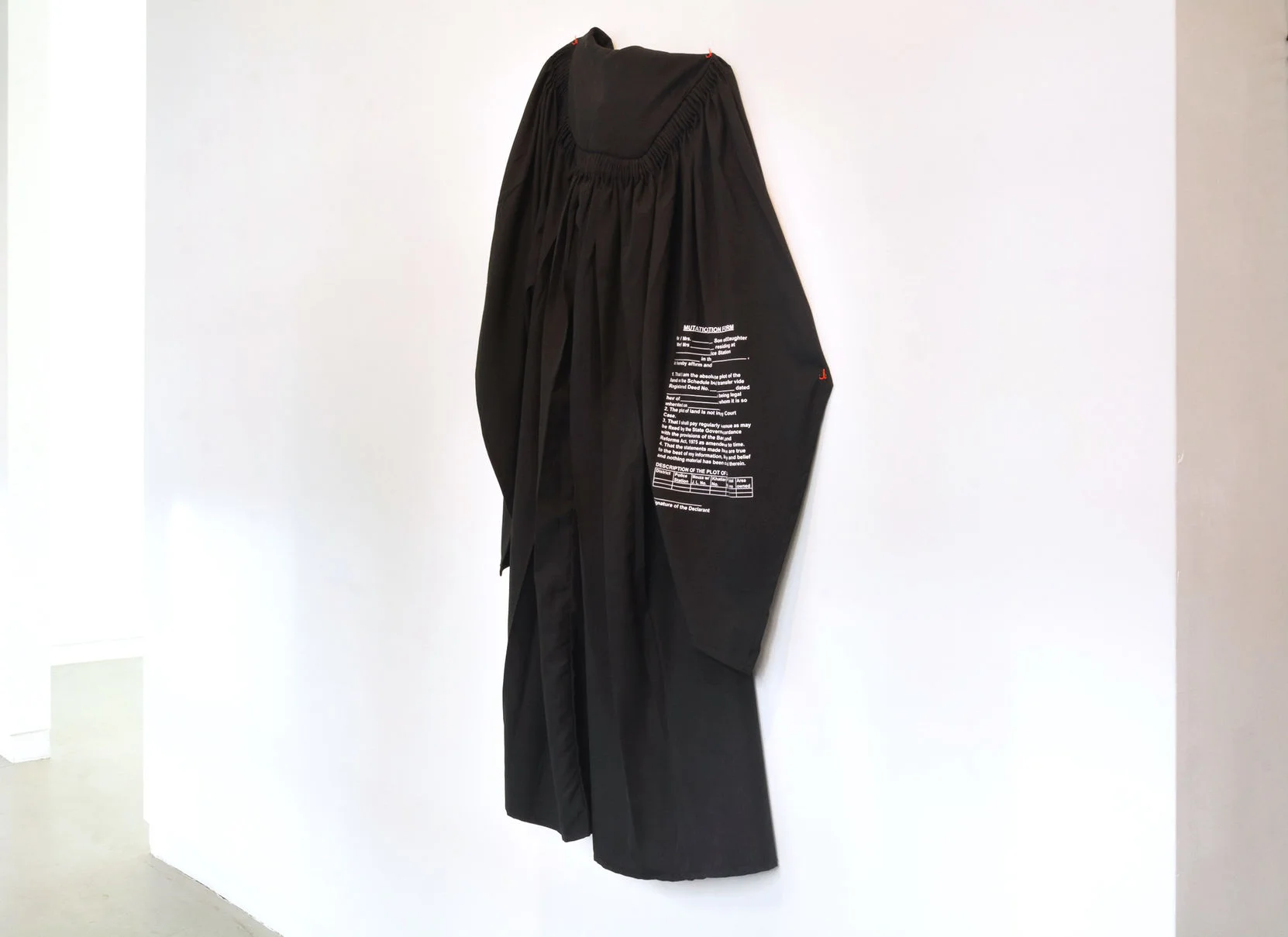
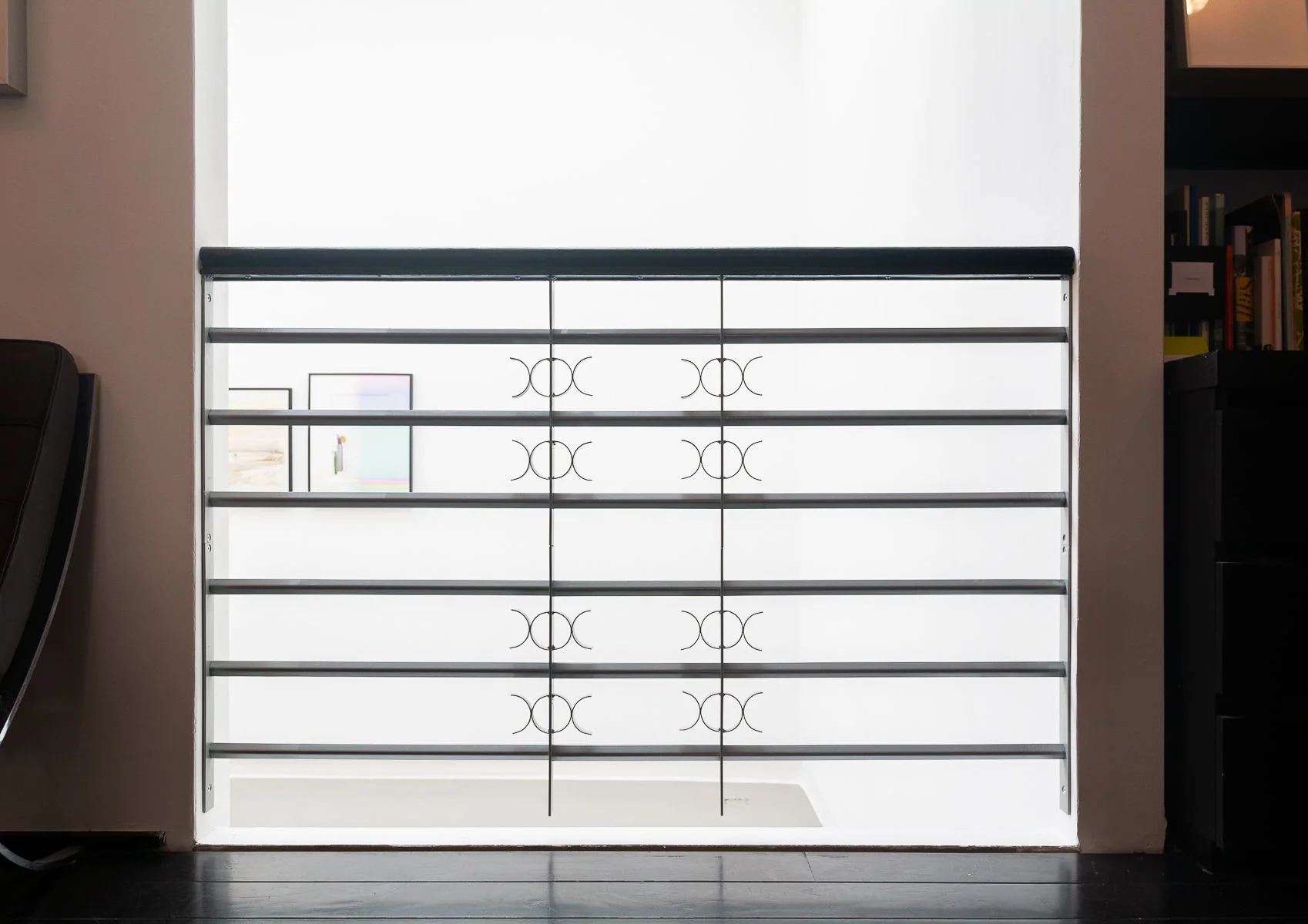
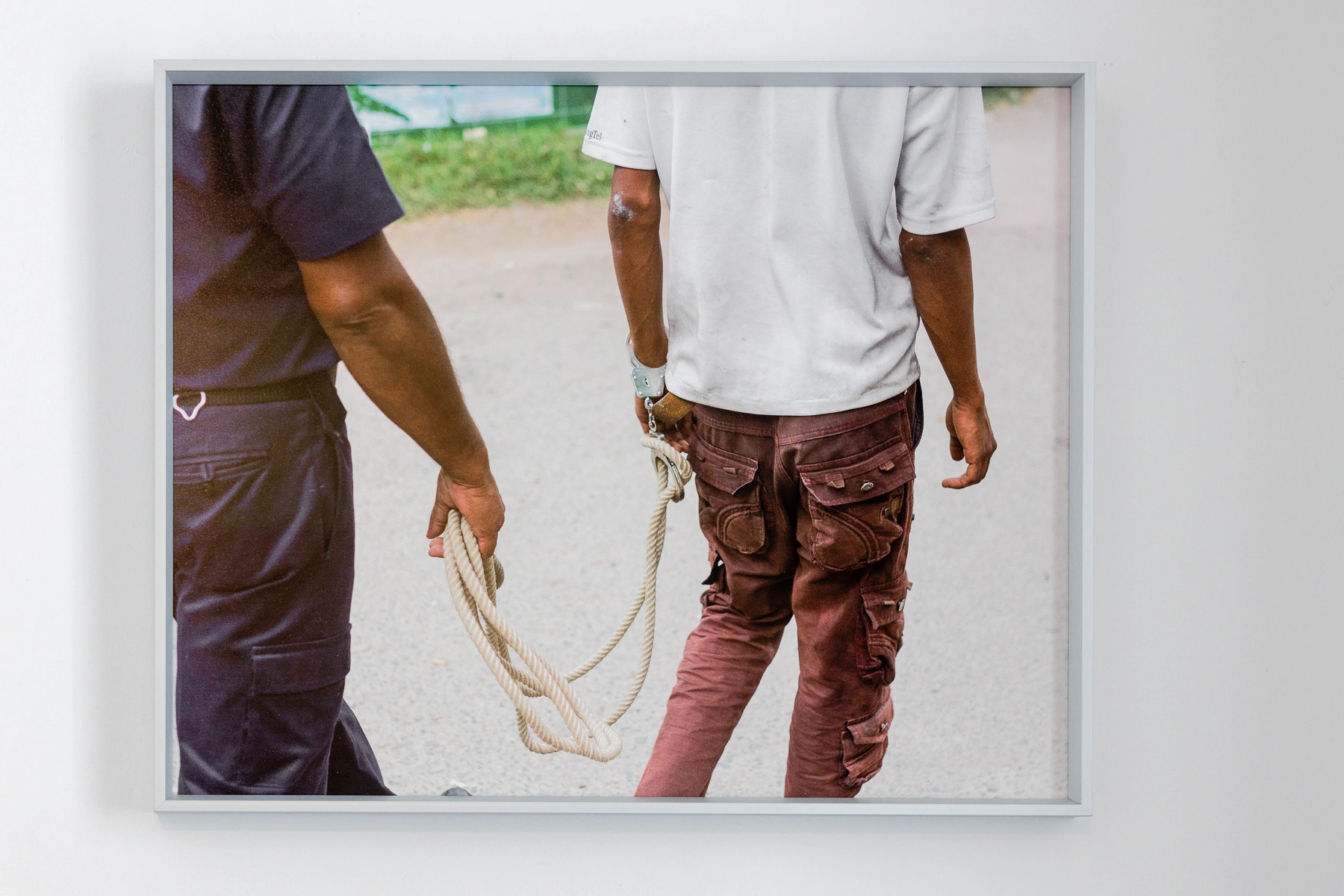
Visitors encounter fragments: a barrister’s gown hangs in a passageway, tea is served in clay cups, a security grill replaces a window, and a ceiling fan turns overhead. Downstairs, mobile shelving, ageing papers, cabinet doors and broken handcuffs evoke the administrative viscosity of an archive slowly falling apart. The exhibition is haunted by Dr Shahidul Zaman, who visits the law courts of Rajshahi in the early 1980s, searching for the deeds to family land he hopes to sell to finance his emigration to Europe. Missing documents lead back to Partition, forced migration and an exchange of property between Hindu and Muslim families.
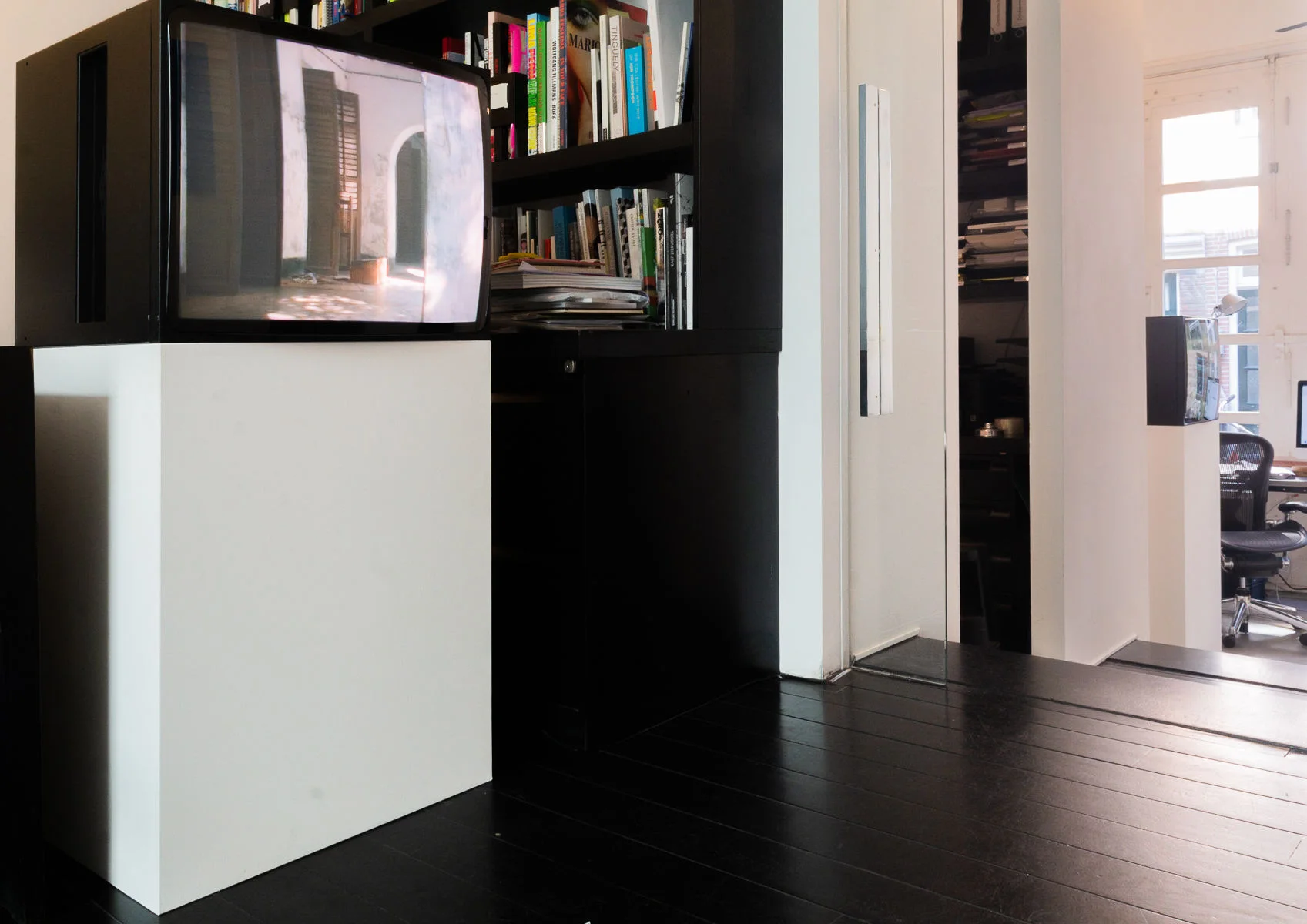
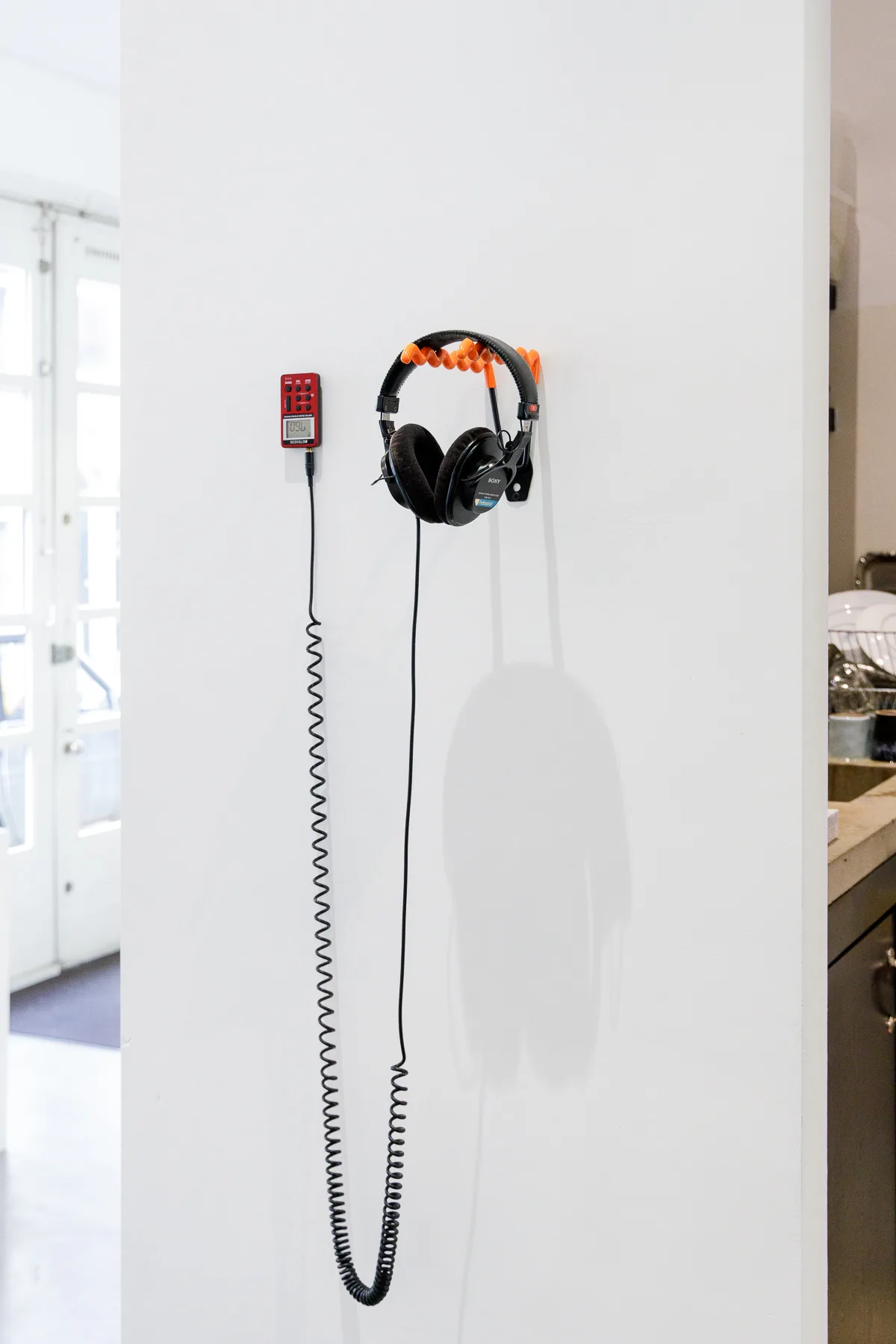
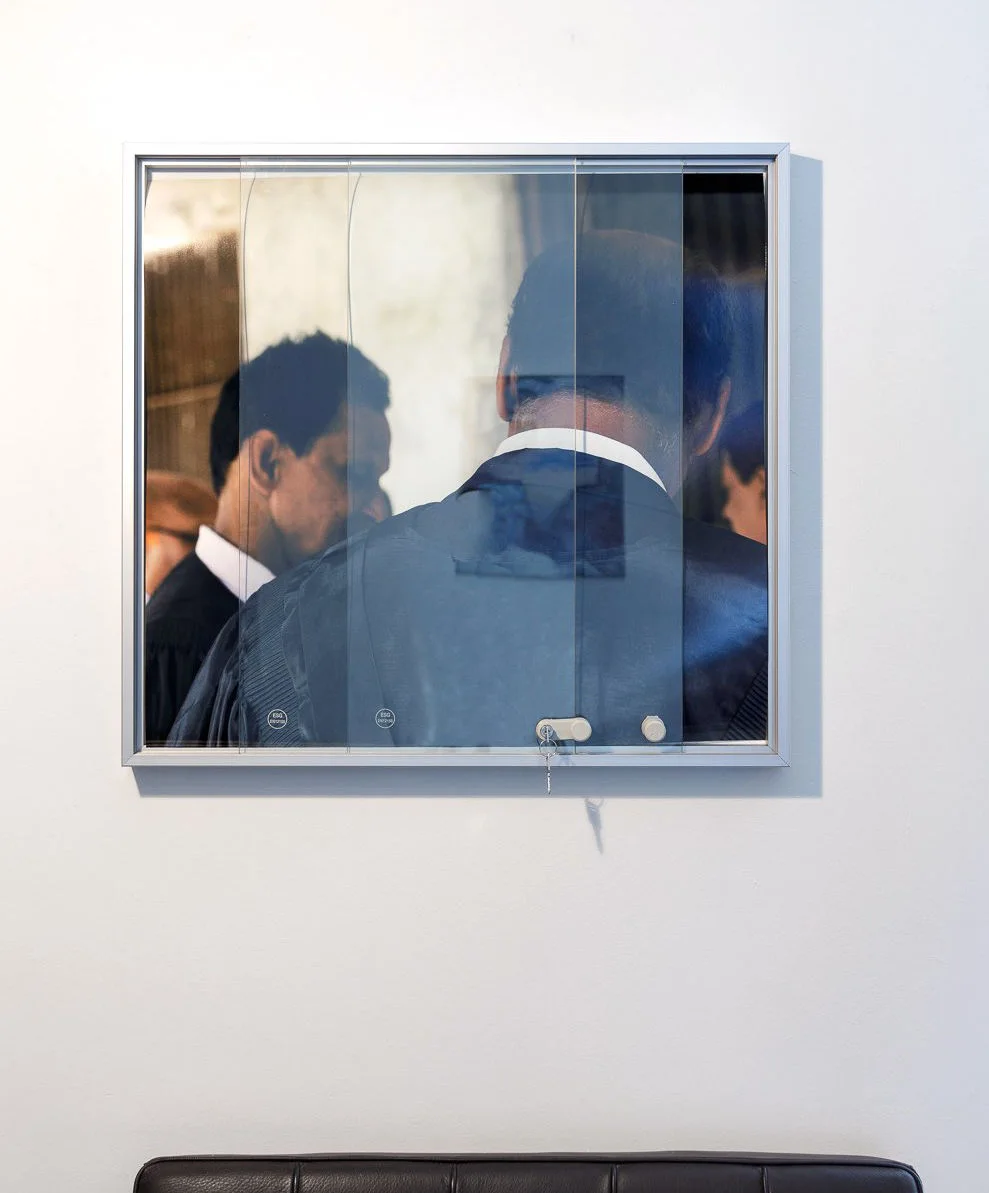
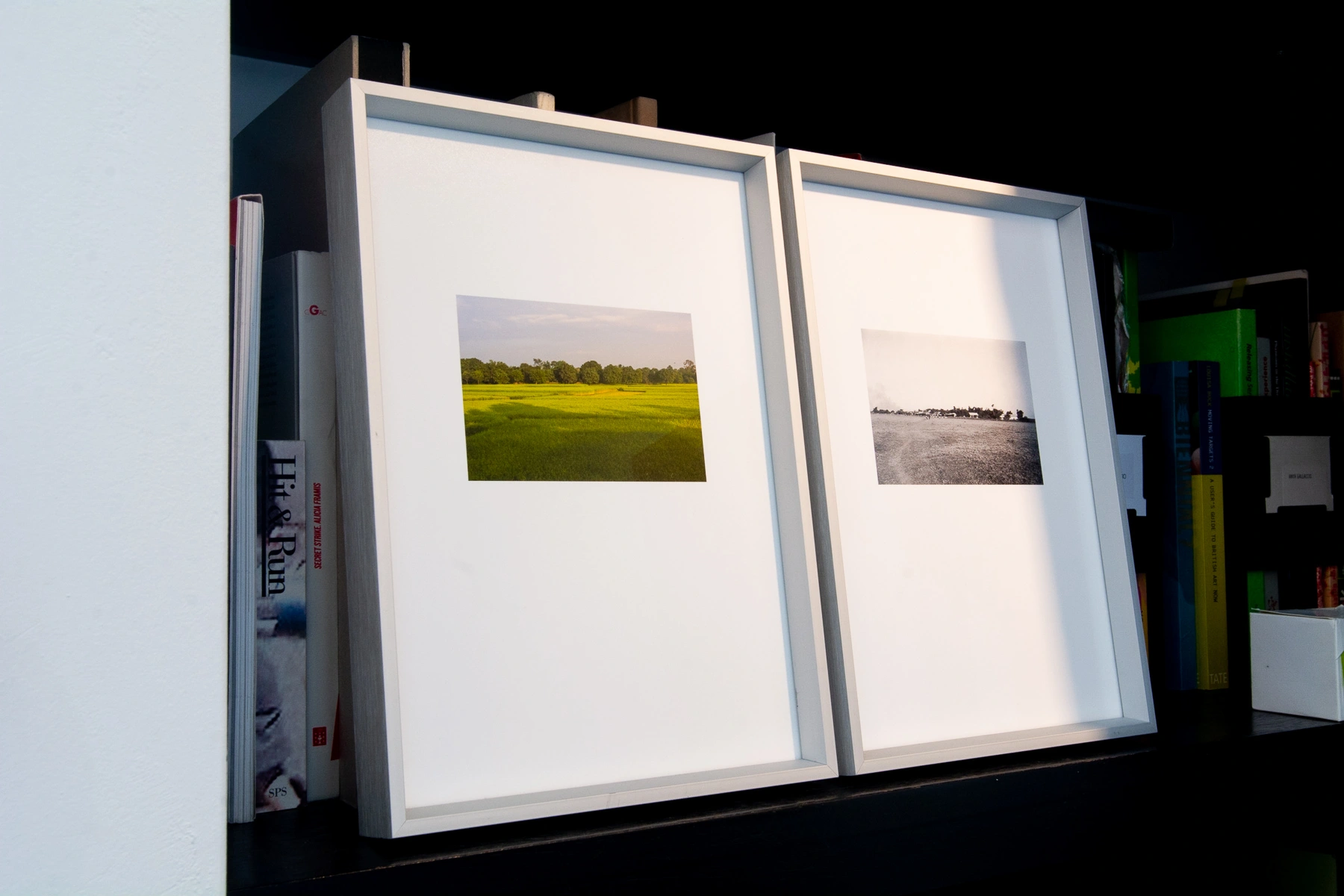
A ruptured voice arrives through headphones and an FM transmission disturbed by interference; two synchronised CRT monitors show silent images from Rajshahi; photographs recur like uncertain evidence. Moving through spaces normally hidden behind the gallery’s public face, the visitor becomes part client, part witness and part intruder. The exhibition produces a dissociative haunting in which memory, migration and bureaucracy become impossible to separate—and the past refuses to let its subjects leave.