Omar Chowdhury

Echo, Saturn (I) (2019)
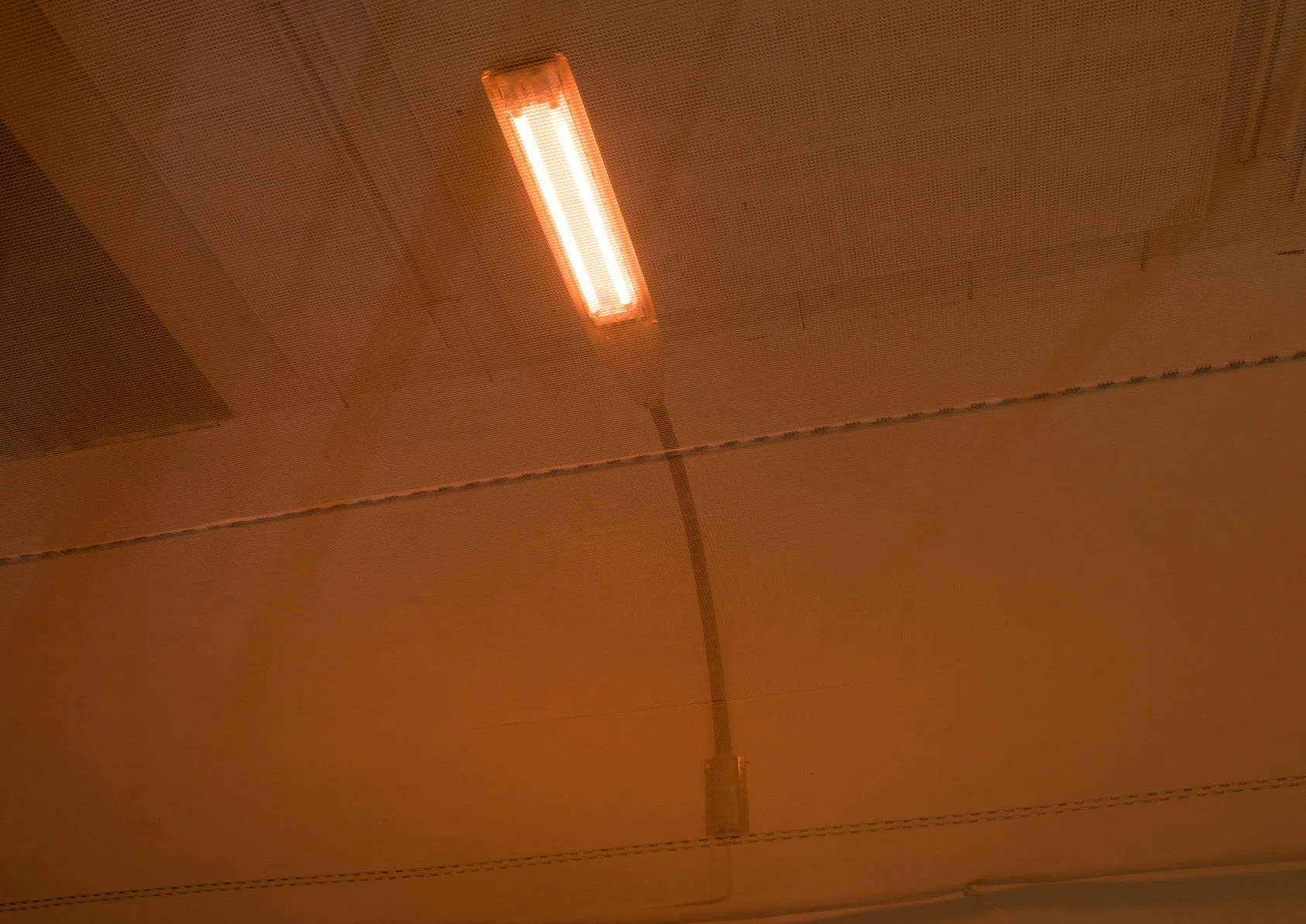
Installation view with netting and synchronised street lights
Netting (1st) (2019), scaffolding netting, thread, rips, hooks and clips; Synced street lights (2nd) (2019), used street lights, LED strips, controller, cabling, bracket and screws
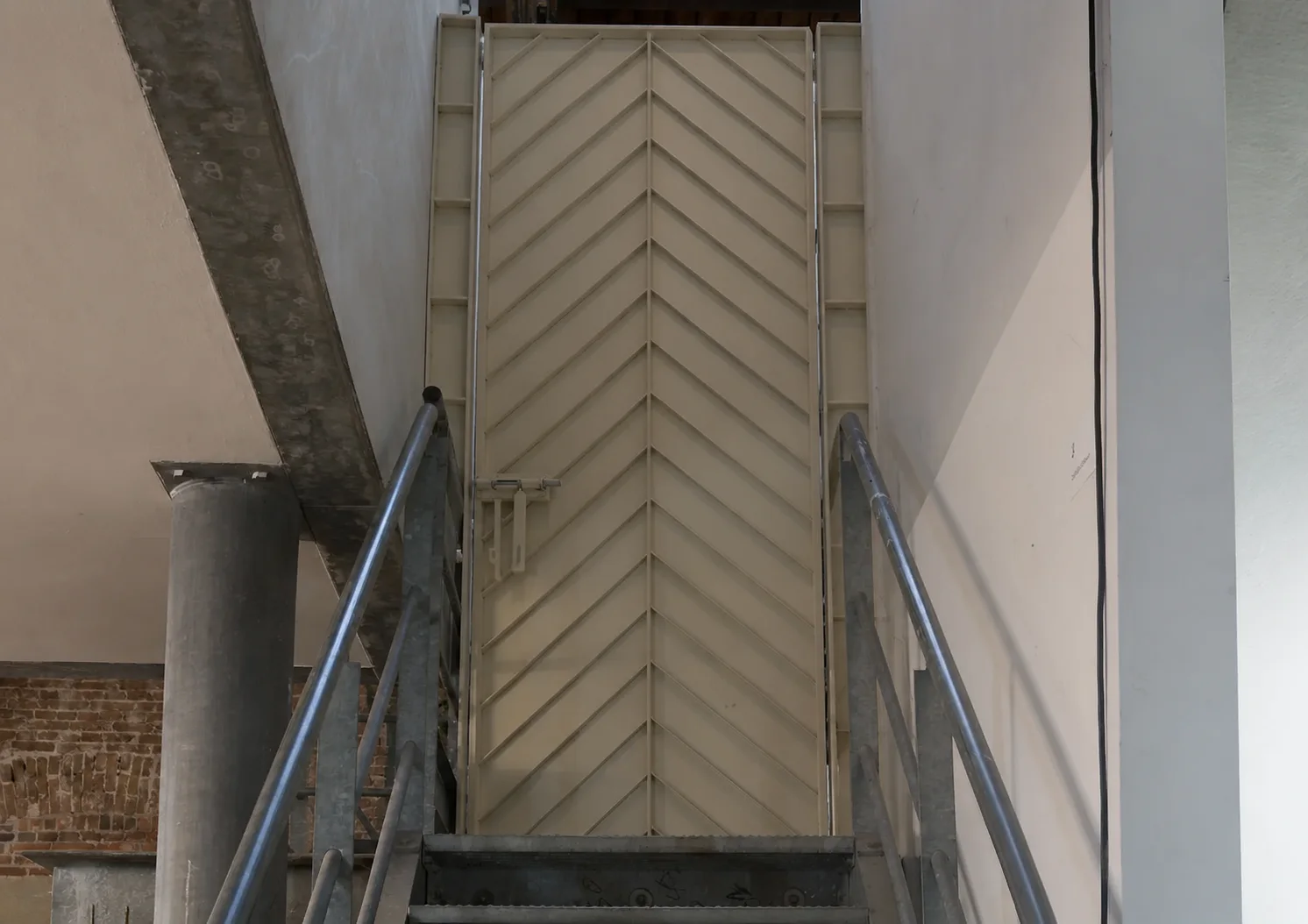
Welded steel front door installation
Front door (2019), 214 × 135 × 4 cm, welded steel, metal paint, hinges, sliding bolt, metal door closer, screws and door stoppers
documentation from Echo, Saturn (I)
Documentation video, Echo, Saturn (I) (2019)
Watch Echo, Saturn (I) documentation

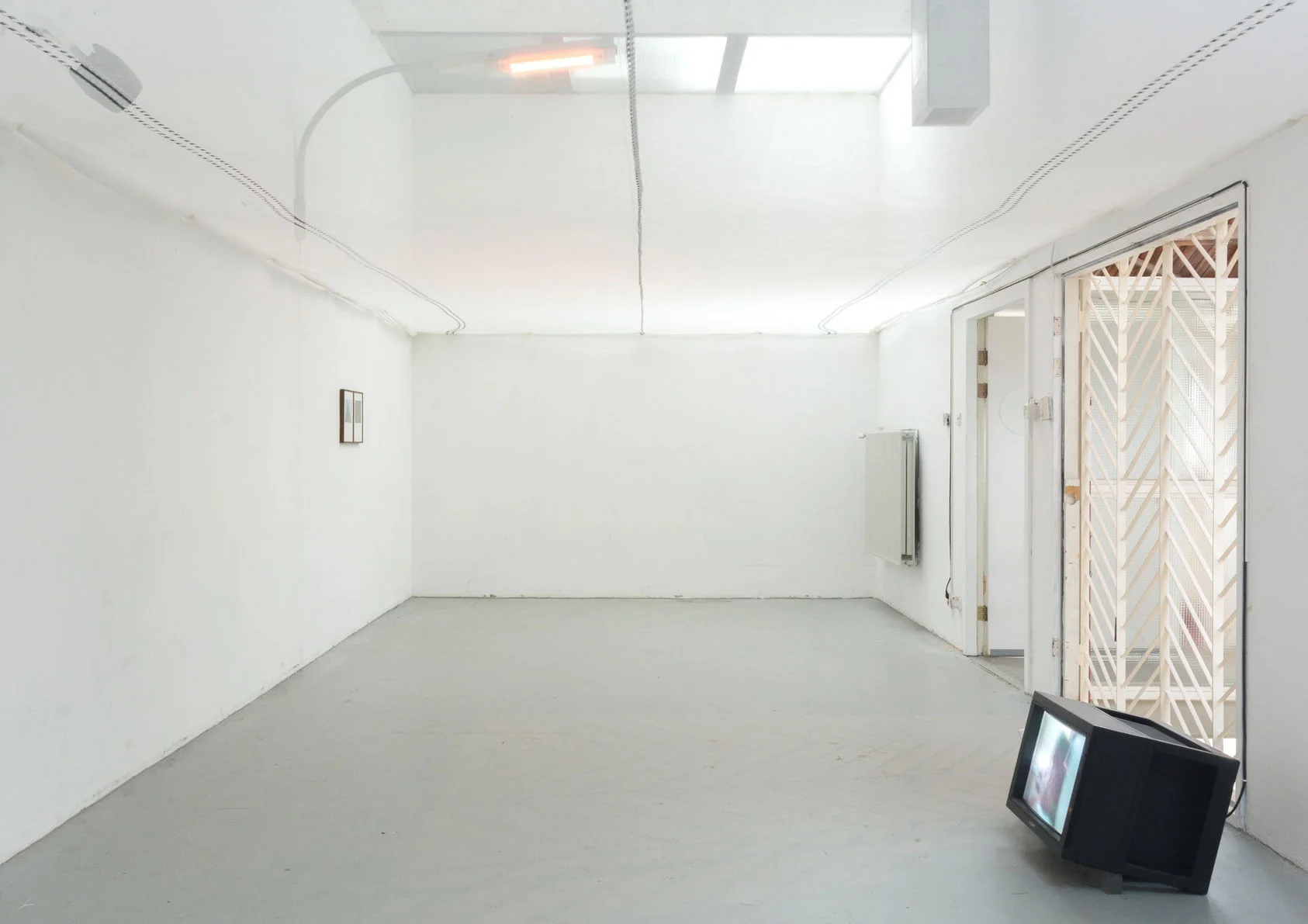
Installation view of the first floor
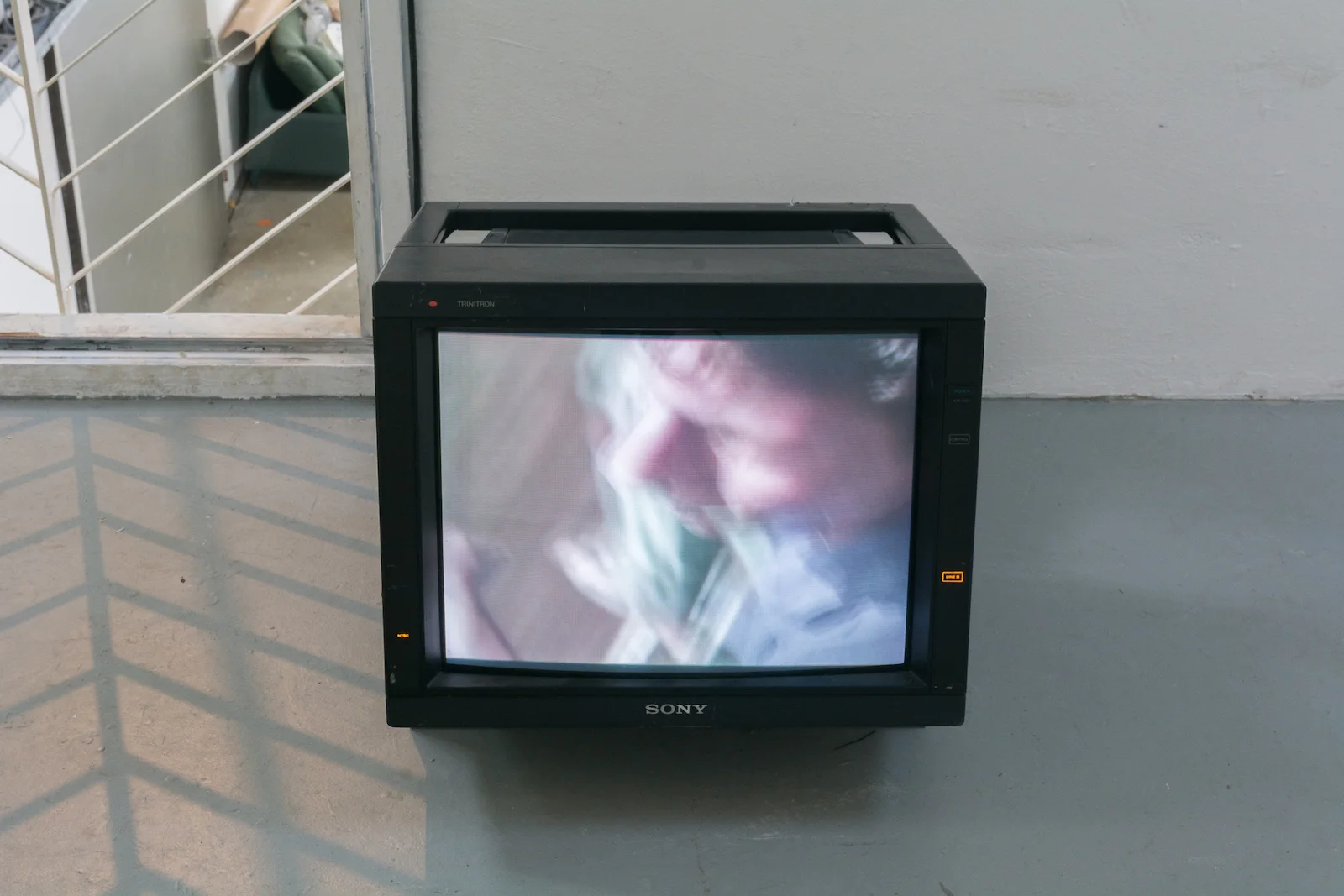
Installation view: Synced street lights (1st), Netting (1st), Film (#1047), Window grilles, Photograph (#1046a), Photograph (#1046b) and Sound (#1046)
Installation view of the second floor
Installation view: Synced street lights (2nd), Netting (2nd), Letters and envelopes, Photograph (#1046c), Window grilles and Sound (#1046)
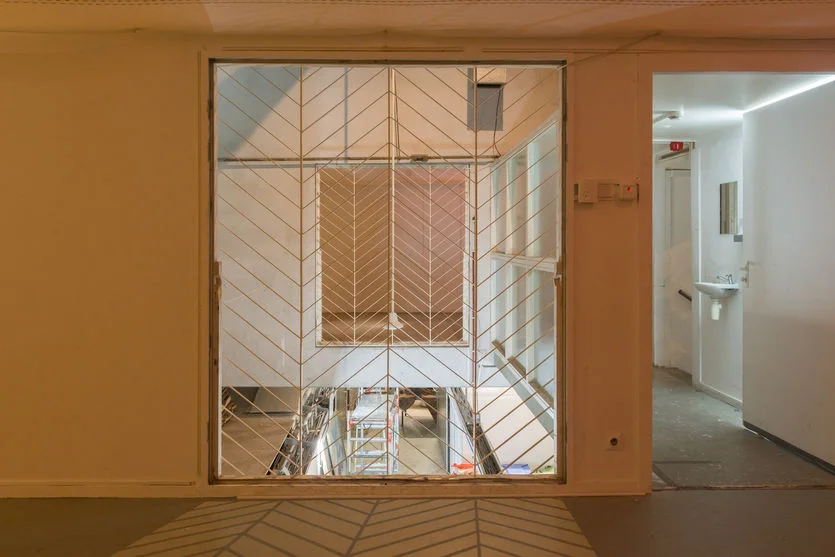
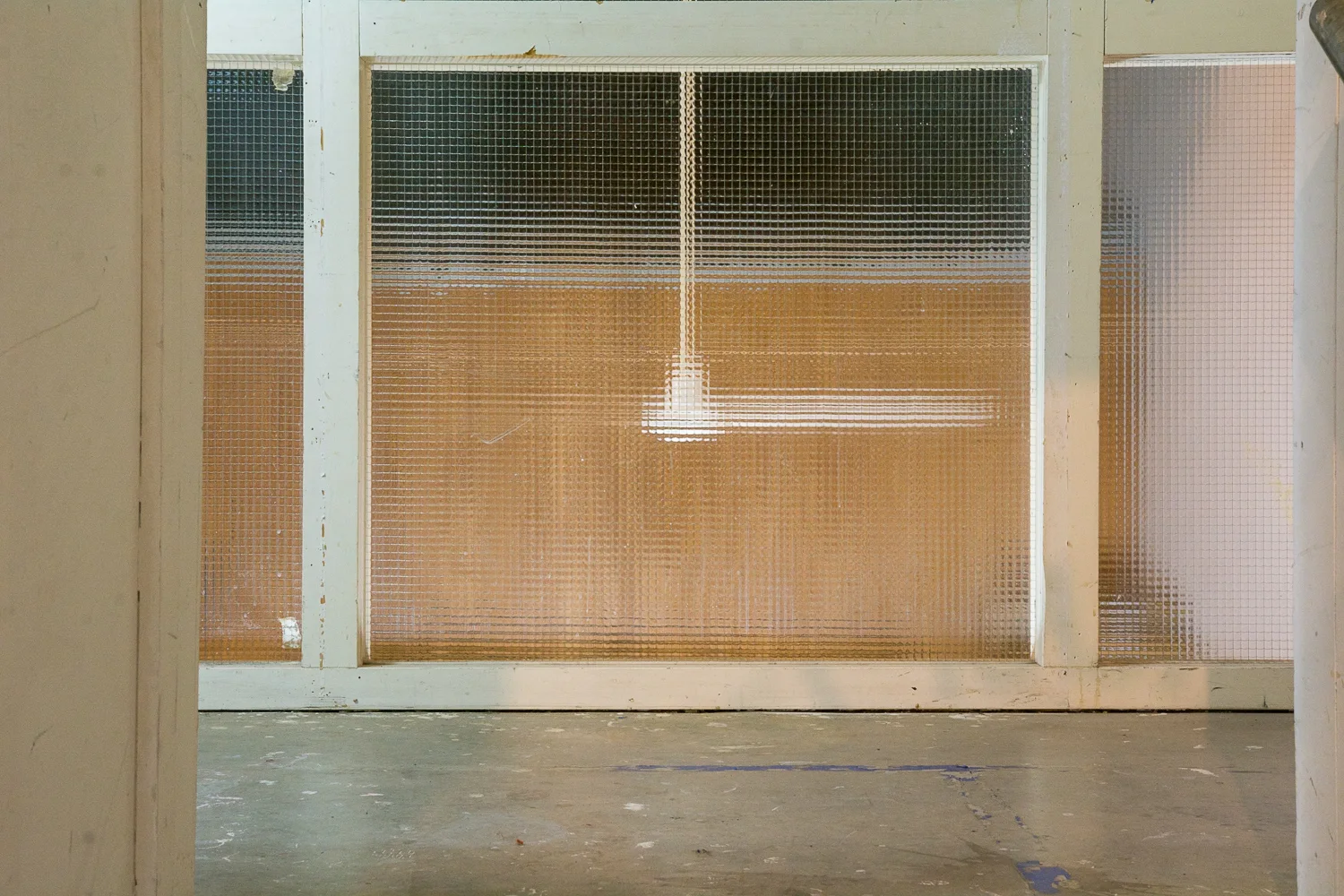
Installation view through a window grille towards the shared facilities
Installation view, Echo, Saturn (I) (2019), with Window grilles and Shared facilities
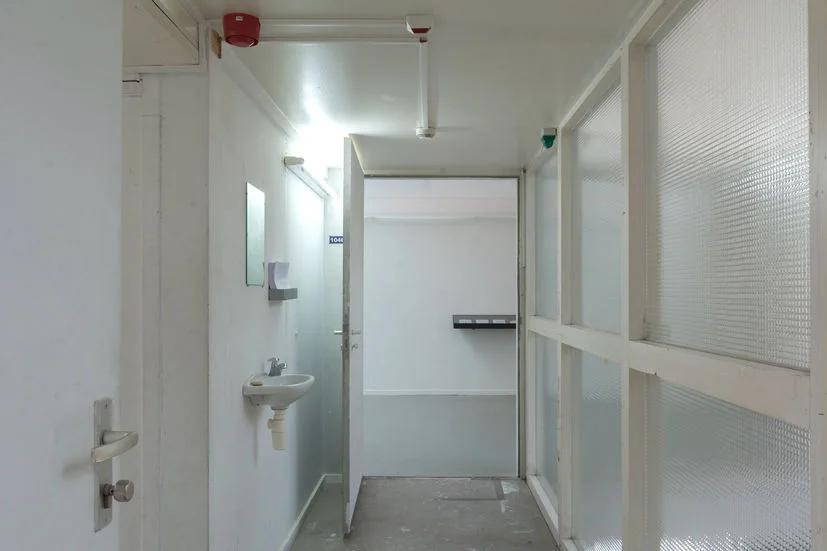
Washbasin, soap, mirror and indicator lights in a corridor
Shared facilities (2019), 70 × 35 × 35 cm, bathroom sink, used Dettol soap, mirror and bolts; Indicator lights (2019), variable dimensions, light fixture, bulb, electrical wire, connectors to electrical infrastructure and screws
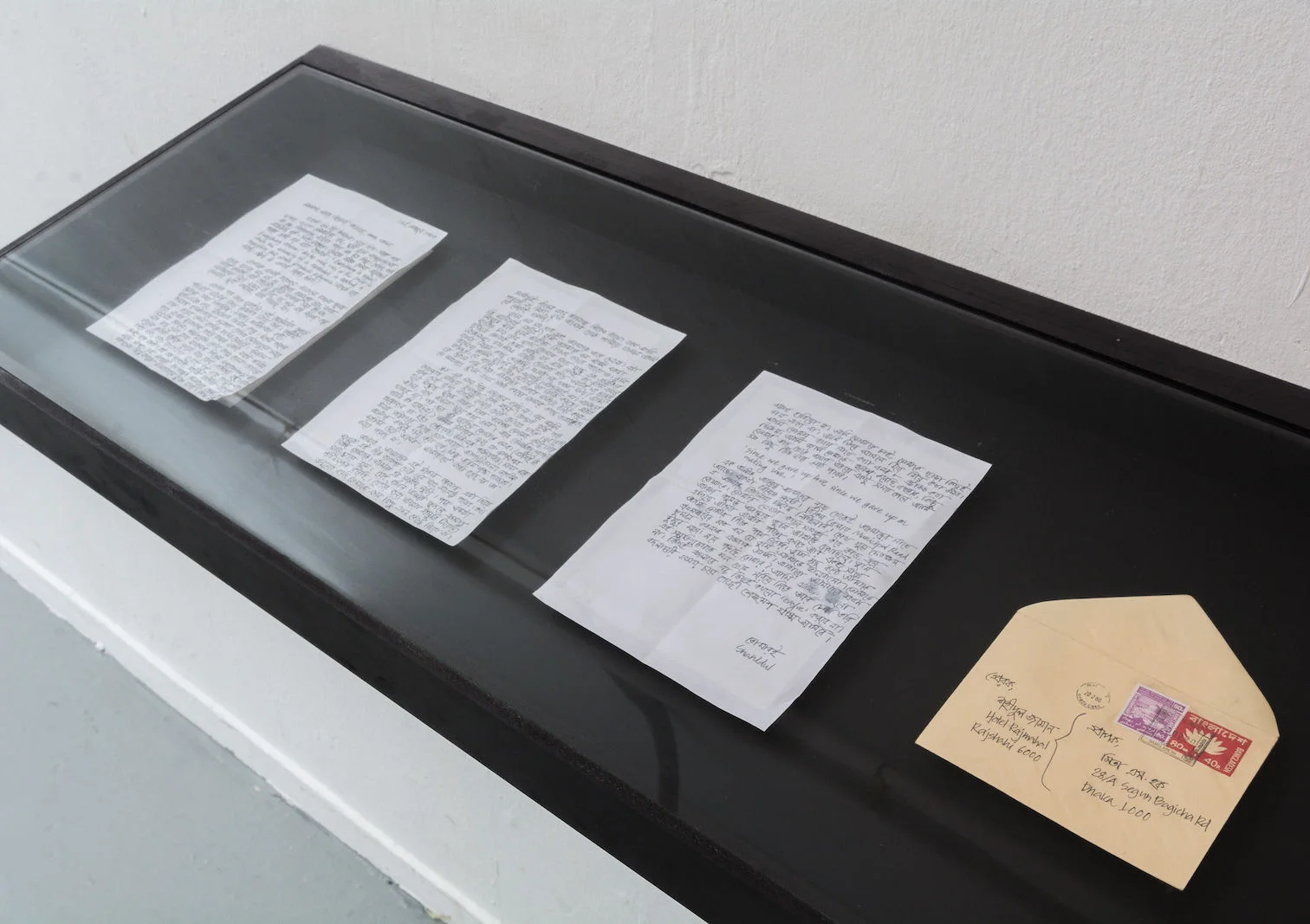
Letters and envelopes displayed in dual vitrines
Letters and envelopes (2019), duplicate letters and period envelopes in fountain pen ink on paper offcuts, period stamps, inkjet postal frank, tea, black MDF, glass and screws
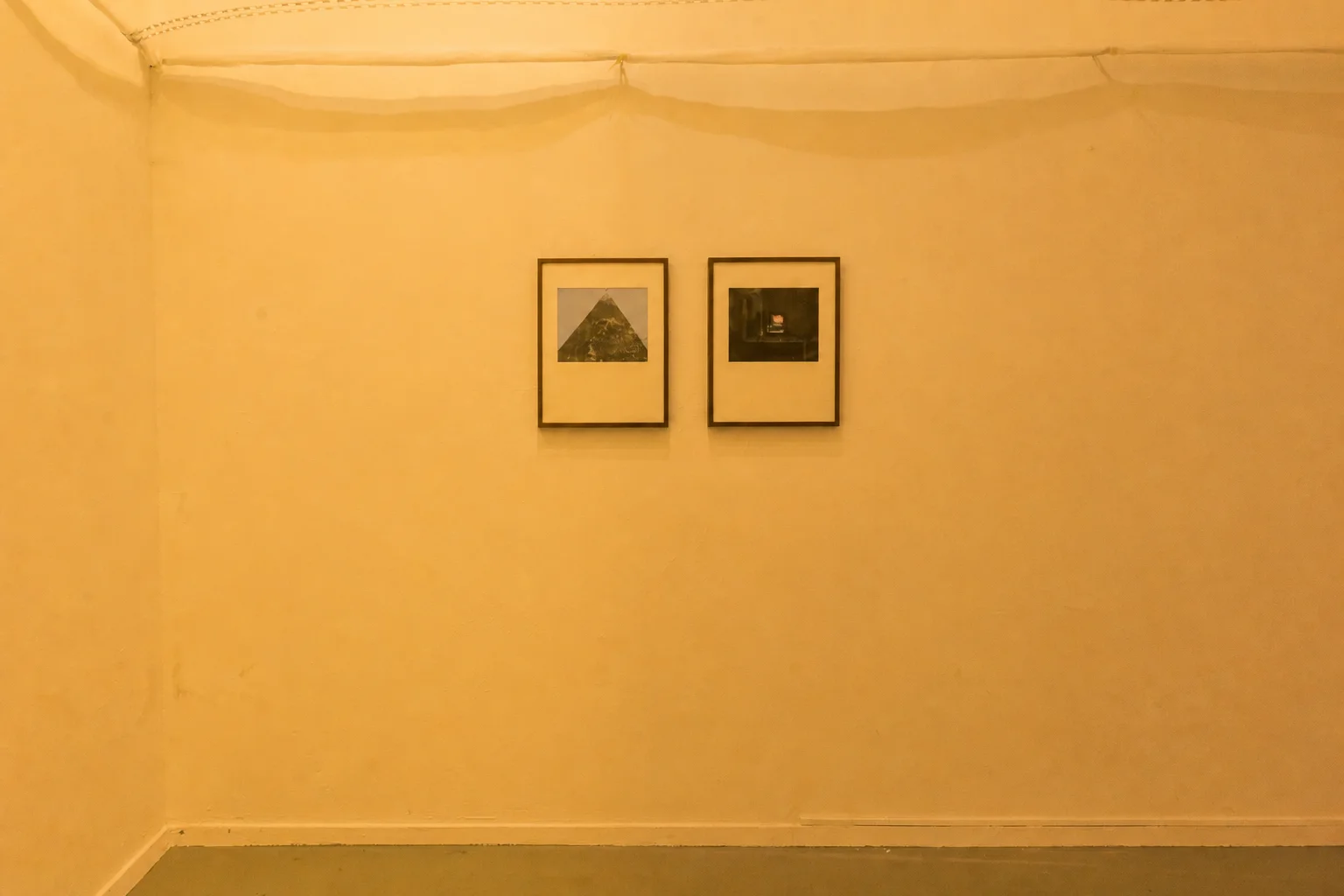
Netting above two framed photographs in an installation view
Netting (1st) (2019); Photograph (#1047a) (2019); Photograph (#1047b) (2019)
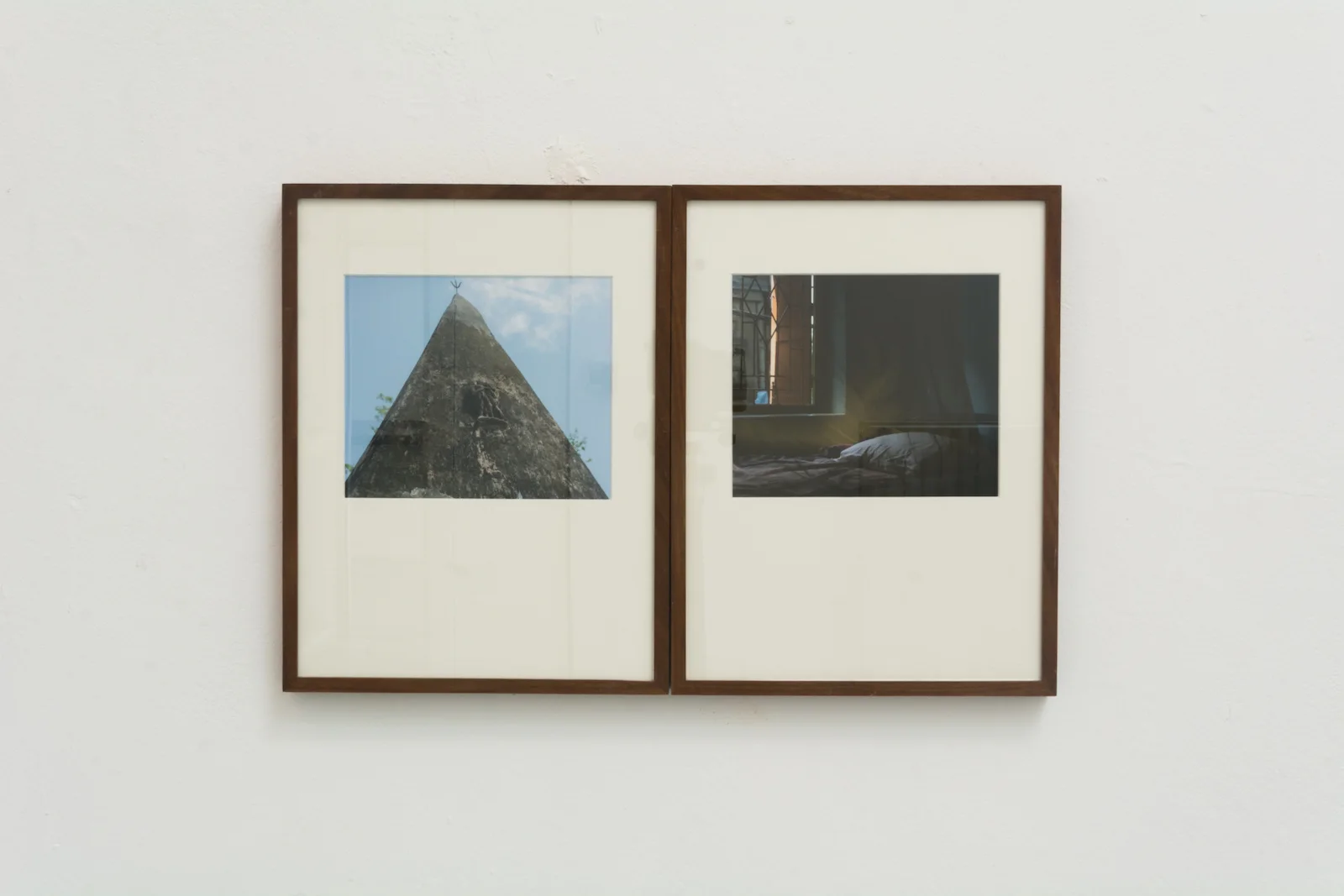
Pair of framed photographs
Photograph (#1046a) (2019); Photograph (#1046b) (2019)
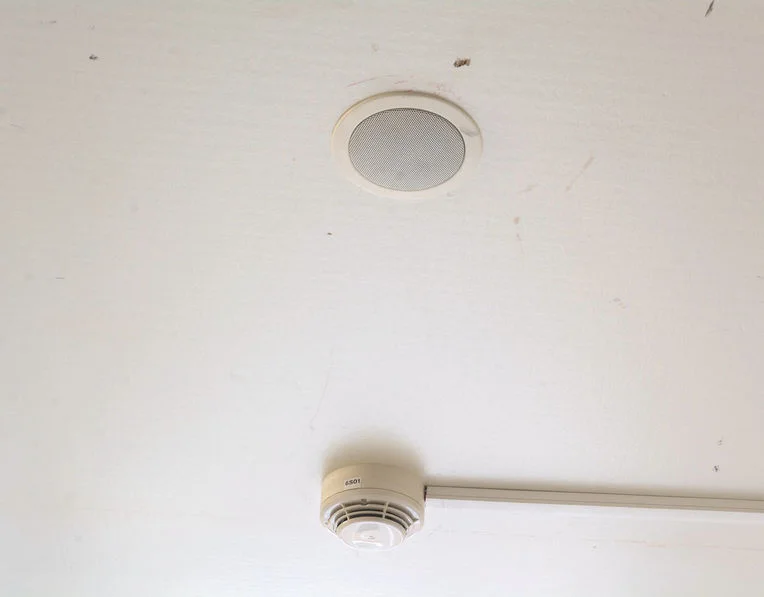
Ceiling-mounted radio speaker
Radio speaker (2019), variable dimensions, ceiling speaker, amplifier, cabling and Mac mini playing All India Radio channels AIR Kolkata and Raagam
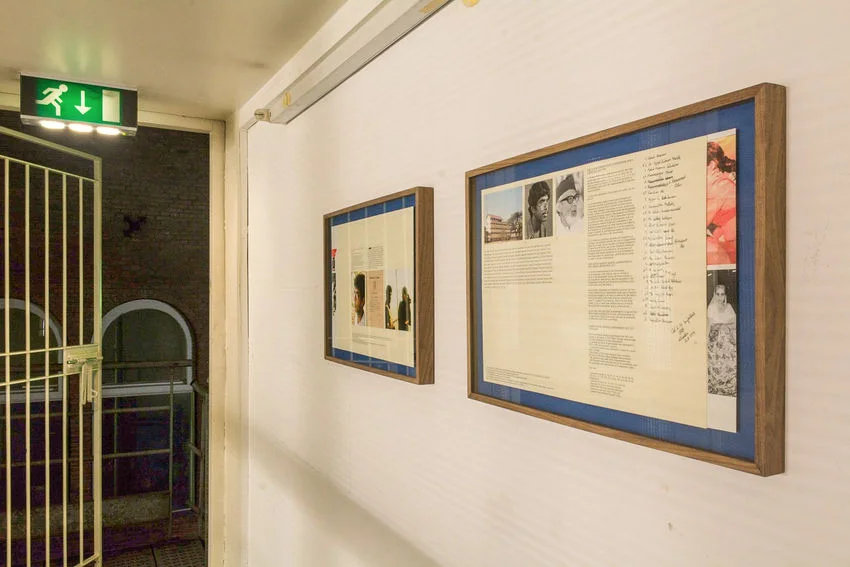
Two framed combine works
Combine (Absence) (2016), 17.53 × 11.69 in, inkjet print on archival photographic and sketch paper; Combine (Disillusionment) (2016), 17.53 × 11.69 in, inkjet print on archival photographic and sketch paper
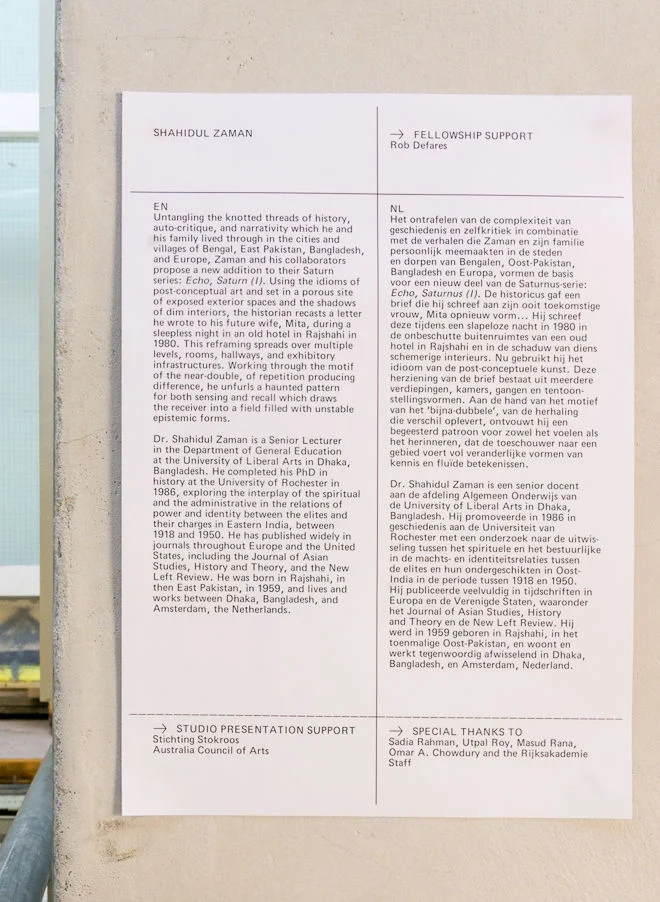
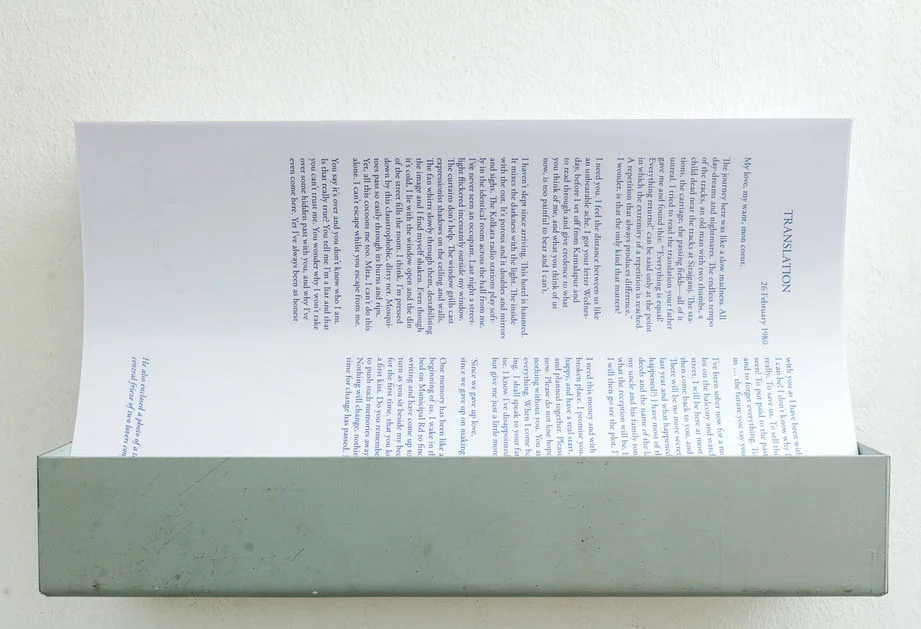
Wall text attributed to Shahidul ZamanPrinted translation held in a metal wall rack
Attribution (Shahidul Zaman) (2019), removal of the artist’s name and substitution with a heteronym, inkjet print on paper, text by Vincent van Velsen, articles in art press and Het Parool · Translation (2019), letter size, inkjet print on paper
Welded steel front door installed in a corridor
Front door (2019), 214 × 135 × 4 cm, welded steel, metal paint, hinges, sliding bolt, metal door closer, screws and door stoppers
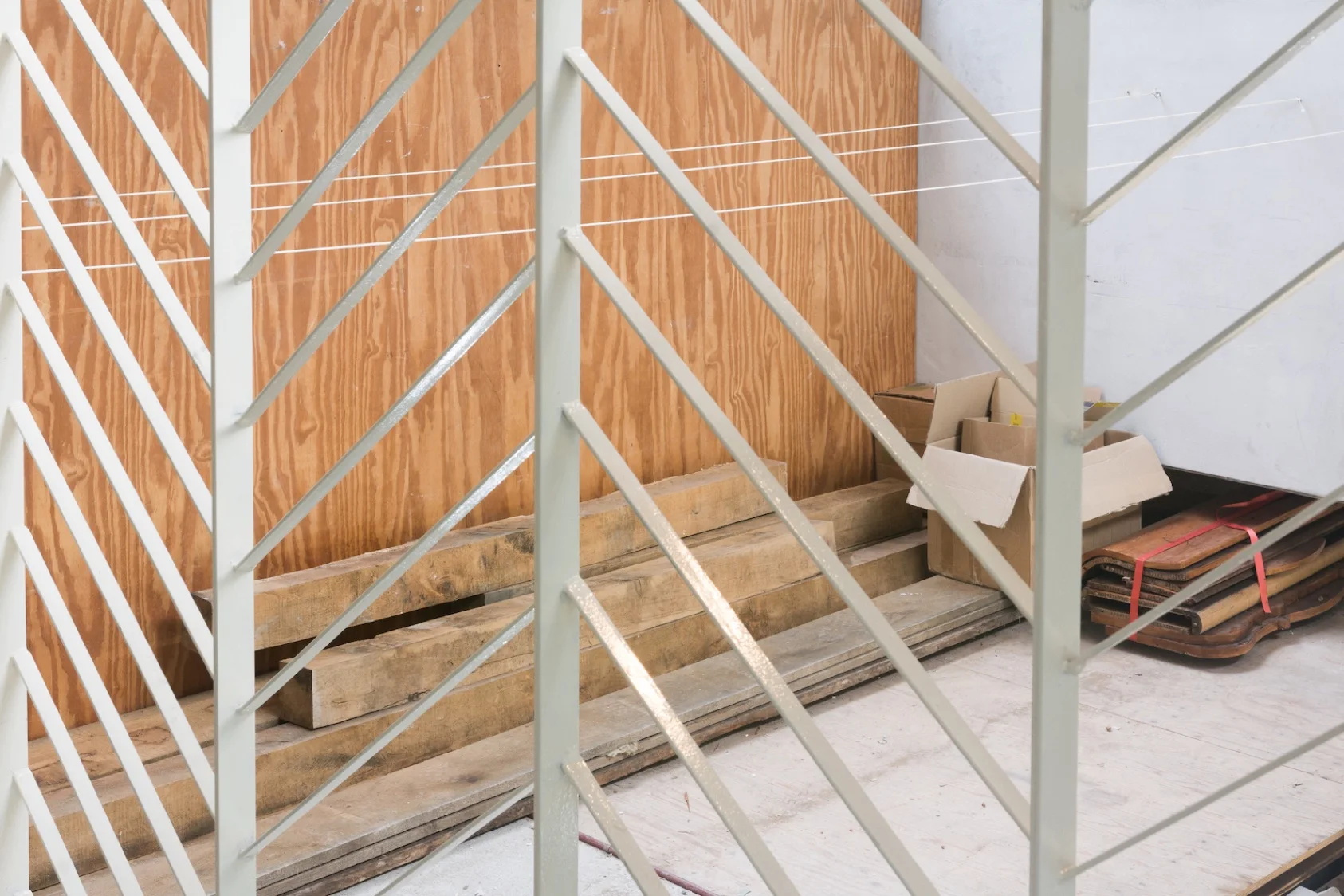
Pale yellow window grille looking onto timber and stored materials
Window grilles (2019), 200 × 182 × 24 cm, welded steel, metal paint and bolts; Wood and batts (2019), variable dimensions, Malaysian teak logs, Indian laurel planks, insulation batts and packaging, debris

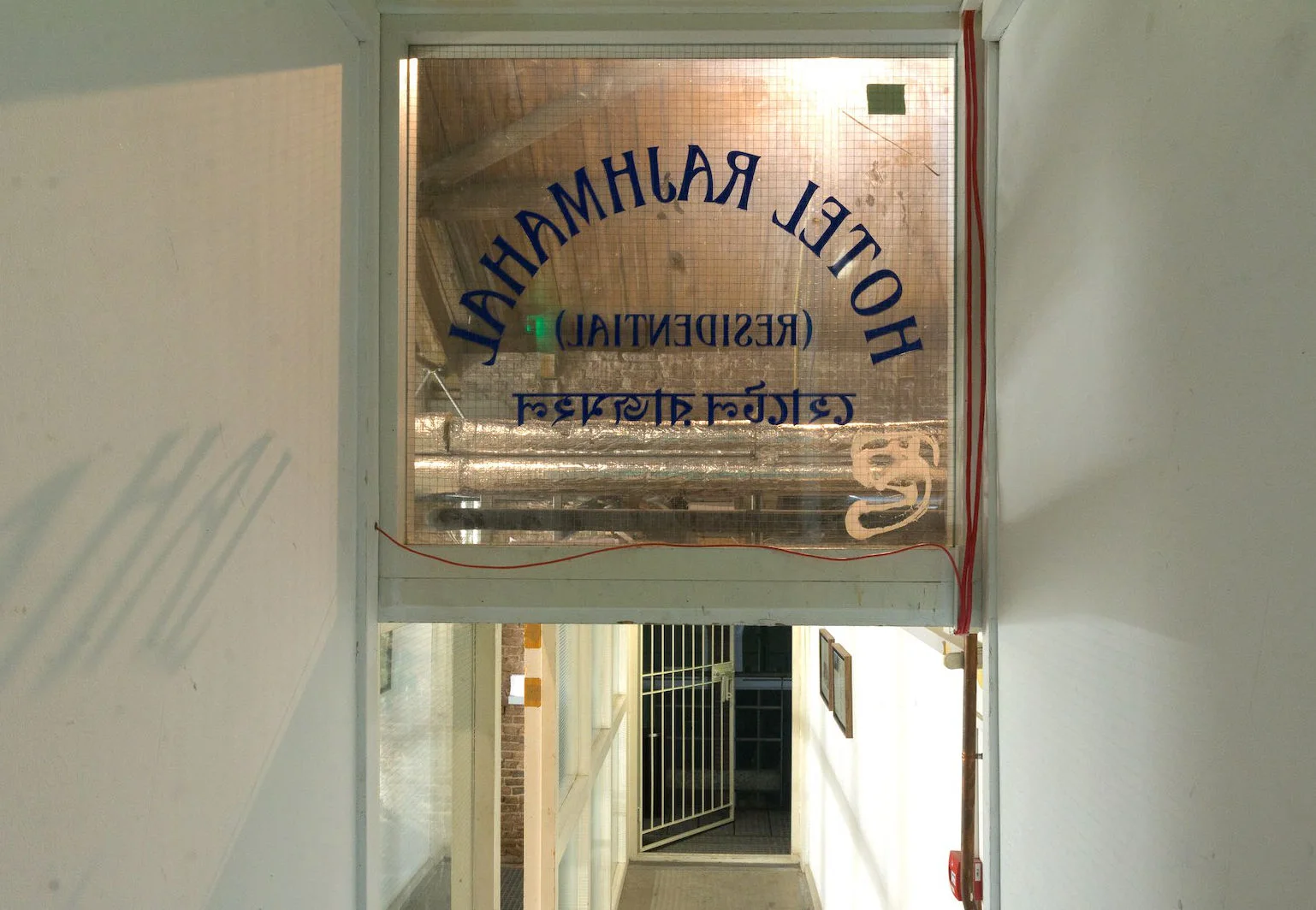
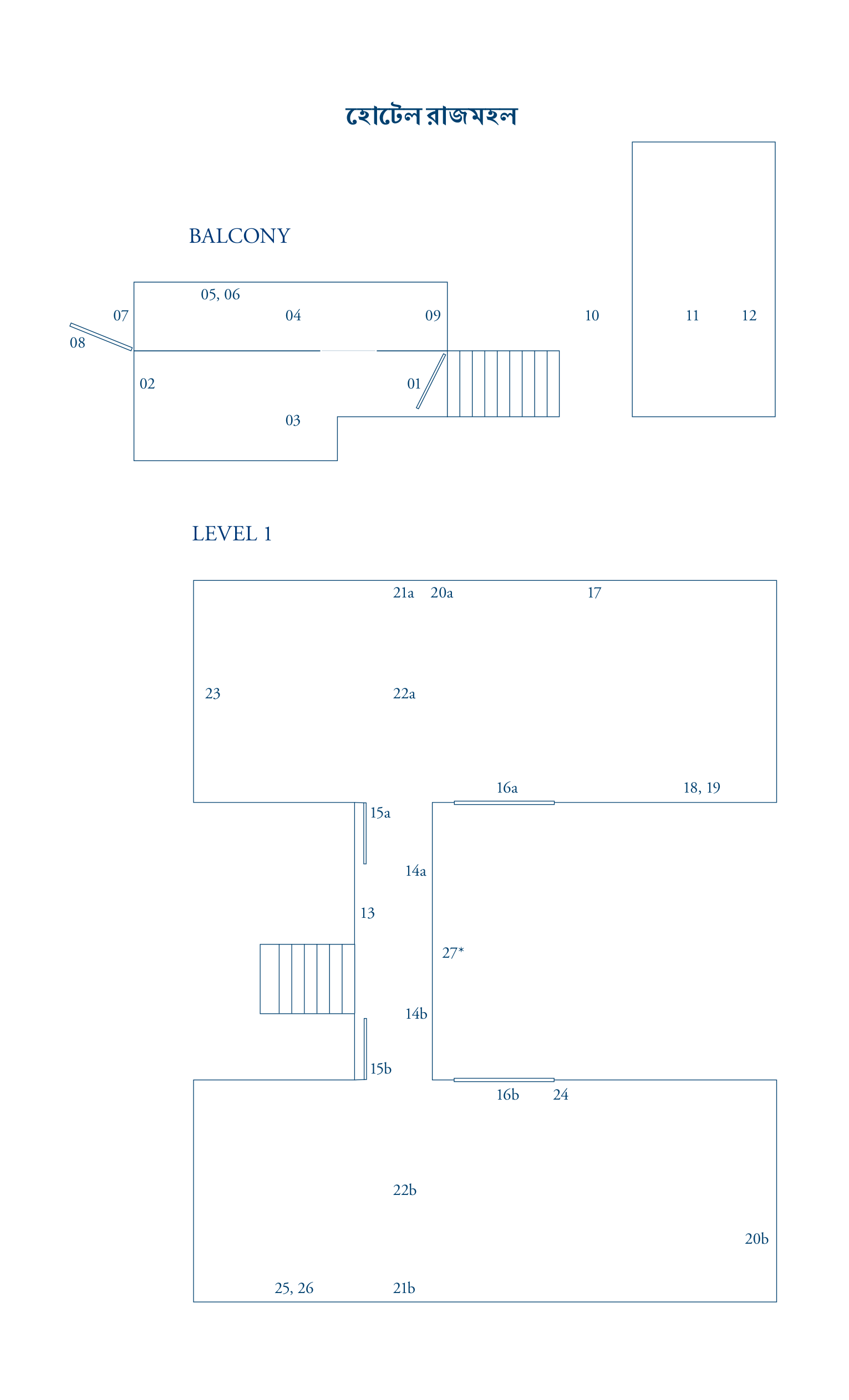
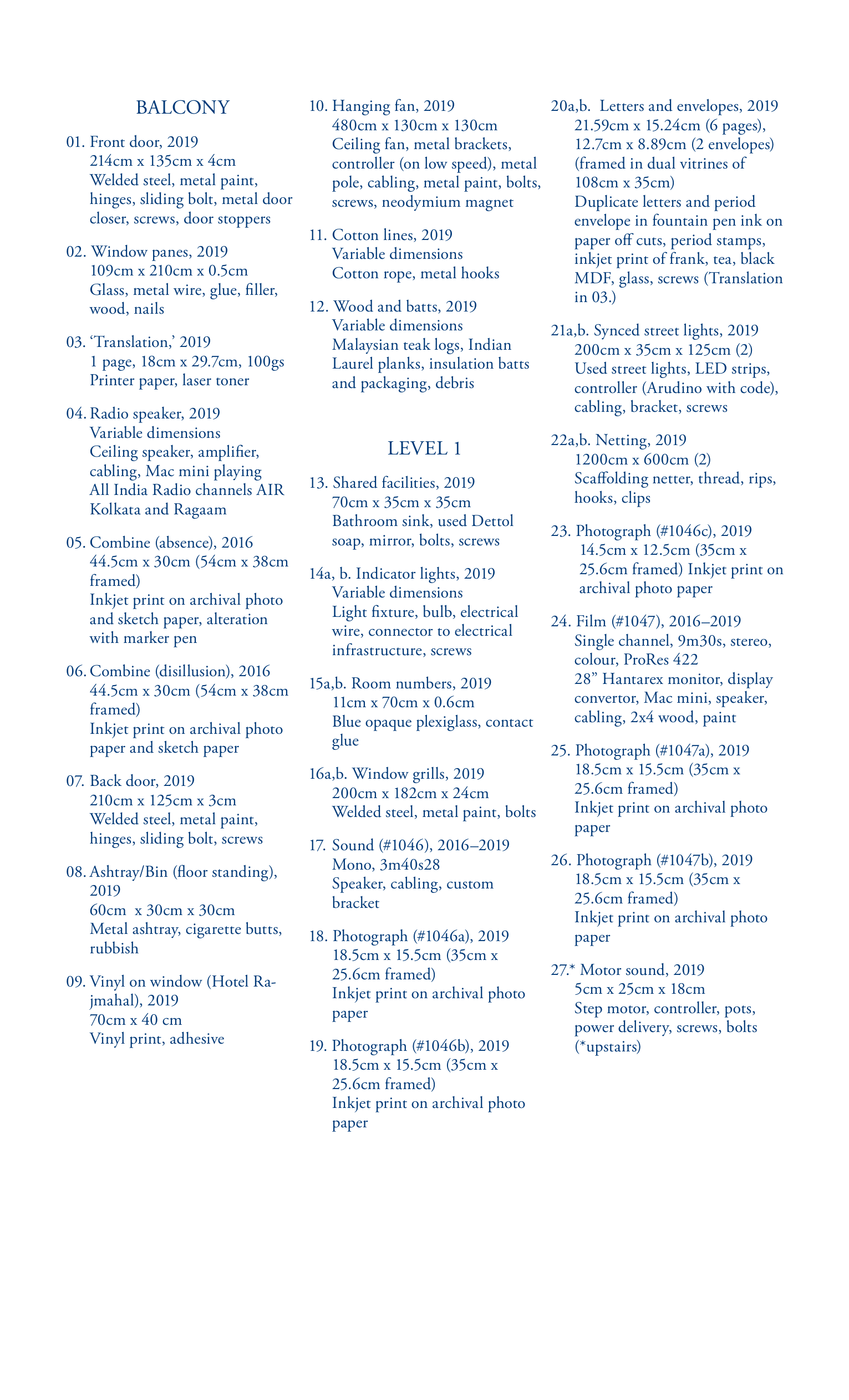
Echo, Saturn (I) (2019) transforms a two-storey Rijksakademie studio into the ghost of the Hotel Rajmahal in Rajshahi. Gates, window grilles, scaffolding netting, doubled streetlights, repeated room numbers and radio transmissions divide the building into near-identical spaces. Moving between exposed balconies and dim interiors, visitors enter an architecture that appears simultaneously protective and feverish: part hotel, family memory, transit point and trap. The exhibition is publicly attributed to Dr Shahidul Zaman, the historian and heteronym whose unstable memories shape the Saturn series.
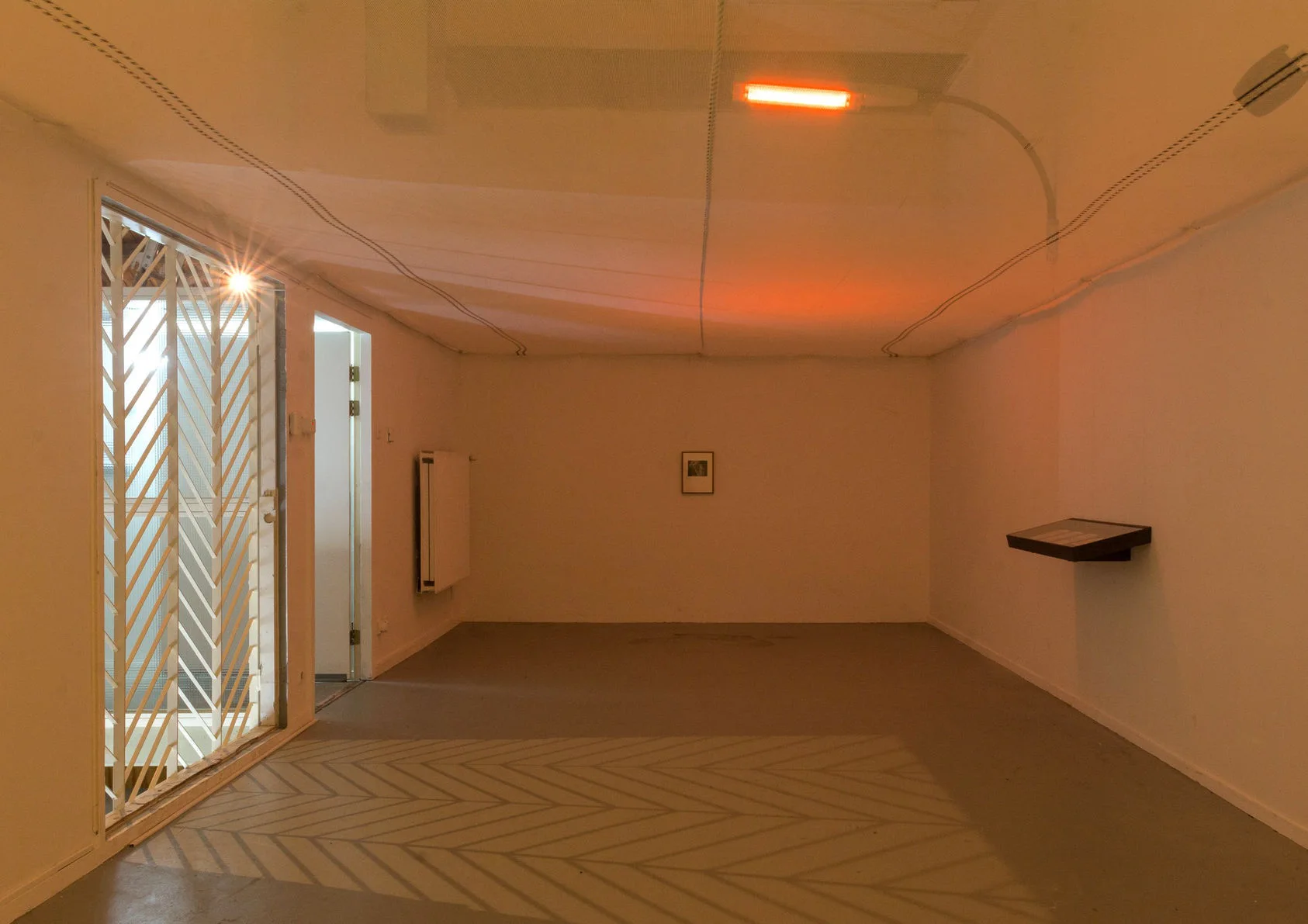
At its centre is a letter Zaman writes to his future wife, Mita, during a sleepless night at the hotel in February 1980. He has travelled to Rajshahi to locate and sell family land he has never seen, hoping to finance his departure for Europe and rescue their disintegrating relationship. In the letter, confession becomes inseparable from architecture: the hotel “doubles and mirrors and sighs”; a streetlight flickers outside; window grilles cast shifting shadows; torn netting traps him while also forming a cocoon. He promises Mita an escape and a shared future, even as the journey draws him more deeply into inheritance, secrecy and repetition.

The letter’s images spread throughout the building. Visitors pass through gates and grilles, encounter a shared washbasin and slowly turning fan, hear broadcasts from AIR Kolkata and find paired rooms illuminated by synchronised streetlights. Each element seems to confirm Zaman’s account while subtly altering it. Through near-doubles and repetitions that continually produce difference, Echo, Saturn (I) asks how personal memory becomes history—and whether a past reconstructed in order to escape it can ever be separated from one invented in the process.

View in complete works sequence