Means (2014)
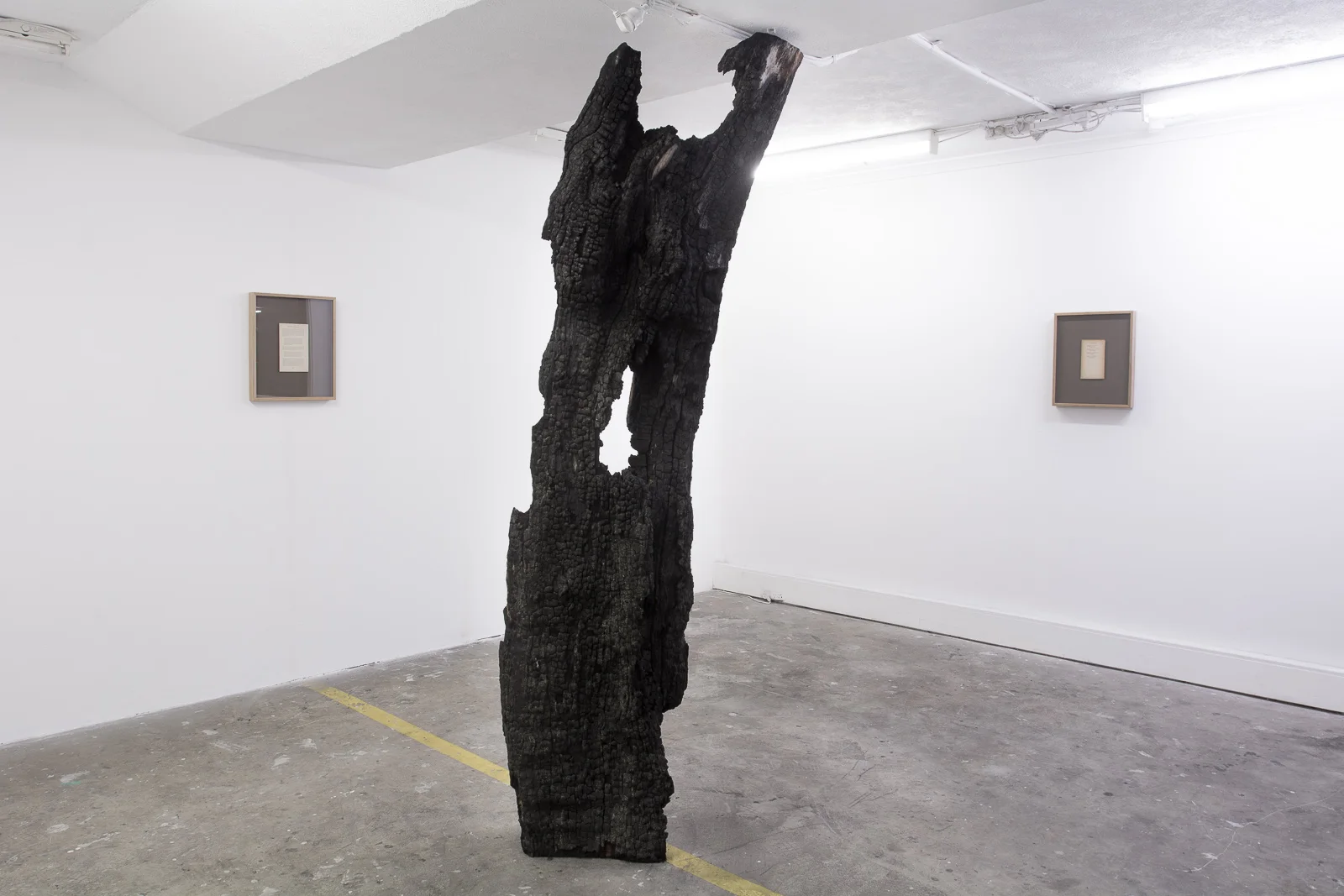
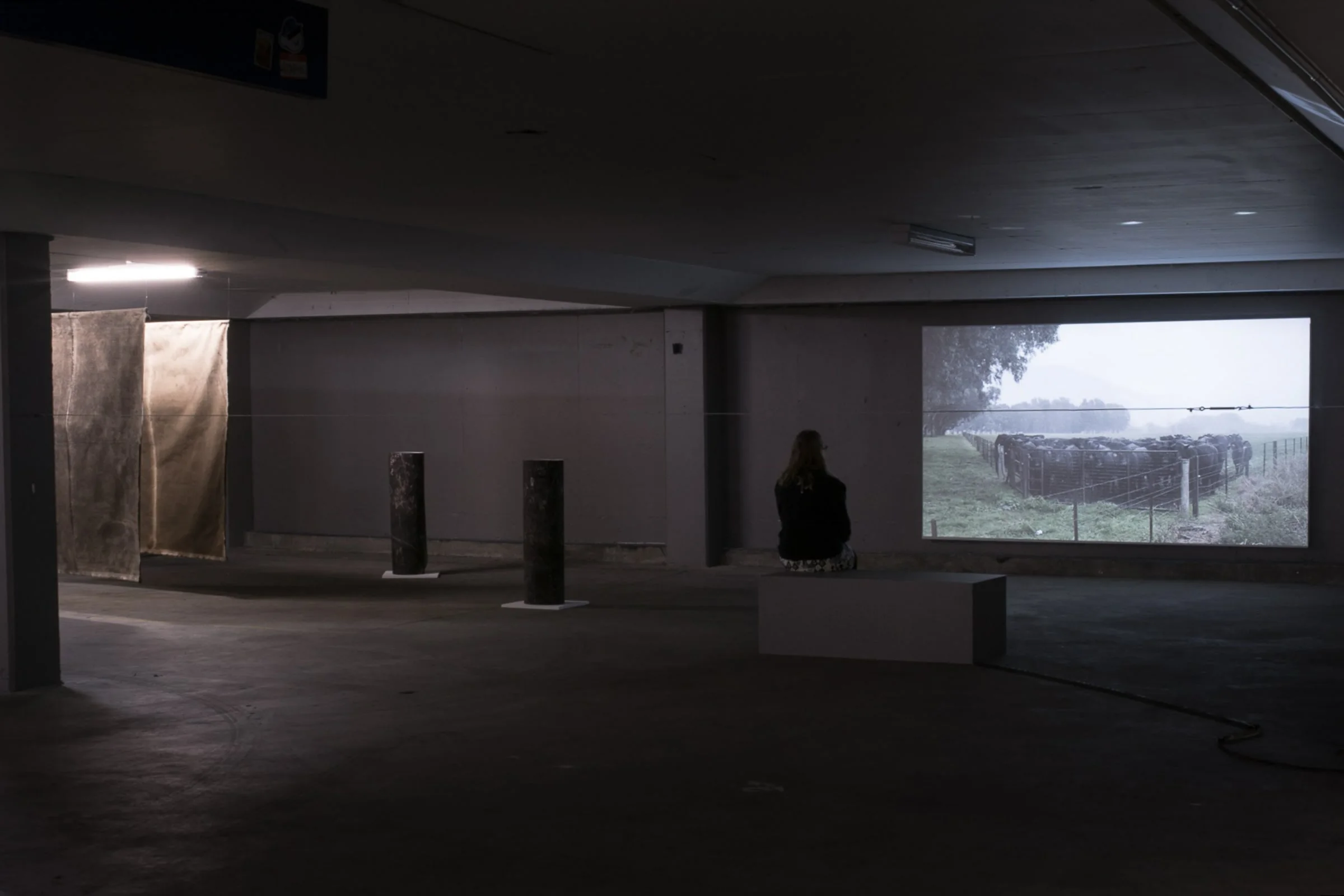
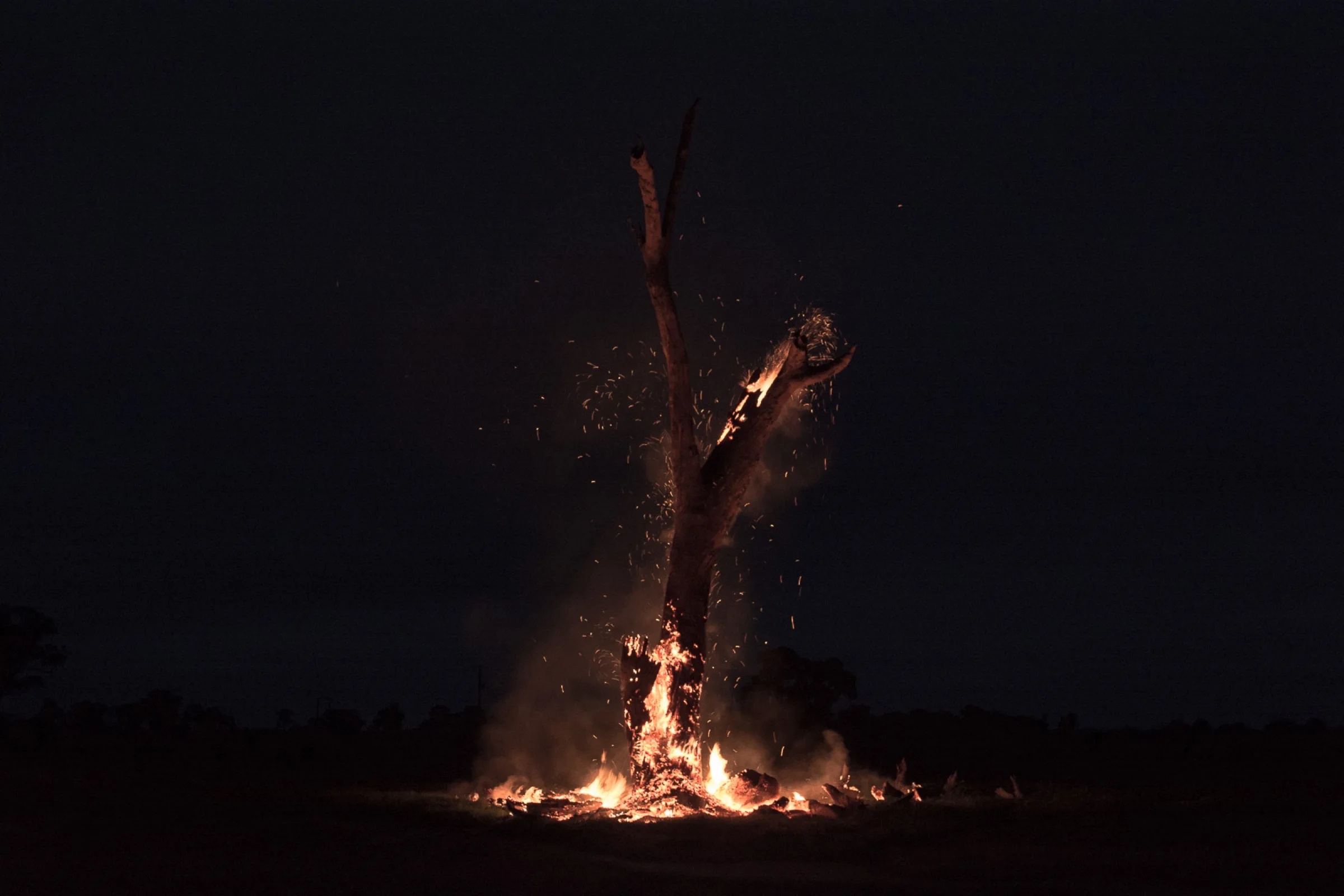
Means (2014) asks how looking intently at the Australian bush might become a way of never belonging to it. Film, photography, sound, charred wood, smoke-darkened cotton, steel wire and fictional texts draw together journeys through the Southern Highlands, Great Dividing Range and Victorian gold towns.
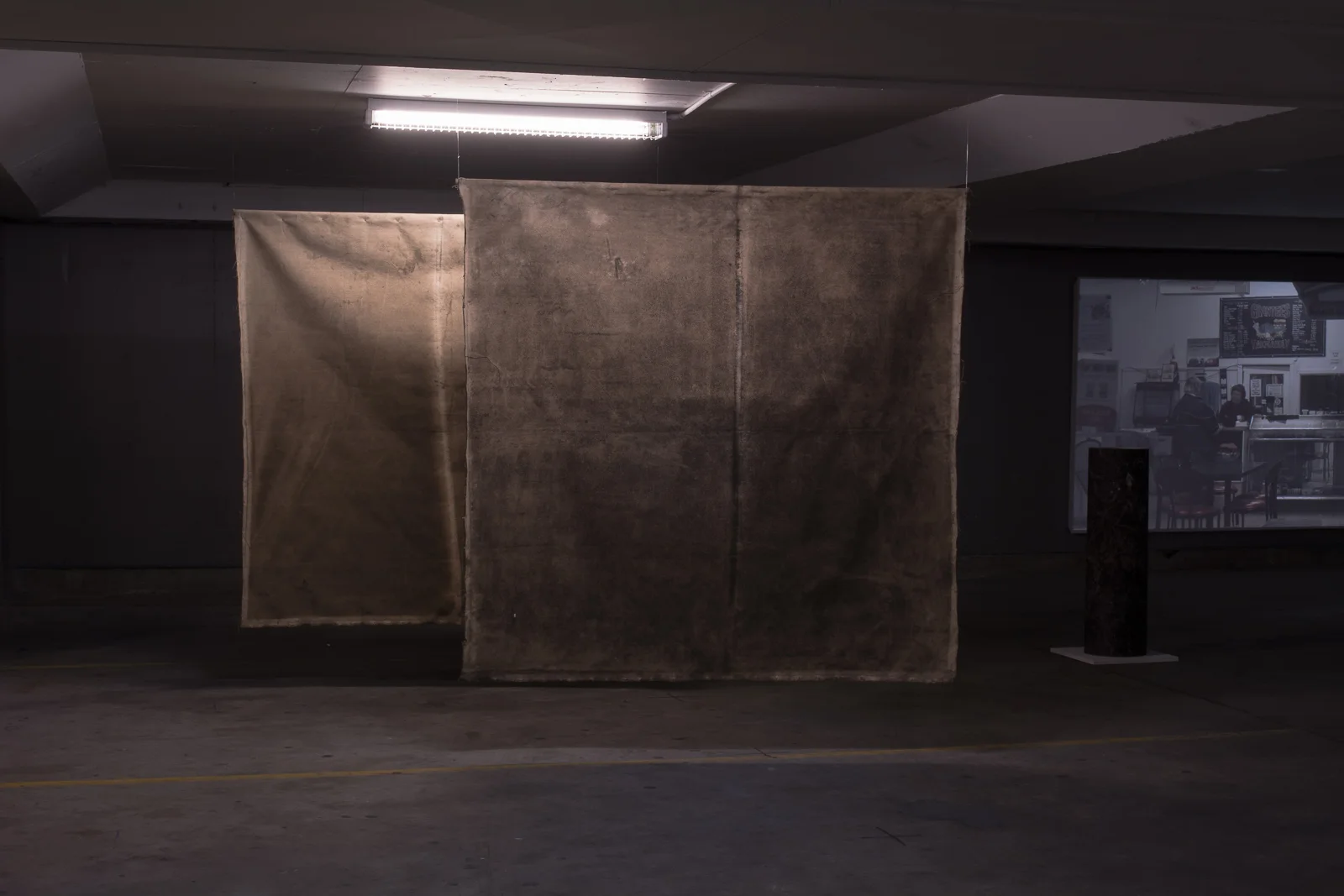
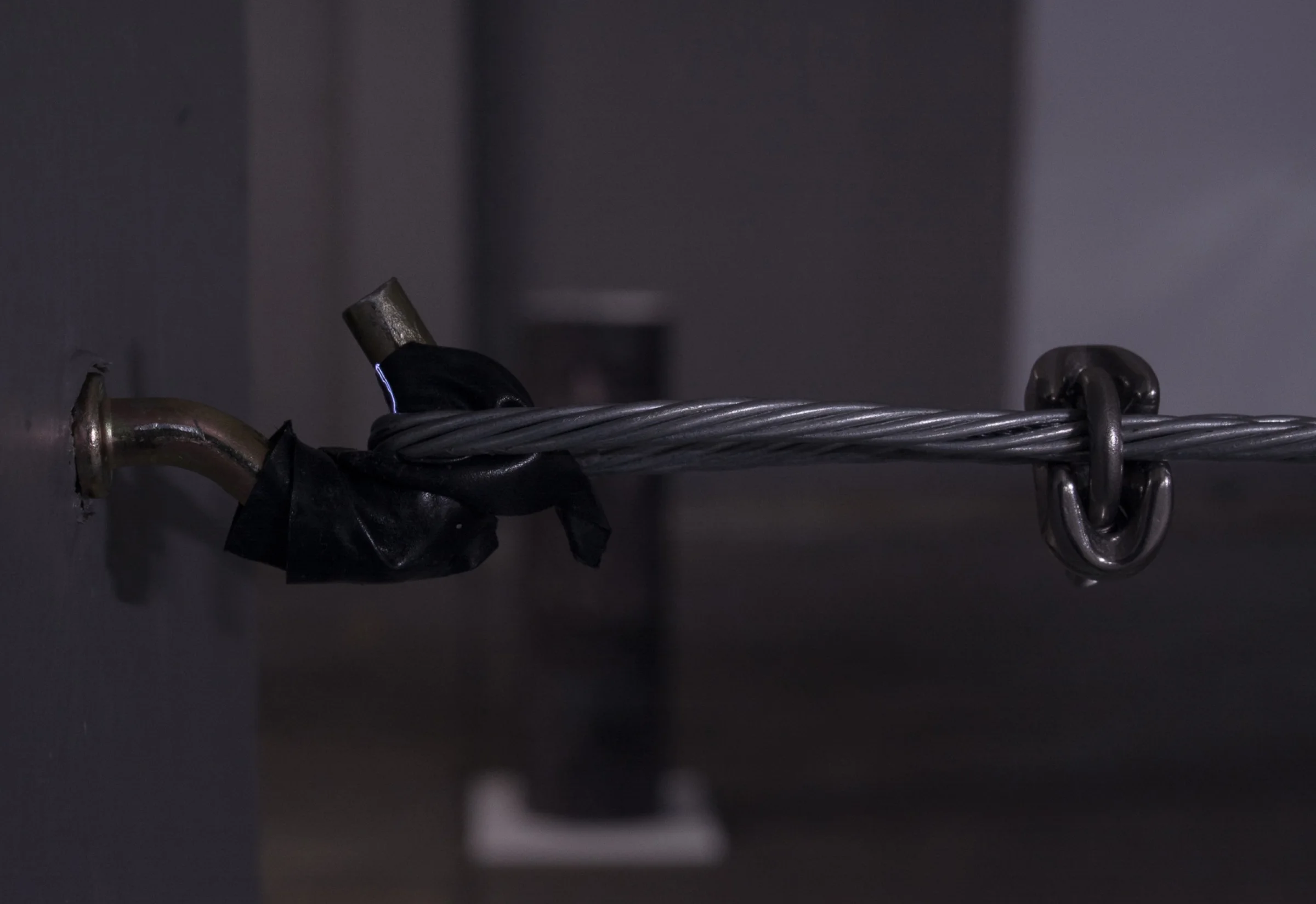
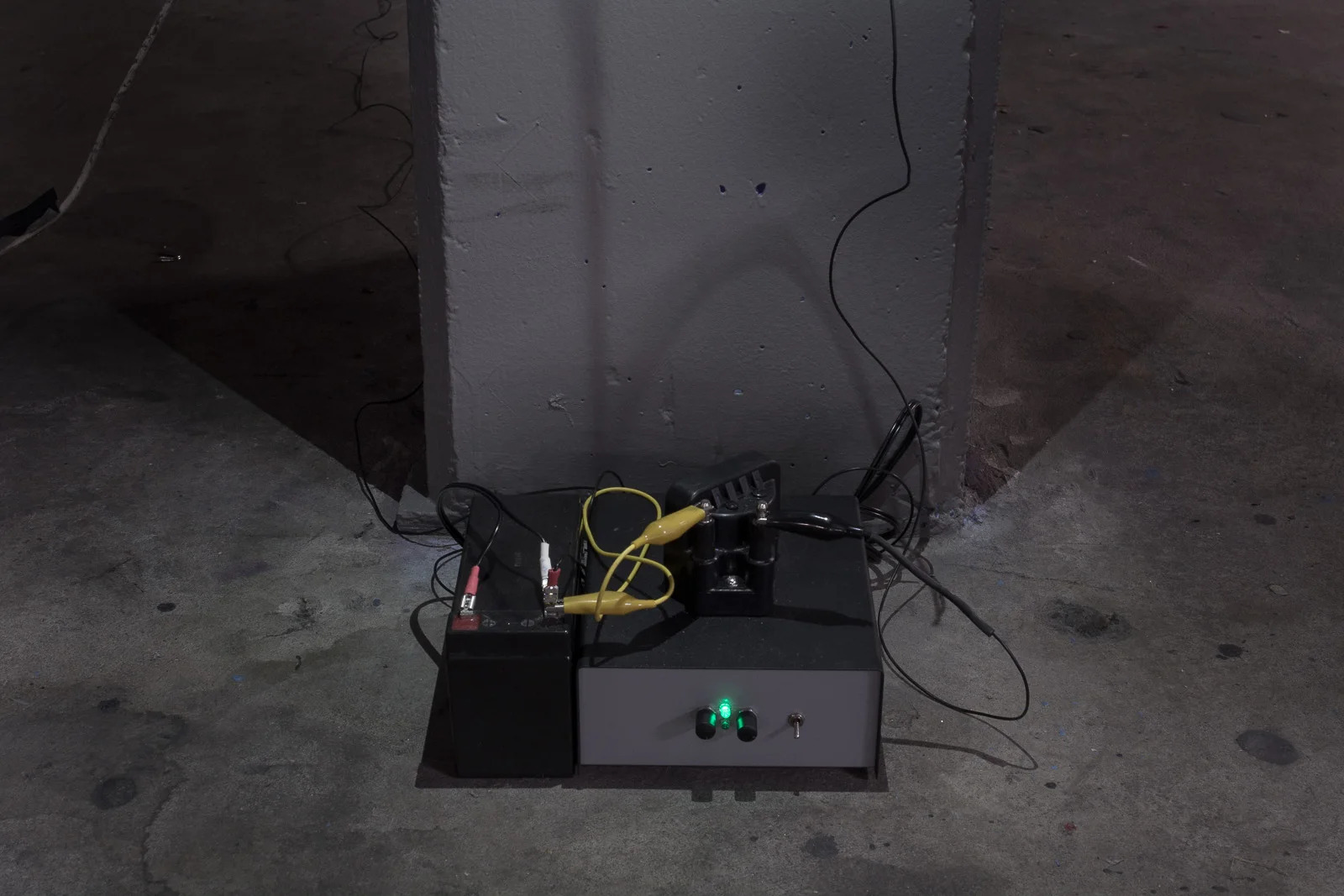
Installed through the estranged levels of a functioning Sydney car park, the works behave less like discrete media than instruments trained on the same uncertain terrain. The Colonies at Dusk moves among cattle, snakes, rocks, burning trees, machinery and isolated people; a thirty-minute sound work carries the distant infrastructure of the Snowy Hydro scheme through the space. Two large cotton panels retain cooking smoke. A fire-blackened trunk becomes both found body and sculpture, while steel wire drawn across the car park gives a Minimalist line weight, risk and obstruction.
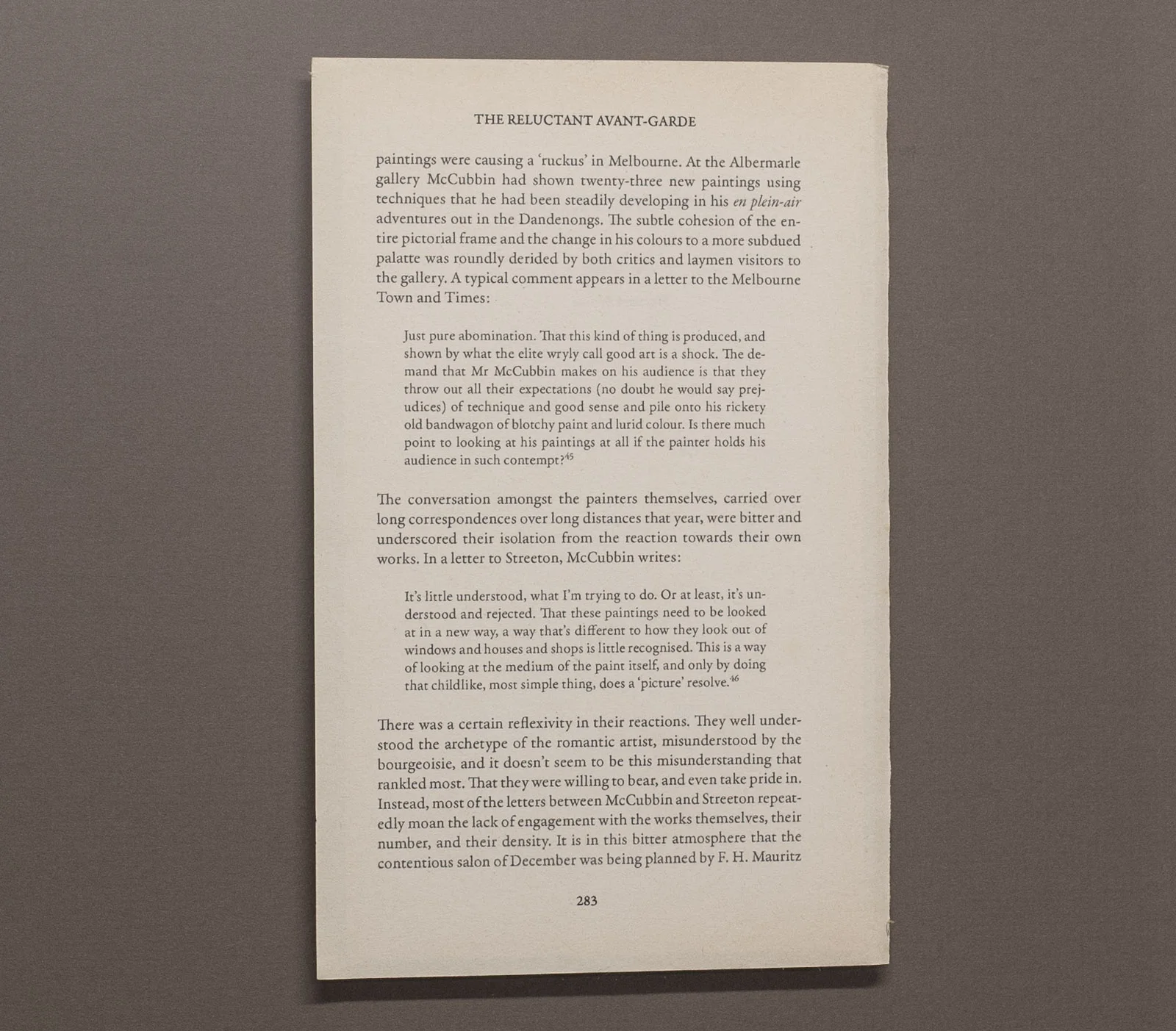
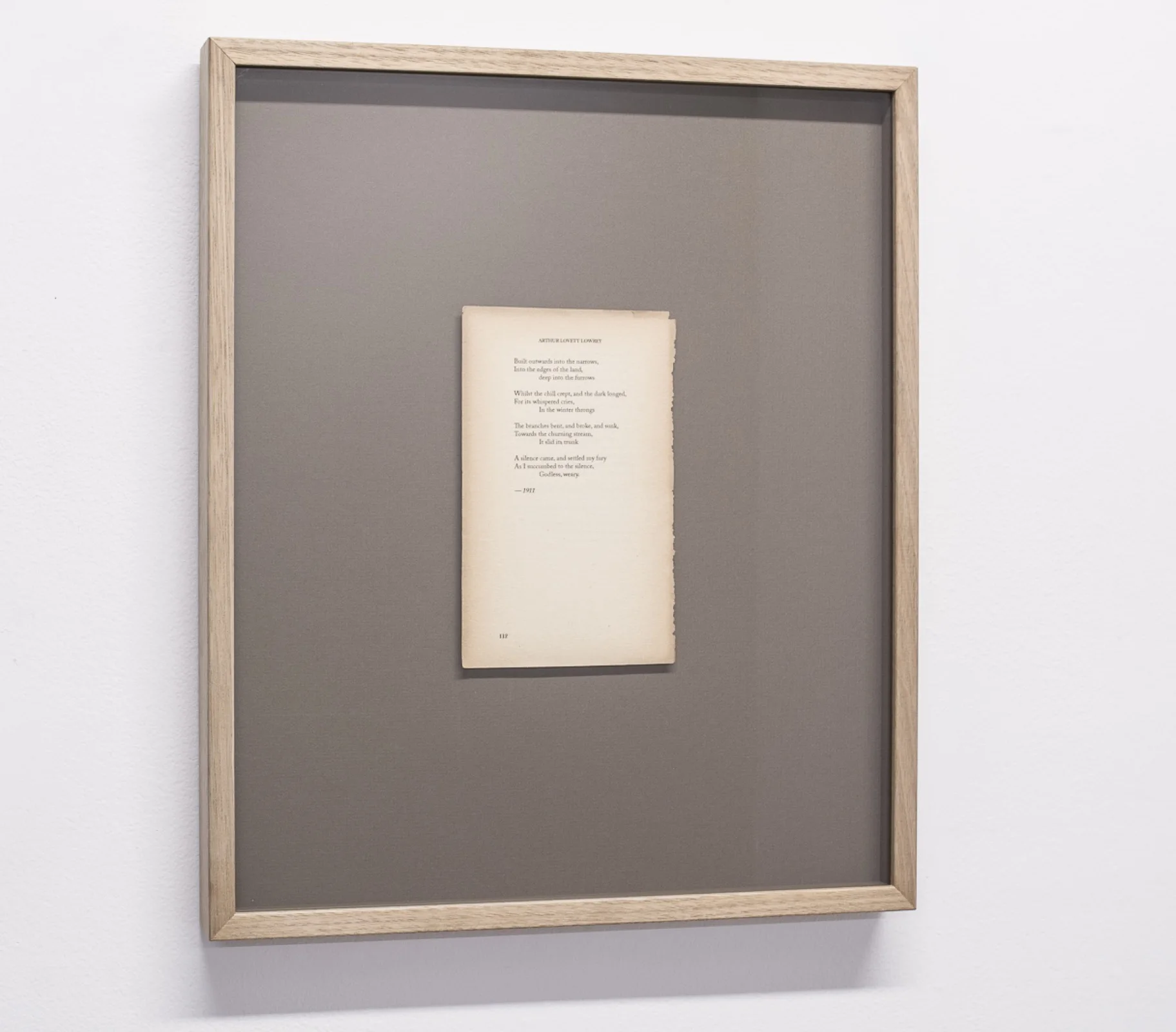
Fragments of invented journals, poetry and criticism borrow the authority of aged paper and art-historical voice, drawing Australian painting, New Topographics, contemplative cinema, Arte Povera and Minimalism into the journey. Each work offers only a partial way of looking. Together they produce an unstable belonging: the bush appears totemic, theatrical and indifferent, and looking outward becomes a test of the artist’s place within it.