
Omar Chowdhury

BANITS (2024–25)

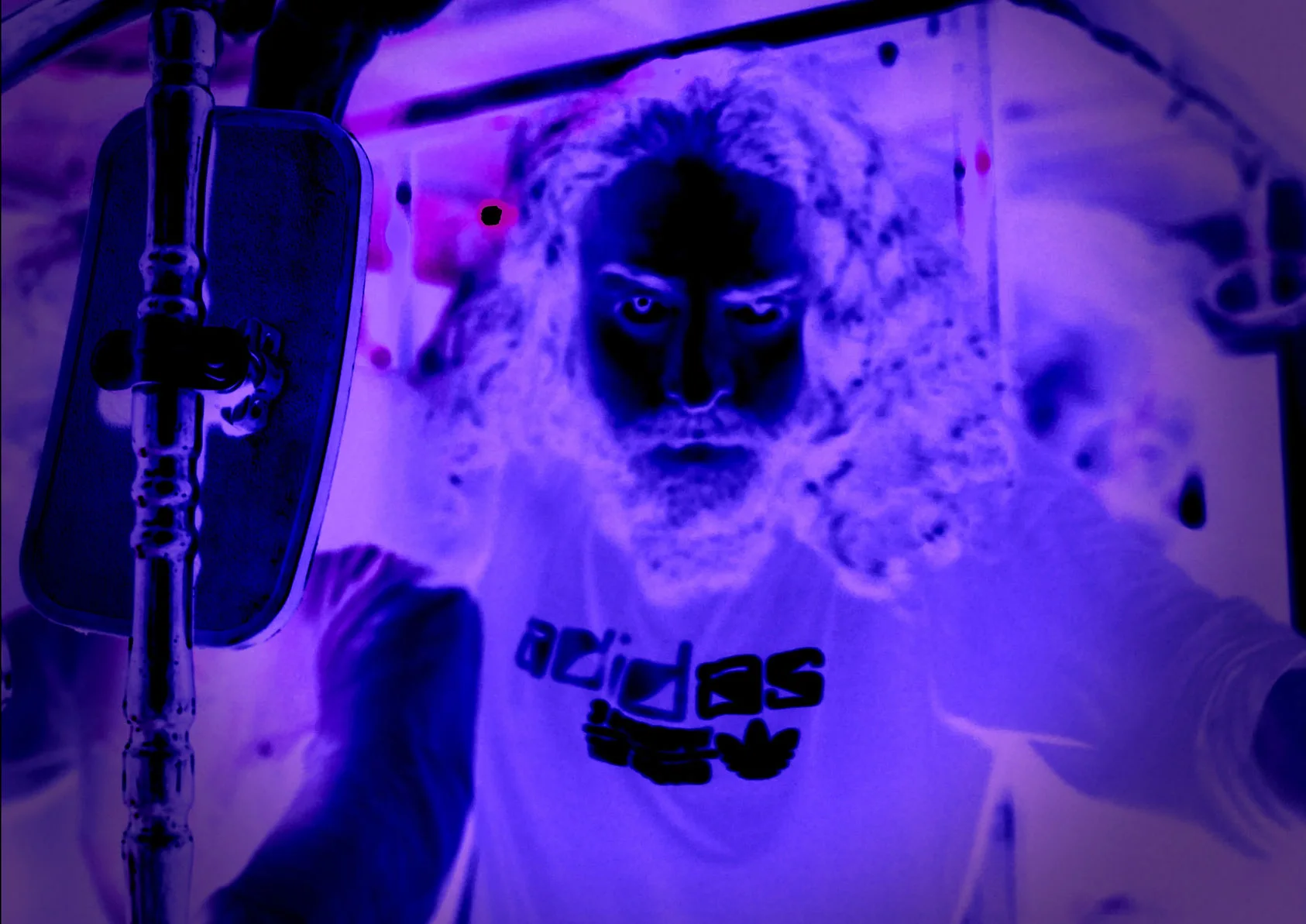
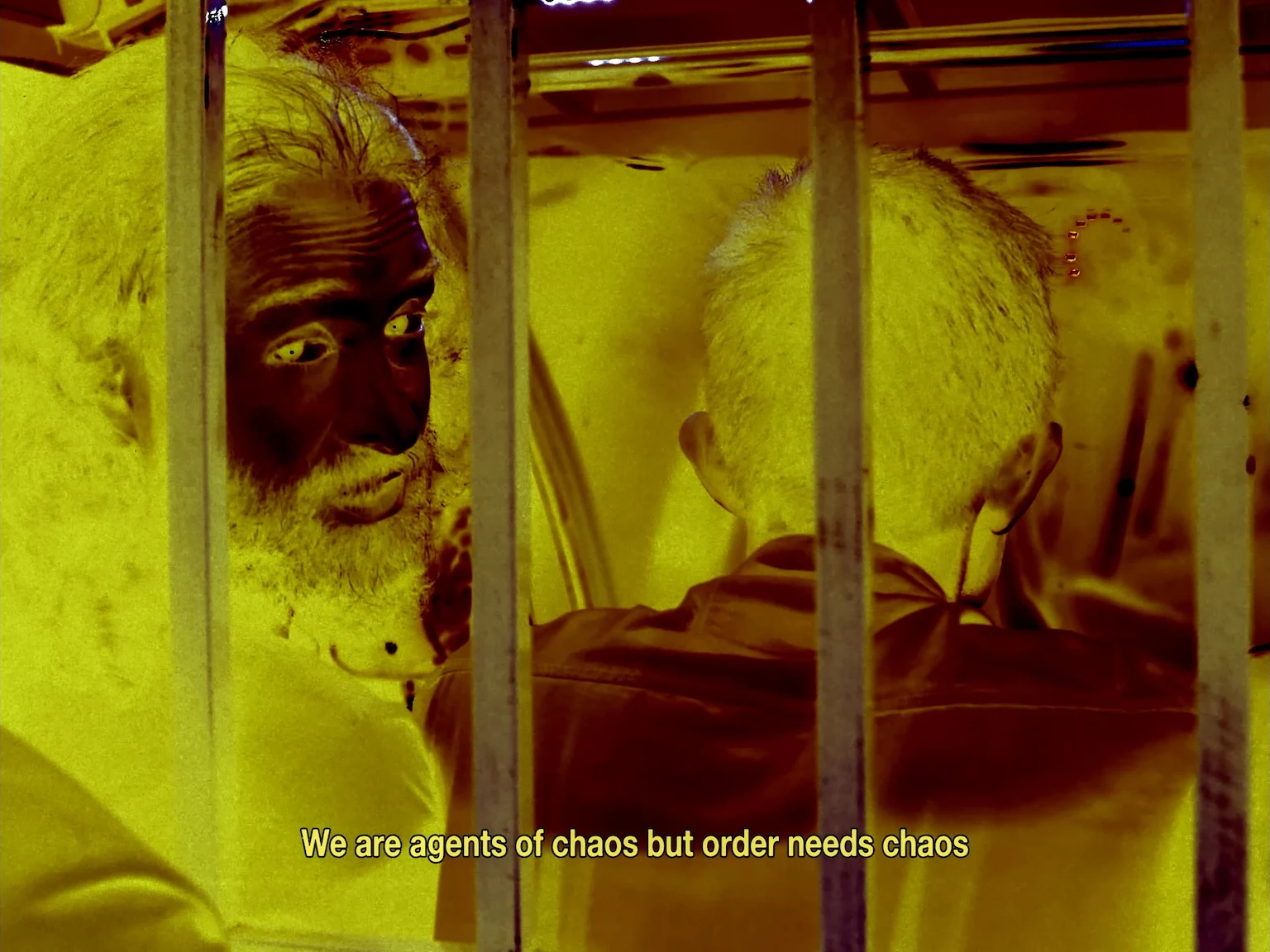
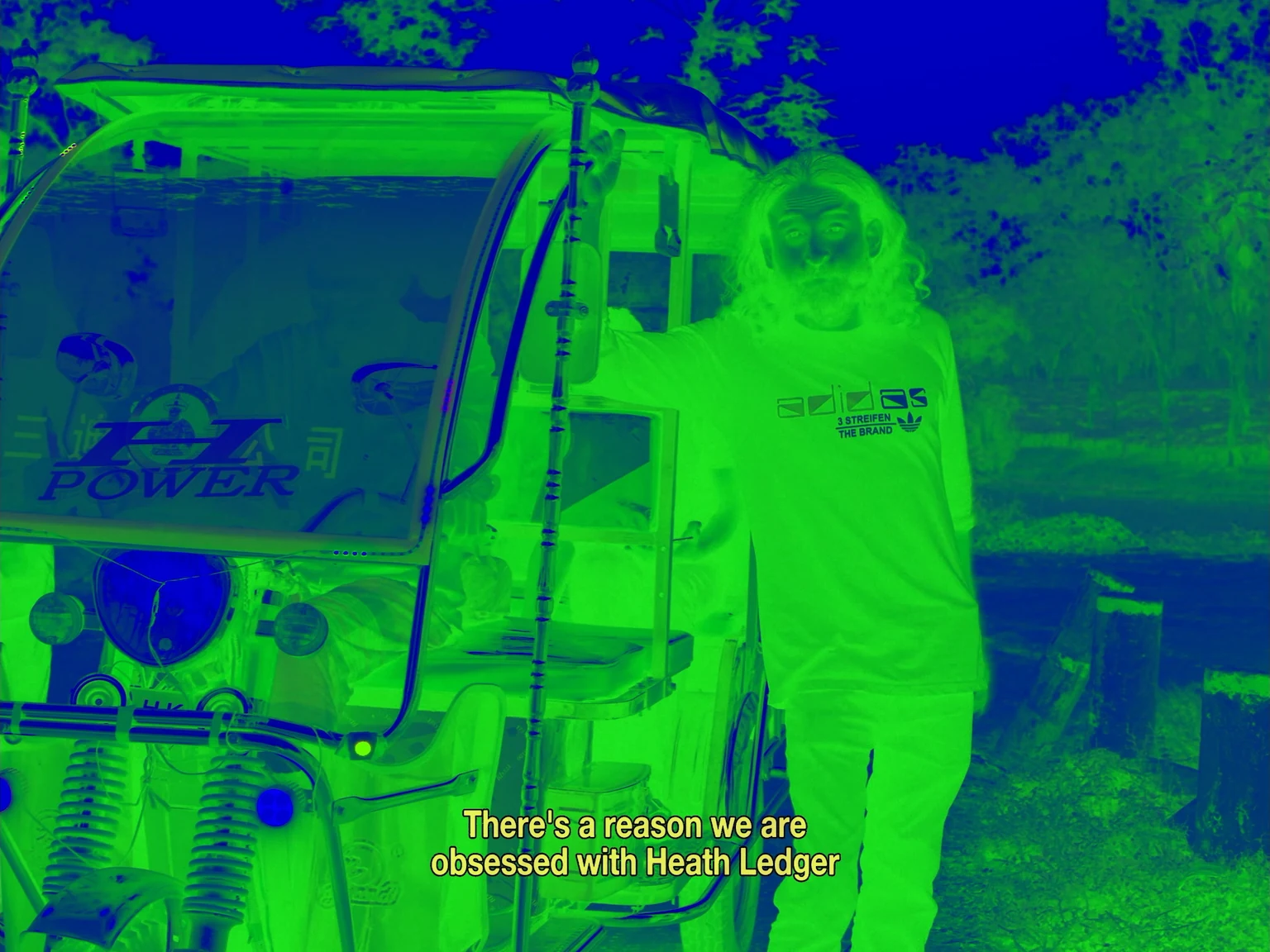
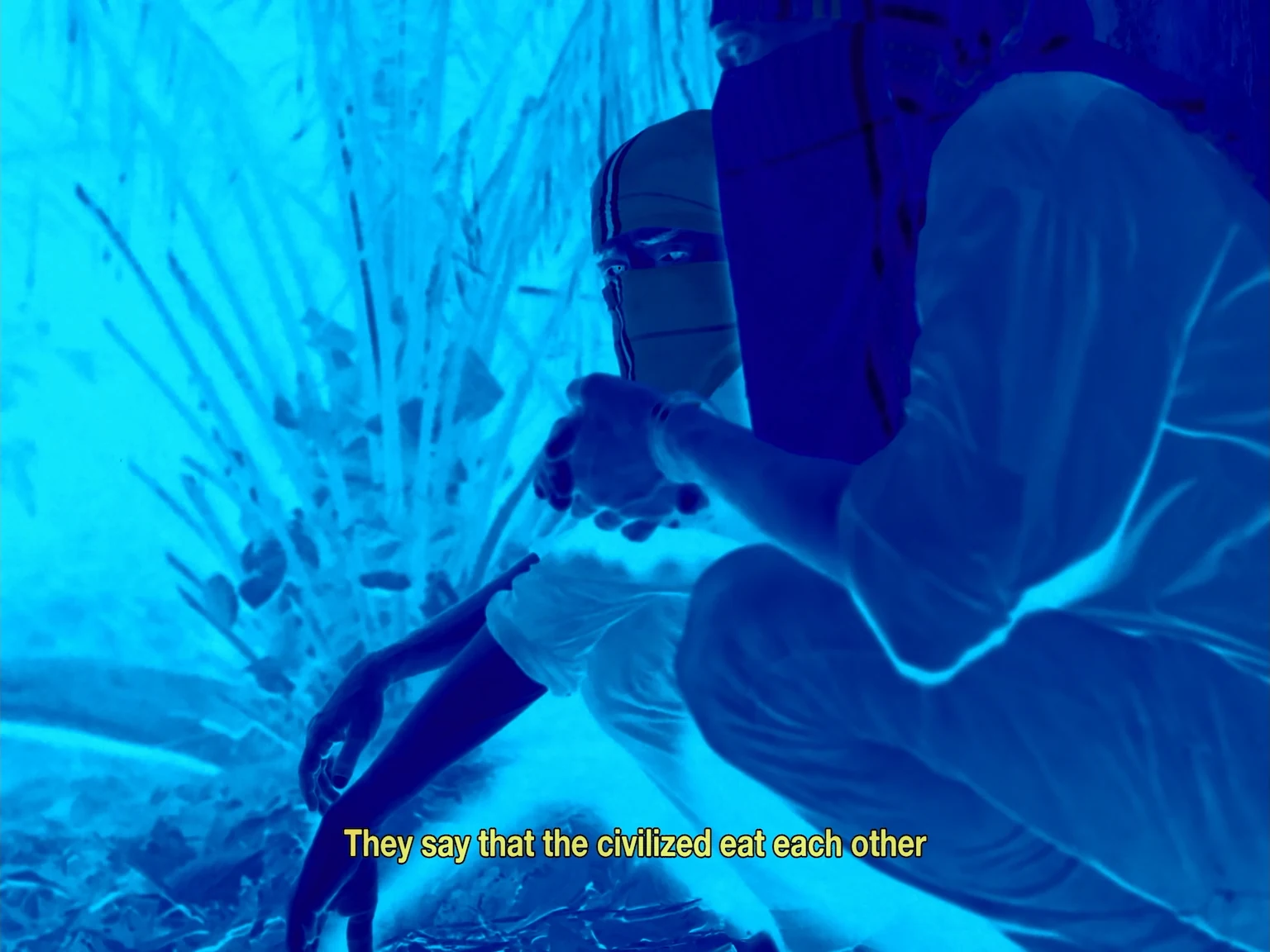
Film still from BAN♡ITS
Film still, BAN♡ITS (2024–25), single-channel video, 17:43, colour, stereo
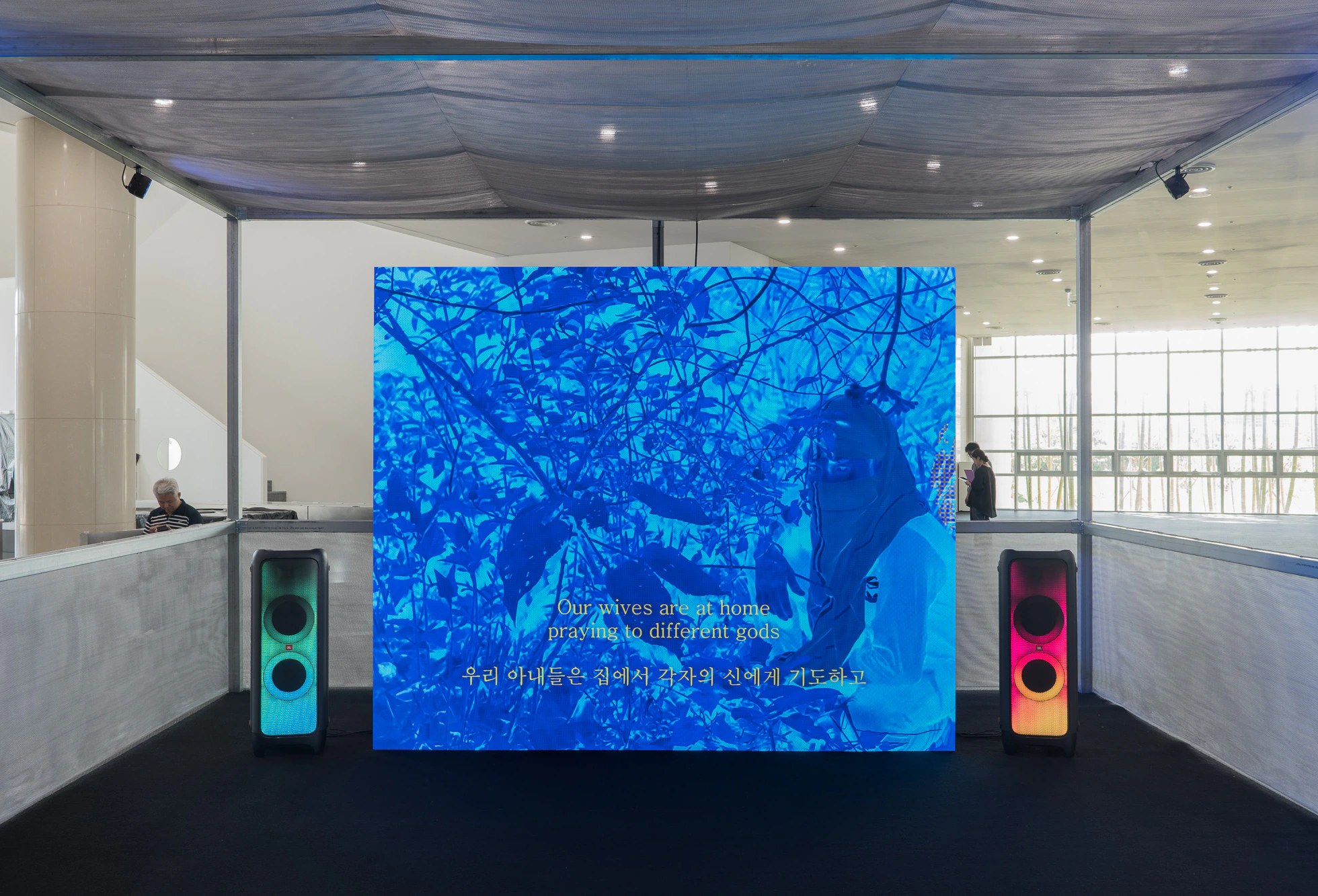
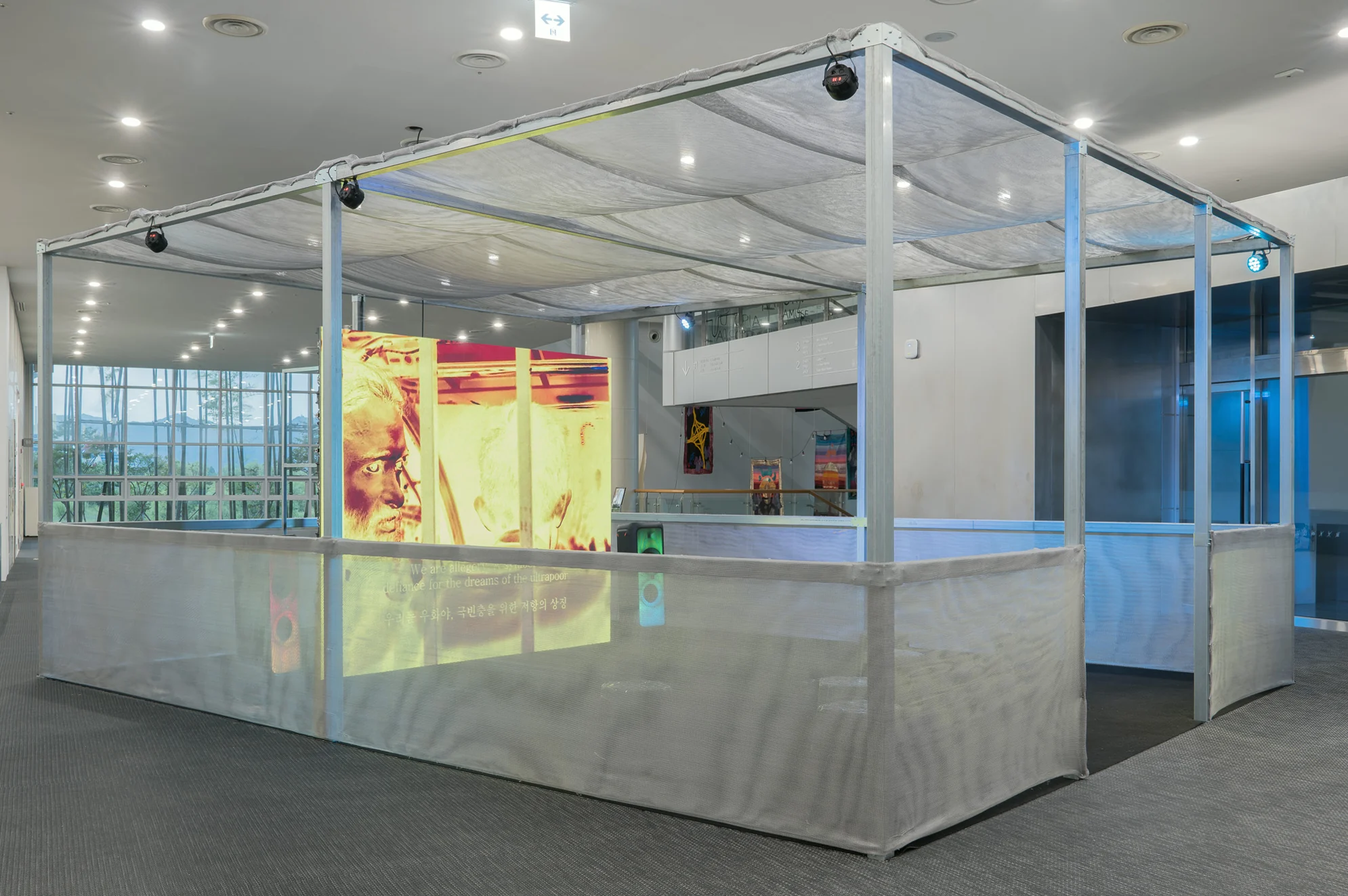
BAN♡ITS installed at Busan Biennale
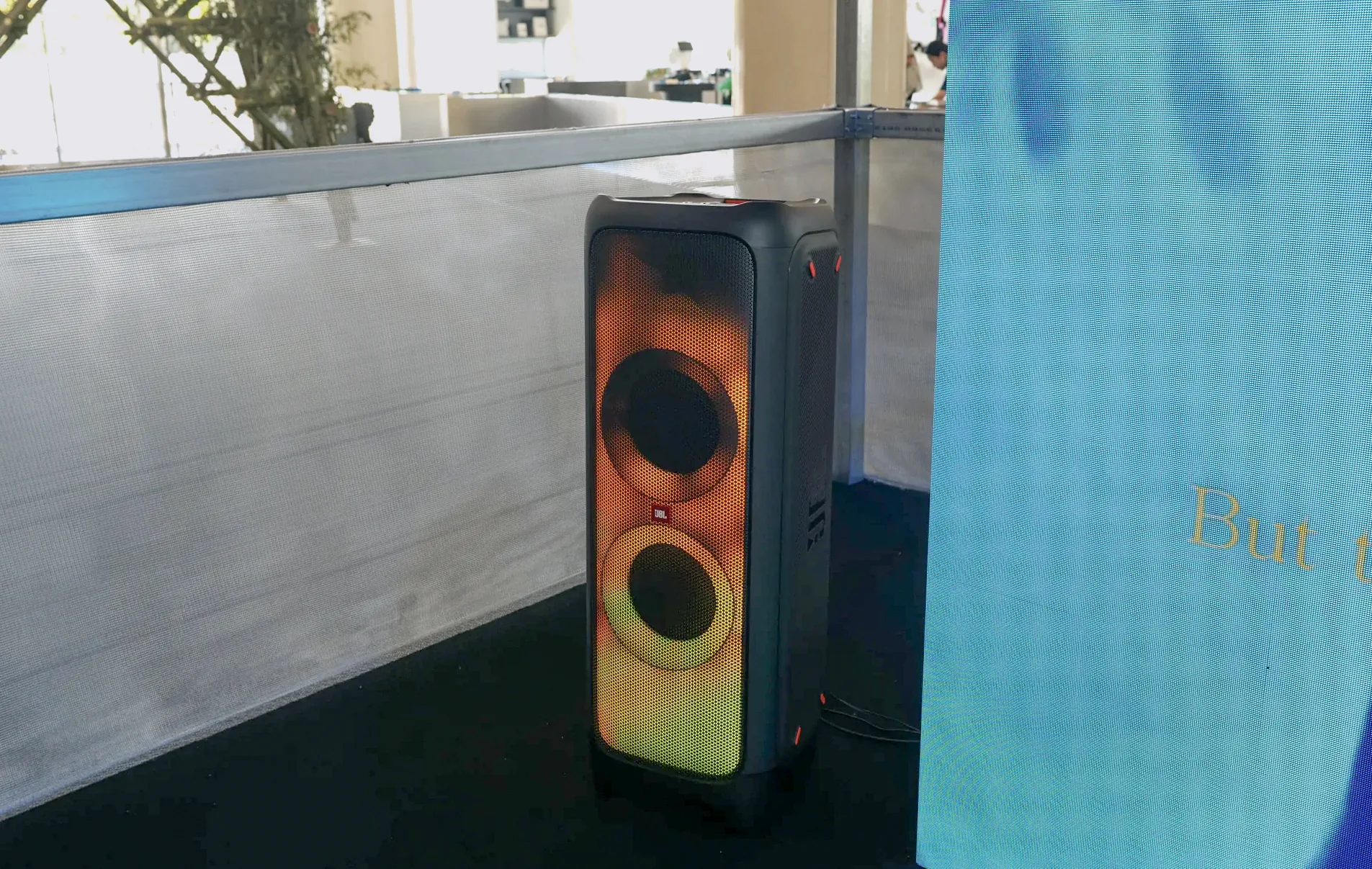
Installation view, Busan Biennale 2024: BAN♡ITS (2024–25), single-channel video, 17:43, colour and stereo; aluminium-and-mesh pavilion, LED wall, JBL PartyBox speakers and LED lighting. Performer credit below.
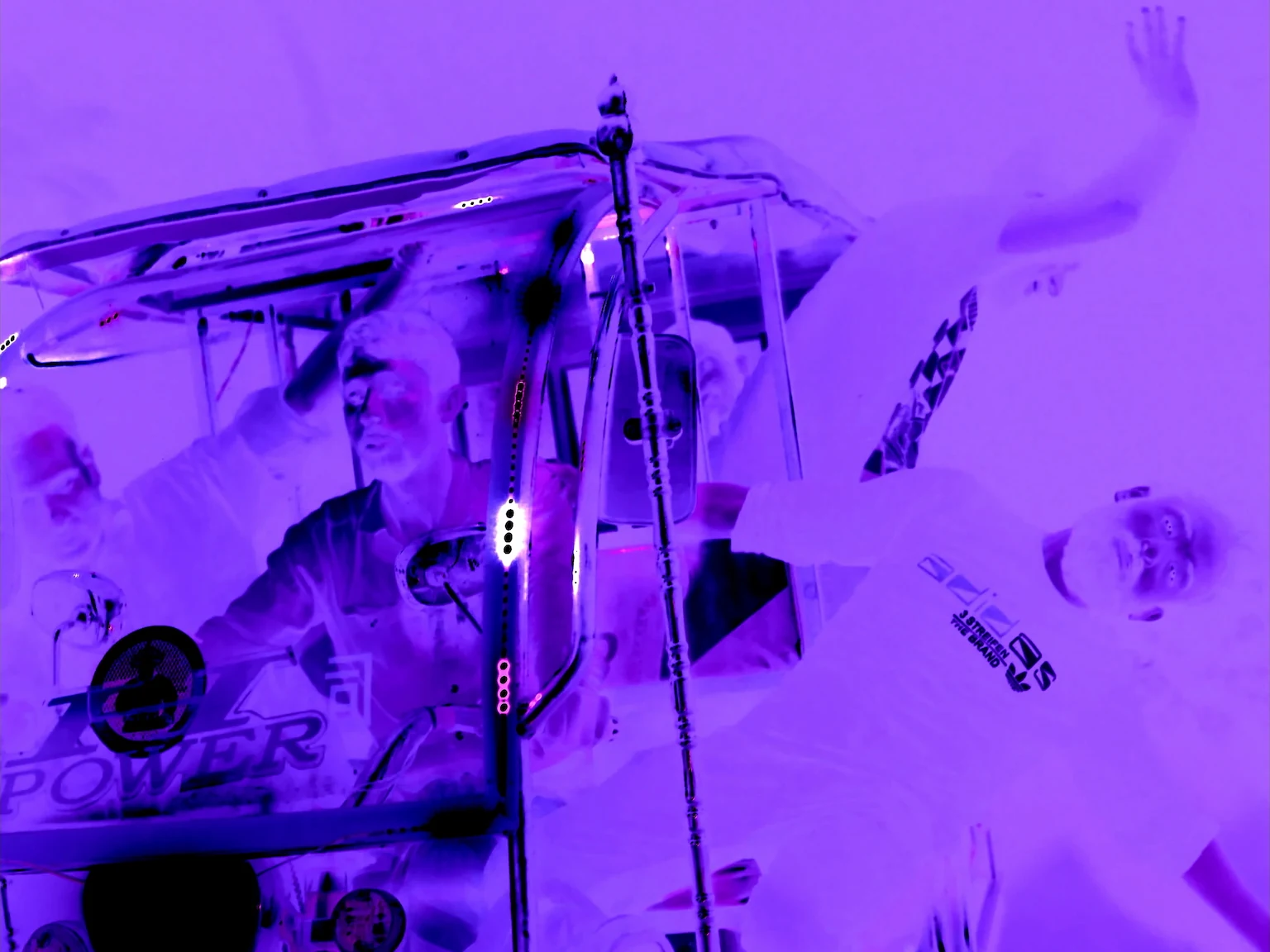
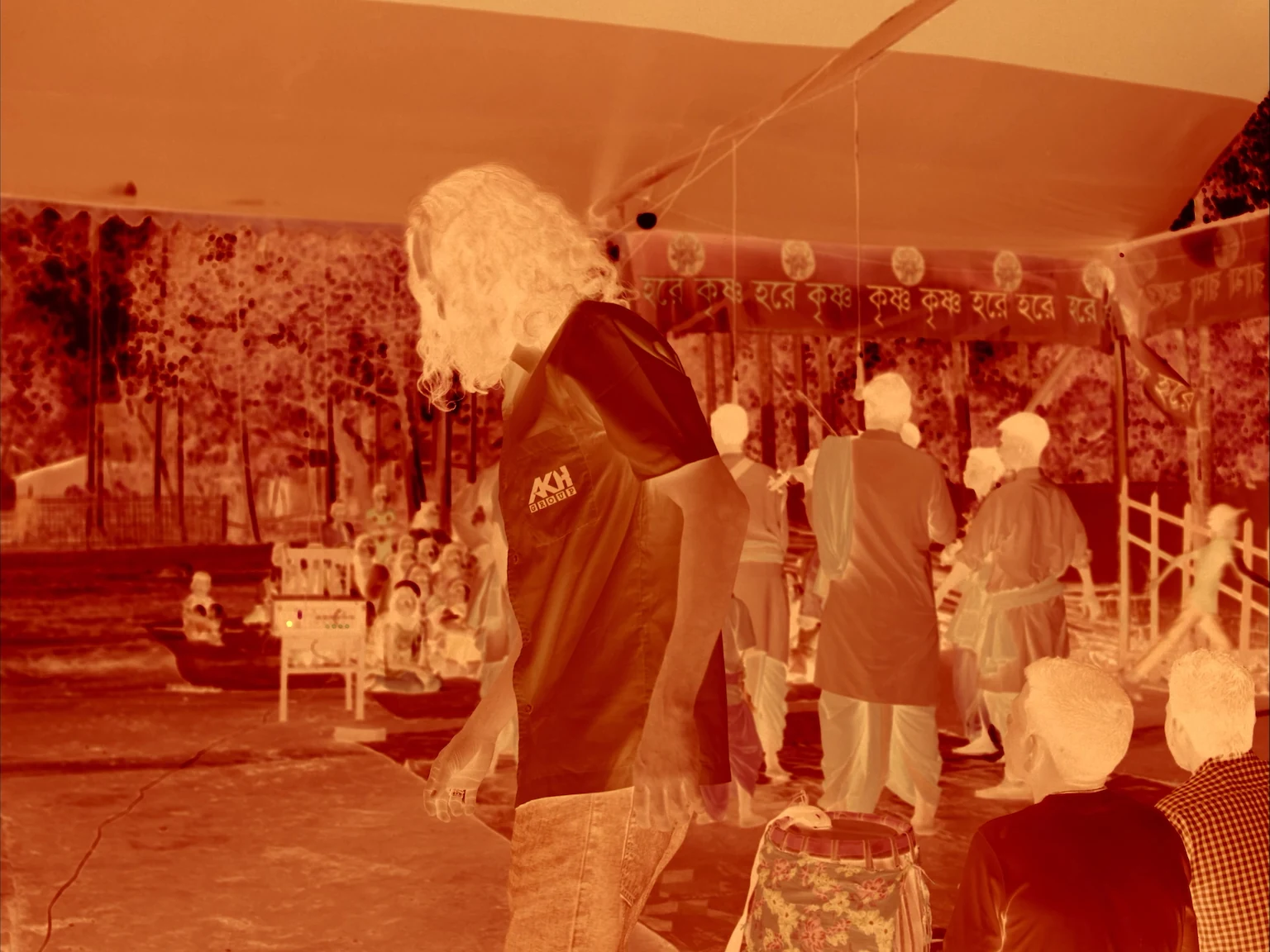
A bearded bandit beside a decorated three-wheeler in an inverted green-and-blue film stillThree masked bandits crouching among branches in a blue inverted film stillBandits gathered around a decorated three-wheeler in a purple inverted film stillA bandit walking through a gathering beneath a decorated pavilion in an orange inverted film still
Film stills, BAN♡ITS (2024–25), 17:43, colour, stereo
film from BAN♡ITS
Trailer, BAN♡ITS (2024–25), 1:00, colour, stereo

Watch BAN♡ITS — 60-second trailer

documentation from BAN♡ITS
Installation documentation, Busan Biennale 2024

Watch BAN♡ITS installation documentation

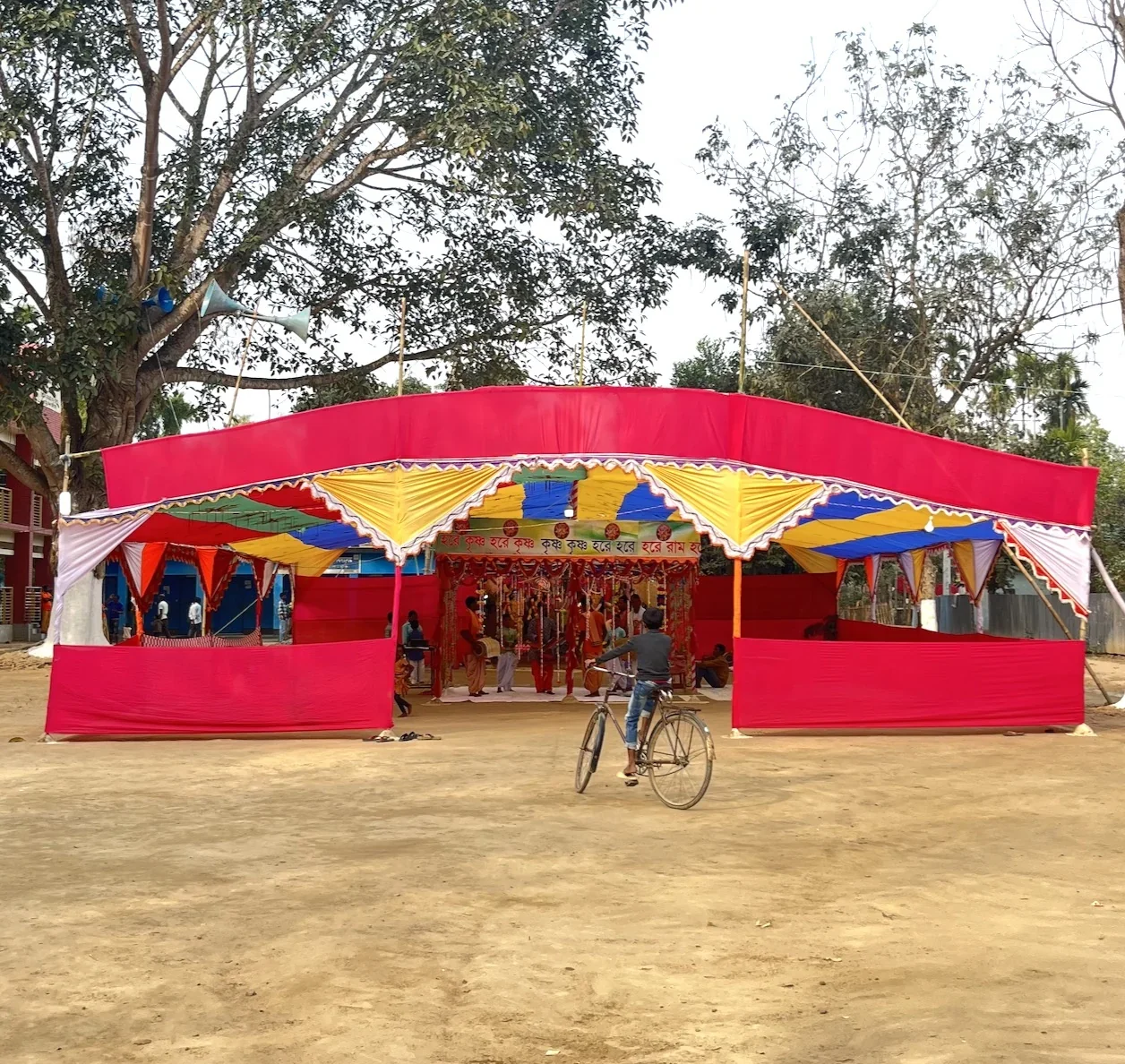
A brightly coloured temporary pavilion with a cyclist approaching its entrance
Temporary community pavilion, the artist’s ancestral village, Ghonoshampur, Sylhet, Bangladesh, 2024—estranged and remade in aluminium and silver mesh for BAN♡ITS (2024–25).
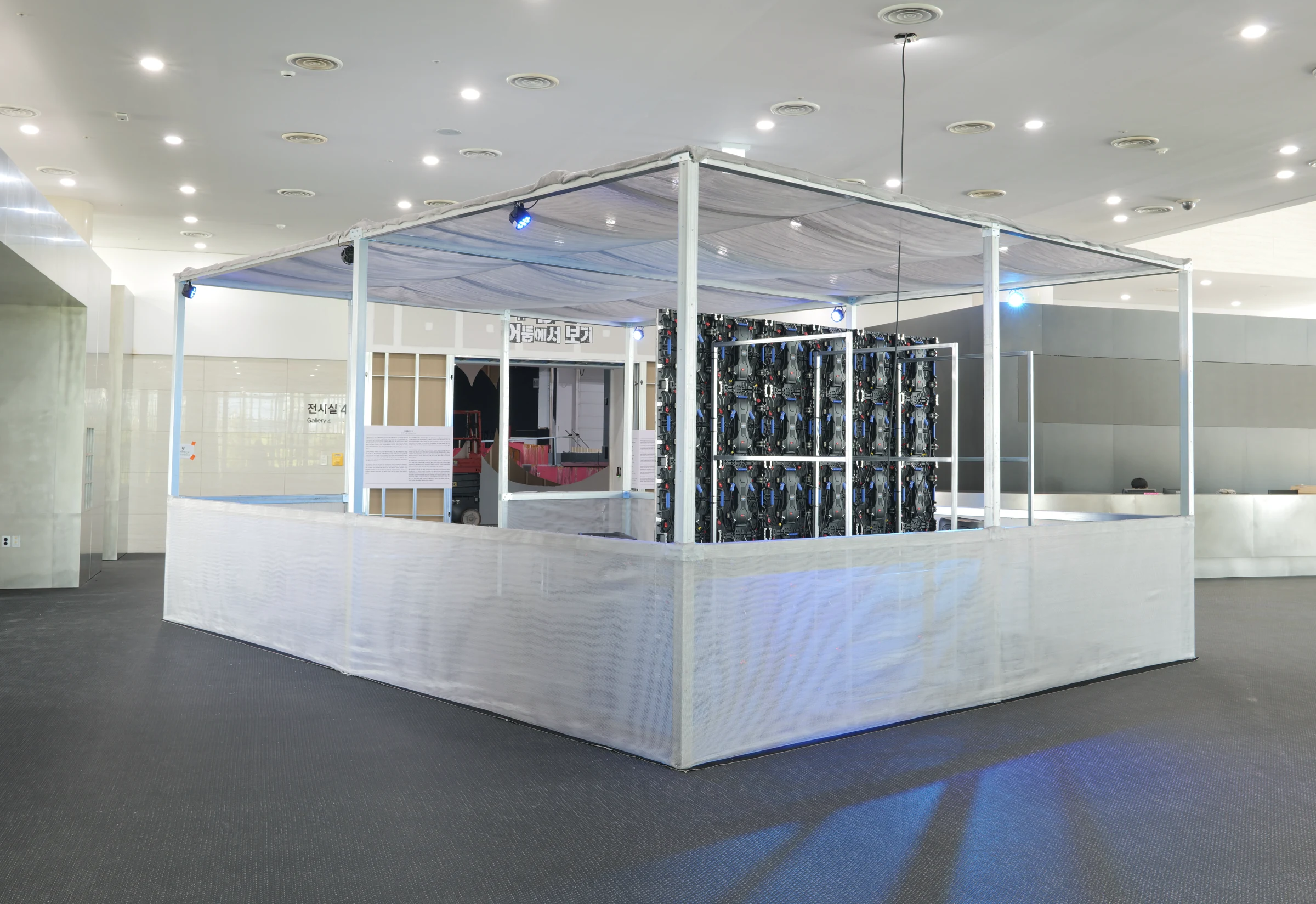
Rear installation view of the aluminium-and-mesh BAN♡ITS pavilion and exposed LED wall at Busan Biennale
Rear installation view showing the exposed LED wall, Busan Biennale 2024: BAN♡ITS (2024–25), single-channel video, 17:43, colour and stereo; aluminium-and-mesh pavilion and LED lighting.

Out near the lawless eastern borderlands of the sub-continent, a No-Visa-Required artist returns to make a film installation with a crew of washed-up ban♡its obsessed with Heath Ledger’s Joker. As they comically reenact their romanticised past, we confront the divergent histories and philosophies of peasant banditry as political resistance. Presented on a festive LED wall inside a temporary village pavilion, BAN♡ITS (2024–25) asks: when the art world comes calling, who are the real ban♡its?

The work combines cinema, ceremony and party aesthetics. Flashing lights animate the roof; speakers burn beside the screen. The installation becomes both social space and stage set.

The bandits occupy every frame as “knowing” subjects, spraying slogans, philosophies and nihilistic declarations across the screen. Their wiry leader emerges as prophet, performer and political theorist, insisting that their failed and increasingly inert violence remains a form of revolution. Extremely unserious, serious people, in other words. But revolutionaries have always been a little theatrical. Revolutions still happen.

The artist remains physically absent but verbally present: an interloper, a pariah and a minor agent of exoticism. The bandits casually discuss murdering him for his possessions, yet he cannot quite transform their boasts into heroic cinema. Unable to verify their mythology, he turns to their soliloquies to fill the vacuum where his own art is supposed to be.

View in complete works sequence